In the 1560s, Antwerp ran the most sophisticated financial market the world had ever produced. Bills of exchange, maritime insurance, commodity futures, currency trading — all operating simultaneously through a single Bourse, inaugurated in 1531, the first permanent institution where financial instruments were traded continuously. Portuguese sugar agents worked alongside Spanish silver handlers, Flemish textile exporters, English wool traders, German banking houses. Any transaction, however exotic, could be financed, insured, and settled in Antwerp at better prices than anywhere else on earth.
November 4, 1576. Mutinying Spanish tercios — unpaid for months by Philip II, the same sovereign whose treasury depended on the very financial machinery his soldiers were about to destroy — broke into the city. Three days. Some eight thousand dead, by Geoffrey Parker’s estimate from burial tallies and survivor testimony — though more recent scholarship has argued closer to 2,500 civilians. Contemporary accounts ran as high as seventeen thousand. Parker called it the holocaust of Antwerp.
But here’s the thing that should bother you. The market didn’t come back. Not slowly, not partially, not in diminished form. The most complex financial system in existence — embedded, sophisticated, backed by centuries of mercantile tradition — vanished from Antwerp permanently. Within a decade, Amsterdam was doing what Antwerp had done. Antwerp never recovered the position. Not in the seventeenth century. Not ever.
Why not?
The wrong explanation
The reflexive answer — geography, harbors, empire, stability — doesn’t survive contact with the evidence.
Hamburg had Germany’s first stock exchange, founded in 1558 near Trostbrücke. A free-city constitution. Europe’s second-largest port for much of the seventeenth and eighteenth centuries. Protestant mercantile culture. Political independence from imperial entanglements. Hamburg never became a European financial capital.
Vienna sat at the center of the largest political entity in continental Europe for three hundred years. By the nineteenth century, the Rothschild family was financing Habsburg railway networks, functioning as the empire’s primary private creditor. The Vienna Stock Exchange achieved genuine international standing by the 1850s.
Then geography stayed exactly the same, and the financial system imploded anyway.
The Creditanstalt, May 1931

On May 11, 1931, Austria's largest bank — larger than all other Austrian banks combined — announced that its 1930 balance sheet had revealed losses of 140 million schillings, approximately 85 percent of its equity. Total losses ultimately exceeded one billion schillings, roughly seven times the initial announcement. The Austrian government's guarantee of the bank's 1.2 billion schillings in liabilities threatened to consume two-thirds of the federal budget. The cascade hit Hungary, then Czechoslovakia, Romania, Poland, Germany. Britain left the Gold Standard on September 21, 1931 — four months after a Viennese bank admitted it was insolvent. Geography had nothing to do with it.
And then there’s Chicago. Geographically inferior to New York by every relevant measure — no deepwater port, no proximity to European capital, no concentration of international banking. And yet Chicago built the world’s dominant derivatives complex, the CME Group, now the largest derivatives exchange on earth by volume. If geography were the explanation, Chicago could not exist.
Something else is operating.
The Antwerp template
To understand what was lost, you need to understand what Antwerp had actually built. Not a city that happened to have money in it. An institutional stack — a specific, layered configuration of financial innovations whose value came from the co-presence of all its components.
The Bourse created permanent price discovery. Before 1531, financial dealing happened in private, between known parties, at negotiated rates. The Bourse made prices public, continuous, and competitive. London’s Royal Exchange, built in 1571, was explicitly modeled on it. Amsterdam’s exchange, completed in 1611 to Hendrick de Keyser’s design, was its direct descendant.
The bourse lineage

Antwerp's Bourse (1531) was not just the first — it was the template from which every subsequent exchange was consciously copied. Thomas Gresham built London's Royal Exchange in 1571 after visiting Antwerp and studying its operations. Amsterdam's exchange (1611) replicated the model in purpose-built architecture. The institutional form traveled because the institutional form worked — and because the people who built the copies had used the original.
Transferable bills of exchange made credit fungible. A merchant who’d extended credit could endorse the obligation to a third party, who could endorse it again — creating a liquid secondary market in debt that could clear obligations without moving coin. Maritime insurance distributed voyage risk across a market of underwriters rather than concentrating it with individual merchants.
But the critical element was density. Portuguese, Spanish, Flemish, English, German intermediaries operating in one location, each needing services the others provided. The system’s value was not additive — it didn’t equal the sum of its parts. It was systemic. It depended on the co-presence of all components. Remove the merchants and the entire stack collapsed simultaneously.
Which is precisely what happened. Between 1578 and 1609, more than five hundred merchants from the Southern Netherlands migrated north to Amsterdam — carrying not just capital but the institutional knowledge of how the stack worked. Who trusted whom. How bills were endorsed. How insurance was priced. The relationships that made the system function.
The accident of Amsterdam
Amsterdam didn’t plan to become a financial capital. It absorbed a refugee crisis.
The decisive moment wasn’t the Spanish Fury of 1576 — that was military violence, and cities can recover from violence. The decisive moment was August 17, 1585: Alessandro Farnese’s siege, Antwerp’s surrender, and the treaty granting the city’s Protestant population four years to leave. These were not random casualties. They were the merchant and banking class — mostly Calvinist — who had built and operated the financial infrastructure. What migrated north was not merely money. It was money fused with the social architecture of financial trust.
Amsterdam built two innovations on this inherited foundation that went beyond anything Antwerp had achieved.
The Bank of Amsterdam — the Wisselbank, founded January 31, 1609 — solved a friction that had plagued commercial life for decades: the chaos of multiple coinages. The United Provinces hosted fourteen different mints and countless foreign coins at varying silver content. The Wisselbank provided standardized exchange in a common unit — bank money — separating the unit of account from the unit of circulation. The conceptual move that defines every modern monetary system. And it made every other financial operation in Amsterdam cheaper by eliminating the friction at the foundation.
The VOC, chartered March 20, 1602, did something more radical. Previous merchant ventures pooled capital for single voyages — investors got paid when the ship returned. The VOC required investors to commit capital for twenty-one years and capped their liability at the amount paid in. The Amsterdam branch raised approximately 3.67 million guilders from 1,143 initial investors in August 1602 — everyone from directors putting in twelve thousand guilders to a maid subscribing a hundred. Investors who wanted out before twenty-one years had to sell their shares to someone else. By necessity, this created a secondary market for equity. The Amsterdam Stock Exchange. A new class of tradable financial instrument that Antwerp had never imagined.
The Dutch then sealed the structural advantage by blockading the River Scheldt from 1585 until 1795. Two hundred years. Antwerp retained its buildings, its legal traditions, its geographic position. None of it mattered without river access to the sea.
But here’s the puzzle that the Amsterdam story leaves open. The Scheldt blockade was lifted in 1795. Antwerp’s port reopened. Its geographic advantages — which had been real — were restored. The city never reassembled what it had lost. Hamburg, which absorbed some of the same merchant diaspora and had every geographic advantage Amsterdam possessed, never did what Amsterdam did either. Something beyond the initial disruption was holding the new arrangement in place — something that prevented reversal even after the original cause was removed.
The lock-in mechanism
That something is a feedback loop, and once you name it plainly the irreversibility stops being mysterious.
The loop works like this. A large pool of capital produces tighter transaction spreads — larger markets simply have more natural buyers and sellers at any given price. Tighter spreads attract intermediaries: brokers, lawyers, accountants, insurers, because the volume justifies their presence. More intermediaries reduce information costs — unusual transactions find counterparties, legal questions find precedents, complex structures find people who’ve built them before. Lower information costs attract more capital. The loop compounds. A small early lead becomes a large late one, and a large one becomes effectively permanent.
Peter Spufford traced this mechanism across three centuries of European financial geography in his 2006 paper “From Antwerp and Amsterdam to London,” tracking the successive displacement of financial centers and naming the self-reinforcing dynamics that made each transition irreversible once complete.
The critical implication for competition: a challenger cannot win by being marginally better. It must offer something the incumbent physically cannot provide. Amsterdam offered Antwerp’s refugees a functioning market — something Antwerp, with the Scheldt blockaded, literally could not have. That’s the entry condition. Not “better” — categorically different.
Chicago: the regulatory gap

On May 16, 1972, the CME launched currency futures. These instruments fell outside the Commodity Exchange Authority's jurisdiction — which covered only enumerated agricultural commodities — and outside the SEC's, which covered securities. Currency futures were neither. They operated in a regulatory vacuum with no federal oversight until 1975, when the newly created CFTC explicitly authorized continued trading of what it called "previously unregulated" commodities. Chicago didn't beat New York at equities. It found ungoverned space where no incumbent existed. By 2007, CME Group had acquired the Chicago Board of Trade to form the world's largest derivatives exchange. But Chicago never became a general financial capital — it won a market, not a center. The distinction is the point.
The mechanism’s hard limit: winning a new instrument in unoccupied space is possible. Rebuilding intermediary density where it already exists somewhere else is not. Because intermediary density forms only around existing activity. You cannot mandate it. You cannot subsidize it into existence. You cannot build the building and expect the people to come.
The chain of transfers
Amsterdam, London, and New York are not three separate stories. They’re one chain. Each transfer required the previous center’s infrastructure plus one specific element the previous center couldn’t match.
Amsterdam’s weakness was not its instruments — those were the best available. Its weakness was sovereign credit risk. The Dutch Republic’s public debt was managed by the States-General, but the Republic’s federal structure made fiscal commitment uncertain — provincial sovereignty meant any province could, in theory, refuse to honor central obligations. Investors had no structural guarantee against default.
England after the Glorious Revolution of 1688 offered something new: Parliamentary control of the Crown’s finances. And Parliament included, as members, the creditors who held that debt. The people who voted on whether to service the debt were the same people who owned it. Not a coincidence — a design. Sovereign debt service became self-enforcing through self-interest baked into the constitutional architecture, and investors knew it.
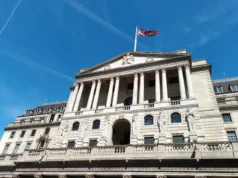
The Bank of England, chartered in 1694 explicitly to organize government borrowing for war against France, institutionalized this arrangement. London’s banking sector expanded: approximately twenty-four banks in 1725, fifty-two by 1785, seventy by 1800. Banking assets as a proportion of national income rose from roughly 15 percent in 1775 to nearly 30 percent by 1825.
The Bank of Amsterdam’s death was specific and ignoble. During the Fourth Anglo-Dutch War (1780–1784), the Wisselbank secretly lent enormous sums to the VOC and the city of Amsterdam for war financing. Its reserve ratio — the foundation of its credibility — dropped from approximately 97 percent in 1778 to 28 percent by summer 1783. Insolvent by 1784. Bank money at a discount by 1790. Formally wound up in 1820. The institution that had invented modern central banking destroyed itself through the very sovereign entanglement its design was meant to prevent.
London to New York was slower — a drain, not a displacement. Through the nineteenth century, New York built intermediary density around a specifically American need: financing continental expansion at continental scale. The Erie Canal, completed 1825, required the kind of capital coordination that London’s trade-finance system wasn’t built for — not because London lacked capital but because the instrument class (long-duration infrastructure bonds, sold domestically to American investors) didn’t fit London’s existing intermediary structure. Railroad bonds followed. By 1900, New York had the intermediary mass for domestic industrial finance — and a domestic market large enough to sustain it without reference to London at all.
World War I converted domestic scale into international function. J.P. Morgan & Co. became the sole purchasing agent for the British and French governments, handling approximately three billion dollars in Allied procurement. American banks acquired, in the process, the expertise and counterparty relationships London had monopolized for two centuries. Bretton Woods in 1944 made the transfer permanent — the dollar as global reserve currency, backed by the productive capacity of the only major industrial power whose factories hadn’t been bombed.
Each link added something: Amsterdam contributed permanent equity and limited liability. London added constitutional creditor protection. New York added reserve currency status backed by industrial dominance. Each was additive. London didn’t discard Amsterdam’s instruments — it built on them.
The failures
Three cities had what looked like everything. They had nothing of the kind.
Hamburg survived the disruption that displaced Antwerp — absorbed some of its merchants, increased its trade volume through the late sixteenth and seventeenth centuries. Germany’s oldest stock exchange. A free-city constitution. Major port. Everything a financial capital might need, except the one thing Amsterdam had: a new class of financial instrument around which intermediary density could crystallize. Hamburg did what Antwerp had done, competently, at scale. But it never did what Antwerp had not done. It remained a generalist trading hub, permanently stuck at Antwerp’s level of financial innovation while Amsterdam pulled away.
The failure mode is clean: surviving the disruption that displaces an incumbent is not enough. The replacement must do something the incumbent could not.
Vienna had the largest economy in continental Europe behind it for centuries, Rothschild backing, and genuine international standing. But the Habsburg Empire was simultaneously the financial system’s largest client and its structural weakness. The empire’s fiscal needs were dominated by military expenditure; it defaulted repeatedly. Philip II — the same sovereign whose unpaid tercios destroyed Antwerp — declared bankruptcy in 1557, 1560, 1575, and 1596. The pattern was not accidental. It was constitutive. When the empire dissolved in 1918, Austria lost over 60 percent of its former territory and population. The financial system held claims on a state that no longer had the fiscal capacity to service them. The Creditanstalt in 1931 was the terminal expression — not the cause — of a structural problem two centuries in the making.
Chicago proved the mechanism operates in two distinct modes. You can win a specific new market if you find ungoverned space and produce the instrument to fill it. You cannot build general financial primacy that way. The CME is the world’s largest derivatives exchange. New York remains the equity and banking center. Both facts are true. They are not in tension. They describe different competitions entirely.
The current contenders
The contemporary experiments in hub-building are running a version of the same play Hamburg ran in 1558 — serious institutional infrastructure, built for a market that hasn’t yet crystallized around it. With one critical difference: they know the history. Whether that helps is the question the mechanism was designed to answer.
Zurich complicates the argument — deliberately and productively. Zurich is not a general financial capital. It’s a private banking niche, dominant in cross-border wealth management. The mechanism analog, not the equivalent of Amsterdam or London. Switzerland’s rise required two things coinciding: deliberate legal preparation — the Federal Banking Act of 1934 formalized banking secrecy, though confidentiality predates this by centuries (Geneva prohibited client disclosure in 1713) — and a contingent disruption nobody scheduled. World War II sent capital from every combatant nation to the one major European country not fighting. The 1934 law was preparation. The war was the accident. Together they created intermediary density in private banking that has never dispersed.
The lesson is narrow and uncomfortable: deliberate policy can position a city to receive a contingency it cannot predict. But positioning without the contingency produces nothing — and contingency arriving at a city without the positioning produces only temporary opportunity that migrates elsewhere.
Dubai is the purest test of deliberate construction. And the evidence should be read honestly, without the deference owed to ambition or expense. The DIFC, launched in 2004: zero-tax jurisdiction, imported English common law with independent courts, double-taxation treaties spanning over 140 jurisdictions. By the available playbook, Dubai has done almost everything right. What’s missing is what the historical mechanism says you cannot acquire by doing things right: intermediary density that sustains itself under stress, and the founding contingency — the disruption that forces capital and expertise to the same place with no alternative. Dubai gains capital during episodes of regional instability. It has not yet experienced the founding event that Amsterdam and Zurich both required.
Singapore most nearly approaches the Zurich pattern, and the ambiguity is the point. Political stability. Common-law infrastructure. Time-zone positioning for Asia-Pacific. Early capture of specific instrument classes — FX trading, private banking, trade finance — each established before regional competition thickened. Assets under management reached S$6.07 trillion (approximately US$4.5 trillion) in 2024, according to the Monetary Authority of Singapore, with 77 percent sourced from outside the country. Whether Singapore achieved this through design or through benefiting from Southeast Asian political disruption — Cold War instability, decolonization, capital flight from regional upheaval — is genuinely ambiguous. The cases that look most designed often had the contingency baked in without anyone noticing at the time.
Hong Kong: the constitutional trust problem

Hong Kong built its primacy on a unique instrument-level opportunity — access to mainland Chinese capital markets that no other center could replicate. Structurally analogous to Amsterdam's VOC: a unique instrument class drawing intermediary density because there was nowhere else to go. But the arrangement that made London's financial primacy self-reinforcing — Parliament protecting creditors because Parliament was the creditors — does not exist in Hong Kong's relationship with the sovereign power controlling its political architecture. Hong Kong's common-law courts are formally independent. Their independence is not protected by the constitutional structure that produced and sustains that independence in London. The DIFC's imported English law, Singapore's MAS framework, and Hong Kong's courts all reproduce the legal forms without the political arrangement that made those forms credible in the first place. Whether Hong Kong's institutional independence survives the pressures currently bearing on it is a question the historical pattern makes pointed: the answer matters more than any other variable.
Two of these three have not experienced the founding contingency. Zurich had a world war. Dubai and Singapore are still waiting — though Singapore may have already had its contingency and simply not recognized it as one. Which would, of course, be exactly what the mechanism predicts.
In the weeks after the Spanish Fury, the surviving merchants of Antwerp were solving a logistics problem. They needed counterparties. They needed functioning instruments. They needed a market that cleared. Some went to Hamburg. Some went to Frankfurt. Most went to Amsterdam — not because Amsterdam was destined for anything, but because it was close, it was Protestant, it was safe, and some of them already had contacts there from the textile trade.
They weren’t building a financial capital. They were looking for a place to do business next week. Nobody told them they were founding a dynasty. Nobody could have, because the dynasty’s existence depended on decisions that hadn’t been made yet — the Wisselbank, the VOC, the Scheldt blockade — none of which were inevitable and all of which were responses to problems that hadn’t yet materialized.
Every major financial center began this way. Someone solving an immediate problem in a place that happened to have the other conditions in place — legal tolerance, political stability, geographic access — without recognizing those conditions as conditions. Without understanding what they were building, or that four centuries later economists would still be trying to explain why it can’t be undone.
The current hub-builders have studied this history. They have the institutions, the frameworks, the legal imports, the infrastructure. They’ve replicated everything that can be replicated by studying the outcome. What they cannot replicate — because it was not recognized as a condition by the people who lived through it — is the accident that set everything in motion. You can prepare for it. You can position for it. You cannot schedule it.
The founding contingency arrives uninvited, or it doesn’t arrive at all.
Zastrzeżenie dotyczące Gen AI
Niektóre treści tej strony zostały wygenerowane i/lub edytowane przy pomocy generatywnej sztucznej inteligencji.
Media
Kluczowe źródła i odniesienia
Peter Spufford, “From Antwerp and Amsterdam to London: The Decline of Financial Centres in Europe,” De Economist, vol. 154, pp. 143–175, 2006. Springer. DOI: 10.1007/s10645-006-9000-7.
Geoffrey Parker, The Dutch Revolt, Allen Lane, 1977. Revised edition: Penguin, 1985.
Oscar Gelderblom and Joost Jonker, “Completing a Financial Revolution: The Finance of the Dutch East India Trade and the Rise of the Amsterdam Capital Market, 1595–1612,” Journal of Economic History, vol. 64, no. 3, pp. 641–672, 2004.
Oscar Gelderblom, “Merchants from the Southern Netherlands (1578–1630),” Research Data Journal for the Humanities and Social Sciences, Brill, vol. 1, no. 1, 2016.
Stephen Quinn and William Roberds, “The Bank of Amsterdam and the Leap to Central Bank Money,” American Economic Review, vol. 97, no. 2, 2007.
Stephen Quinn and William Roberds, “Death of a Reserve Currency,” International Journal of Central Banking, vol. 12, no. 4, 2016.
Ron Chernow, The House of Morgan: An American Banking Dynasty and the Rise of Modern Finance, Atlantic Monthly Press, 1990.
Aurel Schubert, The Credit-Anstalt Crisis of 1931, Cambridge University Press, 1991.
U.S. Commodity Futures Trading Commission, “History of the CFTC,” official institutional history, available at cftc.gov.
Monetary Authority of Singapore, “2024 Singapore Asset Management Survey,” released July 2025.
Erik Lindberg, “The Rise of Hamburg as a Global Marketplace in the Seventeenth Century: A Comparative Political Economy Perspective,” Comparative Studies in Society and History, vol. 50, no. 3, pp. 641–662, 2008.
D.M. Joslin, “London Private Bankers, 1720–1785,” Economic History Review, vol. 7, 1954, pp. 167–186.
Geoffrey M. Hodgson, “Financial institutions and the British Industrial Revolution: did financial underdevelopment hold back growth?” Journal of Institutional Economics, vol. 17, no. 3, pp. 429–448, 2021.
Raymond Fagel, “The Origins of the Spanish Fury at Antwerp (1576): A Battle Within City Walls,” Early Modern Low Countries, vol. 4, no. 1, pp. 102–123, 2020.
Lena Martin
Zajmuje się ekonomią. Czasami matematyką. Topologii algebraicznej unikam z zamysłem.








 English
  Español
  Français
  Deutsch
  日本語
日本語  Polski
  Português do Brasil
  العربية
  Bahasa Indonesia
  Italiano
  한국어
한국어