The shopfront in Deira looks like a dozen others on the same street: a glass counter, stacked paperwork, a ceiling fan doing approximately nothing, a phone that hasn’t stopped since morning. The man behind the counter takes cash, writes a number on a slip of paper, speaks a few words in Somali or Urdu or Pashto, then makes a call. No receipt. No transfer confirmation. No transaction ID. In a few hours — sometimes less — someone in Mogadishu or Peshawar or Kabul will walk into an equivalent shopfront, say a code, and walk out with cash.
No wire transfer. No correspondent bank. No SWIFT message threading through a chain of intermediaries. Nothing crosses a border except a phone call and an obligation.
This is hawala. And it moves somewhere between $100 billion and $300 billion every year — a range that wide not because the data is poor, though it is, but because the system is structurally unmeasurable. That immeasurability is not a bug. It is part of what the system is. The IMF Occasional Paper that produced that estimate — No. 222, by El Qorchi, Maimbo, and Wilson, published in 2003 — has become the standard scholarly anchor on hawala volume, and the authors are explicit that any figure is an approximation. The system leaves no central ledger because it was never designed around one.
Here is the entry problem. Western governments, financial regulators, and the journalists who cover them have spent more than two decades treating hawala primarily as a money-laundering or terrorism-financing vehicle — something that needs to be regulated, monitored, registered, and eventually replaced by the formal banking system as development catches up with the Global South. The assumption is temporal: hawala persists because proper banking hasn’t arrived yet.
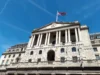
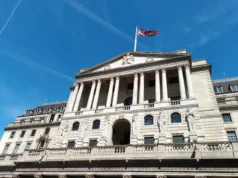
But hawala has been operating, continuously, for somewhere between eight hundred and twelve hundred years. The Bank of England was founded in 1694. If there is a newcomer in this story, it isn’t the man behind the counter in Deira.
So why, if this system is as primitive and dangerous as Western governments claim, does it keep winning?
The Machine
The mechanics are simple. A sender in Dubai — call him Ahmed — has a cousin in Karachi who needs $500. Ahmed walks into a Deira shopfront, hands over the equivalent in dirhams, and receives a code. The hawaladar — call him the broker — calls his counterpart in Karachi, another broker in a network built on years of relationship, and relays the code and the amount. Ahmed’s cousin walks to the Karachi broker, states the code, and receives the equivalent in Pakistani rupees. The transaction is complete.
No money crossed a border. A debt did.
The Karachi broker now holds a liability: he has paid out funds he hasn’t received. The Dubai broker holds the offsetting credit. At some point the two hawaladars settle. They might settle by reversing the flow — when money regularly moves both directions between two cities, the debts cancel. They might settle in gold. They might settle through trade goods: the Karachi broker imports fabric from the Dubai broker’s cousin, and the paper obligation dissolves into a shipment. In high-volume corridors the debts net down over weeks or months; settlement might happen once a quarter. The FATF identified this in its October 2013 report as the structurally distinguishing feature of the entire system: non-bank net settlement. Not the absence of records, not the use of cash — the fundamental mechanism of running obligations against each other and settling in whatever form is most efficient.
That efficiency is not accidental. It is the product of a trust infrastructure with teeth.
Schramm and Taube, writing in the International Review of Financial Analysis (Vol. 12, No. 4, 2003) — the foundational institutional economics paper on hawala — describe networks organized along kinship, clan, and village lines. Entry into the network requires existing relationships, vouching, reputation accumulated over time. Becoming a hawaladar is not a matter of registering a business and acquiring a license; it is a matter of being known. Default — absconding with funds, failing to honor a settlement obligation — doesn’t result in a lawsuit. It results in excommunication from the network. In contexts where the formal court system is absent, slow, or corrupt, that threat is close to absolute enforcement. The social cost of fraud, in a world where professional and personal identity are deeply intertwined with community standing, dwarfs whatever financial gain a single bad act might produce. The mechanism makes fraud structurally self-defeating. No quantitative study has documented fraud rates, because the system generates no data on which such a study could be based — but the structural argument doesn’t require one.
The Other Side of Trust

Structural trust is not moral cleanliness. The same mechanism that makes fraud among legitimate users essentially irrational makes hawala attractive to actors with legitimate standing within criminal networks — actors for whom community standing within a particular network is real, and for whom the formal financial system is genuinely hostile.

The UNODC report published in September 2023, "The Hawala System: Its operations and misuse by opiate traffickers and migrant smugglers," documented that 80–90% of hawala dealers in Kandahar and Helmand were involved in drug-related transfers. Helmand alone accounts for roughly $800 million in drug-related hawala annually. Herat between $300–500 million. These are not marginal numbers.

Edwina Thompson, in "Misplaced Blame: Islam, Terrorism and the Origins of Hawala" (Max Planck Yearbook of United Nations Law, Vol. 11, 2007), argued that post-9/11 literature collapsed a diverse financial ecosystem into a single threat narrative, and that evidence specifically linking hawala to terrorism financing was considerably thinner than the policy response assumed. Both things are true simultaneously: the UNODC data documents serious criminal exploitation; Thompson's critique documents serious analytical sloppiness. Acknowledging both is not fence-sitting. It is what honesty requires.

The section that follows is about the system's history and economics. It is not an exoneration. The drug trade in southern Afghanistan is real, the hawala networks serving it are real, and neither fact disappears because the formal financial system has its own extensive record of criminal facilitation.
The Original
Hawala appears in Islamic jurisprudential texts from the eighth century CE. The Abbasid Caliphate, which ruled from 750 to 1258 CE and stretched from North Africa to Central Asia, used suftaja — precursor instruments that functioned on the same debt-transfer logic — to facilitate trade across what was then the most sophisticated commercial network on earth. A merchant in Baghdad could transfer value to a counterpart in Samarkand without touching a coin. Schramm and Taube found documentary evidence of hawala use reaching to 1327 CE. The system was already old by then.
The South Asian strand is older still. The hundi — a bill of exchange instrument used throughout the Indian subcontinent — traces its precursors to the adesha described in Kautilya’s Arthashastra, the political economy treatise of the Mauryan period, roughly 321 to 185 BCE. Ali Ekber Cinar, in “Situating an Informal Funds Transfer System in Islamic Legal Theory: The Origin of Hawala Revisited” (darulfunun ilahiyat, 2022), noted that the origin debate is about which ancient system the modern hawala descends from — the Islamic or the South Asian strand, or both — not whether it is modern. No serious scholar is arguing that.
The Bank of England opened in 1694. The Bank of Amsterdam — generally credited as the world’s first central bank — in 1609. Hawala was centuries old when they opened.
The linguistic trace runs deep. The word “cheque” appears to derive from Arabic sakk — documented in the Encyclopaedia of Islam as a technical term of early Islamic financial usage — via Persian čak, meaning document, contract, deed. Suftaja bears a structural resemblance close enough that scholars have debated whether the Italian bill of exchange of the thirteenth century adapted Islamic models. Jared Rubin, in “Bills of Exchange, Interest Bans, and Impersonal Exchange in Islam and Christianity” (Explorations in Economic History, Vol. 47, No. 2, 2010), traced how Islamic and European bills diverged institutionally once European states began legalizing interest — a divergence that shaped different financial development paths, not a judgment about which path was more sophisticated at the origin.
The system now labeled “informal” predates the institutions that did the labeling. When Western financial regulators call hawala informal, they are not describing its organizational sophistication, its age, or its geographic reach. They are describing the fact that it was not registered by them.
The Linguistic Trail

Etymology carries argument. "Cheque" from sakk — a written obligation to pay — is documented in the Encyclopaedia of Islam and widely accepted by philologists. Suftaja as a precursor to the European bill of exchange is debated but taken seriously by economic historians including Abraham Udovitch and S.D. Goitein, whose work on the Cairo Geniza documents Islamic commercial instruments predating their European counterparts by centuries.

Jared Rubin's 2010 analysis tracks the institutional divergence: Islamic and European bills were structurally similar at origin, but European states' willingness to legalize interest drove the development of impersonal exchange — anonymous market transactions with strangers — in ways that Islamic finance, constrained by consistent interest prohibitions, did not. The Medici letters of credit, often cited as the foundation of modern European banking, operated in a world that had already absorbed Islamic financial concepts through trade contact.

West adapted the original, built new institutional architecture around it, then called the original "informal." The word describes authority, not antiquity.
The Numbers
A system with a thousand years of refinement had time to get very good at exactly one thing: moving value from one person to another, quickly and cheaply, across borders that formal banking treats as obstacles.
The numbers are not subtle.
Hawala fees in high-volume corridors run approximately 0.5 to 2 percent of the transfer value. The World Bank’s Remittance Prices Worldwide database, which surveys the cost of sending $200 across hundreds of corridors, recorded a global average of 6.49 percent in Q1 2025. Banks are the most expensive service type: 14.99 percent average in Q3 2025. The G20 set a target of getting the global average below 3 percent by 2030. The UN Sustainable Development Goals encode the same target in SDG 10.c. The current trajectory — roughly 0.3 percentage points of reduction per year — makes that target unlikely. Hawala is already there.
Speed: hawala transfers complete in hours, sometimes less, in high-volume corridors. A wire transfer through correspondent banking typically takes one to five business days. That gap matters most when the recipient needs money to buy food today, not on Thursday.
But the fee and speed comparisons assume the formal alternative exists. For hundreds of millions of people, it doesn’t.
Consider Somalia. Somalia has no Somali commercial bank that maintains a direct US dollar correspondent relationship with any major international bank. All dollar flows route through Kenya, Djibouti, or Turkey. A Somali wishing to receive a wire transfer needs a bank account — and the banking sector’s total assets amount to approximately 4.3 percent of GDP. Credit to the private sector is approximately 1.3 percent of GDP. These are not figures that describe a banking sector in the normal sense of the word. They describe a financial ghost.
Mobile money has changed daily transactions in Somalia — penetration is estimated at over 70 percent of adults, per the U.S. Department of Commerce — but international remittances still run through hawaladars. The formal correspondent banking infrastructure needed to connect Somalia to the global dollar system simply isn’t there.
Hawaladars handle approximately $2 billion in annual remittances to Somalia — roughly a quarter of the country’s entire GDP, according to the U.S. Department of Commerce. That isn’t hawala vs. a more expensive alternative. That is hawala vs. a service that doesn’t exist for most of the people who need it.
India received $129 billion in remittances in 2024 — the highest annual remittance inflow ever recorded for any country, per World Bank December 2024 estimates. Pakistan recorded $38.3 billion in FY2024–25, per the State Bank of Pakistan. These are the formal flows. Informal flows — hundi in both corridors — persist alongside them not because users are hiding anything, but because hawala offers a better product. Same-day settlement. Fees that don’t swallow a week’s income.
The formal system is not losing a competition. It mostly isn’t showing up to one.
The Withdrawal
Which raises the question that the formal system’s defenders never quite answer: why haven’t the banks competed?
The answer requires distinguishing between competitive failure and deliberate forfeiture. Banks didn’t fail to build cost-effective remittance corridors to Somalia or rural Pakistan or Caribbean island states. They decided those corridors weren’t worth building. The arithmetic was simple, if you were a compliance officer at a major Western bank in the 2010s: modest transaction fees plus outsized anti-money-laundering and counter-terrorism-financing exposure, in corridors serving populations that lacked political representation in any jurisdiction that mattered, equalled not worth maintaining.
This is called de-risking. The polite version of the story is that it was a rational response to the regulatory architecture created after 9/11 — the USA PATRIOT Act in 2001 and the FATF Special Recommendations on Terrorist Financing in 2001, revised in 2012. FATF Recommendation 13 made correspondent banks responsible for their counterparts’ AML/CFT standards. If Bank A in New York maintains a relationship with Bank B in Mogadishu, Bank A is now liable for Bank B’s compliance framework. In countries where banking infrastructure barely exists, that liability is unquantifiable. So Bank A terminates the relationship. Repeat across the Caribbean, Pacific Islands, sub-Saharan Africa, and parts of Asia. Repeat a few hundred times.
The IMF documented this process explicitly in Staff Discussion Note SDN/16/06, “The Withdrawal of Correspondent Banking Relationships: A Case for Policy Action,” published in June 2016. Caribbean banking sectors, Pacific island economies, sub-Saharan African corridors — systematic retreat. The World Bank documented the same dynamic: de-risking may “threaten progress” on financial inclusion, and pushing transactions out of the regulated system drives them into “more opaque, informal channels” that become “harder to monitor.” The policy designed to increase transparency produced its inverse. The cost was borne entirely by populations with no representation in the decision.
Somalia is the extreme case, but it is not the only one.
The Dahabshiil case made the logic concrete. Dahabshiil Transfer Services — the largest Somali money transfer operator, with more than 2,000 employees across 144 countries — had been a Barclays client for more than fifteen years. Annually, it transferred approximately £177 million on behalf of individual customers to Somalia. In May 2013, Barclays wrote without prior warning to inform Dahabshiil that it would terminate banking facilities within two months. The reason cited was AML/CFT risk.
Dahabshiil applied for an injunction. On 5 November 2013, Mr Justice Henderson, in Dahabshiil Transfer Services Ltd v Barclays Bank Plc [2013] EWHC 3379 (Ch), granted the interim injunction. His judgment described Barclays’ decision as “unfair.” The case settled before reaching trial; terms were not made public. What Barclays cited was not evidence of AML/CFT violations at any meaningful scale. It was the cost of compliance review in a corridor that Barclays had decided was unprofitable. The risk framing provided the vocabulary. The arithmetic made the decision.
Pakistan runs a different order of magnitude. It has a functioning central bank, a regulated banking sector, a sovereign credit rating. Pakistan was placed on the FATF grey list in June 2018 and removed in October 2022 — four years during which multiple Western correspondent banks reduced or terminated relationships with Pakistani money service businesses, regardless of whether those businesses had demonstrated compliance failures. Proximity to a grey list designation was enough. The hundi system — Pakistan’s version of hawala — carries an estimated $5–7 billion in annual unofficial flows according to Pakistani government estimates. The UAE-Pakistan corridor alone: the UAE is Pakistan’s second-largest remittance source — contributing roughly a sixth of total formal inflows in FY2024, per IOM tracking data. Hundi persists in that corridor not because of regulatory arbitrage or criminal intent, but because same-day settlement at sub-2-percent fees beats the formal alternative on every metric users care about.
The regulatory framework presupposes functioning banking infrastructure. Applying it uniformly to countries without that infrastructure is a category error — one that was pointed out at the time and ignored. Nikos Passas of Northeastern University, who coined the term “informal value transfer systems” in his 1999 study for the Netherlands Ministry of Justice, documented in a 2003 study for the National Institute of Justice that post-9/11 hawala literature “lacks depth and is replete with inaccuracies.” That literature shaped the policy. The policy produced the outcome it claimed to prevent.
The de-risking framework didn’t push hawala into darkness. Hawala was already operating in the light, by the standards of the communities that use it. What de-risking did was remove the formal alternative from markets where it had barely existed, and then treat the continued operation of hawala as evidence that more regulation was needed. The circularity would be comical if the consequences weren’t real: families paying higher fees for slower transfers, aid organizations unable to move money into crisis zones, a Central Bank of Somalia governor testifying about the systemic costs of correspondent bank withdrawal to an audience of development economists who mostly agreed and then went back to their offices.
Banks chose to de-bank entire populations. Not through malice — the compliance officers were doing their jobs, the risk committees were applying their frameworks, the shareholder returns were being protected. But these were choices. The language of risk and regulation made them sound like physics.
What the word means
Back to Deira. The shopfront is still there. The phone is still ringing. The man behind the counter is completing a transaction that will take hours and cost the sender less than a dollar in fees on a $200 transfer, connecting two people across a border without correspondent banks, wire infrastructure, deposit insurance, or the participation of any institution that a Western regulator has ever licensed.
You started reading this asking why an informal, primitive system persists despite the evident advantages of modern banking. But the question had the word order wrong.
The system labeled informal is older, faster, cheaper, and more present in the places that need it than the system that did the labeling. It is not a workaround for missing infrastructure. For hundreds of millions of people, it is the infrastructure — the only one that actually shows up.
“Formal” and “informal” are not descriptions of organizational sophistication. They are not descriptions of reliability, efficiency, or institutional age. They are descriptions of who registered what, and who got to name the thing after they’d registered it. The Bank of England named itself formal in 1694. The system it was calling informal had been running, continuously, for at least five hundred years before that — and continued running for three hundred and thirty years after, and is running right now, faster and cheaper than the institution that labeled it primitive.
The word “informal” describes a relationship to authority. It doesn’t describe capacity.
What the formal system actually is — younger, more expensive, slower, dependent on infrastructure that exists mainly in rich countries, and now systematically absent from the places with the greatest need — that’s visible if you look at it from Deira.
The man behind the counter isn’t waiting for banking to arrive. He’s already there.
Gen AI Disclaimer
Some contents of this page were generated and/or edited with the help of a Generative AI.
Media
Eslam Mohammed Abdelmaksoud – Pexels
Key Sources and References
El Qorchi, Mohammed, Samuel Munzele Maimbo, and John F. Wilson. Informal Funds Transfer Systems: An Analysis of the Informal Hawala System. IMF Occasional Paper No. 222. International Monetary Fund, 2003.
Schramm, Matthias, and Markus Taube. “Evolution and Institutional Foundation of the Hawala Financial System.” International Review of Financial Analysis, Vol. 12, No. 4, 2003, pp. 405–420.
Financial Action Task Force (FATF). The Role of Hawala and Other Similar Service Providers in Money Laundering and Terrorist Financing. FATF Report, October 2013.
United Nations Office on Drugs and Crime (UNODC). The Hawala System: Its Operations and Misuse by Opiate Traffickers and Migrant Smugglers. September 2023.
Thompson, Edwina A. “Misplaced Blame: Islam, Terrorism and the Origins of Hawala.” Max Planck Yearbook of United Nations Law, Vol. 11, 2007, pp. 279–305.
Cinar, Ali Ekber. “Situating an Informal Funds Transfer System in Islamic Legal Theory: The Origin of Hawala Revisited.” darulfunun ilahiyat, Vol. 33, No. 1, 2022.
Rubin, Jared. “Bills of Exchange, Interest Bans, and Impersonal Exchange in Islam and Christianity.” Explorations in Economic History, Vol. 47, No. 2, 2010, pp. 213–227.
World Bank. Remittance Prices Worldwide, Issue 53 (Q1 2025) and Issue 54 (Q3 2025). World Bank Group.
International Monetary Fund. The Withdrawal of Correspondent Banking Relationships: A Case for Policy Action. IMF Staff Discussion Note SDN/16/06, June 2016.
World Bank. “De-risking in the Financial Sector.” Brief. October 7, 2016.
Dahabshiil Transfer Services Ltd v Barclays Bank Plc [2013] EWHC 3379 (Ch), 5 November 2013.
Passas, Nikos. Informal Value Transfer Systems and Criminal Organizations: A Study into So-Called Underground Banking Networks. Netherlands Ministry of Justice / WODC, 1999.
Passas, Nikos. Informal Value Transfer Systems, Terrorism and Money Laundering. National Institute of Justice, NCJ 208301, November 2003.
World Bank. Migration and Development Brief: Remittances Brave Global Headwinds. December 2024.
State Bank of Pakistan. Press Release on Workers’ Remittances, July 2025.
International Organization for Migration (IOM). Displacement Tracking Matrix: Remittance Inflows to Pakistan. IOM, 2024.
U.S. Department of Commerce, International Trade Administration. Somalia — Banking Services and Financial Services. Country Commercial Guide, 2025.
Encyclopaedia of Islam, Second Edition. Entry: Ṣakk. Brill.


 English
  Español
  Français
  Deutsch
  日本語
日本語  Polski
  Português do Brasil
  العربية
  Bahasa Indonesia
  Italiano
  한국어
한국어