Last updated: · 14 min read
In brief
In one measurement, cargo for Uganda, Rwanda and Burundi sat an average of 25 days at Dar es Salaam, five more than Tanzania’s own. That is the landlocked penalty’s first charge: someone else’s roads, ports and politics stand between you and the sea. Yet Luxembourg has no coast and a GDP per head of about $138,000. The difference is the neighbours. Inside the EU single market, transit friction is designed away, while Zambia or Chad depend on poor neighbours with weak roads and border posts. For the 32 landlocked developing countries, the fix lies mostly beyond their governments’ reach.
Contents
The container arrives at Dar es Salaam and sits. In one detailed measurement published in 2007, goods bound for Uganda, Rwanda, and Burundi spent an average of 25 days in this port — five days longer than cargo destined for Tanzania itself. It is the opening charge on what economists call the landlocked penalty: the systematic additional cost imposed on countries that cannot reach the ocean without crossing someone else’s territory first.
Zambia’s freight uses the same port. From Dar es Salaam it crosses Tanzania all the way to the border at Tunduma–Nakonde before it reaches Zambian soil; the TAZARA railway alone runs 1,860 kilometres from the port to Kapiri Mposhi, north of Lusaka. For that first leg, everything depends on Tanzania: its roads, its port, its customs posts, its politics. A Zambian importer pays for freight and also for the quality of Tanzanian infrastructure, the reliability of Tanzanian border officials, and whatever the current state of bilateral relations happens to be.
Luxembourg has no coast; its trucks reach the North Sea ports of Antwerp, Rotterdam, and Zeebrugge within about 400 kilometres. Its GDP per capita was about $138,000 in 2024, and among sovereign states only the micro-states Monaco and Liechtenstein rank higher.
Switzerland and Austria are landlocked too, and for all three the penalty that makes Zambia’s importers pay more for the same goods effectively does not exist. The missing coastline cannot by itself explain why Zambia’s outcome is so different.
The Price in Numbers
The world has 32 landlocked developing countries, home to more than 500 million people. Sixteen of them are classified by the United Nations as among the world’s least developed nations.
Over trade between 2005 and 2014, landlocked countries are estimated to export between 27 and 41 percent less than otherwise comparable coastal countries, and among developing countries specifically the penalty exceeded 40 percent. The comparison controls for income, distance to trading partners, country size and a range of other variables, which leaves the gap with the landlocked condition itself.
The investment picture is bleaker. Landlocked developing countries, home to about 7 percent of humanity, attract only around 1.5 percent of global foreign direct investment flows. Global manufacturers avoid supply chains routed through multiple countries with unpredictable border times. An assembly plant in a landlocked developing country that depends on transit through two neighbours with variable governance is a liability that does not appear in a coastal competitor’s cost model.
By one 1999 estimate, temperate regions within 100 kilometres of the sea or a sea-navigable river accounted for just 8 percent of the world’s inhabited land and 23 percent of its population, yet 53 percent of world GDP. Sachs and others have since argued that geographic isolation turns into persistent poverty traps in landlocked developing countries, and that the trap is very hard to escape without specific structural advantages.
The landlocked penalty is concentrated almost entirely in developing countries. High-income landlocked countries such as Luxembourg, Switzerland, Austria and Liechtenstein show essentially no penalty at all. The geographic condition is identical and the economic outcomes are not, which means geography alone does not decide the outcome.
The geography-vs-institutions debate

Jeffrey Sachs argues that geography directly shapes economic outcomes through trade costs, disease burden, and agricultural productivity — that the map loads the dice before any policy is chosen. Daron Acemoglu and James Robinson argue that geography matters mainly by shaping colonial institutions, which then persist and determine outcomes long after colonialism ends. The two positions imply different policy responses, and the dispute has generated decades of empirical jousting.

The evidence in this article is consistent with both, in a way neither camp fully captures. Transit dependency is a geographic fact: landlocked countries cannot reach the ocean without crossing other countries' territory. But whether that fact produces poverty depends almost entirely on institutions, specifically those of transit neighbours and regional bodies as well as the landlocked country's own. Geography sets the constraint, and institutional capacity determines whether it binds. That is how Switzerland and Chad can both be landlocked while only Chad is caught in a development trap.
The Stack — How Transit Dependency Works
Paul Collier’s diagnosis is that coastal countries can sell to the whole world, while landlocked countries are, in practice, tied to their neighbours. This is the right diagnosis, but it understates the problem: landlocked countries depend on their neighbours’ cooperation for access to every other market on earth. That dependence has four layers, and the layers compound.
The first is physical. Overland freight costs vastly more per tonne-kilometre than sea freight. In the same mid-2000s corridor measurements, a Kyrgyz truck entering Uzbekistan could pay up to $700 to cross a single border, a quarter of it in unofficial payments — bribes, facilitation fees, whatever the local term happens to be. In West Africa, roadblocks can appear every 30 kilometres or even more often, adding around ten percent to hauliers’ overheads. Trucking operators in landlocked Zambia were paying as much as 50 percent more for fuel than their counterparts elsewhere in the region.
The second layer is time unpredictability. For export manufacturing, logistics predictability matters as much as logistics cost. Just-in-time production is impossible when goods can take four to six weeks to reach a landlocked country from the coast, depending on factors the manufacturer cannot control. The five extra days that cargo for Uganda, Rwanda, and Burundi spent at Dar es Salaam in that measurement were only an average; uncertainty at the port carries through the rest of the journey, and the delays are set by another country’s port management.
The third layer is political. A landlocked country’s access to global markets depends on the political relationship between itself and every country it transits through. When that relationship deteriorates, the transit neighbour can close the road and trade stops, whatever the landlocked country itself has done. Uzbekistan’s border restrictions in the 1990s and 2000s severely disrupted Kyrgyz and Tajik commerce even when those countries’ own policies were functioning.
The fourth layer is compound poverty — the one Collier’s formulation captures best. Landlocked developing countries are almost always surrounded by other developing countries. Their transit neighbours have underfunded roads, underpaid customs officials, and political instability of their own, so the poverty of the whole region compounds the cost of being landlocked. Switzerland’s transit neighbours are Germany, France, Austria, and Italy. Chad’s lifeline to the sea runs through Cameroon: N’Djamena sits 2,000 kilometres from the port of Douala, and in 2006 the rail-and-road journey took five weeks.
The doubly landlocked case shows the pattern most clearly. Uzbekistan and Liechtenstein are the only two countries in the world that must cross at least two countries to reach any ocean port. Liechtenstein, in a customs union with Switzerland since 1923 and inside the EU single market through the European Economic Area since 1995, had a GDP per capita of about $220,000 in 2024, the highest of any landlocked country on earth. Uzbekistan shares the geography but not the neighbours: ringed by Central Asian states with their own transit barriers, it faces the stacked mechanism twice over.
The European Dissolve
Part of the explanation for Luxembourg’s $138,000 GDP per capita is what its trucks do not have to do. They pass no customs posts and pay no unofficial fees between Luxembourg and Antwerp, and no one inspects them at national borders that have been, for legal purposes, abolished.
For a landlocked country, the EU single market designs transit friction away. Luxembourg is as landlocked on the map as Zambia, but fifty years of deliberate institutional construction have removed the transit problem that gives landlockedness its economic cost.
Switzerland is not an EU member, but it has concluded more than 120 agreements with the EU, including one on land transport, and it belongs to the Schengen area. Because Switzerland is outside the EU customs union, goods still clear customs at its borders — but the procedures are streamlined enough that trucks move between Switzerland, Germany, France, and Italy with a fraction of the friction a Central Asian or African border imposes. The legal structure differs; the practical result comes close.
What both cases share is collective institutional quality: both are embedded in a regional integration framework among wealthy, capable states that eliminates transit friction at the border. That is narrower than “good institutions”, a phrase that in development economics tends to mean nothing specific. The framework required neighbours who were willing, economically capable, and stable enough to participate in building it over decades, so it was never the product of one country’s good decisions.
Luxembourg’s wealth also reflects a structural feature of its economy that makes geography secondary: its primary exports are financial instruments, regulatory access, and administrative functions. The European Court of Justice sits in Luxembourg. Major investment funds are domiciled there. Finance, including banks, investment funds, insurers, and the legal and advisory firms that serve them, generates about 30 percent of Luxembourg’s economic output. A port is irrelevant to all of this. The geographic constraint, which always bears on physical trade, dissolves when physical trade is not your primary business.
Switzerland demonstrates the same logic at larger scale. Roche and Novartis, both headquartered in Basel, anchor a chemical and pharmaceutical complex that accounts for roughly half of Switzerland’s total exports. Financial services in Zurich and Geneva manage assets worth trillions of dollars. MSC, the world’s largest container shipping company, is run from Geneva; its business is coordinating the movement of physical goods around the world, but the value it creates is informational, and producing it takes a legal system and a phone line. The absence of a Swiss coastline is operationally irrelevant to a company that owns the ships.
Austria adds a geographic advantage on top of the institutional solution: the Danube, linked to the Rhine via the Main-Danube Canal, gives it effective river access to both the Black Sea and the North Sea. But the river is a bonus layered on EU membership, and the essential mechanism remains political.
None of the three could have achieved this outcome alone, through better domestic policy. The solution required the cooperation of wealthy neighbours willing to build, over half a century, an integration framework that abolished the transit problem. That framework does not exist in sub-Saharan Africa, Central Asia, or South Asia at comparable depth or income level.
The doubly landlocked paradox

Liechtenstein, with a population of about 41,000, is simultaneously the world's richest landlocked country and one of only two doubly landlocked countries on earth: both of its neighbours, Switzerland and Austria, are themselves landlocked, so its goods must cross at least two borders to reach the sea.

Liechtenstein operates within a currency union with Switzerland and uses Swiss customs controls at its external frontiers, but reaches the EU single market through its own EEA membership. Switzerland is not in the EEA — Swiss voters rejected it in a referendum, and Switzerland instead relies on bilateral agreements with Brussels. Its economy runs on precision manufacturing, financial services, and a corporate registration industry.Botswana and the Limits of the Lesson
In September 1966, Botswana became independent. It was one of the poorest countries in the world. It had 22 university graduates, 12 kilometres of paved road, and a GDP per capita of under $90. It was landlocked, bordered by apartheid South Africa, Rhodesia before it became Zimbabwe, and South West Africa before it became Namibia — three territories whose political stability and commercial reliability could not be assumed.
Within a year, diamond-bearing kimberlite pipes were identified near Orapa. The Orapa mine opened in 1971. Jwaneng, which would become one of the richest diamond mines on earth, was located in 1972. By the time the diamond sector was fully operational, Botswana faced the decision that landlocked resource-rich countries face repeatedly: who captures the rents?
The answer, in Botswana’s case, was the state. The Mines and Minerals Act of 1967 vested subsoil mineral rights in the national government rather than allowing tribal or individual capture. The partnership with De Beers (Debswana, today a 50/50 joint venture) channelled royalties through the national budget rather than allowing raw wealth to be exported. Underneath it, Acemoglu, Johnson, and Robinson argue, lay an older institutional foundation: pre-colonial kgotla assemblies that constrained chiefly authority, a tradition of inclusive decision-making that survived into the post-independence state. Diamonds provided the rents. Capable institutions ensured those rents funded infrastructure, education, and health rather than private accounts elsewhere.
Diamonds have historically supplied about three-quarters of Botswana’s foreign-exchange earnings and about a third of government revenue. The slump has cut deep into that: in the government’s 2026 budget, all mineral revenue together came to only about a sixth of total revenue and grants.
In the second quarter of 2025, Botswana’s diamond output fell 43 percent — the steepest quarterly decline in the country’s modern mining history. Lab-grown diamonds, once a novelty, made up roughly 20 percent of global diamond sales by late 2025 and sold for up to 80 percent less than natural stones. The economy shrank for a second straight year: GDP fell 2.8 percent in 2024 and another 0.7 percent in 2025.
The Botswana institutions story is true, as far as it goes. The Mines and Minerals Act and the Debswana structure were sound, and the kgotla tradition was real. But the institutions story has always been, at its core, about how well Botswana managed a windfall. It says nothing about whether the windfall itself was replicable.
It was not: Botswana happened to sit on one of the world’s highest concentrations of gem-quality diamonds in a geological formation that made large-scale extraction economically viable. Zambia had copper. The DRC had coltan, cobalt, and gold. Neither produced the same outcome — partly for institutional reasons, but also because of commodity price volatility, colonial-era extraction structures, and post-independence political dynamics that Botswana’s particular history happened to avoid. British colonial neglect of Botswana, which left its pre-colonial institutions largely intact, is not a model for replication.
And even Botswana’s success has a ceiling. After fifty years of diamond revenues and real institutional quality, the country has not diversified out of resource dependence, has not become a manufacturing exporter, and faces the landlocked constraint in agriculture and industry as acutely as any comparable economy.
The diamonds deferred the penalty in sectors where rent could substitute for trade competitiveness, but in manufacturing and agriculture the geographic constraint has never lifted, and the lab-grown market is now cutting into the revenue that did the deferring.
Zambia: the counterfactual

Zambia reached independence in 1964 far ahead of Botswana. It already had working copper mines, concentrators and smelters, it produced more than 12 percent of the world's copper, and in 1966 its GDP per capita of about $325 was more than three times Botswana's, at a time when Botswana's diamonds had not yet been found. Both countries were landlocked and surrounded by unstable neighbours. Zambia started with the richer economy, and it is Zambia that fell behind.

Zambia took a 51 percent stake in its copper mines under the 1969 Matero reforms and completed the takeover by 1973 — just in time for the copper price collapse of the mid-1970s, which hit with no reserve cushion. In 1982 the state merged its two mining companies into Zambia Consolidated Copper Mines, which was milked to fund government programmes and starved of investment. Economic decline continued through the 1990s, when per capita income was lower than at independence. Recovery has been partial.

Atsushi Iimi put the question to cross-country data. He concluded that governance, meaning the quality of regulation and the control of corruption, determines whether resource wealth turns into growth, and that Botswana is the textbook case of it doing so. By that measure, the geology did not give Botswana its advantage; what happened to the money after extraction did, along with the institutional capacity that ensured it.
What Can Be Done
The European solution, deep regional integration among wealthy, capable neighbours, is the only intervention that eliminates the transit dependency problem rather than mitigating it at the margin. The analogues in Africa exist on paper. SADC, COMESA, and the African Continental Free Trade Area have produced real progress: simplified transit documents, harmonised customs procedures, some reduction in the number of stamps required to move a truck across a border.
But the European case shows that the binding constraint is the income level of the neighbours. Swiss transit works because Germany and France have excellent roads, functioning customs technology, and stable governance. A transit corridor between Zambia and Tanzania is only as good as the weakest point in the chain — in practice, roads that wash out in the wet season, customs systems that run on underpaid officials with discretionary power, and political relationships that have historically been variable. European integration was built on infrastructure and income levels that African partners do not yet have, and which took Europe decades to accumulate before the legal framework had any practical effect.
The Middle Corridor, the multimodal route from China through Kazakhstan and across the Caspian to Azerbaijan, Georgia, and Turkey, has drawn infrastructure investment into Central Asian transit. Kazakhstan’s oil revenues have paid for new logistics capacity, and Russia’s war in Ukraine has pushed more cargo onto this alternative. But the corridor primarily benefits resource exporters, not landlocked manufacturing or agricultural economies, and its geopolitical foundations remain fragile.
Institutional reform, such as reducing corruption at borders, streamlining customs documentation and improving trade facilitation, can reduce the transit penalty, within limits. The ceiling is that reform has to happen in the transit countries as well as in the landlocked country itself. A government that transforms its own customs procedures gains nothing if the bottleneck is two borders away, where different officials, different incentives, and different political accountability apply. No government can solve that collective action problem alone.
The world’s landlocked countries divide into roughly two groups. The first, the European cases inside the EU and EFTA framework (from Luxembourg and Austria to Switzerland and Czechia), operates among wealthy, capable neighbours whose common rules effectively dissolve the transit problem. The second, the 32 landlocked developing countries (from Zambia, Bolivia, Kyrgyzstan, Chad, Mongolia, and Nepal to some two dozen others), does not.
For the second group, the available interventions reduce the penalty at the margin without removing it. What would remove it lies mostly outside a landlocked government’s reach: the income level and institutional quality of its neighbours, the regional infrastructure stock, and the degree of regional economic integration, all of which are either very slow to change or largely outside the landlocked country’s control.
That container at Dar es Salaam waits on governance decisions made by officials in another country, whatever the policies of the country it is bound for. Most of the landlocked world has neither Europe’s wealthy, willing neighbours nor a diamond field found within a year of independence.
Related articles
- The hidden cost of being an island nation
- The remittance economy: how migrants send home more money than all foreign aid combined — and what that does to the countries receiving it
- The underground economy that sustains the world’s poorest countries
Further reading
As an Amazon Associate, Eikleaf earns from qualifying purchases. The book links below are affiliate links: if you buy through them, we may earn a small commission at no extra cost to you.
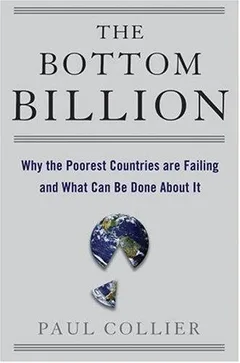 The Bottom Billion: Why the Poorest Countries Are Failing and What Can Be Done About ItExplains how landlocked geography, poor neighbours, resource dependence and weak governance combine to obstruct development.
 Why Nations Fail: The Origins of Power, Prosperity, and PovertyDevelops the institutional explanation for national prosperity, including why Botswana diverged from poorer African neighbours.
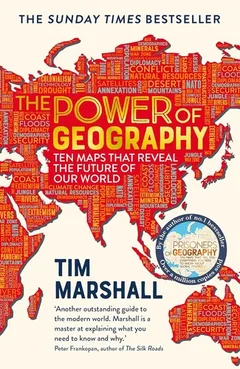 The Power of Geography: Ten Maps That Reveal the Future of Our WorldUses Ethiopia and the Sahel to explain how access routes, neighbours and physical geography constrain states’ economic and political choices.
 Outside the Box: How Globalization Changed from Moving Stuff to Spreading IdeasTraces how transport costs, trade rules and supply-chain risks determine access to global markets, then examines the shift toward services and ideas.
Recommended videos
 18:42Why Botswana Got So WealthyWendover on how landlocked Botswana became rich, one of the exceptions the article examines.
 54:12How Africa’s Geography Traps it in Endless PovertyRealLifeLore on how geography, including landlocked interiors and poor river access, holds African economies back.
 15:00Does Switzerland Deserve to Be the Richest Economy in the World?Economics Explained on landlocked Switzerland’s wealth and how it got there.
Cite this article
Lena Martin. “Why landlocked countries are systematically poorer — and the exceptions that prove the rule.” Eikleaf, 13 May 2026, updated 2 November 2026. https://www.eikleaf.com/why-landlocked-countries-are-systematically-poorer-and-the-exceptions-that-prove-the-rule/
Gen AI Disclaimer
Some contents of this page were generated and/or edited with the help of a Generative AI.
Media
Key Sources and References
Moore, Alexander J. (2018). “Quantifying the Landlocked Trade Penalty using Structural Gravity.” Journal of Quantitative Economics, vol. 16, no. 3, pp. 769-786. DOI: 10.1007/s40953-017-0106-3. https://doi.org/10.1007/s40953-017-0106-3
Faye, Michael L., John W. McArthur, Jeffrey D. Sachs, and Thomas Snow (2004). “The Challenges Facing Landlocked Developing Countries.” Journal of Human Development, vol. 5, no. 1, pp. 31-68. DOI: 10.1080/14649880310001660201.
Gallup, John Luke, Jeffrey D. Sachs, and Andrew D. Mellinger (1999). “Geography and Economic Development.” International Regional Science Review, vol. 22, no. 2, pp. 179-232. https://www.jeffsachs.org/s/Sachs-et-al-1999_Geography-and-Economic-Development.pdf
Mellinger, Andrew D., Jeffrey D. Sachs, and John L. Gallup (1999). “Climate, Water Navigability, and Economic Development.” CID Working Paper No. 24, Center for International Development, Harvard University. https://econpapers.repec.org/RePEc:wop:cidhav:24
Collier, Paul (2007). The Bottom Billion: Why the Poorest Countries Are Failing and What Can Be Done About It. Oxford University Press.
Acemoglu, Daron, Simon Johnson, and James A. Robinson (2002). “An African Success Story: Botswana.” CEPR Discussion Paper No. 3219. Published in Dani Rodrik (ed.), In Search of Prosperity, Princeton University Press, 2003. https://voices.uchicago.edu/jamesrobinson/files/2018/06/jr_africansuccess_0-11jzsp6.pdf
Acemoglu, Daron and James A. Robinson (2012). Why Nations Fail: The Origins of Power, Prosperity, and Poverty. Crown Publishers, New York.
Iimi, Atsushi (2006). “Did Botswana Escape from the Resource Curse?” IMF Working Paper WP/06/138. https://www.imf.org/external/pubs/ft/wp/2006/wp06138.pdf
Arvis, Jean-François; Raballand, Gaël; and Marteau, Jean-François (2010). The Cost of Being Landlocked: Logistics Costs and Supply Chain Reliability. World Bank, Washington D.C.
World Bank (2008). “Landlocked Countries: Higher Transport Costs, Delays, Less Trade.” World Bank Feature Story, June 16, 2008 (archived copy). http://web.archive.org/web/20260604141843/https://www.worldbank.org/en/news/feature/2008/06/16/landlocked-countries-higher-transport-costs-delays-less-trade
UN-OHRLLS (Office of the High Representative for the Least Developed Countries, Landlocked Developing Countries and Small Island Developing States). “About Landlocked Developing Countries” and “List of LLDCs.” United Nations. https://www.un.org/ohrlls/content/about-landlocked-developing-countries · https://www.un.org/ohrlls/content/list-lldcs
UNCTAD (UN Trade and Development). “Landlocked developing countries.” https://unctad.org/topic/landlocked-developing-countries
UNCTAD (2018). “Foreign direct investment to most vulnerable countries remains fragile.” World Investment Report 2018 press release (archived copy). http://web.archive.org/web/20260117110030/https://unctad.org/press-material/wir-foreign-direct-investment-most-vulnerable-countries-remains-fragile-says-united
UNCTAD (2025, June 19). “Global foreign direct investment falls for second consecutive year.” World Investment Report 2025 press release. https://etradeforall.org/news/global-foreign-direct-investment-falls-second-consecutive-year-posing-acute-challenges
World Bank Open Data (2024). GDP per capita, current US$ — Luxembourg, Liechtenstein, Botswana, Zambia; Population, total. https://data.worldbank.org/indicator/NY.GDP.PCAP.CD?locations=LU · https://data.worldbank.org/indicator/NY.GDP.PCAP.CD?locations=LI · https://data.worldbank.org/indicator/NY.GDP.PCAP.CD?locations=BW-ZM · https://data.worldbank.org/indicator/SP.POP.TOTL
The Citizen (Tanzania). “Tazara fails to meet its targets despite huge business potential.” https://www.thecitizen.co.tz/tanzania/news/national/tazara-fails-to-meet-its-targets-despite-huge-business-potential-2715652
Luxembourg Logistics (Government of Luxembourg). “European road connectivity.” https://logistics.public.lu/en/why-luxembourg/high-connectivity/european-road-connectivity.html
Swiss Federal Council (2025). “Switzerland and the EU: better and more predictable relations.” https://www.admin.ch/gov/en/start/documentation/swisseurelations.html
About Switzerland (Federal Department of Foreign Affairs). “Chemical and pharmaceutical industry.” https://www.aboutswitzerland.eda.admin.ch/en/chemical-and-pharmaceutical-industry
MSC Group (2025). “About the MSC Group: Pioneers in Global Logistics.” https://www.mscgroup.com/en/about-us
Luxembourg for Finance (2025). “State of the Financial Sector 2025.” https://lff.foleon.com/brochures/state-of-the-financial-sector-2025/economic-role
Debswana. “Our history.” https://www.debswana.com/about-us/our-history/
Fortune (2025, November 29). “Lab-grown diamonds are crushing this African economy that was built on natural stones.” https://fortune.com/2025/11/29/lab-grown-diamonds-african-economy-botswan-synthetic-vs-natural-stones/
Reuters (2026, March 31). “Mining slump a major reason for Botswana’s shrinking economy.” Via BusinessDay. https://www.businessday.co.za/world/africa/2026-03-31-mining-slump-a-major-reason-for-botswanas-shrinking-economy/
Republic of Botswana, Ministry of Finance (2026, February 9). “2026 Budget Speech,” paragraphs 125–127. https://bankofbotswana.bw/sites/default/files/publications/2026%20Budget%20Speech.pdf
Sikamo, J., A. Mwanza, and C. Mweemba (2016). “Copper mining in Zambia – history and future.” Journal of the Southern African Institute of Mining and Metallurgy 116(6). DOI: 10.17159/2411-9717/2016/v116n6a1. https://miningforzambia.com/wp-content/uploads/2016/11/Copper_Mining_in_Zambia_history_and_future_SAIMM-1.pdf
World Bank (2023). “Middle Trade and Transport Corridor.” https://www.worldbank.org/en/region/eca/publication/middle-trade-and-transport-corridor