Last updated: · 16 min read
In brief
On Exmoor, Wimbleball reservoir dropped so far that Bessom Bridge became visible in it. The reservoir serves 390,000 people and was down to 13% full by late October. The weather made the drought. Whether it reaches the tap depends on the margin. Even in a wetter year, most supply areas held less spare water than planned, and leaks still lose nearly one litre in five. Refilling Wimbleball now depends on a wet winter raising the Exe high enough to pump water back up.
Contents
A bridge in the reservoir
In early October, as the water in Wimbleball reservoir on Exmoor kept dropping, a structure called Bessom Bridge became visible in it. The Environment Agency put the picture on the notice it published on 8 October. The notice explained that six days earlier the Agency had granted South West Water a drought permit for the reservoir, and the permit is a small lesson in how England’s water moves.
Below its dam, Wimbleball normally sends a steady “compensation flow” into the River Haddeo, a guaranteed release meant to keep the small river below the dam alive. The permit lets the company pause that flow, but only while it releases at least the same volume of water further downstream to keep up the River Exe, where water is taken out for public supply. In effect, one release does the work that two would normally do, and less water leaves the reservoir. The Agency says this will help conserve what is left in Wimbleball, and the permit comes with conditions meant to protect both rivers and the wildlife in them.
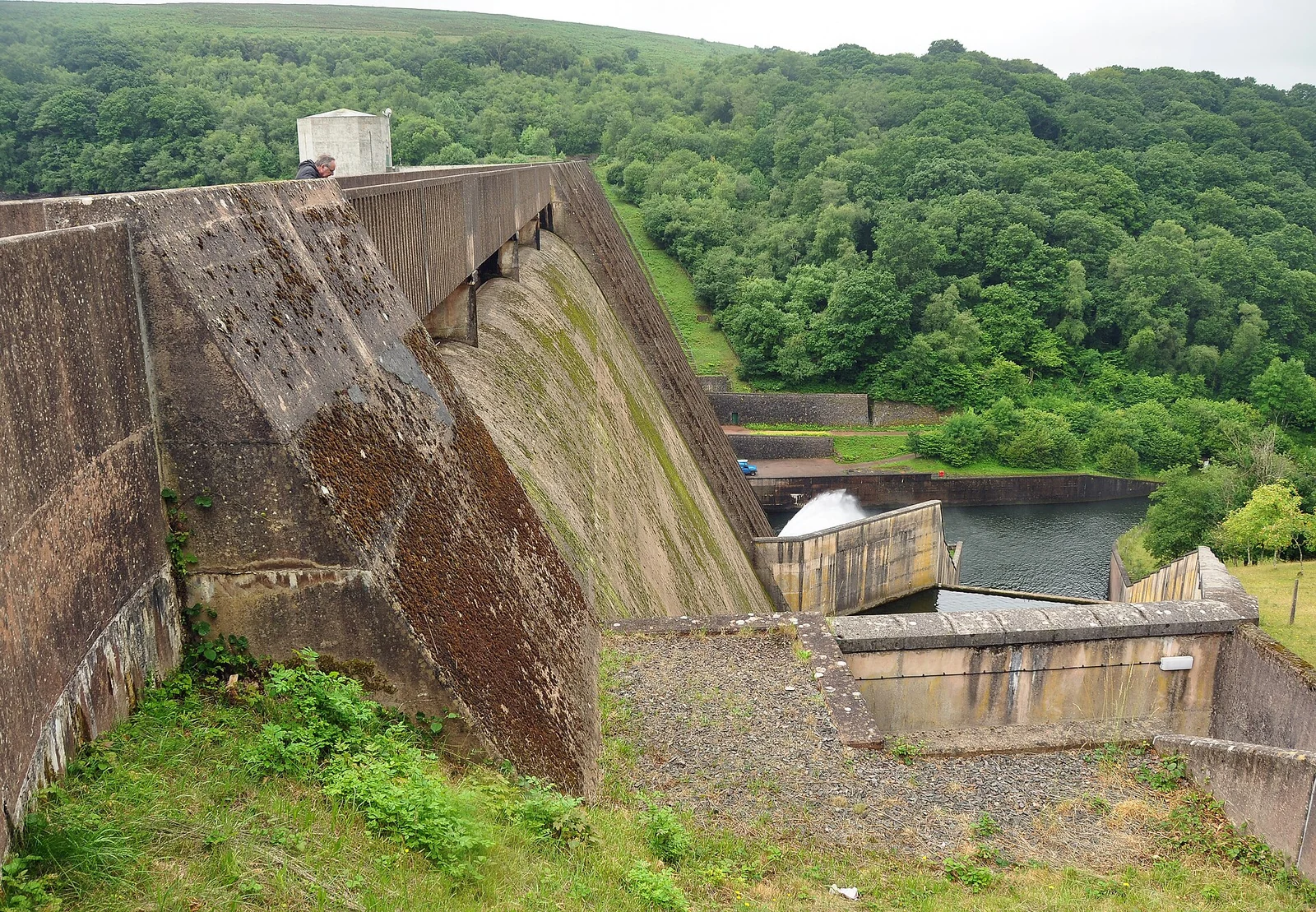
South West Water’s share of Wimbleball’s water reaches taps by way of a river. When the Exe falls below a set threshold, South West Water has to release water from the reservoir so that its treatment works at Pynes and Allers can go on drawing from the river. The Agency says the reservoir serves 390,000 people. It was 18% full on 4 October, against 30% a year earlier. By 22 October South West Water put it at 13%. The Agency said plainly that the permit alone would not be enough to secure supplies.
On 15 October the government declared severe drought, the highest level that can be declared, in parts of Cornwall, Devon, Dorset, Somerset, East Sussex and West Sussex. Those are the areas that depend on Wimbleball, on a handful of smaller reservoirs in south Devon and west Cornwall, and on Ardingly reservoir in West Sussex, which was 17.1% full on 18 October. On 15 October the Agency also said 82% of England remained in drought. Officials said the South East and South West had just had their driest April to September in over a century. “This level of drought is something we have not experienced for decades,” said the Environment Secretary, Angela Eagle.
England has a reputation for rain, and the puzzle is how a country like that ends up banning hosepipes and deciding which river gets the water. The weather made the drought. Whether a drought turns into a shortage at the tap depends on something less visible: the margin between the water a supply area can count on in a bad year and the water its people use. In 2026 supplies were most at risk in places like Wimbleball, where the margin rested on one reservoir propping up one river.
How water reaches a tap
England’s taps draw on three connected sources: rivers, reservoirs and the water held underground in rock. In the South West, drinking water comes mainly out of rivers and 23 reservoirs. Many of those reservoirs are small and serve their local valleys, and South West Water backs them with three large ones it calls its “strategic reservoirs”: Colliford, Roadford and Wimbleball.
Some reservoirs pipe water straight to a treatment works. Wimbleball, which South West Water shares with Wessex Water for some customers in Somerset, works differently for South West Water. Its share is let into the Exe and taken out again at Tiverton and Exeter. That arrangement is why it emptied faster than its two partners in 2026. Colliford and Roadford also support rivers, the Fowey and the Tamar, but those rivers did not fall below their release thresholds as quickly as the Exe did. How fast a reservoir drops depends on the river beneath it and the rules for releasing water into that river, as well as on the rain that falls on its own catchment.
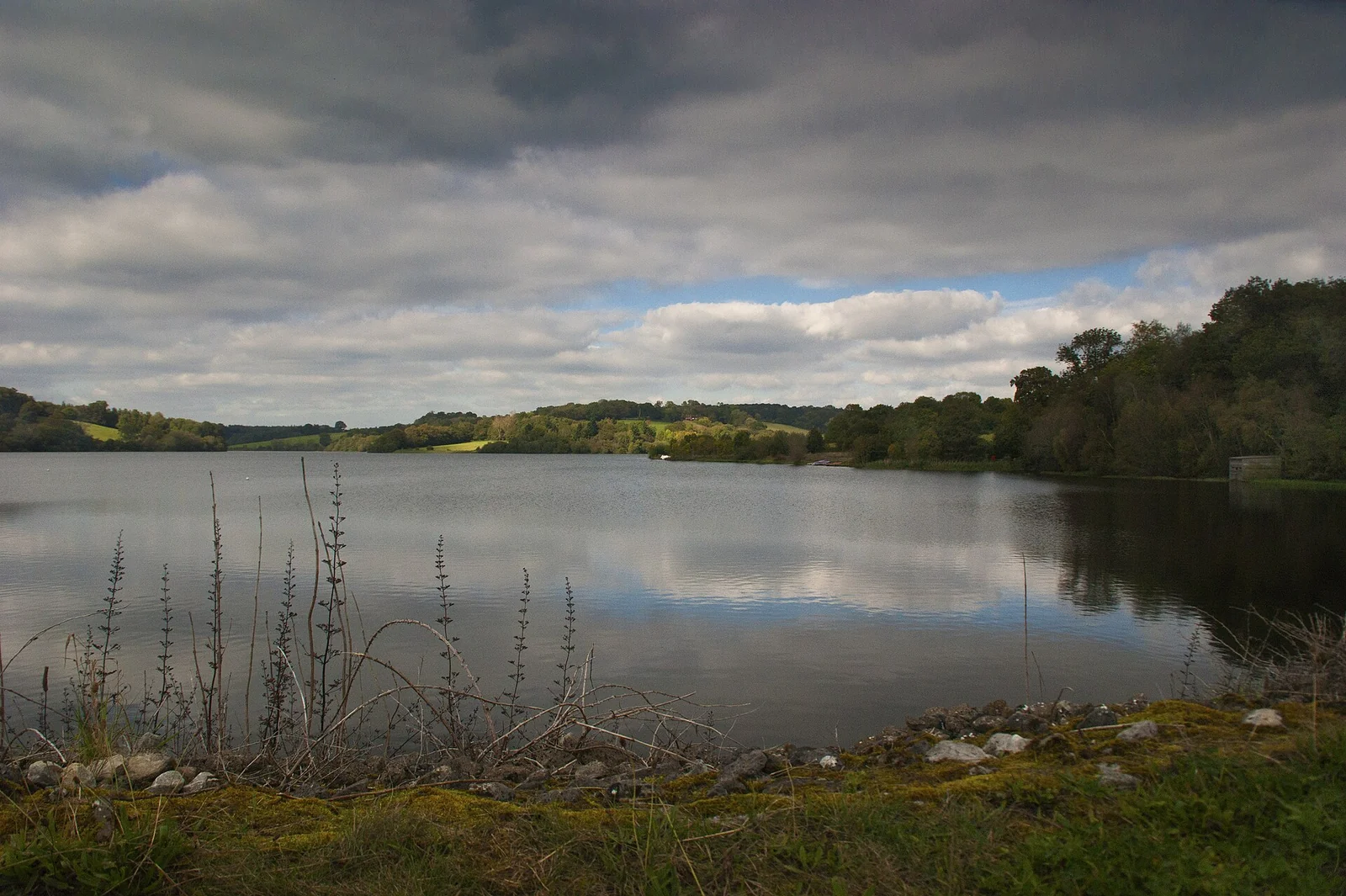
In Sussex the arithmetic looks different again. Ardingly and its sister reservoir Arlington can store up to 8,300 million litres between them, and they supply 8% of the drinking water South East Water provides. The company also pumps millions of litres a day from boreholes sunk into aquifers. So a reservoir that provides less than a tenth of a company’s water can still put a district into severe drought, because the supply to particular towns, Haywards Heath and Uckfield among them, runs through it. Ardingly itself is filled from the River Ouse, normally between October and April, when rain is heavier and rivers run higher.
Groundwater behaves on a slower clock. An aquifer is a layer of rock, or of sand and gravel, whose connected pores and cracks hold water and let it flow out to wells and springs. In the UK aquifers are usually refilled in winter, and because they respond slowly to changes in rainfall, they ride out a dry spell better than rivers do. The slowness works in reverse too. Rain that falls after a long dry spell has to soak the soil before much of it reaches the rock, so in late October the Agency was still reporting groundwater falling at many sites, two weeks into a run of rainy weather.
Then there is the other side of the ledger, which is how much people use. Thames Water says that in July’s heat its customers in London and the Thames Valley used around 100 million litres a day more than normal. Metered homes use less, too: the average person on a water meter uses 122 litres a day, against 171 for someone without one. By the Agency’s report covering 16 to 22 October, cooler weather and hosepipe bans had steadied demand, though it was still higher than expected in some areas.
Put those pieces together and a drought becomes a local event. Rain, river flow, the rules that govern reservoir releases, the state of the aquifers and the volume coming out of household taps all meet in a single supply zone, and the zone either has water to spare or it doesn’t.
The test
Nationally, the year reached summer in fair shape, despite a dry spring. In early July, reservoirs across England held 83% of their capacity, about 2% below the long-term average for the time of year. Then came the driest July England has had since records began in 1836, with 10% of its normal rainfall. The UK summer as a whole was provisionally the warmest on record, at an average of 16.5°C. A wet late August kept the season off the rainfall record books, although totals stayed below average.
On 29 July the Agency moved over half of England, including London, into drought. Hosepipe bans followed company by company, and by late September around 30 million people were living under them.
The Agency’s map of drought status is only one of several labels. Each water company also grades its own position on an operational scale from drought level 1 to level 4. In October South West Water had its Wimbleball zone at level 3, and South East Water had its Eastbourne and Haywards Heath zones at the same level.
Who decides what in a drought

The Environment Agency describes the state of an area in four stages: prolonged dry weather, drought, severe drought, and recovering from drought. These are assessments of rivers, groundwater and reservoirs. Restrictions come from other people under other powers. A hosepipe ban, formally a temporary use ban, is imposed by the water company itself when it thinks it faces a serious shortage, and the law gives it a closed list of uses it may ban, from watering a garden or washing a private car with a hosepipe to filling a domestic pool or an ornamental fountain. A drought permit, granted by the Environment Agency, changes how much water a company may take from a river or must release into one. A drought order goes further. The company applies, and the Secretary of State decides. One kind of order bans what is called non-essential use, which reaches businesses that a hosepipe ban leaves alone.
The rain came back in October, but not enough. By the week covered in the Agency’s report of 23 October, England had received 52% of its normal October rainfall despite a second week of wet weather. Storage across England held steady at 54% in the week ending 20 October, yet two-thirds of individual reservoirs or reservoir groups still fell. The Agency added its own caution about reading those numbers. Some low levels reflected planned maintenance and outages, and Kielder was being run under a new operating rule that keeps more room free for floodwater, so not every empty-looking reservoir was a drought casualty. On 23 October, after those figures were gathered, Storm Austen, the first named storm of the season, brought damaging winds and spells of heavy rain to Cornwall and Devon. How much of that rain reached the reservoirs would only show in the next weekly figures.
At the hard end of the scale, the companies were asking for more powers. South West Water applied on 6 October for an order to ban non-essential water use by some businesses in Mid Devon and parts of East Devon and Dorset. South East Water had applied for a similar ban on 2 October. Southern Water’s applications of 31 July, including one for an order on the River Test, were still waiting on the Secretary of State on 22 October. Meanwhile the Water Minister, Emma Hardy, told the Agency to put public supply first in severe-drought areas wherever there was an unavoidable trade-off with environmental rules. The rivers were already paying. By 22 October the Agency had confirmed 411 drought and dry-weather environmental incidents in 2026, more than in the whole of 2022 or 2025, among them 106 incidents of dead fish.
The margin, measured
Water companies in England plan their supplies area by area. Each “water resource zone” is a patch of the map that shares the same sources, and each must show that it could meet demand in drought conditions with an uncertainty buffer on top, which the industry calls target headroom. A zone has a deficit when the water it can supply in drought falls short of forecast demand plus that buffer. The margin is whatever is left over: the spare water a zone holds in a bad year.
In November 2025 the Environment Agency published its audit of how companies had done in 2024-25. That was a wetter year than 2026. Even so, 18 areas still had trouble balancing supply and demand. Over half of all zones reported smaller surpluses than their companies had forecast. The Agency put this down to demand running above forecast, partly because companies had not done enough to manage it, and in some cases to delays in new supply projects. Many of the schemes companies had promised for 2020 to 2025 had slipped, which the Agency warned could reduce resilience to drought. Its overall verdict was that across England there was less surplus water available in most zones during drought than had been planned. The audit is national and does not single out Wimbleball’s zone. What it shows is that, before the July rain failed, drought surpluses were already below plan, partly because demand management and new supply schemes had fallen behind.
One large loss companies can reduce is leakage, and its history is easy to misread. The industry’s economic regulator, Ofwat, keeps a long record for England and Wales, measured in millions of litres lost per day. It is two series stitched together. Under the older methods, leakage stood at 5,112 million litres a day in 1994-95 and about 3,100 by 2016-17. Then the definition changed. Under the current one, used from 2017-18 onward, the figure was 3,319 million litres a day in 2017-18 and 2,968 by 2023-24. Ofwat draws a break in its chart between 2016-17 and 2017-18 and treats only the years from 2017-18 as properly comparable, so the step up between those two years should not be read as pipes suddenly getting worse.
For England alone, the Agency put leakage at 2,617 million litres a day in 2024-25. That was the lowest in over 20 years. It was also nearly one litre in five of all the water put into supply, and still above what companies’ own plans had forecast. Ofwat’s targets would bring leakage across England and Wales down to about 2,294 million litres a day by 2029-30.
Leaks are hard to chase down because most of them can’t be seen. Thames Water says around 95% of the water it loses comes from leaks hidden underground, and in the summer of 2026 it was fixing more than 1,000 leaks a week. The pipes are replaced slowly as well. The rate at which water mains are renewed fell from around 0.6% a year in 2011-12 to around 0.1% in 2023-24. Ofwat argues that age is a poor guide to a pipe’s health if it has been maintained, and industry research has found that some pipes can last 160 years. Either way, leakage is a dial that turns over years. Nobody can close it off for a dry August, so whatever leakage a company carries into a drought is part of the margin it has already spent.
Building more margin
The other way to widen the margin is to find more water. No new major reservoir has been delivered in England since 1992, and by 2025 England’s population had grown by 21% over that time. Storage did not stand still, though. Essex & Suffolk Water spent £150 million enlarging Abberton reservoir by 58%, enough to hold an extra 15 billion litres, and since 2008 South West Water has turned four old quarries into reservoirs.
New reservoirs take a long time to arrive. Havant Thicket, a Portsmouth Water and Southern Water scheme for an 8.7 billion litre reservoir, has had planning permission since 2021. Anglian Water and Cambridge Water hope to complete a Fens reservoir, still in planning, in 2036, and Anglian aims to have a Lincolnshire reservoir working by 2040. Ofwat’s spending settlement for 2025 to 2030 backs new reservoirs in eight counties plus a quarry conversion in Somerset, which together could produce 670 million litres a day once they are finished, after 2030.
How a water bill pays for a reservoir

Every five years Ofwat decides how much each company in England and Wales may spend and how much it may charge for it. For 2025 to 2030 it set average combined water and sewerage bills to rise from £440 a year in 2024-25 to £597 in 2029-30, an increase of 36% before inflation. The rise varies widely between companies: South West Water's customers face an increase of about 23%, Wessex Water's about 21%. Customers are meant to be protected if the work doesn't happen. A claw-back rule returns the money for any scheme not delivered in full and on time through lower bills, and for Southern Water and Thames Water, Ofwat has ruled that customers won't pay for part of the planned work until the timing of the companies' plans is clearer. The settlement still moves. In August 2026 Ofwat provisionally allowed five companies, Wessex Water and South East Water among them, to raise bills further from 2027, with a final decision due in December. In October it proposed a net £240 million cut to bills by 2029-30 for poor performance in 2025-26.
Pipes between places are margin too. Wessex Water can reverse the flow in its main trunk pipeline across Somerset, so that customers normally fed from Exmoor sources get groundwater from Wiltshire instead when Wimbleball and its neighbour Clatworthy run low. The price is harder water in Somerset kitchens. Before 2022, the last time it did so for a sustained period was the winter of 2003-04.
How much margin is enough is a policy choice, and England has an official answer. By 2039-40, supply systems in England are meant to be resilient enough that the annual chance of a drought forcing emergency restrictions, such as standpipes, is no more than 0.2%, or once in 500 years. Hosepipe bans can still come more often. That target alone adds 630 million litres a day to what the country needs.
The Agency’s long-range planning puts the whole gap in a starker form. Its Do Nothing scenario assumes that companies deliver their plans to 2030 and then do nothing more, along with high population growth, climate change, the one-in-500 standard and the most ambitious cuts to river abstraction in company plans. On those assumptions public supply could be up to 5,000 million litres a day short by 2055. That is a scenario, not a forecast. The largest single part of it, 2,600 million litres a day, is water that companies would have to stop taking out of rivers and groundwater. In the West Country, 182 of the 260 million litres a day of extra need between 2030 and 2055 is environmental. The Agency expects about 60% of the gap to be closed by cutting demand and leakage, and 40% by new supply.
Seen from Wimbleball, those planning numbers describe a familiar trade. The permit on the Haddeo lets a small river go without its guaranteed flow for a dry season so that the reservoir keeps more water for supply. The national plan’s largest number is the water to be handed back to rivers for good, and the margin has to be built big enough that a dry year doesn’t force the Haddeo trade every time.
Yorkshire, 1995
England has seen a margin nearly give way before. In August 1995 the Christian Science Monitor reported that a heatwave had produced the driest English summer since 1727, and that the Labour opposition was blaming the recently privatised water companies. Yorkshire was declared a drought area on 21 August. When the industry was privatised, the paper recalled, the government had said future shortages were unlikely because the companies would have to take preventive measures.
Yorkshire Water imposed a hosepipe ban in July. In August it put up trial standpipes in Bradford. From September it began bringing water in by road, from as far away as Northumbria, in a fleet of tankers that grew from 200 to 700 at the peak. From October 1995 to early January 1996 rota cuts, with supplies switched off district by district, were a real possibility. Only the tankers and emergency engineering work kept them away, and the taps stayed on.
The regulator’s verdict came in June 1996. Ofwat found serious failures by the company, including in controlling leakage, and made it give up £40 million of price rises. Ian Byatt of Ofwat also criticised the £50 million special dividend Yorkshire Water had paid in the summer of 1995, which he said in retrospect was “not appropriate in the circumstances”.
Leakage was where the change showed. On Ofwat’s older basis, leakage across England and Wales fell from 5,112 million litres a day in 1994-95 to 3,294 in 1999-2000, a cut of more than a third in five years. On that basis it was still around 3,100 in 2016-17, not much lower than 17 years earlier. The fastest gains came in the five years straight after the tankers, with the regulator’s verdict on the record.
What a dry year should cost
The drought was extreme, and restrictions were among the tools companies’ plans were designed to use. England had its driest July on record. The UK summer was provisionally its hottest, and the Met Office calculated that the season’s mean temperature was made around 130 times more likely by human-induced climate change, a figure that concerns heat alone. On rainfall, the Met Office says the summer closely matched what an average UK summer would look like under 3°C of global warming. Severe drought, the Agency notes, does not automatically trigger restrictions, and it is not a civil emergency. People responded too: in an official survey, 88% of adults in Great Britain said they had taken at least one step to cut their water use in August, although that is what they reported, not what their meters measured.
Even a year like this is meant to leave a margin, and by 2039-40 that margin is meant to keep emergency restrictions to a one-in-500-year event. In 2024-25, a wetter year, the Agency’s audit found less surplus than planned in most zones, and the reasons it gave were demand above forecast, supply schemes running late and leakage above what companies’ own plans had forecast. The Agency’s chief executive, Philip Duffy, put both halves of the case into a single sentence when severe drought was declared: “We cannot change the weather, but water companies can act now.” The Met Office expects summers to become hotter and drier, and each one will make the margin that was planned, and not yet delivered, count for more.
The pumps at Exebridge
Wimbleball’s own recovery leans on a licence. From 1 November until 31 March, up to 150 million litres a day can be pumped out of the Exe at Exebridge and back up into the reservoir, but only while the Exe’s flow is above minimum limits at the gauging stations at Thorverton and Exebridge. The scheme was licensed in 1995, and by the time of Wessex Water’s 2022 drought plan the pumps had run in 12 of the years since.
The reservoir holds 21,320 million litres when full. On 22 October it held 13% of that, and the drought permit that pauses the Haddeo runs until 28 February 2027. To refill the reservoir that keeps the Exe going in summer, the Exe first has to run high enough in winter to spare the water. Across England as a whole, the Agency says at least 120% of average rainfall is needed over the six months from late October for the country to be out of drought by the start of spring. Its outlook for the South West is conditional. If Devon, Cornwall and the Isles of Scilly get above-average rain this winter, the area may reach a fragile recovery by the start of April 2027. Even so, the Agency says, it may go into the dry months of 2027 still short of water.
Related articles
- Who pays for the grid that data centres need?
- The mountain range that determines Asia’s weather — and its wars
- Why rivers make poor borders — and why we keep using them
Further reading
As an Amazon Associate, Eikleaf earns from qualifying purchases. The book links below are affiliate links: if you buy through them, we may earn a small commission at no extra cost to you.
- Water: A Biography — Giulio Boccaletti (2021). A history of how societies have managed water, and why abundance on average does not mean supply when needed.
- Private Island: Why Britain Now Belongs to Someone Else — James Meek (2014). Includes a long chapter on the privatisation of England’s water companies.
- The Big Thirst: The Secret Life and Turbulent Future of Water — Charles Fishman (2011). A readable account of water supply, reuse and shortage in rich countries.
Recommended videos
 5:38Is the UK running out of water? | BBC NewsBBC explainer on why the UK is short of water and how close supply is to the margin.
 2:54UK’s first new reservoir in 35 years: Is it enough?Sky News on Britain’s first new reservoir in decades and whether it is enough.
 2:35UK faces severe drought as reservoir levels fallAl Jazeera on falling reservoir levels during the 2026 English drought.
Cite this article
Owen Parker. “How a wet country runs short of water.” Eikleaf, 24 October 2026, updated 25 October 2026. https://www.eikleaf.com/how-a-wet-country-runs-short-of-water/
Gen AI Disclaimer
Some contents of this page were generated and/or edited with the help of a Generative AI.
Media
Bessom Bridge, Brompton Regis – Wikimedia Commons (Photo: Lewis Clarke, CC BY-SA 2.0)
Wimbleball Dam – Wikimedia Commons (Photo: Nilfanion, CC BY-SA 3.0)
Ardingly Reservoir – Wikimedia Commons (Photo: Kurseong Carl, CC BY-SA 2.0)
Key Sources and References
Environment Agency. “Drought permit granted to support Wimbleball Reservoir.” GOV.UK, 8 October 2026. https://www.gov.uk/government/news/drought-permit-granted-to-support-wimbleball-reservoir
South West Water. “Current reservoir levels” (data dated 22 October 2026). https://www.southwestwater.co.uk/environment/water-resources/reservoir-levels
South West Water. “Why Wimbleball Reservoir looks low – and how that’s not a cause for concern.” 18 November 2025. https://www.southwestwater.co.uk/about-us/latest-news/why-wimbleball-reservoir-looks-low—and-how-thats-not-a-cause-for-concern
Wessex Water. “Drought Plan – Final Plan” (technical document). June 2022. https://corporate.wessexwater.co.uk/media/m2jc22dl/drought-plan-2022-technical-document.pdf
South East Water. “Reservoir levels” (figure dated 18 October 2026). https://www.southeastwater.co.uk/about/locations/reservoir-levels/
Beament, Emily (Press Association). “Parts of England in severe drought as water supplies under immense pressure.” The Irish News, 15 October 2026. https://www.irishnews.com/news/uk/parts-of-england-in-severe-drought-as-water-supplies-under-immense-pressure-L32RN5GNJRJDNIRO5AQVPWZWIE/
Defra. “Government activates plan to protect consumers as severe drought declared in parts of England.” GOV.UK, 15 October 2026. https://www.gov.uk/government/news/government-activates-plan-to-protect-consumers-as-severe-drought-declared-in-parts-of-england
Defra. “Water company bosses update National Drought Group on resilience.” GOV.UK, 20 October 2026. https://www.gov.uk/government/news/water-company-bosses-update-national-drought-group-on-resilience
Environment Agency. “What is severe drought?” Environment Agency blog, 15 October 2026. https://environmentagency.blog.gov.uk/2026/10/15/what-is-severe-drought/
Environment Agency. “Dry weather and drought in England: 16 to 22 October 2026.” GOV.UK, 23 October 2026. https://www.gov.uk/government/publications/dry-weather-and-drought-in-england-2026-summary-reports/dry-weather-and-drought-in-england-16-to-22-october-2026
Environment Agency. “Dry weather and drought in England: 18 to 26 June 2026.” GOV.UK, June 2026. https://www.gov.uk/government/publications/dry-weather-and-drought-in-england-2026-summary-reports/dry-weather-and-drought-in-england-18-to-26-june-2026
Environment Agency. “Dry weather and drought in England: 2 to 9 July 2026.” GOV.UK, July 2026. https://www.gov.uk/government/publications/dry-weather-and-drought-in-england-2026-summary-reports/dry-weather-and-drought-in-england-2-to-9-july-2026
Environment Agency. “Dry weather and drought in England: 24 to 30 July 2026.” GOV.UK, July 2026. https://www.gov.uk/government/publications/dry-weather-and-drought-in-england-2026-summary-reports/dry-weather-and-drought-in-england-24-to-30-july-2026
Environment Agency. “Dry weather and drought in England: 31 July to 6 August 2026.” GOV.UK, August 2026. https://www.gov.uk/government/publications/dry-weather-and-drought-in-england-2026-summary-reports/dry-weather-and-drought-in-england-31-july-to-6-august-2026
Environment Agency. “Dry weather and drought in England: 25 September to 1 October 2026.” GOV.UK, October 2026. https://www.gov.uk/government/publications/dry-weather-and-drought-in-england-2026-summary-reports/dry-weather-and-drought-in-england-25-september-to-1-october-2026
Met Office. “Summer 2026 provisionally hottest on record for the UK.” Updated 17 September 2026. https://www.metoffice.gov.uk/about-us/news-and-media/media-centre/weather-and-climate-news/2026/summer-2026-provisionally-hottest-on-record-for-the-uk
Environment Agency. “Drought explained.” Environment Agency blog, 31 July 2023. https://environmentagency.blog.gov.uk/2023/07/31/drought-explained/
Water Industry Act 1991, section 76, “Temporary bans on use.” legislation.gov.uk. https://www.legislation.gov.uk/ukpga/1991/56/section/76
Environment Agency. “Drought: how water companies plan for dry weather and drought.” GOV.UK, updated 16 June 2025. https://www.gov.uk/government/publications/drought-managing-water-supply/drought-how-water-companies-plan-for-dry-weather-and-drought
Environment Agency. “Environment Agency secures £50,000 from Yorkshire Water.” GOV.UK. https://www.gov.uk/government/news/environment-agency-secures-50000-from-yorkshire-water
U.S. Geological Survey. “Ground Water: How Ground Water Occurs.” https://pubs.usgs.gov/gip/gw/how_b.html
British Geological Survey. “Groundwater drought.” https://www.bgs.ac.uk/groundwater/flooding-and-drought/groundwater-drought/
Thames Water. “Thames Water updates on drought response, reservoir levels and leakage action.” 18 August 2026. https://www.thameswater.co.uk/news/2026/aug/thames-water-updates-on-drought-response-reservoir-levels-and-leakage-action
Environment Agency. “England faces 5 billion litre public water shortage by 2055 without urgent action.” GOV.UK, 17 June 2025. https://www.gov.uk/government/news/england-faces-5-billion-litre-public-water-shortage-by-2055-without-urgent-action
Environment Agency. “Water resources 2024 to 2025: analysis of the water industry’s annual water resources performance.” GOV.UK, 18 November 2025. https://www.gov.uk/government/publications/water-resources-2024-2025-analysis-of-the-water-industrys-annual-water-resources-performance/water-resources-2024-to-2025-analysis-of-the-water-industrys-annual-water-resources-performance
Ofwat. “Long-term leakage data trend” (leakage dataset). June 2025. https://www.ofwat.gov.uk/wp-content/uploads/2025/06/EXT_Long-term-leakage-data-trend-1.xlsx
Independent Water Commission. “Final Report.” 21 July 2025. https://assets.publishing.service.gov.uk/media/687dfcc4312ee8a5f0806be6/Independent_Water_Commission_-_Final_Report_-_21_July.pdf
Environment Agency, Ofwat and Natural Resources Wales. “Water resources planning guideline.” GOV.UK, updated 16 June 2026. https://www.gov.uk/government/publications/water-resources-planning-guideline/water-resources-planning-guideline
Defra. “Government steps in to build first major reservoirs in 30 years.” GOV.UK, 29 May 2025. https://www.gov.uk/government/news/government-steps-in-to-build-first-major-reservoirs-in-30-years
Northumbrian Water Ltd. “Annual Performance Report, year ended 31 March 2017.” https://www.nwg.co.uk/globalassets/corporate/nw-annual-performance-report-final.pdf
Havant Borough Council. “Havant Thicket Reservoir.” https://www.havant.gov.uk/planning/major-projects/havant-thicket-reservoir
Ofwat. “PR24 final determinations: sector summary” (revised). 2025. https://www.ofwat.gov.uk/wp-content/uploads/2025/04/PR24-FD-sector-summary-revised.pdf
Williams, Holly (Press Association). “Thames Water among suppliers set to be allowed to hike bills to boost spending.” The Irish News, 13 August 2026. https://www.irishnews.com/news/uk/thames-water-among-suppliers-set-to-be-allowed-to-hike-bills-to-boost-spending-2YIR37JH4JKZXGTSN6JPAWDHTI/
Williams, Holly (Press Association). “Water firms set to return £240m to customers by 2030 for poor performance.” The Irish News, 14 October 2026. https://www.irishnews.com/news/uk/water-firms-set-to-return-240m-to-customers-by-2030-for-poor-performance-XZ4U2AFS2JIURK5SHWL5Z7GUWE/
Environment Agency. “National Framework for Water Resources 2025,” appendix B, “Water resources modelling.” GOV.UK, 17 June 2025, updated 27 August 2026. https://www.gov.uk/government/publications/national-framework-for-water-resources-2025-water-for-growth-nature-and-a-resilient-future/appendix-b-water-resources-modelling-national-framework-for-water-resources-2025
Environment Agency. “National Framework for Water Resources 2025,” chapter 3, “How much additional water we need.” GOV.UK, 17 June 2025, updated 27 August 2026. https://www.gov.uk/government/publications/national-framework-for-water-resources-2025-water-for-growth-nature-and-a-resilient-future/3-how-much-additional-water-we-need-national-framework-for-water-resources-2025
Robinson, Sophie (Press Association). “Met Office issues amber wind warning for parts of south-west England.” The Irish News, 21 October 2026. https://www.irishnews.com/news/uk/met-office-issues-amber-wind-warning-for-parts-of-south-west-england-X3OA5Y2KSJNCHGNZC2OP7ZH5OA/
Greenaway, Aaron. “Storm Austen hits Cornwall: The latest updates and all you need to know.” The Post (Cornwall), 22 October 2026, with live updates on 23 October 2026. https://www.thepost.uk.com/news/storm-austen-hits-cornwall-the-latest-updates-and-all-you-need-to-know-966196
MacLeod, Alexander. “Drought Forces Britons To Keep Dry Upper Lip.” The Christian Science Monitor, 23 August 1995. https://www.csmonitor.com/1995/0823/23061.html
Harrison, Michael. “Ofwat ‘fines’ Yorkshire Water £40m.” The Independent, 4 June 1996. https://www.independent.co.uk/news/business/ofwat-fines-yorkshire-water-pounds-40m-1335433.html
Jones, Ian (Press Association). “‘Nine in 10’ adults cut back on water use as drought continues.” The Irish News, 18 September 2026. https://www.irishnews.com/news/uk/nine-in-10-adults-cut-back-on-water-use-as-drought-continues-RPLLSZTMGVPQFBULSVK5Q7OIGM/