Last updated: · 19 min read
In brief
At NOVEC, a Northern Virginia power cooperative, data centres used 64% of the energy it delivered in one year. A proposed rule could have required it to post about $1.95bn in collateral, more than everything it owns. Data centres pay their own bills, but forecast demand pushes up the auction price everyone else pays. That demand need not exist yet. Most of the estimated effect came from data-centre demand that was still only a projection. Who pays for capacity bought for a data centre that arrives late is once more for federal regulators to decide.
Contents
In 2024 the Northern Virginia Electric Cooperative, known as NOVEC, had about 180,000 meters and an unusual customer list. In the year to September 2024, data centres used 64% of the energy it delivered. In 2026 NOVEC told the Federal Energy Regulatory Commission (FERC), which regulates America’s wholesale power markets, that a proposed rule could require it to post about $1.95bn in collateral, more than the value of everything it owns. It was not sure it could raise $2bn at all.
The rule belonged to an emergency purchase. PJM Interconnection, which runs the grid and the wholesale electricity markets for more than 67 million people across 13 states and the District of Columbia, had come up short in its regular auction for 2028/29. It planned a “backstop” procurement of about 6.8 GW of new capacity under 15-year commitments. The utilities that serve homes and businesses would pay, and each would post collateral of $1.5m for every megawatt assigned to it, enough to cover about half the value of the commitments. If one utility failed to pay, its unpaid share would be spread across all the others. Each utility’s share would be fixed from a single snapshot of forecast demand. Amazon, itself a data-centre operator, told FERC that a snapshot of that kind was inconsistent with cost causation, the principle that whoever causes a cost should pay it.
On 29 September FERC accepted the plan and then suspended it until 28 February 2027, finding that the cost allocation, the exit rules for transmission owners and the collateral demanded from buyers might be unjust and unreasonable. Its chairman, Laura Swett, wrote: “This commission will not be forced into accepting a deeply flawed, eleventh-hour procurement mechanism with billion-dollar implications for consumers.”
NOVEC’s predicament compresses two questions that regulators from Virginia to Dublin and London were trying to answer in the autumn of 2026. When data centres join a grid, by what routes do their costs reach everyone else’s bill? And when the demand that was planned for arrives late, smaller or not at all, who has already paid? The answers run through an auction few customers have heard of, through forecasts built partly from data-centre requests, and through rules still being written in late October 2026. Worldwide, data centres’ electricity use grew 17% in 2025, and that of AI-focused data centres grew 50%. The regional evidence, though, counts all data centres, whatever runs on their servers.
Buying capacity for demand that has not arrived
A utility in the PJM region has to show that enough supply stands behind its customers’ demand. It can own power plants, buy capacity from others in private deals, or buy it in PJM’s capacity market, which has run since 2007. The capacity market does not buy electricity. In PJM’s own description, it pays “for the promise to produce electricity when called upon”.
The auction works from a forecast. Utilities tell PJM how much power they expect their customers to need, and PJM turns the forecast peak into a reliability requirement with a reserve on top. That requirement anchors a demand curve, which sets how much capacity the auction buys at each price, so the result can land above or below the target. The auction accepts the cheapest offers first and works upward. When it stops, every accepted seller in an area receives that area’s clearing price, set by the last offer needed; where transmission lines limit imports, an area can clear higher than the rest. The market is designed to buy three years before the delivery year, though recent auctions have run on a compressed calendar: the one held in July 2024 was only about a year ahead.
Megawatts, megawatt-hours and a price per day

A megawatt measures a rate: how much power a plant can deliver at a given moment. A megawatt-hour measures energy, the amount actually used over time, and household bills count it in thousandths, as kilowatt-hours. A capacity auction buys megawatts and prices them per megawatt per day. At $325 per MW-day, a year's promise from one megawatt costs about $118,600 (simple arithmetic: 325 times 365). PJM counts each plant by its accredited capacity, known as UCAP, the amount the grid operator credits it with, and not by ICAP, the total the plant could produce. A plant that clears the auction is paid for being available, and paid again, separately, for any energy it generates. Customers meet the capacity charge spread over the energy they use. PJM's market monitor puts the capacity cost at $19.61 for every megawatt-hour of wholesale power in the first half of 2026, up from $6.39 a year earlier.
The single price is what gives the forecast its power. Add a few thousand megawatts of expected demand and the auction has to reach further up the pile of offers, to dearer ones, and the higher price is then paid on every megawatt that clears, including the great majority that would have cleared anyway. The demand does not have to exist yet. It only has to be in the forecast. For the 2028/29 auction, held in July 2026, PJM’s forecast contained 21,470 MW of data-centre load, by the market monitor’s count, and 16,436 MW of that was forecast growth that new and expanding data centres were expected to add.
The auction for 2024/25 cleared at $28.92 per megawatt per day. The next, held in July 2024 for 2025/26, cleared at $269.92 across much of the region. PJM put that jump down primarily to a large number of power-plant retirements, combined with rising demand and market reforms approved by FERC, including new rules on how much each plant is counted for. Maryland’s consumer advocate named the same three causes and put demand, “driven largely by data centers”, first. The three auctions after that all cleared at the cap that regulators had approved: $329.17, $333.44 and $325.
The last two of those, for 2027/28 and 2028/29, both left the region as a whole short of its reliability requirement, the second by 6,831 MW. PJM says that does not necessarily mean it will be unable to serve its customers reliably; it means slimmer reserves and more risk, with a reserve margin of 14.7% still expected for 2028/29. Supply offered into that auction rose by 3,447 MW and the forecast peak by about 2,000 MW, but only 525 MW of the capacity that cleared came from new plants and upgrades to existing ones. “These auction results show that demand for electricity continues to grow faster than electricity supply,” said David Mills, PJM’s chief executive.
More demand does not always mean higher prices. Much of what a power system costs is fixed: plants, poles and wires that have to be paid for however much power flows through them. Spread over more sales, those costs fall per kilowatt-hour. That holds in a system with spare capacity. In a tight one, the International Energy Agency notes, new load can force new investment and push prices up. By July 2026, PJM was the tight kind.
From the auction to a Baltimore bill
PJM runs the wholesale market. It sends no one a household bill. In Maryland, PJM charges for capacity to retail suppliers and to the utilities that provide “standard offer service”, the default supply for customers who have not picked a retail supplier, and they pass the cost on in the supply rate. To soften price swings, utilities buy standard-offer power in four state-supervised auctions spread over two years, each covering a quarter of the need.
Follow the July 2024 auction through. It set the capacity price for the delivery year that began on 1 June 2025, and in the zone of BGE, Baltimore’s utility, where transmission limits imports, it cleared at $466.35. Maryland’s Office of People’s Counsel, the state’s consumer advocate, estimated that the average BGE household would pay about $16 a month more for at least a year, and the average Pepco household about $14. In 2023, before that auction, capacity had made up 8% of wholesale power costs, by the advocate’s count. After it, the share was about 27%.
Capacity costs pushed up average wholesale costs across PJM in 2025, and Maryland’s retail prices rose that year, partly for the same reason. Staggered buying and longer contracts change when an increase reaches households; how much reaches them, and when, depends on purchasing contracts, retail rates and state regulators. Whether hedging also reduces the total is disputed.
Capacity is one route from a data centre to someone else’s bill. Wires are another. Maryland’s advocate says transmission costs in the state are being driven by large expansion projects built primarily for data-centre growth outside Maryland, projects it argued impose unfair costs on Maryland customers. Transmission is paid for through regulated rates, and those rates include a return on the capital spent.
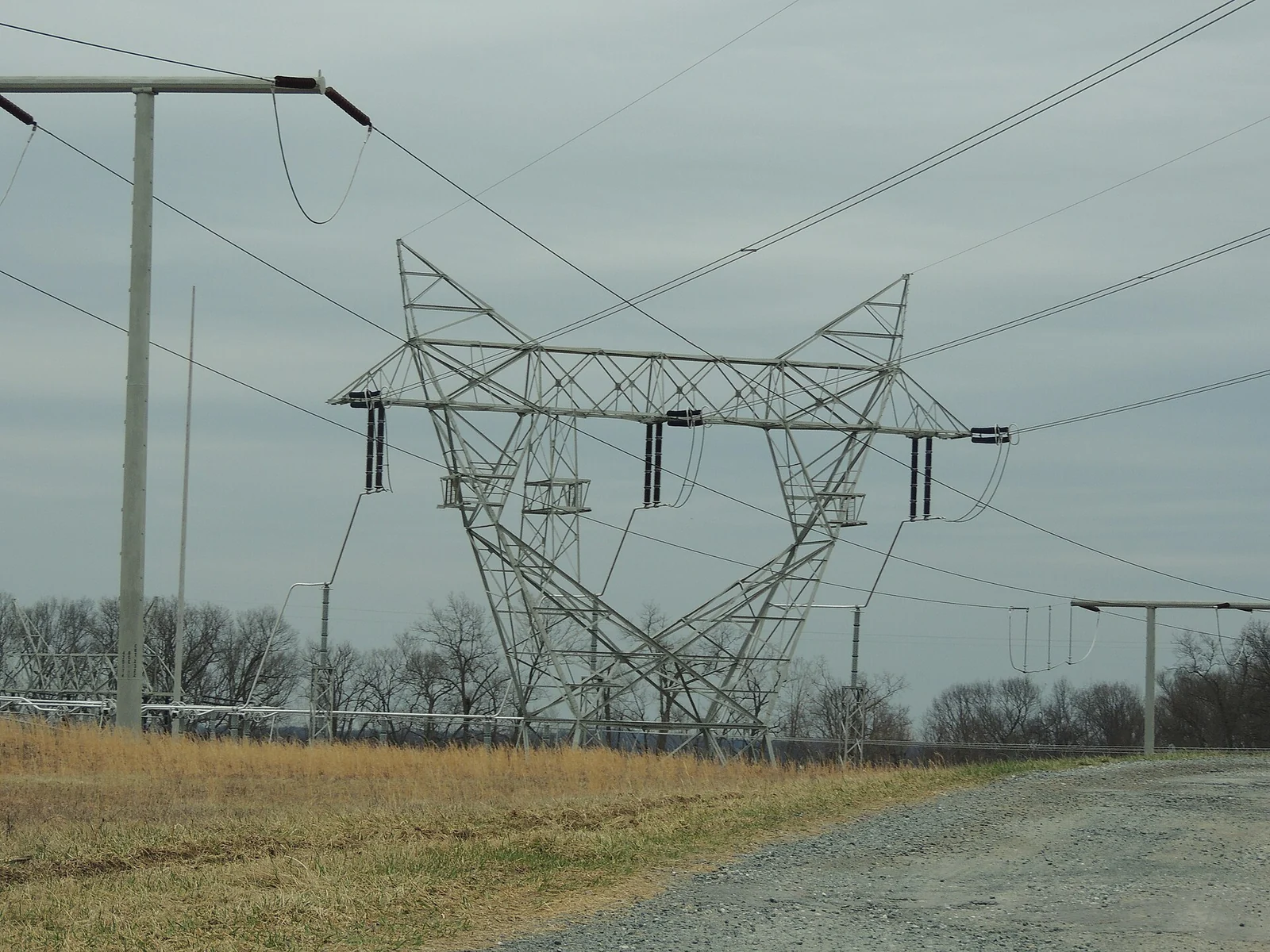
The two routes work differently, and they need different fixes. Capacity runs through a shared market price. When a large new buyer joins a tight market, the auction price rises for every buyer exposed to it, even if the newcomer pays every cent of its own bill. Wires run through allocated cost: lines, substations and plants built to serve particular customers and recovered through rate cases, where a regulator decides who carries them. Virginia’s legislative auditor described exactly this pair in December 2024. Data centres, it found, were “currently paying their full cost of service”, yet their demand “will likely increase system costs for all customers”.
What the monitor’s estimate says, and what it does not
How much of PJM’s price rise belongs to data centres? One answer comes from Monitoring Analytics, the independent market monitor that watches PJM’s markets. Its method is a counterfactual. It takes each auction as it actually cleared and recalculates the result as if data-centre load had not been in the forecast, then compares the revenue. On that basis it estimates that existing and forecast data-centre load added $6.3bn of the $16.4bn in capacity charges for 2028/29, and $29.4bn across the four auctions for 2025/26 to 2028/29. It calls data-centre growth, actual and forecast, the primary reason for the market’s tight conditions and high prices, and the accuracy of the forecasts “highly questionable”.
For the three auctions from 2025/26 to 2027/28, the monitor also separated the data-centre load that existed when each forecast was prepared from the additions the forecast projected, including expansion at existing sites. Of the $23.1bn it attributed to data-centre load in those auctions, $21.3bn came from the projected additions alone. In the 2027/28 auction, removing all data-centre load would have cut revenue by $6.50bn, and removing only the projected additions by $6.24bn. On the monitor’s numbers, most of the effect came from demand that was still a projection.
The monitor attaches its own warnings. The figures are estimates that depend on assumptions, the scenarios cannot simply be added together, and in 2027/28 the auction’s price floor narrowed the gap between them. Auction value is also not the same as what customers pay. PJM says that demand hedged through utilities’ own plants or bilateral contracts is not exposed to the auction price. The monitor rejects that: “Hedges can never beat the market over time because every hedge has a buyer and a seller.”
Joe Bowring, the monitor’s president, put the consequence plainly in July 2026. “This is not something the data centers are actually paying themselves,” he said. “This is a cost being imposed on all customers in the PJM footprint.” Data centres pay their own electricity bills. Bowring’s point is about the higher clearing price and what it costs everyone else, whose exposure depends on how their supply is bought.
Data centres are not the only cause on the record. PJM’s own account of the 2024 jump put retirements first, and NOVEC argued to FERC that the backstop’s cost allocation ignored structural causes of the shortfall beyond load growth, such as plants retiring because of state policies.
The price cap changes the arithmetic from here on. Once the auction price reaches the cap, further tightness cannot raise it and shows up as a shortfall against the reliability target instead, though other electricity costs can still rise. The cap also slows relief: small cuts in demand can leave the price at the cap. In a letter on 1 September 2026, Mills told Maryland’s People’s Counsel that substantial load reduction would be needed for the December auction to clear below the cap, so the forecast changes the advocate had asked for “will not impact consumer bills”.
Who stands behind a forecast
The forecast begins with requests. In October 2024 NOVEC asked PJM to add an adjustment to its 2025 load forecast for data-centre growth in its territory, and other utilities made similar submissions. PJM has since tightened the filter. For its January 2026 forecast, the near-term years need “firm” commitments, such as signed service obligations or construction commitments, while projects further out are treated as “non-firm” and derated, counted at less than their full size. That brought near-term large-load adjustments down compared with the 2025 forecast.
The raw submissions show why a filter is needed. In October 2025 Maryland’s People’s Counsel calculated that utility submissions would roughly double the data-centre growth already planned for, taking it to about 60 GW by 2030. Maryland’s entire peak demand, built up over a century, is about 12 GW. “There are huge signs that the submissions to add more data centers to the forecast are wildly overstated,” said David Lapp, the People’s Counsel, whose office likened the requests to the Oklahoma land rush of 1889. Those were submissions, not the forecast PJM adopted.
Several forces push forecasts up. A data centre’s peak load is uncertain even after it opens, the IEA notes, because servers are installed gradually and developers often reserve a bigger grid connection than they first need. Lawyers at Harvard’s Electricity Law Initiative argue that utilities have an incentive to announce optimistic growth, which promises capital spending and future profits, and that their reluctance to disclose project details can lead to one project being counted by several utilities. In October 2026 the US Department of Energy told FERC that without tracking whether each project enters service, PJM cannot reliably reconcile its forecasts or avoid double counting.
Britain shows the same pattern from another angle. Its contracted demand connection offers rose from 41 GW to 125 GW between November 2024 and June 2025, more than tripling in under a year. Ofgem, the energy regulator, fears that a significant number of those projects may never proceed, “creating misleading signals about future network investment needs”.
Any overstatement that survives PJM’s checks feeds into what the auction buys. A utility submits a request, PJM derates it, and the auction buys capacity against what remains. Under PJM’s current rules, Maryland’s advocate says, residential customers across the region foot the bill for capacity and transmission costs driven by projected data-centre growth, and that bill is paid whether or not the projected data centre turns up. The backstop would have fixed each utility’s share from one forecast snapshot for 15 years. If the forecast proves wrong, the capacity has still been bought, and the rules decide who carries it.
When electricity forecasts failed

In the 1970s, Pacific Northwest planners expected demand to keep growing about 7% a year, and the Washington Public Power Supply System, WPPSS, set out to build five nuclear plants. Higher prices slowed growth to 4%, and by 1983 forecasts were down to 2% a year. Their projected cost had reached $24bn by 1982. That January, WPPSS cancelled plants 4 and 5 because their output would not be needed. The 88 participating utilities held take-or-pay contracts binding them to pay their share "whether or not the projects are ever completed or operational". Washington's Supreme Court later ruled that they were not legally obligated on the debt. In July 1983 WPPSS defaulted on $2.25bn of bonds, then the largest municipal bond default in US history, leaving bondholders with paper worth a fraction of its cost. Customers had already been paying: utilities passed on their costs, including those of the cancelled plants, and the region's average retail price rose from 1.7 to 3.2 cents per kWh between 1979 and 1983. Virginia's new contracts are a different instrument: service agreements between a data centre and its utility, with minimum charges and collateral attached.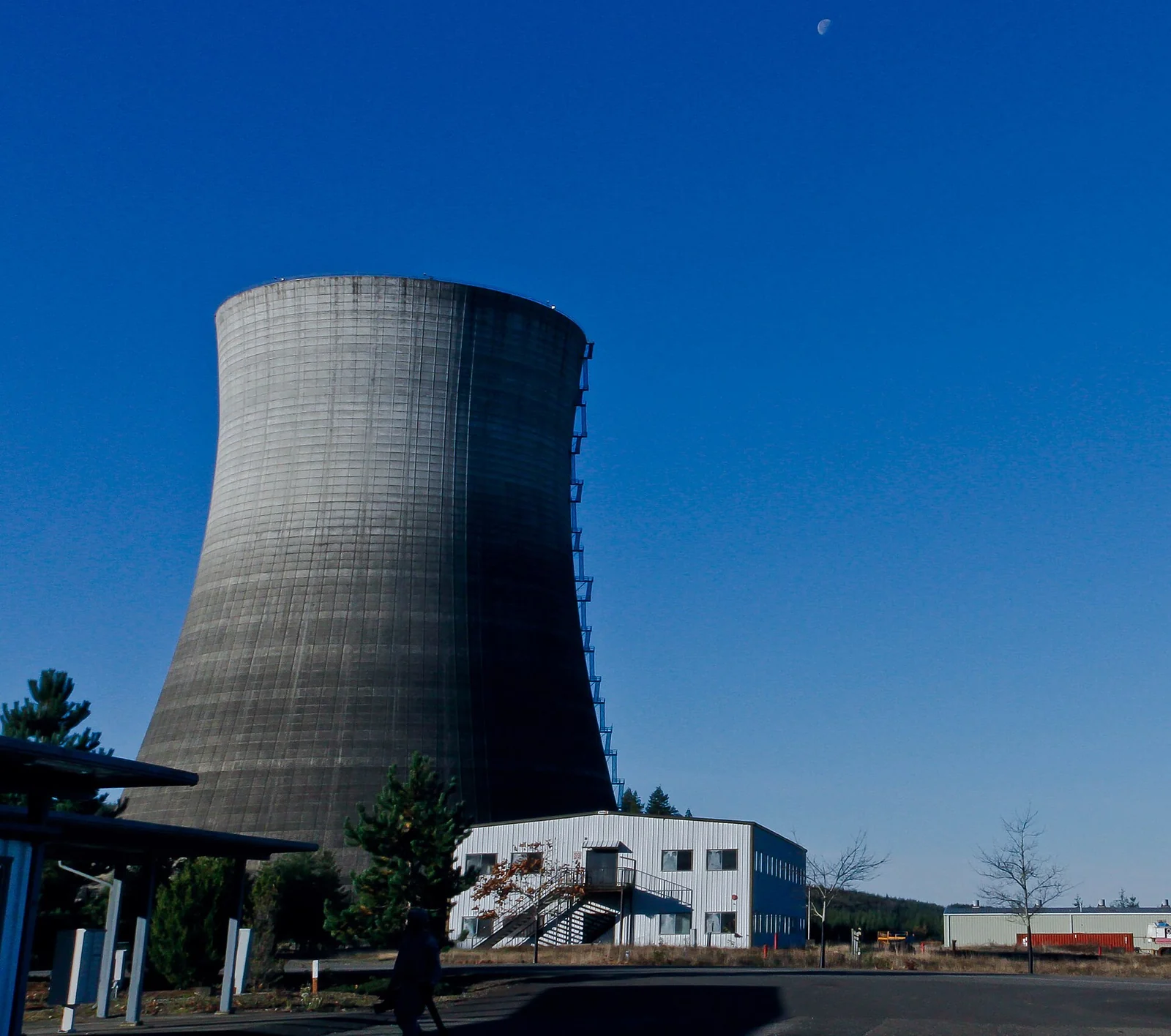
Three fixes for three different risks
Three rules from three jurisdictions show the range of answers. Each covers part of the exposure and leaves part open.
In Virginia, the State Corporation Commission approved a rate class for Dominion Energy’s largest customers, GS-5, which takes effect in January 2027 and covers new and existing customers above set thresholds of capacity and energy use. Covered customers, hyperscale data centres among them, will have to pay each month at least 85% of the transmission and distribution costs incurred to serve them, however little power they actually use; those that began service before 2016 are exempt. New large customers who contract from 1 January 2027 must take and pay for service for at least 14 years, and those without sufficient credit may have to guarantee up to 60% of their minimum charges over the term. The commission also ordered Dominion to move away from its method of allocating generation costs and, after finding that large customers contribute less towards transmission than other classes, to propose new ways of allocating transmission costs in future proceedings.
The tariff is built for allocated costs and for forecast risk on the wires. If a data centre uses less than planned, its minimum payments keep covering the lines built for it. It does not touch the shared market price, the route Virginia’s auditor identified: a data centre paying its full minimum still adds its demand to the PJM auction. A tariff can, however, change who pays inside one utility. In July 2026 Oregon’s utility commission approved a 29.7% rate increase for Portland General Electric’s new class of data centres, crypto miners and large industrial users above 20 MW, created under the state’s POWER Act. PGE’s residential customers, meanwhile, saw their bills fall by 1.3%, about $1.91 a month.
Ireland went after supply. Data centres used 23% of the country’s metered electricity in 2025, against 28% for all households put together. After an effective moratorium on new data-centre connections that lasted from 2021, the energy regulator, the CRU, set new terms for new connection applications in December 2025. A data centre seeking a connection of 10 megavolt-amperes or more, a measure of connection capacity, must bring generation or storage on site or nearby that can be run on demand, sized to match that connection once discounted for expected outages, and it must take part in the wholesale market. It must also match 80% of its annual demand with additional Irish renewable power within six years of being connected.
A data centre that brings its own dispatchable supply adds to the pool as well as drawing from it, so the rule works on the price route directly. Its exposure lies elsewhere: the plants have to be built, and the rule has to survive in court. In April 2026 the High Court gave three environmental groups leave to challenge it under Irish and European climate and environmental law, and by 24 October no ruling had been reported.
Britain is going after the queue. In July 2026 Ofgem proposed that data-centre projects above 40 MW secure a commitment fee of £237,500 to £712,500 per megawatt, in cash or through a bond or letter of credit, from the moment they accept a connection offer. It would be returned when the project is energised and forfeited if it leaves the queue early, with forfeited sums lowering other customers’ transmission charges. Responses were due by 16 September, and by 24 October Ofgem had not published a decision. The fee would make speculative reservations more expensive and could give network planners a clearer picture of demand. It is meant to price the risk of not building, not to pay for the grid.
In PJM, Virginia’s minimum charges leave the shared auction price where it was. The market monitor proposed a way to deal with it: take all forecast data-centre load that was not online by 1 June 2026 out of the regular auction and buy capacity for it in a separate reliability auction. PJM did not adopt it.
When growth makes power cheaper
Across US states from 2019 to 2025, those where electricity demand grew fastest generally saw average retail prices fall in real terms, while states where demand shrank often saw rises. A significant presence of data centres did not appear to change that pattern. A Rutgers University policy lab linked residential bills in 24 states from 2014 to 2024 to 2,277 operating data centres and found no statistically significant effect at the level of utility territories, where rates are set.
The state comparison is weaker for households: there, the link between demand growth and prices is “not as clear as for all-sector average prices”, and it “may change”. The Rutgers sample has a separate limit. Most of its data centres were built before the current wave of AI investment, and its author wrote: “The future could look very different.” The Lawrence Berkeley National Laboratory economists who assembled the state figures flag the exception themselves: “Past need not be prelude, illustrated by the PJM example.”
Forward-looking modelling points the other way. A peer-reviewed model of the US power system, published in June 2026, projects that demand from data centres and crypto mining could make marginal generation costs 6% to 29% higher nationally in 2030 than in a future without that demand, and up to 57% higher in central and northern Virginia. That is a projection of wholesale costs, and its authors note that generation is only one part of what consumers pay.
Both sides fit the IEA’s distinction. Growth can lower average costs where spare capacity absorbs it, and raise them where the extra supply and grid investment cost more. PJM, short of its reliability target with prices at the cap, is the case the Berkeley Lab authors single out. As for who carries the cost, the IEA says it “is ultimately up to policymakers”. In Oregon, households got a small cut when large users were charged more.
The part nobody has settled
The shared market price is the route that tariffs do not reach, and PJM’s own attempt at it failed in October. Its plan, Interim Resource Adequacy Service, would have let large new loads connect without matching new capacity if they could be curtailed before emergencies. PJM also meant to use it to take new large loads that did not bring their own capacity out of the demand side of the December auction. On 9 October FERC largely rejected it, along with PJM’s “bring your own new capacity” rules, finding that they intruded on state jurisdiction over retail rates and appeared to discriminate against large loads.
The provisions, FERC wrote, “appear to place obligations directly on eligible new large loads, which are, for the most part, retail customers”. Commissioner David Rosner warned that excluding those loads could produce “a capacity market signaling that PJM has more than enough capacity while the region sheds thousands of megawatts of demand”. FERC did approve a registry recording each large load’s location, ramp-up schedule and capacity supply. Equity analysts at Jefferies said the ruling would potentially lead to higher capacity prices for longer.
That hands the question back to the states. On 15 October Pennsylvania’s governor, Josh Shapiro, petitioned to intervene in a case challenging PPL Electric Utilities’ rate structure, the first time in at least 15 years that a governor had intervened before the state’s utility commission, and said he would press for a separate customer class for large data centres. A federal bill that would have required state regulators to “consider” making large users bear the costs of infrastructure built for them failed in the Senate on 30 September, 57 votes to 43, short of the 60 needed to advance. PJM’s December auction, for 2029/30, is scheduled to run against a forecast peak of 171,916 MW and a cap of $337.83 per MW-day.
On 7 October the Department of Energy told FERC that large loads, “not American households or other business ratepayers”, must fund the generation and infrastructure their projects require. At a special meeting of its members on 22 October, PJM set out the replacement terms it planned to file on 29 October. Each zone’s share of the cost would follow its growth in large loads between 2026/27 and 2028/29, counted from utilities’ signed service agreements with those customers. Collateral would fall to 40% of the discounted payments owed: in PJM’s worked example, about $680,000 per megawatt instead of $1.5m. Bidding would open in March 2027. All of it was still a proposal awaiting FERC. The lower rate would ease the burden that NOVEC said exceeded its assets, but a utility that failed to pay would still leave its share to the others in the pool. Who pays for capacity bought for a data centre that arrives late, the data centre, the utility that asked for it or everyone else, is once more for FERC to decide.
Related articles
- How a wet country runs short of water
- Why rich governments are paying more to borrow, and who feels it
- Why nuclear fusion has been 20 years away for 70 years — and whether that’s finally changing
Further reading
As an Amazon Associate, Eikleaf earns from qualifying purchases. The book links below are affiliate links: if you buy through them, we may earn a small commission at no extra cost to you.
 The Grid: The Fraying Wires Between Americans and Our Energy FutureReadable history of how the US grid was built and paid for, and why it struggles with new kinds of demand and supply.Superpower: One Man’s Quest to Transform American EnergySuperpower: One Man’s Quest to Transform American EnergyThe story of a failed long-distance transmission project, showing how permitting, cost allocation and local politics block new lines.
 Atlas of AI: Power, Politics, and the Planetary Costs of Artificial IntelligenceTreats AI as a physical industry of minerals, energy and data centres, widening the article’s question of who bears its costs.
Recommended videos
 24:01How the Electrical Grid Is Being Rebuilt for AI | Bloomberg PrimerBloomberg primer on how the US grid is being rebuilt for AI-driven demand, the investment the article asks who pays for.
 16:12AI Data Centers Use a Lot of Energy. You May Be Paying for It | Big TakeBloomberg reporting on how data-centre demand is showing up in ordinary households’ electricity bills.
 3:04Here’s what’s happening to electricity bills in states with the most data centersWhat has happened to power bills in the states with the most data centres.
Cite this article
Ulfur Atli. “Who pays for the grid that data centres need?.” Eikleaf, 24 October 2026, updated 25 October 2026. https://www.eikleaf.com/who-pays-for-the-grid-that-data-centres-need/
Gen AI Disclaimer
Some contents of this page were generated and/or edited with the help of a Generative AI.
Media
Data centers in Ashburn – Wikimedia Commons
BG&E Conastone Substation – Wikimedia Commons (Photo: Tonyglen14, CC BY 2.0)
Satsop nuclear power plant cooling tower – U.S. Army (DVIDS)
Key Sources and References
Federal Energy Regulatory Commission. “Order Accepting Reliability Backstop Procurement and Establishing Further Procedures,” PJM Interconnection, L.L.C., 196 FERC ¶ 61,245, Docket Nos. ER26-3380-000 and EL26-108-000. 29 September 2026. https://elibrary.ferc.gov/eLibrary/filelist?accession_number=20260929-3099&optimized=false (copy on PJM’s site: https://www.pjm.com/pjmfiles/directory/etariff/FercOrders/9154/20260929-er26-3380-000.pdf)
PJM Interconnection. “Tariff, Section 9.2(b) Stakeholder Consultation of Upcoming 205 Filing on Reliability Backstop Procurement.” Special Members Committee presentation, 22 October 2026. https://www.pjm.com/-/media/DotCom/committees-groups/committees/mc/2026/20261022-special/item-01—1-tariff-section-92b-stakeholder-consultation-of-upcoming-205-filing-on-reliability-backstop-procurement—presentation.pdf
Howland, Ethan. “FERC chair slams PJM ‘mess’ as country’s largest grid operator delays power auction.” Utility Dive, 30 September 2026. https://www.utilitydive.com/news/pjm-delays-backstop-procurement-ferc-data-center/831751/
Howland, Ethan. “DOE presses PJM on ratepayer protections from large load costs.” Utility Dive, 8 October 2026. https://www.utilitydive.com/news/doe-pjm-ferc-ratepayer-protection-large-load-data-center/832479/
Howland, Ethan. “FERC rejects most of PJM’s large load interconnection plan.” Utility Dive, 12 October 2026. https://www.utilitydive.com/news/ferc-pjm-large-load-interconnection-iras-byonc/832716/
Northern Virginia Electric Cooperative. “NOVEC Data Center Load Forecast.” PJM Load Analysis Subcommittee, 25 October 2024. https://www.pjm.com/-/media/DotCom/committees-groups/subcommittees/las/2024/20241025/20241025-item-03b—novec-large-load-request.pdf
PJM Interconnection. “PJM Capacity Market: Promoting Future Reliability.” Fact sheet, 2025. https://www.pjm.com/-/media/DotCom/about-pjm/newsroom/fact-sheets/pjm-capacity-market-promoting-future-reliability-fact-sheet.ashx
Federal Energy Regulatory Commission. “Energy Primer: A Handbook for Energy Market Basics.” 2024 edition. https://www.ferc.gov/sites/default/files/2024-01/24_Energy-Markets-Primer_0117_DIGITAL_0.pdf
PJM Interconnection. “PJM Capacity Auction Procures Sufficient Resources To Meet RTO Reliability Requirement.” 30 July 2024. https://www.pjm.com/-/media/DotCom/about-pjm/newsroom/2024-releases/20240730-pjm-capacity-auction-procures-sufficient-resources-to-meet-rto-reliability-requirement.pdf
PJM Interconnection. “PJM Auction Procures 134,311 MW of Generation Resources; Supply Responds to Price Signal.” 22 July 2025. https://www.pjm.com/-/media/DotCom/about-pjm/newsroom/2025-releases/20250722-pjm-auction-procures-134311-mw-of-generation-resources-supply-responds-to-price-signal.pdf
PJM Interconnection. “PJM Capacity Auction Procures 138,318 MW of Generation Resources.” 14 July 2026. https://www.pjm.com/-/media/DotCom/about-pjm/newsroom/2026-releases/20260714-pjm-capacity-auction-procures-138318-mw-of-generation-resources.pdf
PJM Interconnection. “2026 Load Forecast Report.” January 2026. https://www.pjm.com/-/media/DotCom/library/reports-notices/load-forecast/2026-load-report.pdf
PJM Interconnection. “2029/2030 RPM Base Residual Auction Planning Period Parameters.” 3 September 2026. https://www.pjm.com/-/media/DotCom/markets-ops/rpm/rpm-auction-info/2029-2030/2029-2030-planning-period-parameters-for-base-residual-auction-report.pdf
Mills, David E. Letter to David S. Lapp, Maryland People’s Counsel. PJM Interconnection, 1 September 2026. https://www.pjm.com/-/media/DotCom/about-pjm/who-we-are/public-disclosures/2026/20260901-pjm-president-ceo-response-to-md-office-of-peoples-counsel-letter-regarding-base-residual-auction-2029-2030.pdf
Monitoring Analytics. “2026 Quarterly State of the Market Report for PJM: January through June,” Sections 1 and 5. August 2026. https://www.monitoringanalytics.com/reports/PJM_State_of_the_Market/2026/2026q2-som-pjm-sec1.pdf
Monitoring Analytics. “Analysis of the 2027/2028 RPM Base Residual Auction – Part A.” 5 January 2026. https://www.monitoringanalytics.com/reports/Reports/2026/IMM_Analysis_of_the_20272028_RPM_Base_Residual_Auction_Part_A_20260105.pdf
Monitoring Analytics. “Market Monitor Report.” PJM Members Committee, 28 July 2026. https://www.monitoringanalytics.com/reports/Presentations/2026/IMM_MC_Market_Monitor_Report_20260728.pdf
Egan, John. “Report: Data Centers Create About US$6.3 Billion in Electric Costs for PJM Customers.” Industrial Info Resources, 17 July 2026. https://www.industrialinfo.com/news/article/report-data-centers-create-about-us63-billion-in-electric-costs-for-pjm-customers–360334
Maryland Office of People’s Counsel. “Bill and Rate Impacts of PJM’s 2025/2026 Capacity Market Results & Reliability Must-Run Units in Maryland.” Corrected 29 August 2024. https://opc.maryland.gov/Portals/0/Files/Publications/RMR%20Bill%20and%20Rates%20Impact%20Report_2024-08-13%20Final%20corrected%208-29-24.pdf
Maryland Office of People’s Counsel. “A Consumer’s Guide To Summer 2025 Electric Rates.” Corrected 12 June 2025. https://opc.maryland.gov/Portals/0/Files/Publications/Summer%202025%20Electric%20Rates%20Factsheet%206-12-25.pdf
Maryland Office of People’s Counsel. Bulletin on utility load forecast submissions to PJM. 15 October 2025. https://content.govdelivery.com/accounts/MDOPC/bulletins/3f71d62
Wiser, Ryan, et al. “Retail Electricity Price Trends and Drivers: Data Update—2026 Edition.” Lawrence Berkeley National Laboratory and The Brattle Group, July 2026. https://eta-publications.lbl.gov/sites/default/files/2026-07/retail_price_trends_2026_edition_julyupdate.pdf
Garimella, Kiran. “Are Data Centers Raising Your Electric Bill? Mostly Not. Yet.” New Jersey State Policy Lab, Rutgers University, 22 June 2026. https://policylab.rutgers.edu/publication/are-data-centers-raising-your-electric-bill-mostly-not-yet/
Johnson, Jeremiah X., Cameron Wade, Michael Blackhurst, Joseph F. DeCarolis, Anderson R. de Queiroz, I. Daniel Posen and Paulina Jaramillo. “Power system costs and emissions from data center and cryptocurrency mining expansion in the United States.” Environmental Research Letters 21, no. 11, 114007, 4 June 2026. https://doi.org/10.1088/1748-9326/ae6c3d
International Energy Agency. “Key Questions on Energy and AI.” 2026. https://www.iea.org/reports/key-questions-on-energy-and-ai/executive-summary
Martin, Eliza, and Ari Peskoe. “Extracting Profits from the Public.” Harvard Electricity Law Initiative, March 2025. https://eelp.law.harvard.edu/wp-content/uploads/2025/03/Harvard-ELI-Extracting-Profits-from-the-Public.pdf
Joint Legislative Audit and Review Commission. “Data Centers in Virginia.” 9 December 2024. https://jlarc.virginia.gov/pdfs/reports/Rpt598.pdf
Virginia State Corporation Commission. “SCC Data Center Initiatives.” Fact sheet, posted 24 February 2026. https://www.scc.virginia.gov/media/sccvirginiagov-home/about-the-scc/fact-sheets/scc-data-center-initiatives-02-2026.pdf
Dominion Energy. “Meeting the Demands for Large-Load Customers with Reliable, Affordable, and Increasingly Clean Energy” (GS-5 Large Load Rate Class Report). May 2026. https://sustainability.dominionenergy.com/GS-5%20Large%20Load%20Rate%20Class%20Report.pdf
Southern Environmental Law Center. “Dominion customers to see rate increase, though SCC takes steps designed to ensure data centers pay fair share.” 25 November 2025. https://www.selc.org/press-release/dominion-customers-to-see-rate-increase-though-scc-takes-steps-designed-to-ensure-data-centers-pay-fair-share/
Samayoa, Monica. “Oregon approves PGE’s 29.7% rate hike for data centers under landmark law.” OPB, 7 July 2026. https://www.opb.org/article/2026/07/07/oregon-data-center-general-electric-rate-hikes/
Office of the Governor of Pennsylvania. “Governor Shapiro Files Intervention Petition in PUC Case to Protect PPL Customers from Higher Electricity Costs and Hold Data Center Developers Accountable for Their Energy Usage.” 16 October 2026. https://www.pa.gov/governor/newsroom/2026-press-releases/gov–shapiro-protects-customers-and-holds-data-center-developers
NPR. “AI data centers: How much are ratepayers on the hook for?” 1 October 2026. https://www.npr.org/2026/10/01/nx-s1-5984949/data-centers-ai-ratepayers-congress
Al Jazeera. “US Senate rejects bill targeting AI data centre electricity costs.” 30 September 2026. https://www.aljazeera.com/news/2026/9/30/us-senate-rejects-bill-targeting-ai-data-centre-electricity-costs
Commission for Regulation of Utilities. “The CRU Publishes its Decision on New Electricity Connection Policy for Data Centres.” December 2025. https://www.cru.ie/en-ie/about-us/news/the-cru-publishes-its-decision-on-new-electricity-connection-policy-for-data-centres/
Commission for Regulation of Utilities. “Large Energy User Connection Policy: Decision Paper” (CRU2025236). December 2025. https://cruie-live-96ca64acab2247eca8a850a7e54b-5b34f62.divio-media.com/documents/CRU2025236_Large_Energy_User_connection_policy_decision_paper.pdf
The Irish Times. “Data centres account for almost a quarter of Irish electricity usage in 2025.” 7 July 2026. https://www.irishtimes.com/business/2026/07/07/data-centres-account-for-almost-one-quarter-of-irish-electricity-usage-in-2025/
Friends of the Earth Ireland. “Irish energy regulator sued over latest data centre decision.” 27 April 2026. https://www.friendsoftheearth.ie/news/irish-energy-regulator-sued-over-latest-data-centre-decision/
Ofgem. “Ofgem acts to free up grid capacity by tackling speculative data centre projects.” 29 July 2026. https://www.ofgem.gov.uk/press-release/ofgem-acts-free-grid-capacity-tackling-speculative-data-centre-projects
Ofgem. “Proposed data centre connection reforms.” Consultation, published 29 July 2026; responses due by 16 September 2026. https://www.ofgem.gov.uk/consultation/proposed-data-centre-connection-reforms
Ofgem. “Consultation Curate – Demand Connections Reform.” 29 July 2026. https://www.ofgem.gov.uk/sites/default/files/2026-07/Proposed-data-centre-connection-reforms-curate-consultation-document.pdf
Federal Reserve Bank of San Francisco. “Default for Washington Power?” FRBSF Weekly Letter, 22 April 1983. https://fraser.stlouisfed.org/files/docs/historical/frbsf/frbsf_let/frbsf_let_19830422.pdf
The Christian Science Monitor. “Another federal bailout?” Editorial, 27 July 1983. https://www.csmonitor.com/1983/0727/072712.html