Last updated: · 17 min read
In brief
Meta’s Hyperion data centre was financed with $27.3bn of bonds sold by a company called Beignet Investor. The bondholders have no direct claim on the campus they paid for; repayment effectively rests on Meta’s rent and guarantee, under a lease from 2029. The fine print matters. The same dollar of AI spending can sit behind a whole company, a tenant’s promise, a pile of servers or a supplier’s pledge. When a project runs late or a customer walks away, those clauses decide who pays. In October the heaviest credit-market blows landed on weaker borrowers that must keep raising money.
Contents
A bond for a building nobody uses yet
In October 2025, Meta announced that work on its Hyperion data centre in Richland Parish, Louisiana, was “well underway with thousands of construction workers on site”. Paying for it took three parties, and they are easy to blur together.
The first is the owner. A joint venture, 80% owned by funds managed by the investment firm Blue Owl Capital and 20% by Meta, was set up to develop and own the campus, and the partners committed to fund about $27bn of development costs between them. Blue Owl’s funds put in about $7bn of cash, and Meta received a one-time payment of about $3bn from the venture.
The second is the borrower. The bonds were sold by a separate company with a pastry’s name, Beignet Investor, which raised $27.3bn from PIMCO and other selected bond investors in a private offering. The cash was parked in US Treasuries, to be drawn as the buildings go up.
The third is the tenant, and that is Meta again. Meta has agreed to lease all of the venture’s facilities on the campus once construction is complete, under a lease that commences in 2029. It has also given a “residual value guarantee”: if it ends the lease or does not renew it, and certain other conditions are met, it may have to pay up to the shortfall between what the campus is then worth and an agreed threshold. Prasad Gollakota, a former UBS banker who has taken the deal apart, argues that the bondholders depend, in the end, on Meta’s rent and Meta’s guarantee.
So the lenders hold bonds with no direct claim on the campus they paid for, issued for a venture whose key decisions Meta says it does not direct, to be repaid by a tenant whose lease begins in 2029. On Monday 28 September 2026 those bonds traded at 91 cents on the dollar, and the extra yield investors demanded over Treasuries was wider than at launch. On Thursday 22 October the Nasdaq index fell 2.6%, its worst day since June. AI stocks had been swinging on worries about how expensive it has become to borrow money for data centres and chips.
The AI build-out runs on promises like Hyperion’s, made by companies with very different balance sheets to lenders with very different appetites: life insurers, private-credit funds, bond investors. Who has lent the money, and if a project goes wrong, which clause decides who pays? Hyperion itself has since grown. In July 2026 Meta said the campus would reach 5 gigawatts of computing capacity and more than $50bn of investment, while its filings still describe the financed venture as a project of about $27bn.
Rich companies, borrowed money
The scale explains why lenders are involved at all. In August 2026, S&P Global Ratings projected that the combined capital spending of six companies building AI infrastructure, Alphabet, Amazon, Microsoft, Meta, Oracle and SpaceX, would exceed $1.3tn by 2027. It expects all six to have negative free operating cash flow in 2026 and 2027, which means their spending on data centres and equipment will exceed the cash their businesses bring in, and it does not project a recovery until 2029.
Meta, the company behind Hyperion, shows what that looks like up close. In the first nine months of 2026 its operations generated $96.9bn of cash, and it spent $85.8bn on capital projects. At the end of September it held $82.5bn of cash and marketable securities. Its free cash flow did turn negative in the third quarter, by $2.1bn, but the company was far from short of funds.
What changed was how Meta used its cash. It bought back no shares in the first nine months of 2026, against $26bn in the same period a year earlier, and in the spring it borrowed $25bn in the bond market. In October its board approved a new class of non-voting shares, effective 19 January 2027, which Meta can sell to raise capital. Its quarterly filing says the company expects its available funds and its cash flow from operations and financing to be sufficient, and that it expects to raise capital “from time to time” through debt, equity or other arrangements. On the earnings call Mark Zuckerberg, Meta’s chief executive, was asked whether Meta would start making money from Muse, its new AI assistant, sooner than usual. He said it was “very important to get the math on all of this to work out, so that way we can continue the compute build-out”.
Morgan Stanley’s analysts saw the borrowing as partly a choice. In July 2025 they reckoned that, in theory, the cloud giants’ operating cash flow over several years was “high enough to cover the total capex spend” they expected. In practice, they said, investments, shareholder payouts, acquisitions and limited visibility into future funding needs would leave much less of that cash for building, and they put the outside capital the world’s data-centre builders would need through 2028 at about $1.5tn. S&P’s forecasts of negative free cash flow show that the spending plans have since outgrown the cash itself.
The bond market has taken much of the strain. Morgan Stanley estimated that about $450bn of AI-related debt had been issued worldwide by early September 2026, more than double the total for all of 2025. The Bank of England, which cited the figure, expects the full year’s issuance to exceed that of countries such as the UK. The International Monetary Fund says the cloud giants’ share of global investment-grade bond issuance, the market for borrowers judged safest, has risen from under 1% to 10% since 2024.
Shareholders are paying in too. In February 2026 OpenAI announced $110bn of new equity, $50bn of it from Amazon, $30bn from Nvidia and $30bn from SoftBank, and when the round closed at the end of March the commitments had reached $122bn. In October the IMF counted fourteen publicly disclosed deals since 2023 in which investors put equity, led by the cloud giants, and debt into financially weaker AI firms and received in return promises of future purchases of services or chips.
Who promises to pay
Each of those flows of money came with a contract, and the contracts differ on who loses first. The simplest is an ordinary corporate bond. When Meta sold those $25bn of notes on 30 April 2026, investors put in about $96bn of orders. A buyer of those bonds lends to Meta as a whole. Whatever happens at any single data centre, the bondholders are owed by a company with all of Meta’s business behind it.
Hyperion works differently. The bondholders lend to Beignet, which funds a venture that Meta does not consolidate. Meta’s lease has a four-year initial term, with renewal options that can stretch it to 20 years. If Meta ends the lease or declines to renew it, and certain other conditions are met, the residual value guarantee can require Meta to pay up to the gap between the campus’s value and the agreed threshold. Meta says the guarantee covers the first 16 years of operations. Gollakota reports that it is sized so the bonds can be repaid, and that a termination fee equal to the outstanding debt covers the bonds’ final four years. S&P, the only agency to rate the bond, put it at A+, one notch below Meta’s own AA-, because the bondholders have no direct claim on the campus or its contracts and the venture and the bond issuer are legally separate. In effect, S&P rated Beignet as Meta’s credit at one remove.
How Meta accounts for Hyperion

Meta's quarterly filing for the period to 30 September 2026 deals with the venture, the lease and the guarantee in turn. On the venture, Meta says the decisions with the most significant impact on its economic performance are those about remarketing the campus, such as negotiating with future tenants and selling individual properties. It says it does not have the power to direct those decisions, so it is not the venture's "primary beneficiary" and does not consolidate it: the venture's own assets and debts are not added to Meta's accounts. Meta records its 20% stake as an investment. On the lease, Meta reports that, in addition to the lease liabilities on its balance sheet, it has leases that "have not yet commenced": about $356bn of obligations at the end of September. The Louisiana lease is due to commence in 2029. On the guarantee, Meta says payments under it are "not probable", so it has recorded no liability for it. The same note then adds up Meta's maximum exposure to loss in its two data-centre ventures, Louisiana and a newer one in Texas: $68.4bn, of which $41.5bn is the most it could owe under the guarantees.
The third kind of promise comes from the neoclouds, newer companies that buy AI chips and rent out the computing power. In March 2026 CoreWeave arranged an $8.5bn loan to one of its subsidiaries, mainly to pay for the equipment needed to perform a customer contract: servers built around GPUs, the processors used to train and run AI models. The lenders are secured on substantially all of that subsidiary’s assets and on its shares, and their recourse is limited to those assets. CoreWeave itself is liable only under limited guarantees for specified events, such as fraud, wilful misconduct, misappropriation of the collateral or certain voluntary bankruptcy filings, and it says these are not general guarantees of repayment. Once the period for drawing the loan ends, the subsidiary must pass a monthly test: over the previous three months, the cash paid into its accounts, after specified costs, must cover its regular debt payments at least 1.15 times. A breach can be cured, within limits, with fresh equity. Moody’s rated the loan A3, an investment-grade rating, although it rates CoreWeave as a company Ba3, in junk territory. The fixed-rate part of the loan was priced in March at about 5.9% a year. “Our financing model combines infrastructure-backed borrowing, corporate debt, equity, and customer prepayments,” Mike Intrator, CoreWeave’s chief executive, wrote in a memo.
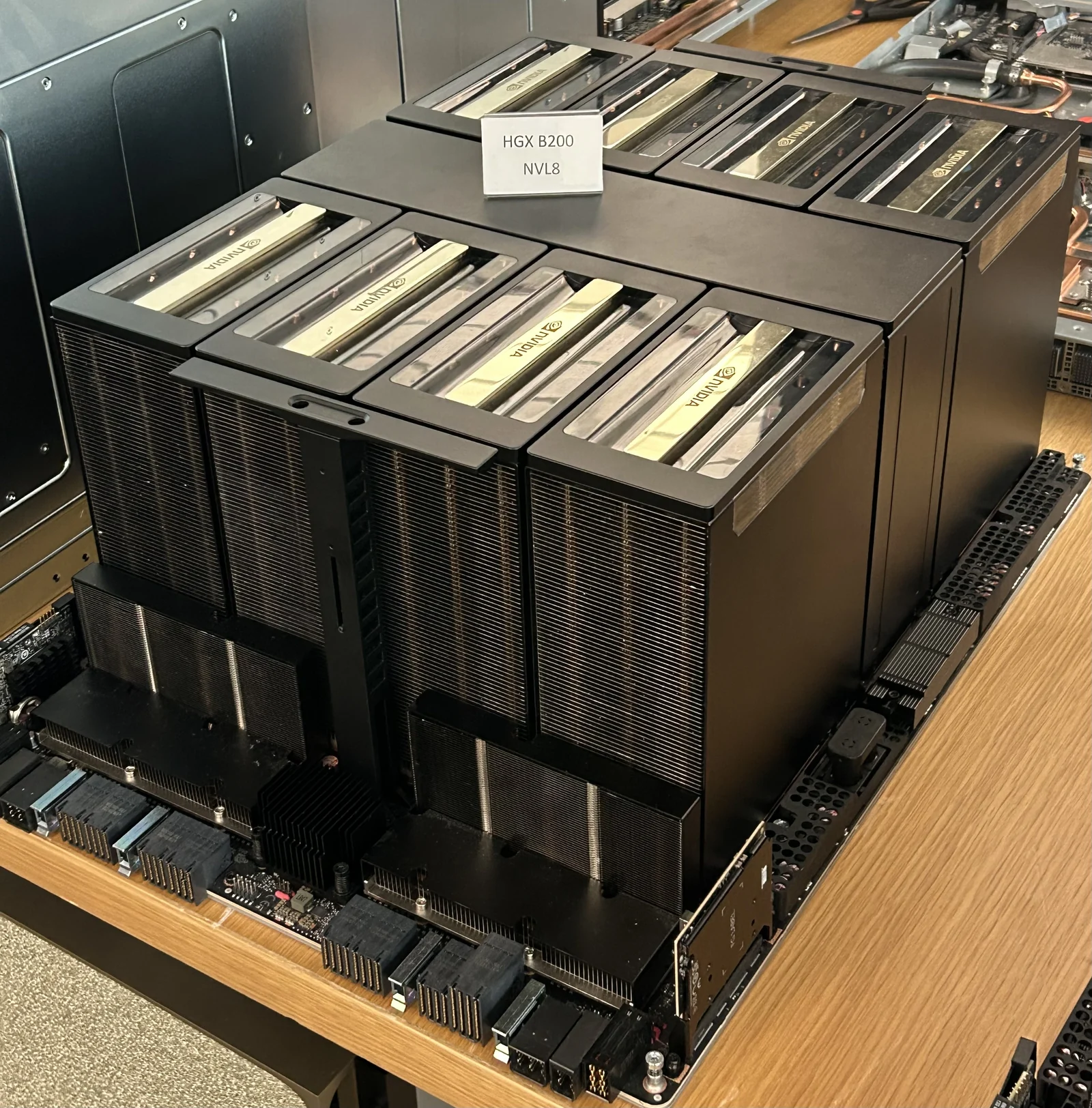
The fourth kind comes from suppliers, and none of it is a loan. Nvidia took a $30bn stake in OpenAI’s funding round, which was reported to replace a 2025 plan to invest up to $100bn, and OpenAI was expected to spend much of the fresh money on Nvidia’s chips. AMD gave OpenAI a warrant to acquire up to 160 million AMD shares, which vest as OpenAI’s purchases of AMD chips grow and as share-price, technical and commercial milestones are met. And in August 2026 Nvidia agreed to guarantee payments at a campus in Pike County, Ohio, that will host Nvidia’s computing for OpenAI under 20-year leases. Under that guarantee Nvidia hands over no money unless the tenant defaults.
The same dollar of AI spending can therefore sit behind a claim on a whole company, a claim on a tenant’s rent and guarantee, a claim on servers and a customer contract, or a supplier’s pledge to step in.
Who lent the money
The lenders behind Hyperion are PIMCO and other bond investors. CoreWeave’s secured loan was anchored by Blackstone Credit & Insurance, with other asset managers and insurers joining, and was arranged by MUFG, Morgan Stanley, Goldman Sachs and JPMorgan.
Insurers turn up again and again. Moody’s calculated in October that US life insurers, the companies that sell life policies and annuities, held about $85.2bn of investments linked to the AI industry at the end of June 2026, about 1.4% of their cash and invested assets. Their holdings of debt tied to data centres and other digital infrastructure grew by about a third in six months, and the share of that debt rated below investment grade rose from 4.7% to 6.1%. Moody’s expects the immediate effect on insurers’ portfolios to stay limited. It also says its figures probably understate the exposure, because some of it is held through special-purpose vehicles, joint ventures and investment funds.
Private credit, lending by investment funds instead of banks, is the other large source. Morgan Stanley estimates that $700bn of data-centre spending between 2026 and 2028 will be financed this way, and the Bank of England puts the assets of private-markets funds worldwide at around $16tn.
How much is owed in total, nobody can say. On 19 October Mark Habib, S&P’s global head of digital infrastructure, said the biggest technology companies probably carry more AI-linked liabilities than are publicly known. “It is safe to assume that there is more [debt] out there that we are not seeing,” he said, though S&P saw no reason to change any ratings. Moody’s counts about $2.8tn of future commitments disclosed by five big US technology companies, a mix of leases that have not yet started, purchase agreements and guarantees. Not all of that is debt, and the categories may overlap.
The lenders include some of the largest institutions in finance, and most of the digital-infrastructure debt held by US life insurers is still rated investment grade. How safe that debt is depends on the contracts behind it, and each contract has a point where it can break.
Three ways a deal goes wrong
The first is delay. On 21 October the Australian data-centre operator NextDC said that holdups in upgrading the electricity network at its M3 site in Melbourne would push about A$140m of contracted customer revenue out of the current financial year. The next increase in power at the site is now expected in 2028. NextDC shelved new developments and land purchases and cut its revenue guidance, and its shares closed down 41.7%, the worst day since it listed in 2010. A Reuters Breakingviews column listed what investors had begun to weigh: debt-financed spending, slow utilities, chip shortages and hyperscaler clients “with ironclad get-out clauses”. At NextDC the shareholders took the first hit, because revenue they had counted on was pushed back.
At Hyperion the bondholders’ money sat in Treasuries until it was drawn for building, and S&P, which rated the bonds, has warned that “substantial credit risk” could pass to Meta during construction as well as once the campus is running. Gollakota’s reading is that Meta funds the construction risk. Nvidia’s Ohio guarantees work differently again. Each one generally becomes effective only when its lease begins, and Nvidia’s obligation is subject to the landlord, SB Energy, meeting the conditions for the buildings to be ready for service. Nvidia’s filing does not say who carries the risk while the campus is being built.
The second is a customer who leaves. Meta can walk away from Hyperion after four years, and if certain other conditions are met the guarantee can then require it to pay up to the gap between the campus’s value and the threshold. At CoreWeave a departing customer could weaken the secured lenders’ prospects of repayment. They can look to the subsidiary’s servers and contracts, and some adverse events affecting certain material contracts count as defaults under the loan.
Oracle faces a different exposure: long-term leases behind a large commitment from OpenAI. In July, when Oracle had $638bn of revenue under contract but not yet delivered, analysts estimated that about half of it came from OpenAI; by the end of August the total had reached $664bn. S&P, which in July cut Oracle’s rating to BBB-, the lowest rung of investment grade, calls OpenAI a “central credit risk” and warns that if OpenAI could not pay, Oracle would be left holding long-term data-centre leases.
Nvidia’s guarantee is triggered only by certain defaults by the tenant. Nvidia may then require the landlord to look for a new tenant or start a sale, and its filing warns that a replacement may not be found on acceptable terms or timing. OpenAI has agreed to reimburse Nvidia for certain losses, but Nvidia says it may not recover the money promptly or in full. Equipment makers have stood behind their own customers before.
When the seller was also the lender

In 1999 the American telecom-equipment maker Lucent Technologies agreed to fund more than 100% of the equipment purchases of PathNet, a start-up with about 100 employees and $1.6m of annual revenue. Sales financed this way counted as revenue for Lucent, while the loans that paid for them sat on its balance sheet as assets. By September 2000 Lucent's commitments to finance its customers, in loans and guarantees, had reached $8.1bn. Then the customers began to fail. Winstar filed for bankruptcy protection in April 2001. The carrier One.Tel went into administration a month later and was then liquidated. PathNet filed for bankruptcy protection the same year. In fiscal 2001 Lucent set aside $2.2bn for uncollectible debts and customer financing, about $1.3bn of it on three projects including Winstar and One.Tel. It had built One.Tel a mobile fibre-optic network that was substantially complete, and in November 2001 it signed an agreement with the liquidator confirming that the network belonged to Lucent. Its annual report that year was blunt: "We are vulnerable to downturns in our customers' businesses as a result of our customer financing arrangements."
The third is a loan that has to be rolled over. At the end of June CoreWeave had about $20.7bn of debt principal scheduled for repayment between July 2026 and the end of 2030. On 14 October its 9.75% bonds due 2031 traded as low as 78 cents on the dollar, a yield of 16.39%, and around 21 October its unsecured debt yielded about 15%. “They need the debt markets in order to grow,” John Lloyd, a fund manager at Janus Henderson, said of the company. Traders on credit desks said the high-yield debt market was effectively on hold until after the US midterm elections in early November. On 23 October Morgan Stanley wrote that growing uncertainty over financing reduces visibility into CoreWeave’s path to putting capacity it has already contracted into service.
Oracle’s plan for its 2027 financial year, as Goldman Sachs summarised it on 23 October, combines about $20bn of new shares, already sold, with $20bn to $25bn of customer prepayments and about $20bn of new debt, and covers the rest from operating cash flow.
At CoreWeave, who loses depends on which part of the company owes the money. The $8.5bn loan sits in a subsidiary, and its lenders have first claim on that subsidiary’s assets and shares but no general claim on CoreWeave. CoreWeave’s unsecured bonds are owed by the parent and guaranteed by some of its subsidiaries, so their holders can claim against the parent and those subsidiaries but hold no security over particular assets. The shareholders own what is left after every creditor is paid. They have already taken a hit: by 22 October the stock had fallen 36% in October, and the unsecured bonds had slid with it.
What October priced
The sharpest test came on Thursday 22 October. The Nasdaq fell 2.6% and the S&P 500 1.2%, while most US stocks rose. Meta lost about 7% after its results and the news of its new share class, and the price of its five-year credit default swaps, contracts that pay out if a borrower fails, reached a record. Makers of power equipment were hit hardest: GE Vernova and Bloom Energy each fell more than 11% during the session.
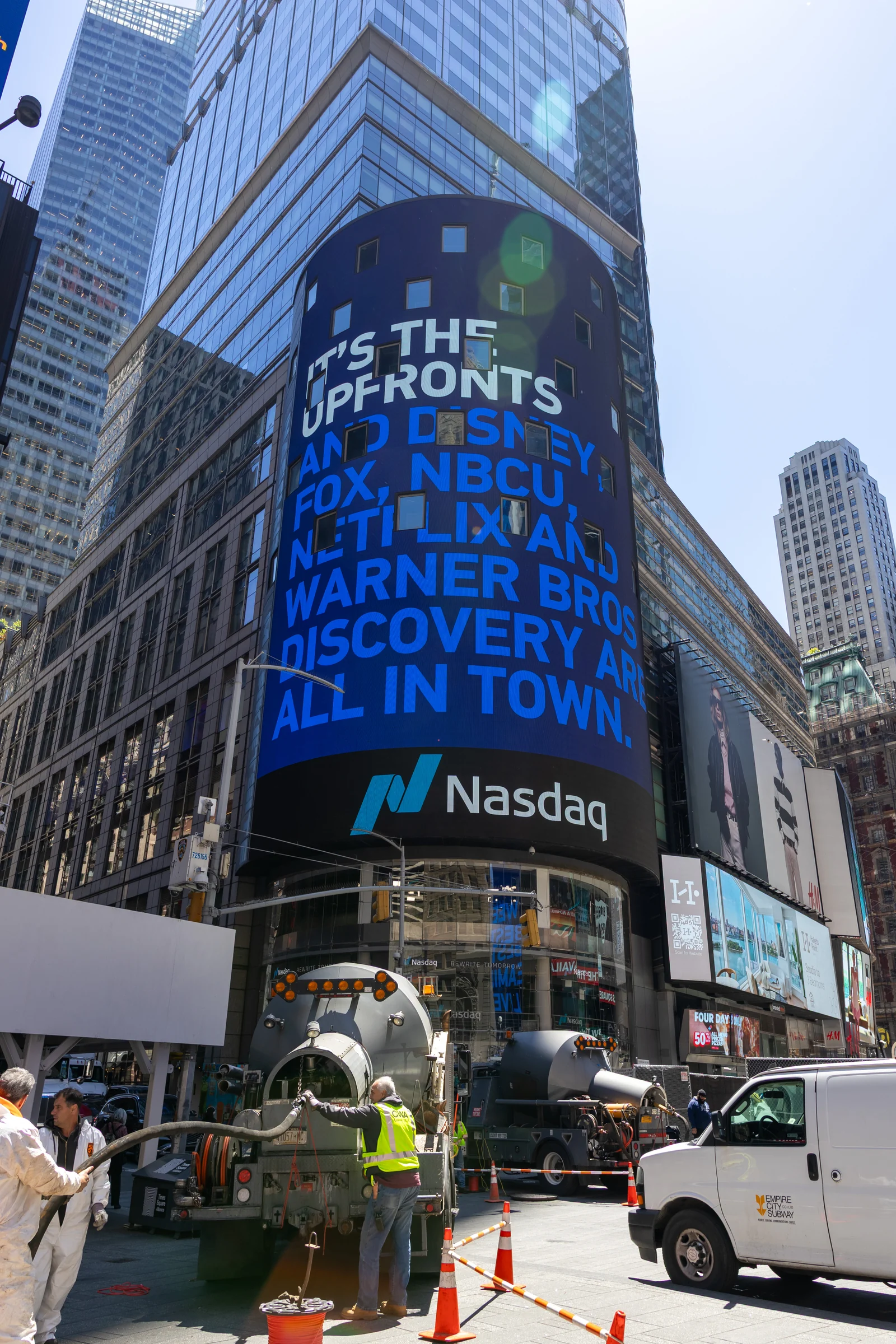
Measured from the S&P 500’s record close on 6 October, a group of companies building and equipping AI data centres, from Caterpillar to Vertiv, had fallen a median 23% by 23 October, while the Big Tech companies paying for them were down 5%. Those are share prices, which record what investors expect. A falling share price does not by itself cost a lender anything.
The credit market drew a similar line. Amanda Lynam, a strategist at Goldman Sachs, said investment-grade bonds had seen less severe price action than the neoclouds’ debt. The cost of insuring CoreWeave’s debt rose above 1,000 basis points, or 10% a year, the level that Gavan Nolan of S&P Global Market Intelligence calls a general sign of credit distress. On 22 October Nvidia’s chief executive, Jensen Huang, said demand from the neoclouds was strong. “There’s a scarcity of capital,” he added. A week earlier Jim Reid of Deutsche Bank had warned that this kind of concern “can prove to be a self-fulfilling prophecy”.
Investors also moved towards safety. The 10-year US Treasury yield fell below 5% on Thursday for the first time in a month and was back at about 5% by Friday afternoon. An S&P 500 index that leaves out AI companies closed Thursday ahead of the full index for the year. On Friday the Dow closed down 1.2% and the Nasdaq 0.2%, as US crude settled above $103 a barrel. The Bank of England had warned in September that because growth and fiscal outlooks partly depend on expected gains from AI, a reassessment could hit government bond markets as well as AI assets.
In October the heaviest credit-market blows landed on weaker borrowers that must keep raising money to keep building. The next test comes on 28 and 29 October, when Microsoft, Alphabet and Amazon report their quarterly results and spending plans.
The case for calm, and the clause it rests on
The reassuring case is strong, and most of it is true. The biggest borrowers are among the most profitable companies in the world. Meta’s revenue rose 26% in the third quarter of 2026 on higher advertising sales, and the average price of an ad rose 14%. The business paying for the spending is growing fast. Moody’s said in July that Microsoft, Alphabet, Amazon and Meta have balance sheets strong enough that their investment-grade ratings are unlikely to be under imminent threat, and in October S&P saw no need to change any ratings.
The weaker borrowers have protected their lenders too. CoreWeave’s secured loan carries an investment-grade rating because servers and a customer contract stand behind it, and Deutsche Bank estimates that about two-thirds of the company’s backlog of more than $100bn is with investment-grade customers. Apollo’s chief economist, Torsten Sløk, says demand for computing power is “significantly greater than supply”. The life insurers’ AI holdings are a small slice of their portfolios. And the IMF, which in October modelled a sharp fall in AI investment, estimated that by 2028 it would leave world output 1.1% below the IMF’s baseline forecast, as falling asset prices and tighter financial conditions weighed on spending. Petya Koeva Brooks, its deputy research director, said the drop in that scenario was unlikely to push the world into recession.
OpenAI is a harder case, because it still burns cash. In September the Financial Times reported a company presentation in which OpenAI projects negative free cash flow of $278bn over 2026 to 2030, while its revenue is meant to rise from about $36bn in 2026 to $350bn in 2030. Those are OpenAI’s own projections, reported second-hand. By analysts’ estimates in July, the same company stood behind about half of Oracle’s contracted backlog, and it is the tenant of the Ohio campus.
Nvidia’s guarantees for that campus are capped at $105bn and cover only defined portions of the lease and power payments. They end if OpenAI earns a satisfactory credit rating. If OpenAI fails to perform and a guarantee is triggered, one of the remedies Nvidia’s filing lists is to take over the lease itself. The chip designer would then be the tenant of a campus built to house its own systems.
Related articles
- The Great Stagnation: why productivity growth slowed and whether it can recover
- What happens when a country defaults — the economics and politics of sovereign insolvency
- How a single sentence written in 1602 shaped every stock market on Earth
Further reading
As an Amazon Associate, Eikleaf earns from qualifying purchases. The book links below are affiliate links: if you buy through them, we may earn a small commission at no extra cost to you.
 The Smartest Guys in the Room: The Amazing Rise and Scandalous Fall of EnronThe definitive account of Enron’s off-balance-sheet vehicles, the precedent commentators invoke when examining joint ventures like Meta’s Hyperion financing.
 Bubbles and Crashes: The Boom and Bust of Technological InnovationA study of 88 technologies over 150 years showing when new technologies produce investment bubbles, which helps judge the AI build-out.
 Manias, Panics, and Crashes: A History of Financial CrisesThe classic history of credit-fuelled booms and how losses travel to lenders and investors once they turn, updated in the 2023 edition.
Recommended videos
 11:41AI’s Next Big Risk Is Hiding in the Debt MarketBloomberg on how AI build-outs are being financed through debt and where the risk sits.
 18:20Almost No One Realizes This About AI Data CentersExplains data-center economics, depreciation and the debt stacked behind the AI boom.
 7:14Meta’s $200 Billion Bet on a Remote Data CenterMeta’s Louisiana Hyperion project, the article’s main example of off-balance-sheet AI financing.
Cite this article
Lena Martin. “Who carries the debt behind the AI boom?.” Eikleaf, 24 October 2026, updated 25 October 2026. https://www.eikleaf.com/who-carries-the-debt-behind-the-ai-boom/
Gen AI Disclaimer
Some contents of this page were generated and/or edited with the help of a Generative AI.
Media
Google Data Center, Council Bluffs, Iowa – Wikimedia Commons (Photo: Chad Davis, CC BY 2.0)
Nvidia DGX B200 8-way GPU board – Wikimedia Commons (Photo: Pokiiri, CC BY-SA 4.0)
Nasdaq Tower, May 2026 – Wikimedia Commons (Photo: Nielsoncaetanosalmeron, CC BY 4.0)
Key Sources and References
Meta Platforms. “Form 10-Q for the quarterly period ended September 30, 2026.” SEC EDGAR, 22 October 2026. https://www.sec.gov/Archives/edgar/data/1326801/000162828026066773/meta-20260930.htm
Meta Platforms. “Schedule 14C preliminary information statement (Class C common stock).” SEC EDGAR, 21 October 2026. https://www.sec.gov/Archives/edgar/data/1326801/000162828026066710/meta-20261021.htm
Meta. “Meta Announces Joint Venture With Funds Managed by Blue Owl Capital to Develop Hyperion Data Center.” Meta Newsroom, 21 October 2025. https://about.fb.com/news/2025/10/meta-blue-owl-capital-develop-hyperion-data-center/amp/
Gollakota, Prasad. “The Meta/Blue Owl deal broken down: off-balance-sheet gymnastics 24 years after Enron.” IFR, 17 December 2025. https://www.ifre.com/ifr-awards/2340435/the-metablue-owl-deal-broken-down-off-balance-sheet-gymnastics-24-years-after-enron
McGeever, Jamie. “Are AI credit cracks a warning, or a ‘buy’ signal?” Reuters (via The Edge Malaysia), 29 September 2026 (The Edge, 30 September). https://theedgemalaysia.com/node/819893
McCarty, Maddy. “Meta Ups Investment To $50B For Its Largest Data Center Project.” Bisnow, 13 July 2026. https://www.bisnow.com/news/national/data-center-development/meta-ups-economic-investment-to-50b-for-its-largest-data-center-project-135394
Gerut, Amanda. “Meta’s revenue surges to $64.6 billion, but settlements and AI spending turn screws on profit.” Fortune, 21 October 2026. https://fortune.com/2026/10/21/meta-q3-earnings-mark-zuckerberg-capex-muse/
Meta Platforms. “Meta Platforms (META) Q3 2026 Earnings Call Transcript.” Stock Analysis, 21 October 2026. https://stockanalysis.com/stocks/meta/transcripts/718643-q3-2026/
S&P Global Ratings. “AI Infrastructure Investment To Exceed $1.3 Trillion By 2027, S&P Global Ratings Says.” S&P Global, 27 August 2026. https://press.spglobal.com/2026-08-27-AI-Infrastructure-Investment-To-Exceed-1-3-Trillion-By-2027,-S-P-Global-Ratings-Says
Jones, Marc. “Hidden AI debt risks cloud tech giants’ credit outlook.” Reuters (via BusinessDay), 19 October 2026. https://www.businessday.co.za/world/2026-10-19-hidden-ai-debt-risks-cloud-tech-giants-credit-outlook/
Morgan Stanley Research. “Bridging a $1.5tr Data Center Financing Gap.” Morgan Stanley, 16 July 2025. https://prod-mssip.morganstanley.com/content/dam/msdotcom/en/assets/pdfs/Research_Bridging-Data-Center-Gap.pdf
Bank of England. “Record of the Financial Policy Committee meeting on 25 September 2026.” Bank of England, 30 September 2026. https://www.bankofengland.co.uk/-/media/boe/files/financial-policy-committee-record/2026/fpc-summary-and-record-september-2026
CNBC. “IMF warns bond yields could see a ‘disorderly’ spike.” CNBC, 13 October 2026. https://www.cnbc.com/2026/10/13/treasury-yields-imf-debt-inflation-.html
Varghese, Harshita Mary, and Matt Tracy. “Meta raises $25 billion in bond sale after lifting AI spending plan.” Reuters (via Yahoo Finance), 30 April 2026. https://finance.yahoo.com/markets/stocks/articles/meta-looks-raise-25-billion-130141093.html
Mutua, Caleb, Michael Gambale and Gowri Gurumurthy. “Meta received US$96 bil of orders for its latest jumbo bond sale.” Bloomberg (via Yahoo Finance Singapore), 30 April 2026. https://sg.finance.yahoo.com/news/meta-received-us-96-bil-085900309.html
Sophia, Deborah. “OpenAI’s $110 billion funding round draws investment from Amazon, Nvidia, SoftBank.” Reuters (via Yahoo Finance), 27 February 2026. https://finance.yahoo.com/news/openais-110-billion-funding-round-145925079.html
Quartz. “OpenAI closes $122 billion funding round, biggest ever in Silicon Valley.” Quartz (via Yahoo Finance), 1 April 2026. https://finance.yahoo.com/markets/stocks/articles/openai-closes-122-billion-funding-010940572.html
Méndez, Carlos, and Krystal Hu. “Nvidia close to investing US$30 billion in OpenAI’s mega funding round.” Reuters (via CP24), 20 February 2026. https://www.cp24.com/news/money/2026/02/20/nvidia-close-to-investing-us30-billion-in-openais-mega-funding-round-reuters-source-says/
AMD. “AMD and OpenAI Announce Strategic Partnership to Deploy 6 Gigawatts of AMD GPUs.” AMD, 6 October 2025. https://www.amd.com/en/newsroom/press-releases/2025-10-6-amd-and-openai-announce-strategic-partnership-to-d.html
NVIDIA. “Form 10-Q for the quarterly period ended July 26, 2026.” SEC EDGAR, August 2026. https://www.sec.gov/Archives/edgar/data/0001045810/000104581026000075/nvda-20260726.htm
CoreWeave. “Form 8-K and Exhibit 99.1 (DDTL 4.0 Facility).” CoreWeave, 30–31 March 2026. https://d18rn0p25nwr6d.cloudfront.net/CIK-0001769628/c1913d78-789a-487b-9184-7ace19030ded.pdf
CoreWeave. “Form 10-Q for the quarterly period ended June 30, 2026.” SEC EDGAR, August 2026. https://www.sec.gov/Archives/edgar/data/1769628/000176962826000366/crwv-20260630.htm
CNBC. “Moody’s says ‘unprecedented’ AI spending threatens credit quality.” CNBC, 24 July 2026. https://www.cnbc.com/2026/07/24/moodys-ai-spending-credit-quality-amazon-meta-alphabet.html
Mixides, Taylor. “US life insurers increase AI investments as exposure risks grow, says Moody’s.” Reinsurance News, 23 October 2026. https://www.reinsurancene.ws/us-life-insurers-increase-ai-investments-as-exposure-risks-grow-says-moodys/
Murdoch, Scott, and Rajasik Mukherjee. “Australia’s NextDC shares tank 42% amid revenue delay, deferred plans.” Reuters (via DealStreetAsia), 21 October 2026. https://www.dealstreetasia.com/stories/australias-nextdc-shares-tank-42-amid-revenue-delay-deferred-plans-498788/
Currie, Antony. “Data centres fail as AI pick-and-shovel trade.” Reuters Breakingviews, 23 October 2026. https://www.breakingviews.com/ddb76cfb4026/columns/considered-view/data-centres-fail-ai-pick-and-shovel-trade-2026-10-23/
Oracle. “Oracle Announces Q1 Results Driven by Triple Digit Growth in Cloud Infrastructure Revenues.” Oracle Investor Relations, 10 September 2026. https://investor.oracle.com/files/content_files/1q27-pressrelease-September_FINAL.pdf
heise online. “S&P downgrades Oracle to BBB-, only one notch above junk level.” heise online, 13 July 2026. https://www.heise.de/en/news/S-P-downgrades-Oracle-to-BBB-only-one-notch-above-junk-level-11363472.html
CNBC. “CoreWeave’s market confidence erodes as bond yields spike and stock sinks.” CNBC, 21–22 October 2026. https://www.cnbc.com/2026/10/21/coreweaves-market-confidence-erodes-as-bond-yields-spike-stock-sinks.html
CNBC. “CoreWeave bond yields stay near 15% as AI credit stress spreads.” CNBC, 19 October 2026. https://www.cnbc.com/2026/10/19/coreweave-oracle-ai-credit-stress.html
CNBC. “CoreWeave credit default swaps hit distress levels as investors sour on AI debt.” CNBC, 15 October 2026. https://www.cnbc.com/2026/10/15/coreweave-credit-default-swaps-hit-distress-levels-as-investors-sour-on-ai-debt.html
Burns, Mairin. “CoreWeave and Data Center Bonds Slide on Capex and Debt Overhang Concerns.” Morningstar, 16 October 2026. https://www.morningstar.com/bonds/coreweave-data-center-bonds-slide-capex-debt-overhang-concerns
CNBC. “Stock market today: live updates.” CNBC, 21–23 October 2026. https://www.cnbc.com/2026/10/21/stock-market-today-live-updates.html ; https://www.cnbc.com/2026/10/22/stock-market-today-live-update.html
Choe, Stan (Associated Press). “Sharp drops for AI stocks overwhelm markets worldwide as oil prices jump.” AP (via BNN Bloomberg), 22 October 2026. https://www.bnnbloomberg.ca/markets/2026/10/22/ai-stocks-drag-markets-down-worldwide-as-oil-prices-climb-to-their-highest-since-may/
CNBC. “Meta stock sinks nearly 7% as AI spend pushes free cash flow negative.” CNBC, 22 October 2026. https://www.cnbc.com/2026/10/22/meta-stock-q3-earnings-free-cash-flow.html
Blikre, Jared. “The AI sell-off is crushing stocks of companies leading the data center build-out.” Yahoo Finance, 23 October 2026. https://finance.yahoo.com/markets/article/the-ai-sell-off-is-crushing-stocks-of-companies-leading-the-data-center-build-out-175206076.html
Lawder, David, and Andrea Shalal. “IMF flags risks to global economy from AI market correction, war and debt.” Reuters (via Kitco), 13 October 2026, with the companion Reuters report “AI investment props up global growth, but war and debt threaten outlook, IMF says” (via Yahoo Finance). https://www.kitco.com/news/off-the-wire/2026-10-13/imf-flags-risks-global-economy-ai-market-correction-war-and-debt ; https://finance.yahoo.com/news/imf-says-ai-investment-propping-021012949.html
Dey, Mrinmay. “OpenAI forecasts cash burn near $280 billion by 2030, FT reports.” Reuters (via The Star), 18 September 2026. https://www.thestar.com.my/tech/tech-news/2026/09/19/openai-forecasts-cash-burn-near-280-billion-by-2030-ft-reports
Lucent Technologies. “Form 10-K405 for the fiscal year ended September 30, 2001.” SEC EDGAR, 28 December 2001. https://www.sec.gov/Archives/edgar/data/1006240/000095011701501896/a31752.txt
Woolley, Scott. “Carly Fiorina’s troubling telecom past.” Fortune, 15 October 2010. https://www.fortune.com/2010/10/15/carly-fiorinas-troubling-telecom-past