Last updated: · 18 min read
In brief
The International Energy Agency’s members pledged 400 million barrels of emergency oil in March 2026, by far their largest action ever. Crude prices rose more than 17% within three days. That is not proof of failure. The war kept escalating, and nothing shows what prices would have done without the release. America lent its oil rather than selling it, at premiums of up to 28%, and its reserve fell to the lowest level since 1982. About 166 million barrels may be owed back, through pumps that refill at less than a fifth of the speed they empty.
Contents
On 16 January 1991, as the air war against Iraq began, President Bush announced in Washington that the United States would start releasing oil from its Strategic Petroleum Reserve. The American barrels were the US share of a plan drawn up by the International Energy Agency (IEA), which consuming countries set up in 1974 after the first oil shock. The plan aimed to make 2.5 million barrels a day available: 2 million by drawing down stocks, the rest through demand restraint, fuel switching and a little extra production. In London the forward price of Brent crude closed at about $30 a barrel on 16 January and at $20.75 the next day, a fall the trade press called the oil market’s “biggest ever 1 day collapse”.
The first oil from the American emergency sale was delivered on 5 February. Buyers took just over half of what the government offered, mainly because they bid low for its high-sulphur crude.
On 11 March 2026, less than two weeks after American and Israeli strikes on Iran had disrupted shipping through the Strait of Hormuz, the IEA’s 32 members unanimously agreed to make 400 million barrels available. It was the agency’s sixth collective action and, in its own words, “by far the largest ever”. Between that Wednesday and the close on Friday 13 March, crude prices rose more than 17%.
Set side by side, the two episodes look like a verdict: a release that worked and one that failed. Neither price move can carry that weight. In January 1991 the first reports that allied air strikes were succeeding, with little Iraqi retaliation, reached the market together with the IEA’s announcement. The 2026 release was announced into a war that kept escalating. A price seen after an intervention can’t be credited to it without an estimate of what the price would have done anyway.
Strategic stocks are oil held for emergencies by governments, by public agencies, or by companies under government order. A headline figure for a release says nothing about how much of that oil moves, how fast, of what kind, or on what terms. A barrel in a release can be pledged on one date, contracted on another and delivered on a third. If it was lent, a fourth date follows, when it has to come back. The US reserve, the largest single contributor in March, makes all four dates visible. In the week to 16 October 2026 it held 282.7 million barrels, its lowest level since October 1982.
Following one barrel
The United States pledged 172.2 million barrels to the March action, all of it crude from public stocks and about 43% of the original 400-million-barrel pledge. Its share is set by its oil consumption. Since the US became a net petroleum exporter in 2020 it has not been bound by the IEA’s stockholding requirement, yet it is still obliged to supply just over 40% of any collective release.
Washington chose to lend rather than sell. In an exchange, as the Department of Energy (DOE) calls it, a company borrows crude from the reserve and must later return it with extra barrels as a premium. DOE’s first request for proposals, published on 13 March, offered 86 million barrels. Contracts were awarded for 45.2 million, with 55 million to come back, and the first shipments left on 20 March, nine days after the announcement.
The premiums were steep. The first solicitation required companies to return 18 to 22% more oil than they borrowed, and bidders could offer more to win contracts; the top rate applied to borrowers who took the reserve’s sour, high-sulphur crude and repaid it in sweet. Later tranches reached 28%, against 3 to 8% for a loan in 2021. The premiums reflected steep backwardation, a market in which oil for delivery now costs more than oil for delivery later. A borrower takes a barrel while oil is dear and can lock in a lower price today for the oil it must return later, which leaves room to return extra barrels. The first loans are due back in tranches between 1 November 2026 and 30 September 2028.
How fast the oil could leave depends on which rate you take. The reserve is designed to sustain 4.4 million barrels a day for up to 90 days and to start releasing within 13 days of an order. In December 2025 DOE estimated its effective drawdown capability at 2.7 million barrels a day, 61% of design, because of construction outages, ageing equipment and low inventory. The schedule announced in March was slower still: 172 million barrels over about 120 days, or roughly 1.4 million a day. Month-end stock figures show the net decline. Stocks fell by about 20 million barrels in April, 39 million in May, 33 million in June and 17 million in July, roughly 0.7, 1.3, 1.1 and 0.6 million barrels a day. From late March to 28 August releases averaged about 0.8 million a day. Even in its busiest month the reserve’s net draw was less than half of what DOE judged it could deliver.
How a salt cavern gives up its oil

The reserve's oil sits in about 60 caverns hollowed out of salt domes at four sites on the Gulf Coast of Texas and Louisiana. To release it, operators pump water into the bottom of a cavern, and the crude is pushed up to the surface and into pipelines. DOE describes the caverns as always full; what changes is the ratio of oil to water. The water dissolves salt as it goes. The caverns DOE built were designed to stay stable through up to five full drawdowns, but repeated partial drawdowns followed by refilling can leach the same part of a cavern again and again, leaving it in an undesirable shape. The large drawdown of 2022 improved some caverns by removing salt bridges left by earlier partial cycles. Every cycle, though, enlarges a cavern and narrows the salt between it and its neighbours, which reduces the caverns' long-term viability. At the end of 2024, 47 of the 60 caverns had at least four drawdowns left.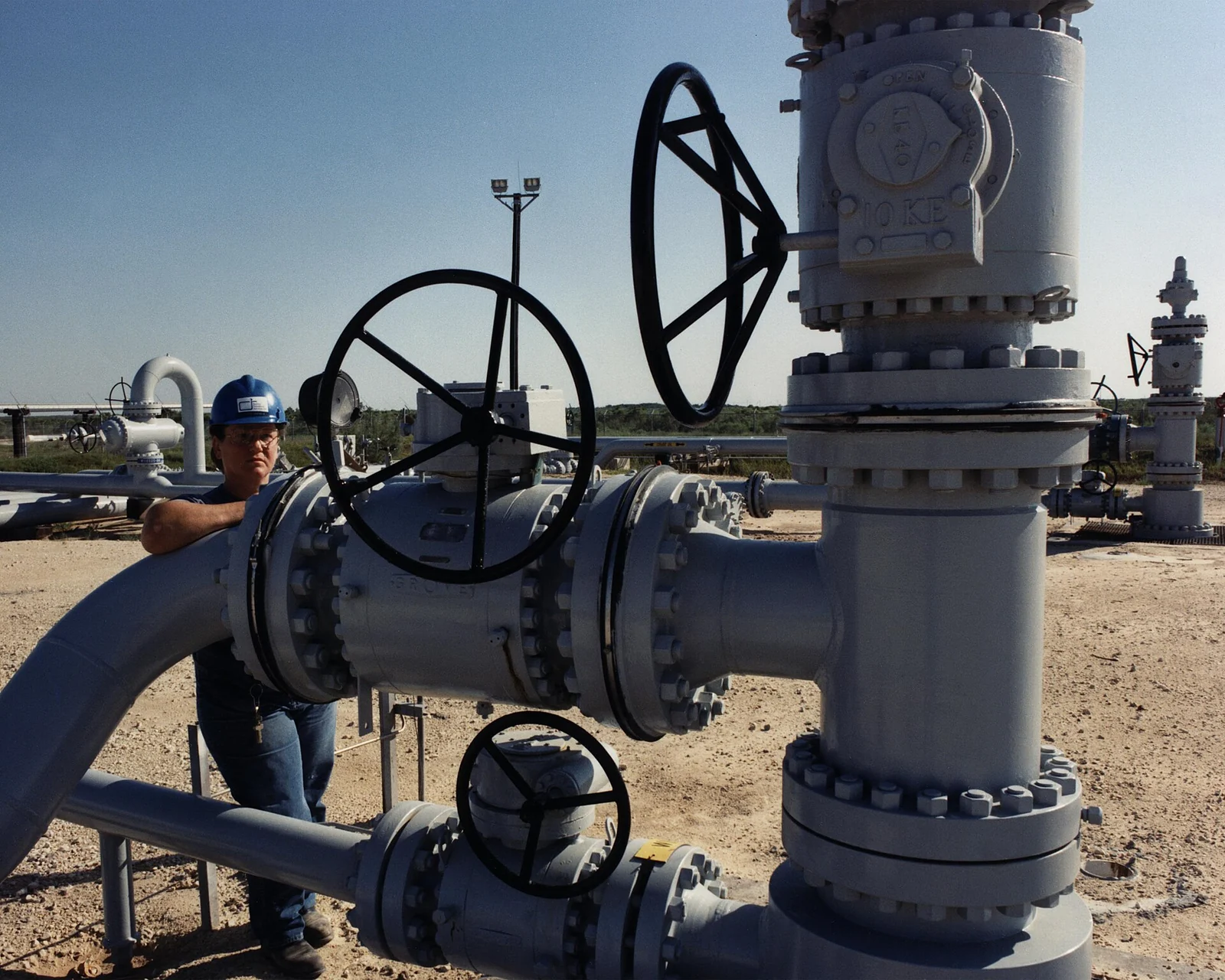
Pumps were not the only limit. A loan moves only if a company wants to borrow. When DOE offered 40 million barrels in June, with premiums of up to 24%, companies agreed to take about 500,000.
By 29 September, DOE said, its solicitations had awarded more than 133 million barrels across four completed exchanges, and further deliveries under awarded contracts were scheduled for November and December. Two newer offers, of up to 40 million barrels on 29 September and up to 17 million on 16 October, had no published awards by 24 October. An award is a contract. The stock count is the physical measure, and it roughly agrees: the reserve held 415.4 million barrels at the end of February and 282.7 million in the week to 16 October, a net fall of about 133 million barrels. DOE projects that the reserve will bottom out near 243 million barrels.
What a release counts
The American barrels, at least, show up in a weekly stock count. The global figure they belong to is built differently, and the design goes back to the first oil shock. The treaty signed for the IEA’s 16 founding members on 18 November 1974 was organised around a binding system for sharing oil in an emergency. Its founders had seen divisive pressures at work in 1973 and 1974 and feared that the next crisis would push governments towards “beggar-my-neighbour” actions instead of sharing. Members had to hold reserves sufficient for 60 days of consumption without net imports, a level raised in steps to 90 days by 1 January 1980. Today the rule is 90 days of net imports, so net exporters such as Canada, Mexico and Norway have no minimum at all. Members may count government stocks, stocks held by public agencies, or stocks that companies are legally required to keep, as crude or as refined products. When the IEA calls a collective action, each member’s share is proportionate to its share of the members’ oil consumption.
Why the sharing system stayed shut in 1979

The supply disruption that came with the Iranian revolution, from November 1978 to April 1979, was the largest on the IEA's own 2012 chart of supply crises, a gross loss of 5.6 million barrels a day at its peak. The treaty's Emergency Sharing System, under which members would divide the available oil among themselves, was built to trigger at a supply shortfall of 7%. In 1979 to 1981 the IEA never made that trigger finding, and the system was never switched on. In March 1979 members agreed instead to cut their oil demand by 2 million barrels a day, about 5% of consumption. The United States had little in reserve to draw on: its strategic stockpile, still being filled, held 59.3 million barrels at the end of November 1978. Out of those years came rules for "sub-crisis" disruptions too small to trip the treaty, ending in a Decision on Stocks and Supply Disruptions on 11 July 1984. Together with the sharing provisions, that decision became the IEA's main framework for emergencies. The first collective action came seven years later, in 1991.
That flexibility shapes what a headline number contains. The provisional commitments filed in March 2026 came to about 426 million barrels. Some 280 million were to come from public stocks. About 119 million were industry stocks, made available by lowering the minimum that companies must hold. About 28 million were extra production from Canada and Mexico, oil from wells rather than tanks. The rounded parts sum to 427, and the IEA said the split was not final. Lowering an obligation frees real oil, but it does not require anyone to sell it; a company may keep barrels it is no longer forced to hold. The practice is long established. In 2011, 22 of the 60 million barrels in the Libya action came that way, and in 2022, 46.7 of 182.7 million. Headline sizes do not simply add up either. In April 2022 the US share of the second collective action, about 60 million barrels, was part of a larger American sale, and the two together made about 240 million barrels available over six months.
South Korea shows how far the categories stretch. It pledged 22.46 million barrels in March, its largest ever. It did not sell government crude. It lent it instead, to refiners that had bought replacement cargoes outside the Middle East and were waiting the roughly 45 days such cargoes take to arrive from the Americas or Africa. The trade ministry later put the oil supplied this way between March and June at about 26 million barrels. Korea did not count these swaps as releases, because the borrowed crude went back into government reserves as soon as the replacement cargoes arrived. To meet its pledge, the government announced on 28 May that it would halve the private stockholding requirement, from 40 days to 20, starting the next day. An official explained that refiners, already holding more than they needed, would have no reason to take government oil if it were offered. Korea said it would report 12 million barrels to the IEA, about 53% of its pledge, and an official said that falling short of a pledge carried no particular penalty. Government stocks were held back in case the Middle East got worse. How the IEA counts Korea’s share has not been made public.
Japan took the plainer route. It released about 90 million barrels from government reserves in two rounds, in March and May. In August its trade minister, Ryosei Akazawa, said part of the volume already approved for release had gone unused because alternative supplies had been secured. By then the government’s own crude reserves, counted on their own, had fallen below the equivalent of 90 days of net imports, the level the IEA requires of a country’s eligible stocks as a whole. The government planned to restore them during the fiscal year ending in March 2027.
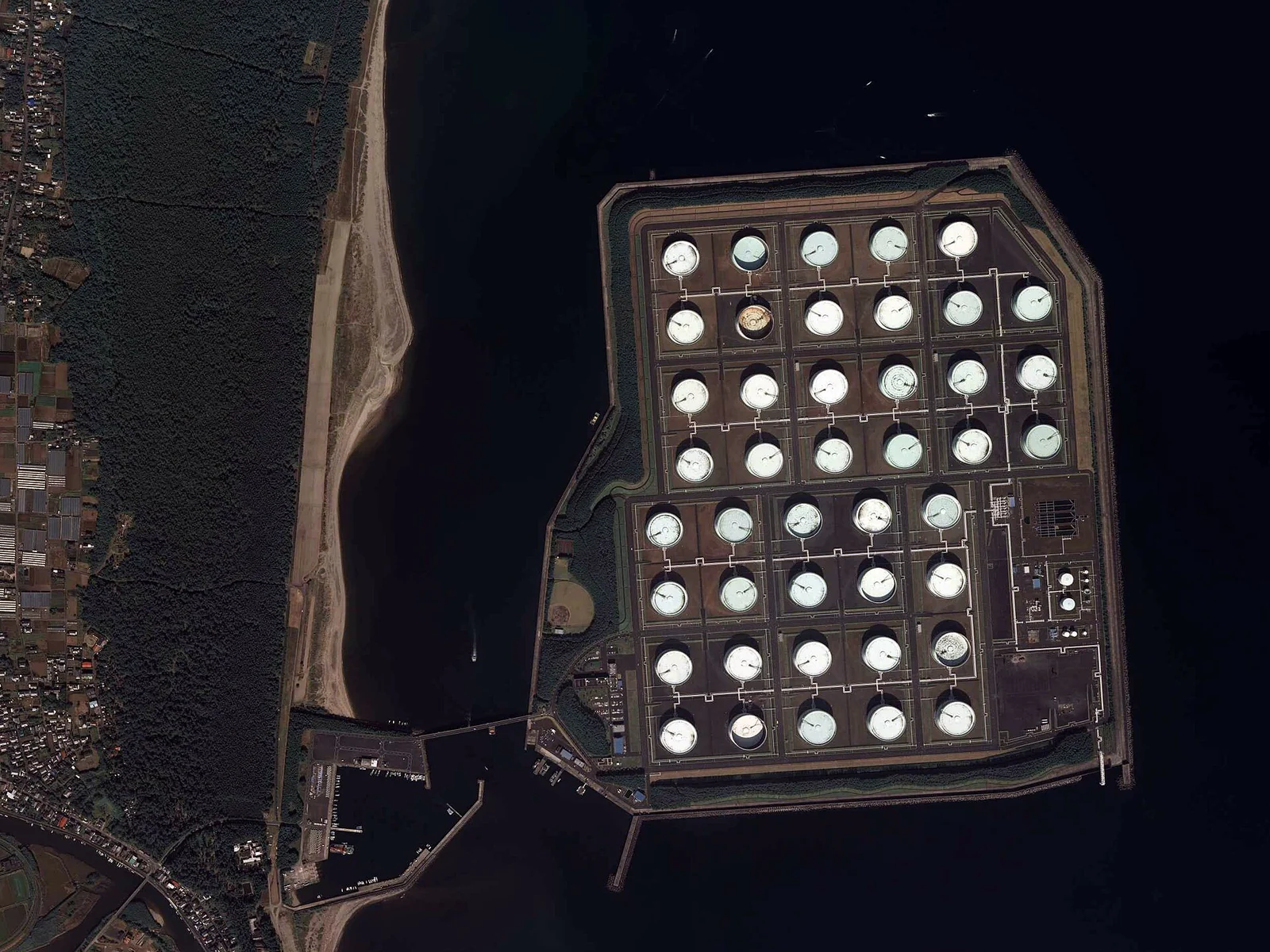
The kind of oil matters too. Crude has to pass through a refinery before it becomes diesel or gasoline, so extra crude does little for a fuel shortage when refineries cannot turn it into more of that fuel. At the end of January 2026 about 75% of OECD governments’ emergency stocks were crude. Only in OECD Europe were refined products the majority, at 60%. The March action was largely crude, with Europe’s contributions mainly products. The US reserve holds crude only; the country’s one product reserve, in the Northeast, holds 1 million barrels of heating oil.
By 15 October the IEA’s Governing Board counted about 330 million barrels as released. It did not say how that total divided between public stocks, lowered obligations and extra production, so the figure cannot be read as oil delivered to refineries. The 100-million-barrel release that G7 leaders announced on 2 October was, by the IEA’s own account, the part of the March pledges that had not yet been released. It followed a US threat to ban diesel exports unless Europe drew on its emergency stocks, and a complaint on 29 September from Chris Wright, the US energy secretary, that several European members had released “only a fraction” of what they had pledged.
Against the size of the hole
Measured against the shortfall it was meant to cover, the release looks smaller. In March the IEA expected world oil supply to fall by 8 million barrels a day that month. Had the 330 million barrels it counted between 11 March and 15 October flowed evenly, they would have averaged about 1.5 million barrels a day. In October the IEA forecast that world supply in 2026 would average 5.8 million barrels a day less than in 2025, a gap of about 2.1 billion barrels over the year. The 330 million barrels come to about 16% of that. The comparison shows scale only. A fall from one year to the next is not the same as the oil lost to the war, so it cannot say what share of that loss the release replaced.
The IEA itself had framed the action modestly in March. It described the action as a significant buffer and named the resumption of regular shipping through Hormuz as the most important factor in restoring stable flows.
By October the hole was smaller and harder to predict. Crude exports from Gulf producers recovered to more than 75% of their pre-war level in September. The IEA still expected the market to stay in deficit to the end of the year, with “any eventual surplus” emerging only in 2027, and called the recovery fragile. By 23 October the month had brought more confirmed or reported attacks on ships in and around Hormuz than any month in records going back to 2017.
What the studies can measure
The question most people ask about a release is whether it lowered prices. The price after a release reflects everything else that happened at the same time: the fighting, the weather, the output of other producers, the expectations of traders. Isolating the release takes a model of what prices would have done without it. Two pairs of economists have built such models, and they measure different things.
Lutz Kilian and Xiaoqing Zhou model month-to-month changes in the American reserve alone. Their price is the cost of imported crude to US refiners, adjusted for inflation, and for each episode they estimate the cumulative effect of the reserve’s changes over the months of the intervention. For the Gulf crisis, from October 1990 to April 1991, the estimate is a fall of about 6%, less than $2 a barrel on a September 1990 price of $29.88, and they find “no evidence” that the intervention prevented a much larger rise. The release after Hurricane Katrina in 2005 also lowered the price by about 6%. They call it a “blunt tool”, because the hurricane’s main effect was a shortage of gasoline rather than crude, and buyers took only 11 of the 30 million barrels offered for sale. The release during the Libyan civil war in 2011 did better, cutting the real price by about 11%, roughly $12 a barrel against a May 2011 price near $108.
One episode in their data resembles 2026 more closely. Between 2000 and 2004 the reserve ran a heating-oil exchange, and the oil was understood from the start to be coming back. At its strongest, the estimated effect was a fall of about 14% in the real price, about $4 a barrel. By the end of the exchange period the cumulative effect had turned into a rise of about 8.5%, or $2 a barrel. Those years also saw a separate expansion of the reserve, and the authors say the two episodes should be read together. Across their cases they conclude that exchanges ultimately raise the real price of oil, while emergency drawdowns lower it.
Richard Newell and Brian Prest, in a working paper that has not been peer reviewed, model something else: the crude held by companies across the OECD, with a release treated as a sudden, unexpected addition to it. On that model, 10 million barrels lowers spot prices temporarily by about 2 to 3%. They then take away the 60 million barrels the IEA made available in 1991, and again in 2011, and simulate what prices would have done. Their prices are monthly averages in 2014 dollars. Without the 1991 release, they estimate, prices would have fallen only to about $45 a barrel instead of about $37, a difference of roughly 20%, statistically significant only for a short time and generally not after nine to 12 months. Without the 2011 release, prices would briefly have risen to about $135 instead of staying near $110, again about 20%. The 2011 figure covers the whole IEA action, including the barrels freed by lowering stock obligations.
The two sets of estimates cannot be lined up against each other. One follows changes in the American reserve and the cost of crude to US refiners; the other simulates whole IEA actions against a different price series. The models also treat the market differently. Kilian and Zhou let companies react: when public stocks fall, private stocks tend to rise in the short run and offset part of the release, although the authors find this does not change their conclusions. They add that where a release was announced a month before the oil moved, as in 2011, their figures may understate the effect. Newell and Prest treat every release as a surprise; if the market saw it coming, they argue, the effect would arrive earlier rather than vanish. Both find that emergency releases lowered prices for a time. Neither covers an action the size of 2026’s, and only one of Kilian and Zhou’s episodes was a loan.
Government estimates sit inside the same uncertainty. In July 2022 the US Treasury used a simple supply-and-demand calculation to estimate that the release of that year, with its IEA partners, had lowered American gasoline prices by 17 to 42 cents a gallon. The estimate assumed that lower crude costs passed in full to the pump, and it set aside a 17-million-barrel rise in private US crude stocks during the release.
No study estimating the effect of the 2026 release had been published by 24 October. Brent closed at $72.48 the day before the war, reached a four-year high of $126.41 on 30 April, and fell below $80 in early August as more oil came through Hormuz. Then the attacks resumed, among them the bombing of Saudi Arabia’s East-West pipeline on 11 September, and on 23 October Brent settled at $116.72. Releases ran through all of it.
The IEA describes the release in terms of supply. On 2 October the IEA said the release, as its executive director Fatih Birol told G7 leaders, had “played a significant role in plugging the supply gap and reassuring markets”. In 2012 the agency described its 2011 Libya action more cautiously, as having “played at least a partial role in helping avoid a damaging price spike”. Politicians promised lower prices. Wright presented the March action as a response to President Trump’s request “to lower energy prices”, and in October the G7 said its measures would “shield households and businesses from price shocks”. The IEA’s own description of its system says it “is not a tool for price intervention” and exists to offset a physical shortage.
The evidence supports neither of the easy readings. Prices rose in 2026 while the war escalated, and that rise says nothing by itself about the release; in the episodes the models cover, releases lowered prices for a time. Nor does the record show what 2026 prices would have been without it. The historical estimates come from smaller actions, measured in different ways, and part of the 2026 tally consists of obligation cuts and of loans that must come back.
The repayment calendar
A loan ends with a delivery in the other direction. By 29 September DOE had awarded more than 133 million barrels and described its loans as earning a 25% premium in returned barrels. If that rate holds across all of it, about 166 million barrels are owed back. The first loans return in tranches between 1 November 2026 and 30 September 2028. DOE said barrels lent in later spring tranches would come back “by next year”. On 10 October it authorised hurricane exchanges of up to 4 million barrels for ExxonMobil and BP, partly by speeding up delivery of crude already awarded to ExxonMobil, with the oil due back in 2027.
Putting oil back is slower than taking it out. The reserve’s fill system is designed for 0.785 million barrels a day, less than a fifth of its design drawdown rate, and in December 2025 DOE put its effective fill capability at 0.44 million. At that rate, pumping 166 million barrels into the caverns would take about 378 days. At 0.672 million barrels a day, the system’s rate under optimum conditions, it would take about 247. These are pumping times only. They do not show whether each tranche can meet its own repayment deadline.
The borrowers carry the repayment. DOE presents the premium barrels as a way for the reserve to grow beyond its current level, and in March Wright said the United States had arranged to replace the released oil with about 200 million barrels “within the next year” and “at no cost to the taxpayer”. The first contracts allow repayment until September 2028.
For the market, the heating-oil exchange of 2000 to 2004 offers a pattern rather than a forecast: Kilian and Zhou’s model puts prices lower at first and higher by the end of the exchange. The IEA tentatively expects a surplus some time in 2027, so oil returned that year could land in a looser market than the one it left.
Refilling the reserve beyond what the loans bring back means buying oil. DOE has estimated that refilling to peak capacity would take about 250 million barrels, at a cost of roughly $20 billion when oil was near $80. A 2025 law provided $171 million for such purchases, enough for about 2 million barrels, and by May 2026 DOE had used that money for a single contract to buy 1 million. Other members face their own refills, Japan among them. On 2 October the G7 asked the IEA for recommendations on future responses, including how stocks should be replenished. By 24 October none had been published.
On 21 October DOE invited bids for a smaller, more targeted loan: up to 315,000 barrels of heating oil from its Northeast reserve, with deliveries to be completed by 13 November and the same volume, plus a premium, due back before the 2027–28 heating season. Wright called it “a temporary measure to solve a temporary supply disruption”. Two days later DOE authorised a loan of up to 400,000 barrels of crude to a Louisiana refinery whose supplies had been disrupted. In November and December 2026, crude is scheduled to leave the strategic reserve under loans already awarded, in the same weeks that the window for repaying the first loans opens.
Related articles
- Dollar dominance – why the world’s most traded commodity isn’t oil
- The ceasefire economy: what actually causes wars to end — and why so many peace agreements collapse
- How insurance companies quietly govern the world’s oceans
Further reading
As an Amazon Associate, Eikleaf earns from qualifying purchases. The book links below are affiliate links: if you buy through them, we may earn a small commission at no extra cost to you.
Recommended videos
 5:36Why the U.S. Stores About 400 Million Oil Barrels in Caves | WSJHow the Strategic Petroleum Reserve’s salt caverns work and how fast oil can be drawn out.
 14:03The IEA’s largest ever emergency oil stock releaseThe IEA itself explains its record 2026 coordinated stock release.
 2:53IEA: ‘Significant strain’ in diesel marketsIEA on strain in diesel markets, showing why released crude doesn’t fix every fuel shortage.
Cite this article
Lena Martin. “What emergency oil stockpiles can and cannot do.” Eikleaf, 24 October 2026, updated 25 October 2026. https://www.eikleaf.com/what-emergency-oil-stockpiles-can-and-cannot-do/
Gen AI Disclaimer
Some contents of this page were generated and/or edited with the help of a Generative AI.
Media
Crude oil pipes at the SPR Bryan Mound site – U.S. Department of Energy
Wellheads at Bryan Mound – U.S. Department of Energy
Key Sources and References
Kilian, Lutz, and Xiaoqing Zhou. “Does drawing down the US Strategic Petroleum Reserve help stabilize oil prices?” Journal of Applied Econometrics 35, no. 6 (2020): 673–691. https://doi.org/10.1002/jae.2798 (working paper version: Federal Reserve Bank of Dallas Working Paper 1916, 2019, https://www.dallasfed.org/-/media/documents/research/papers/2019/wp1916.pdf)
Newell, Richard G., and Brian C. Prest. “Informing SPR Policy Through Oil Futures and Inventory Dynamics.” NBER Working Paper 23974, October 2017. https://www.nber.org/papers/w23974
Harris, Benjamin, and Catherine Wolfram. “The Price Impact of the Strategic Petroleum Reserve Release.” US Department of the Treasury, 26 July 2022. https://content.govdelivery.com/accounts/USTREAS/bulletins/3252715
US Government Accountability Office. “Energy Security: Congress and DOE Need a Unified Plan to Align Priorities and Investments for the Strategic Petroleum Reserve.” GAO-26-106918, May 2026. https://www.gao.gov/assets/gao-26-106918.pdf
Oil & Gas Journal. “Oil prices log record plunge despite war start.” 21 January 1991. https://www.ogj.com/general-interest/companies/article/17238743/oil-prices-log-record-plunge-despite-war-start
US Department of Energy. “History of SPR Releases.” Accessed 24 October 2026. https://www.energy.gov/ceser/history-spr-releases
Scott, Richard. The History of the International Energy Agency: The First 20 Years, Vol. 1. Paris: International Energy Agency, 1994. https://iea.blob.core.windows.net/assets/9f9fe7d6-223a-40db-8725-d8d2539b0e3f/TheHistoryoftheInternationalEnergyAgency-TheFirst20Years.pdf
Scott, Richard. The History of the International Energy Agency: The First 20 Years, Vol. 2. Paris: International Energy Agency, 1994. https://iea.blob.core.windows.net/assets/521c392f-dc53-4ab7-9970-b3ab8c29e82c/TheHistoryoftheInternationalEnergyAgency-vol2.pdf
International Energy Agency. “Oil security and emergency response.” Accessed 24 October 2026. https://www.iea.org/about/oil-security-and-emergency-response
International Energy Agency. “Oil Stocks of IEA Countries.” Updated 12 August 2026. https://www.iea.org/data-and-statistics/data-tools/oil-stocks-of-iea-countries
International Energy Agency. “IEA Response System for Oil Supply Emergencies.” 2012. https://www.energy.gov/sites/prod/files/2013/09/f3/IEA%20Response%20System%20for%20Oil%20Supply%20Emergencies%202012.pdf
International Energy Agency. “IEA confirms Member country contributions to collective action to release oil stocks in response to Middle East disruptions.” 19 March 2026. https://www.iea.org/news/iea-confirms-member-country-contributions-to-collective-action-to-release-oil-stocks-in-response-to-middle-east-disruptions
International Energy Agency. “IEA confirms member country contributions to second collective action to release oil stocks in response to Russia’s invasion of Ukraine.” 7 April 2022. https://www.iea.org/news/iea-confirms-member-country-contributions-to-second-collective-action-to-release-oil-stocks-in-response-to-russia-s-invasion-of-ukraine
International Energy Agency. Oil Market Report, March 2026. 12 March 2026. https://iea.blob.core.windows.net/assets/a25ddf53-cd6c-4910-ac90-16bfd28399e7/-12MAR2026_OilMarketReport.pdf
International Energy Agency. Oil Market Report, October 2026. 14 October 2026. https://www.iea.org/reports/oil-market-report-october-2026
International Energy Agency. “Executive Director participates in G7 Leaders’ meeting on energy security and markets.” 2 October 2026. https://www.iea.org/news/executive-director-participates-in-g7-leaders-meeting-on-energy-security-and-markets
International Energy Agency. “Statement by IEA Executive Director on meeting of IEA Member governments on 7 October 2026.” 7 October 2026. https://www.iea.org/news/statement-by-iea-executive-director-on-meeting-of-iea-member-governments-on-7-october-2026
International Energy Agency. “IEA Governing Board statement on energy markets and security.” 15 October 2026. https://www.iea.org/news/iea-governing-board-statement-on-energy-markets-and-security
G7 Leaders. “G7 Leaders’ statement on global energy security and market stability.” 2 October 2026. https://www.pm.gc.ca/en/news/statements/2026/10/02/g7-leaders-statement-global-energy-security-and-market-stability
US Department of Energy. “United States to release 172 million barrels of oil from the Strategic Petroleum Reserve” (statement by Secretary Chris Wright). 11 March 2026. https://www.energy.gov/articles/united-states-release-172-million-barrels-oil-strategic-petroleum-reserve
US Department of Energy. “Energy Department Initiates Strategic Petroleum Reserve Emergency Exchange to Stabilize Global Oil Supply.” 13 March 2026. https://www.energy.gov/articles/energy-department-initiates-strategic-petroleum-reserve-emergency-exchange-stabilize
US Department of Energy. “Energy Department begins delivering SPR barrels at record speeds.” 20 March 2026. https://www.energy.gov/hgeo/articles/energy-department-begins-delivering-spr-barrels-record-speeds
US Department of Energy. “Energy Department Issues RFP to Continue Swift Execution of President Trump’s 172-Million-Barrel Strategic Petroleum Reserve Exchange.” 30 April 2026. https://www.energy.gov/hgeo/opr/articles/energy-department-issues-rfp-continue-swift-execution-president-trumps-172
US Department of Energy. “Energy Department Initiates Additional Strategic Petroleum Reserve Emergency Exchange.” 1 April 2026. https://www.energy.gov/hgeo/articles/energy-department-initiates-additional-strategic-petroleum-reserve-emergency-exchange
US Department of Energy. “The United States Energy Department Continues Execution of Strategic Reserve Release Commitments.” 29 September 2026. https://www.energy.gov/articles/united-states-energy-department-continues-execution-strategic-reserve-release-commitments
US Department of Energy. “Energy Department Authorizes Strategic Petroleum Reserve Exchange to Address Supply Disruptions Due to Hurricane.” 10 October 2026. https://www.energy.gov/articles/energy-department-authorizes-strategic-petroleum-reserve-exchange-address-supply
US Department of Energy. “Energy Department Authorizes Exchange from Northeast Home Heating Oil Reserve.” 21 October 2026. https://www.energy.gov/articles/energy-department-authorizes-exchange-northeast-home-heating-oil-reserve
US Department of Energy. “Energy Department Authorizes Strategic Petroleum Reserve Exchange to Support Fuel Supply Stability.” 23 October 2026. https://www.energy.gov/articles/energy-department-authorizes-strategic-petroleum-reserve-exchange-support-fuel-supply
US Department of Energy. “Strategic Petroleum Reserve,” “Northeast Home Heating Oil Reserve” and “Northeast Gasoline Supply Reserve (NGSR).” Accessed 24 October 2026. https://www.energy.gov/hgeo/opr/strategic-petroleum-reserve, https://www.energy.gov/hgeo/opr/northeast-home-heating-oil-reserve and https://www.energy.gov/hgeo/opr/northeast-gasoline-supply-reserve-ngsr
US Energy Information Administration. “Weekly Petroleum Status Report, Table 1: U.S. Petroleum Balance Sheet,” week ending 16 October 2026, released 21 October 2026. https://www.eia.gov/petroleum/supply/weekly/archive/2026/2026_10_21/pdf/table1.pdf
US Energy Information Administration. “U.S. Ending Stocks of Crude Oil in SPR” (monthly). Accessed 24 October 2026. https://www.eia.gov/dnav/pet/hist/LeafHandler.ashx?n=PET&s=MCSSTUS1&f=M
Webster, Jamie, and Morgan D. Bazilian. “The risks of the strategic petroleum reserve’s four-decade low.” Atlantic Council, 2 October 2026. https://www.atlanticcouncil.org/in-depth-research-reports/issue-brief/the-risks-of-the-strategic-petroleum-reserves-four-decade-low/
Reuters. “Factbox: US oil loan from emergency reserve depends on stiff premiums.” 18 March 2026 (via BOE Report). https://boereport.com/2026/03/18/us-oil-loan-from-emergency-reserve-depends-on-stiff-premiums/
Reuters. “US solicits exchange of up to 17 million barrels of oil from strategic reserve.” 16 October 2026 (via BOE Report). https://boereport.com/2026/10/16/us-solicits-exchange-of-up-to-17-million-barrels-of-oil-from-strategic-reserve/
Reuters. “Japan plans no crude oil release from national reserve in September, October.” 24 August 2026 (via BOE Report). https://boereport.com/2026/08/24/japan-plans-no-crude-oil-release-from-national-reserve-in-september-october/
Russell, Clyde. “China uses crude stockpiles, but rising oil imports may curtail draws.” Reuters, 20 October 2026 (via BOE Report). https://boereport.com/2026/10/20/china-uses-crude-stockpiles-but-rising-oil-imports-may-curtail-draws-russell/
Reuters. “Ship attacks in Strait of Hormuz hit record high in October.” 23 October 2026 (via BOE Report). https://boereport.com/2026/10/23/ship-attacks-in-strait-of-hormuz-hit-record-high-in-october/
Kimball, Spencer. “The biggest release of emergency oil stockpiles in history was announced. Why crude may keep rising.” CNBC, 14 March 2026. https://www.cnbc.com/2026/03/14/iran-war-iea-oil-stockpile-spr-strait-hormuz.html
Kimball, Spencer. “Depleted strategic oil reserve nears level that raises concerns about damage to caverns, operations.” CNBC, 15 August 2026. https://www.cnbc.com/2026/08/15/strategic-petroleum-reserve-spr-oil-iran-war-caverns.html
Kimball, Spencer, and Chloe Taylor. “Brent crude oil tops $116, a six-month high, as tensions swell in the Middle East.” CNBC, 23 October 2026. https://www.cnbc.com/2026/10/23/oil-price-brent-wti-iran-war-saudi-arabia.html
CNN. “Europe bows to US pressure to release diesel reserves ahead of midterm elections.” 2 October 2026. https://www.cnn.com/2026/10/02/europe/us-europe-diesel-reserves-intl
Yonhap. “S. Korea to release 22.46 mil. barrels from oil reserves under IEA plan.” Korea Times, 12 March 2026. https://www.koreatimes.co.kr/southkorea/20260312/s-korea-to-release-2246-mil-barrels-from-oil-reserves-under-iea-plan
S&P Global Commodity Insights. “South Korea to release record 22.46 million barrels of oil reserves in emergency action.” 11 March 2026 (via Hellenic Shipping News). https://www.hellenicshippingnews.com/south-korea-to-release-record-22-46-million-barrels-of-oil-reserves-in-emergency-action/
KED Global. “S.Korea to release strategic oil reserves to refiners; Asiana cuts flight schedules.” 1 April 2026. https://www.kedglobal.com/business-politics/newsView/ked202603310008
Seoul Economic Daily. “Korea to Meet IEA Stockpile Release Pledge by Cutting Private Reserve Mandate.” 28 May 2026. https://en.sedaily.com/finance/2026/05/28/korea-cuts-private-stockpile-mandate-to-meet-iea-oil
Nam Soo-hyun. “South Korea cushions Iran war oil shock as Japan’s Saudi crude imports plunge.” Korea JoongAng Daily, 21 October 2026. https://www.koreajoongangdaily.com/business/korea-cushions-iran-war-oil-supply-shock-as-japans-imports-plunge/12929166
S&P Global Commodity Insights. “Japan to proceed with oil shipping aid, restore national crude reserves to 90 days of net imports.” 24 August 2026 (via Hellenic Shipping News). https://www.hellenicshippingnews.com/?p=1145478