Last updated: · 18 min read
In brief
Saudi Arabia spent an estimated $83.2bn on its armed forces in 2025, more than Turkey and Pakistan together. Yet with Houthi strikes reaching Riyadh, it has spent the autumn asking other governments for help, and each has answered on its own terms. For decades, Saudi forces were organised to protect the monarchy from its own soldiers as well as from enemies. Separate commands make a coup harder, and joint fighting harder too. Money buys hardware. A unified chain of command is harder to buy.
Contents
On Monday 5 October 2026, the foreign and defence ministers of Saudi Arabia, Turkey and Pakistan met in Riyadh. Afterwards the three governments said they would “provide the agreed military forces and capabilities and ensure their rapid deployment” in the kingdom. As the announcement came, loud blasts rang out in the north of the city, near King Khalid International Airport. An AFP journalist reported a “powerful explosion”. A resident of the area said “the windows in my house shook.”
It was the first time anyone had invoked the alliance that Crown Prince Mohammed bin Salman, President Recep Tayyip Erdogan and Prime Minister Shehbaz Sharif had signed in Mecca on 7 August. Its central promise mirrors NATO’s: an external armed attack on one member counts as an attack on all three. Two months after the signing, the biggest military spender of the three was receiving pledges of forces from the other two.
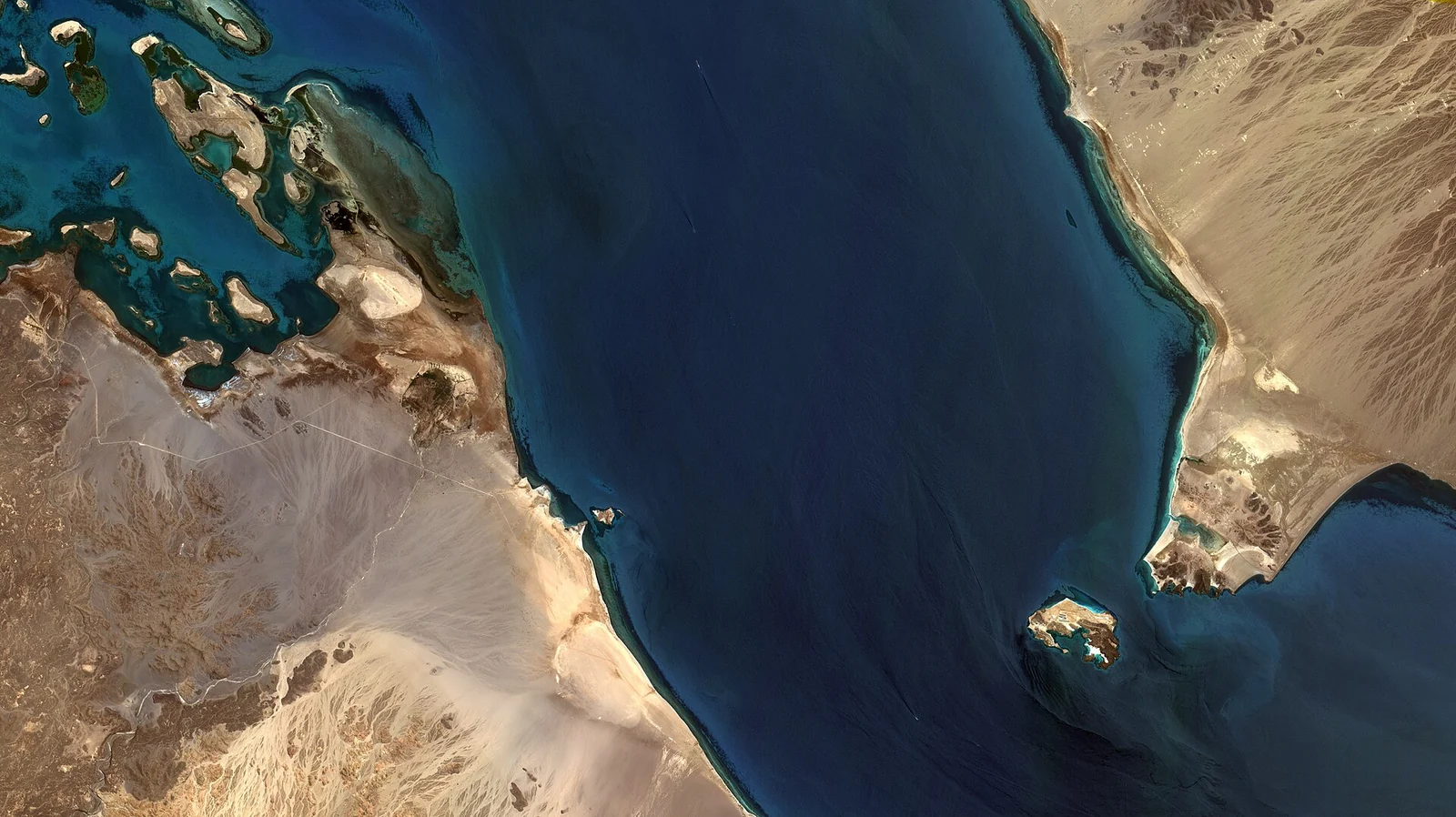
The attacks came from Yemen. The Houthis, an Iran-aligned movement that controls Yemen’s most populous areas, including the capital, Sanaa, had kept a truce with Riyadh for four years. It broke in early July. On 10 September Houthi fighters took the Red Sea port of Mokha, overrunning government forces despite sustained Saudi air support, and the next day they reached Perim island, at the narrowest point of the Bab el-Mandeb strait. Riyadh’s answer was an offensive led by Yemeni ground troops and backed by Saudi air power. On 5 October, the spokesman for the Saudi-led coalition said 100 warplanes had flown at daybreak in support. Five days later a strike on Riyadh’s airport killed at least 12 people. By 23 October Brent crude had touched its highest price since early May, after more Houthi attacks inside the kingdom, and Aramco had ordered staff out of its headquarters in Dhahran the day before. Early on 24 October the Saudi-led coalition said its air defences had destroyed a ballistic missile fired at Riyadh.
None of this is happening to a poor country. Saudi Arabia spent an estimated $83.2bn on its armed forces in 2025, by the Stockholm International Peace Research Institute’s (SIPRI) count. That is more than Turkey ($30.0bn) and Pakistan ($11.9bn) spent together. Yet the kingdom has spent the autumn asking other governments for help, and each has offered it on terms of its own.
How much help is coming is partly hidden. The 5 October statement gave neither the size of the deployment nor the role the troops would play. By 21 October Pakistan was still declining to give details, and Turkey had sent no personnel.
What Riyadh asked for, and what Washington would not do
The requests Riyadh made to its allies were about the sky. On 16 September two regional officials told the Associated Press that Saudi Arabia was running low on missile interceptors and had asked France, Britain, Pakistan and Egypt to deploy air-defence support. One of them described a kingdom in a “very difficult position”, forced to protect not only military bases and government installations but oil facilities across the kingdom. The second official said Riyadh also wanted its allies to join a collective response against the Houthis, but “the decision now is to give diplomacy a chance”. Turkish and Pakistani officials said that day that they had received no Saudi request.
That narrows the problem. A shortage of interceptors is a matter of stockpiles and production lines, and allies lending each other air defence is ordinary alliance behaviour. Saudi soldiers have fought in Yemen before, and this autumn the kingdom’s top cleric has been rallying those on its front line. The harder question is which kinds of protection money can secure on demand, and on whose terms.
The terms Riyadh wanted most were American. In July, a person familiar with the matter told Reuters, Saudi Arabia had assured Washington that it could fight the Houthis on its own. On 10 September, the day Mokha fell, the crown prince phoned President Donald Trump at least twice. Trump did not agree to strike; Washington offered intelligence sharing and help with targeting instead. The New York Times later reported that after a further call Trump ordered preparations for strikes and then reversed himself on a Sunday, with target lists approved and bombs being loaded onto American jets. The Times also recalled why strikes are no sure cure: the Houthis had absorbed about eight weeks of intensive American bombing in 2025 before Trump announced a truce.
After the Riyadh airport attack, Trump was asked on 10 October whether the United States would join Saudi strikes. “We may. We’re going to look at it,” he said. Three days later he declined to say: “I can’t tell you that.” No American decision had been reported by 23 October.
On paper the partnership had grown closer in November 2025, when Trump and the crown prince signed a Strategic Defense Agreement. The White House presented it as strengthening a defence relationship more than 80 years old and making it easier for American defence firms to work in the kingdom. Nothing in its account of the deal committed American forces to fight for Saudi Arabia. The 2026 National Defense Strategy asks regional partners to take “primary responsibility” for deterring Iran and its proxies, and Tom Barrack, the US ambassador to Turkey, said in Doha on 20 October that “America getting involved in a ground, kinetic battle somewhere else seems fruitless”. Yet in September dozens of American military advisers were still in Saudi Arabia, and Barrack said of the old oil-for-security bargain: “I think it hasn’t ended. It’s transitioning.” Then: “We’re not leaving.” Around 21 October the State Department ordered some diplomats and the families of US government staff to leave the kingdom.
Beyond the intelligence and targeting help Washington offered, what Riyadh has been promised comes from other governments.
Five partners, five sets of terms
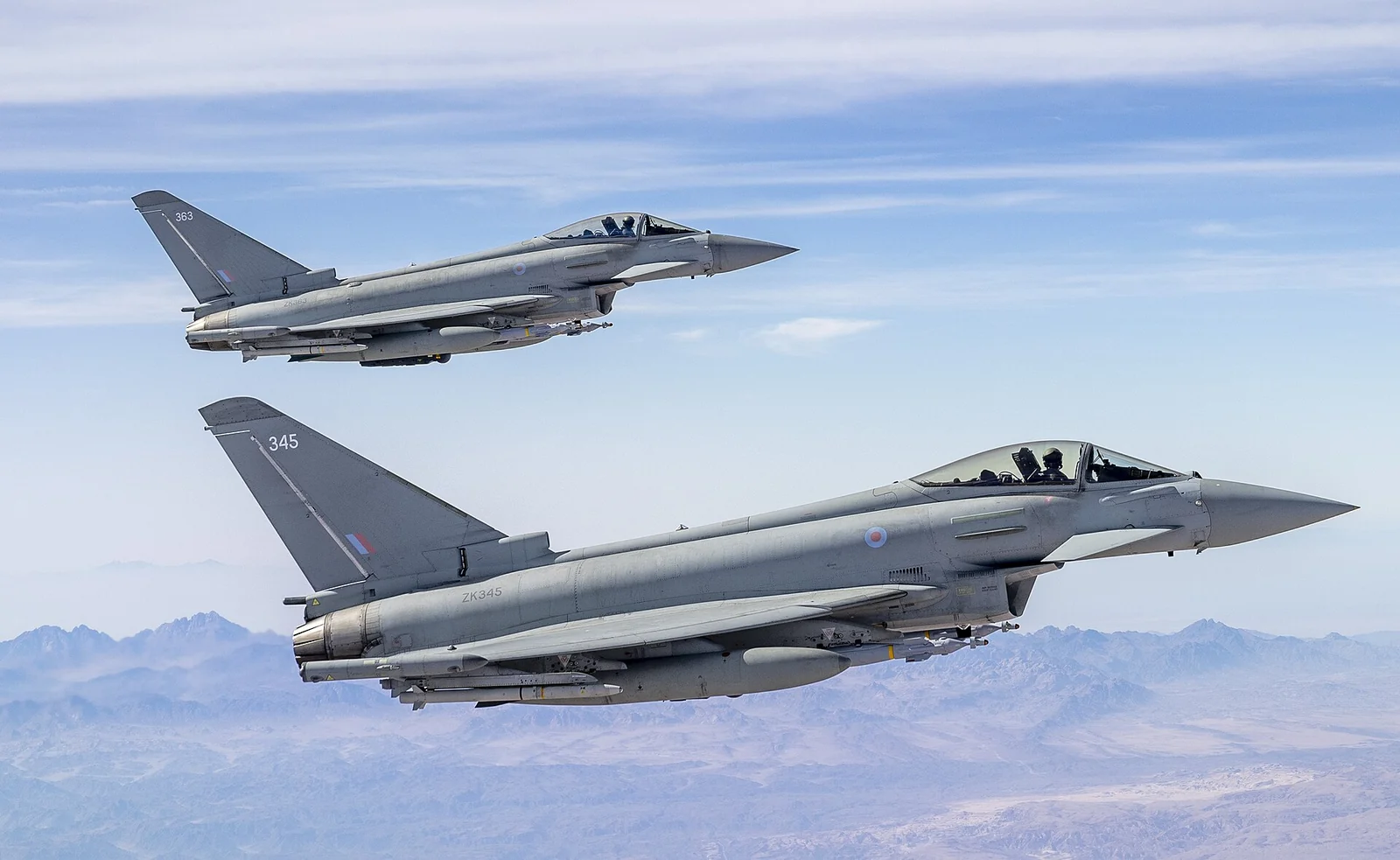
Britain and France have offered to guard Saudi skies and key sites. Britain was among those asked in September. On 20 October its Ministry of Defence announced that RAF Typhoons would fly defensive counter-air missions over Saudi cities and critical infrastructure, and that the jets “will not conduct offensive strikes against the Houthis”. The same announcement extended British air-to-air refuelling support for Saudi air operations, “including to degrade Houthi military targets in Yemen”. British fighters will not bomb the Houthis; British tankers will help the Saudi jets that do. London gave no number of aircraft, and no report by 23 October said the patrols had begun. One of its stated reasons was domestic: violence in the Gulf, the ministry said, drives up the cost of living in Britain and disrupts its energy supplies.
France had moved earlier. On 24 September President Emmanuel Macron said France would send soldiers, radars and defence systems to protect the Red Sea oil terminal at Yanbu, “not to get us involved in any conflicts, but to protect this site”. He gave no numbers and no timing.
Turkey’s offer is technical, and it requires two parliamentary votes. Foreign Minister Hakan Fidan called it a defensive pact, not an offensive one: Turkey, he said, would not send troops into another country’s territory to carry out an attack there. A lawmaker from the ruling AKP said Turkey would first send experts in air defence and electronic warfare, and that none would take part in offensive operations. Two officials told Reuters they expected Turkey’s contribution to consist of equipment, intelligence and weapons systems, and that as of 21 October nothing else had been deployed. The ratification bill was registered in parliament on 21 October, and the chairman of the foreign affairs committee said the next day that it would take the bill up on 27 October. Any Turkish personnel will need a second, separate mandate. Ankara has its own reasons to be involved: it has also agreed to join a Saudi-led coalition protecting navigation in the Red Sea.
Pakistan has troops already on Saudi soil, and says the least about them. Its military spokesman confirmed on 7 October that Pakistani forces are “already there” and have been “for decades, in multiple capabilities”. Islamabad will not say more, citing operational confidentiality. In May, sources told Reuters that Pakistan had sent about 8,000 troops, a squadron of about 16 aircraft, mostly JF-17 fighters, and a Chinese HQ-9 air-defence system, with the equipment operated by Pakistanis and financed by Saudi Arabia. Those troops joined “thousands of Pakistani troops with a combat role” already stationed in the kingdom. One government source who had seen the confidential 2025 Saudi-Pakistani pact said it allows up to 80,000 Pakistani troops to help secure the kingdom’s borders alongside Saudi forces. Middle East Eye has reported “tens of thousands” in the kingdom, while Pakistan’s information ministry dismissed reports of 30,000 to 40,000 as “speculative”. The real number is not public.
Nor is their task. On 7 October The New York Times quoted a senior Pakistani military official as saying that Pakistani fighter jets were being used against the Houthis; Pakistan’s information ministry called the report “fake and fabricated”. It is unclear whether Pakistani troops will act against the Houthis, and Pakistan has a reason for caution: it is a mediator with Tehran in the US-led war on Iran, and fighting Iran’s Yemeni allies directly could rupture that role. At home, something has changed. In 2026 Islamabad agreed to send more forces without a parliamentary vote. “There were times in the past when Pakistan’s parliament would vote not to send troops, and the military would abide by that decision. But it’s a different era now,” said Michael Kugelman of the Atlantic Council. Saudi money is part of the background: in April Riyadh extended a $5bn deposit at Pakistan’s central bank and added $3bn. No reporting links those deposits to deployment decisions.
Contract soldiers, loaned officers and allied contingents

Foreign military personnel in the Gulf come in three kinds, and each answers to someone different. Seconded, or loaned, personnel remain members of their home country's forces under its rules, though the host pays them and they wear the uniform of the unit they serve in. In 2019 the British Military Mission was a small group of officers on permanent loan, training Saudi National Guard officers in counterterrorism and hostage rescue. Contract personnel have left their home country's service. Zoltan Barany, who conducted more than 150 interviews in the region between 2011 and 2019, notes that such soldiers "generally have no political interests to pursue and seldom participate" in attempts to overthrow a regime, and that their deaths bring no social condemnation in the host country. There is no public count of how many serve in the Gulf. In Saudi Arabia the National Guard is restricted to citizens, and officer status is generally tied to citizenship. Allied national contingents are different again: their own governments set the rules. When Pakistan sent troops in 2018, it said they "will not be employed outside" the kingdom.
Egypt has offered legal authority. President Abdel Fattah el-Sisi asked parliament to authorise military support for Saudi Arabia; the National Defence Council approved on 18 October, and the vote was adjourned to 26 October. It needs 398 of 596 votes. Approval would give Sisi the authority to deploy, but it would send no one automatically. Egypt will act only if Riyadh asks, and by 24 October no formal Saudi request had been announced. “We’re talking only about defence,” Sisi said.
The offers have come in pieces. Britain has extended refuelling support for Saudi air operations, and Washington has offered intelligence and targeting help. The other pledges concern the defence of Saudi territory. None of the partners has announced ground forces for Yemen, and no public report through 23 October documents a 2026 Saudi request for them.
The ground war stays Yemeni
Inside Yemen, the division of labour was set before the 5 October pledges. Saudi Arabia planned the offensive so that Yemeni ground forces would lead it and Saudi aircraft would support them.
The ground forces are the weak point. Mokha fell in September to a Houthi advance that sustained Saudi air support did not stop. The analyst Raiman al-Hamdani described the government’s troops in October as “big on paper and quite sizeable, but scattered across a bunch of fronts and running on old pre-war gear”, able to hold their lines but not to push the Houthis out of their mountain strongholds.
Saudi soldiers are being called on too. In September the grand mufti, Saleh Al-Fawzan, called defending the borders a duty “for which lives and souls are sacrificed”. Gokhan Ereli, an analyst, read that as a mobilisation message “aimed at soldiers on the front line”.
Money for Yemeni fighters may also be coming from a neighbour. In mid-October The Guardian reported that the United Arab Emirates had agreed to resume paying southern Yemeni forces, mainly the Giants Brigades, with Saudi Arabia providing air cover. That rests on a single report, citing sources in Yemen, and by 24 October neither government had confirmed it.
By 23 October, Reuters described clashes between the Houthis and the Saudi-led coalition as having “raged since” the Houthi push towards Bab el-Mandeb in September. The United States had not joined the renewed Saudi campaign with strikes in Yemen, and European help had been limited to support such as Britain’s tankers.
So the arrangement looks like this: Saudi aircraft above, Yemenis on the ground, and partners guarding the kingdom behind them. Riyadh has used that arrangement before.
Guarding the throne, guarding the border, fighting in Yemen
The habit of calling in outside help in a crisis is older than the Houthi war. In November 1979, when armed militants seized the Grand Mosque in Mecca, the Saudi state needed foreign expertise to take it back.
Two weeks inside the Grand Mosque

The siege of the Grand Mosque lasted from 20 November to 4 December 1979. Saudi government forces were beaten back again and again by the militants holding Islam's holiest site. The Saudis then turned in secret to France's elite gendarmerie unit, the GIGN. Its co-founder, Paul Barril, led a small team sent to Saudi Arabia at Riyadh's request, and three of its commandos acted only as advisers. With their help, Saudi forces regained control of the mosque. The Saudi government put its own losses at 127 soldiers killed and 450 wounded. Western intelligence estimated more than 1,000 dead in all, and the true toll will probably never be known.
Three later episodes show the different jobs foreign forces have done for the kingdom.
The first is protection of the regime itself. In 1982, at King Fahd’s request, Pakistan’s military ruler, General Zia ul-Haq, sent a reinforced armoured brigade to Saudi Arabia. It was stationed near Tabuk, in the north-west, but the analyst Bruce Riedel writes that “its principal purpose was to be an elite fighting force to defend the monarchy from any foe at home or abroad”. The Saudis paid all its expenses, and it stayed for more than a decade. A 1982 agreement covered training and joint exercises. Nearly 15,000 Pakistani troops were posted in the kingdom during the 1980s, and in the late 1980s tens of thousands of Pakistanis served there in military roles of every kind, from menial jobs to training. Riedel calls the brigade a “loyal palace guard”, though it was posted far from the capital.
The second is Iraq’s invasion of Kuwait on 2 August 1990. Four days later King Fahd agreed to host American forces, and by January 1991 nearly half a million Americans were in the theatre. General Norman Schwarzkopf later observed that Saudi Arabia “had absorbed more of our troops and military hardware than it had in its own armed forces”. Facing Iraq’s army, the kingdom relied on a superpower. That is the role Barrack said in October was “transitioning”.
The third is Yemen in 2015, and it has two halves. When the Saudi-led campaign began, Riyadh asked Pakistan for warships, aircraft and ground troops. On 10 April 2015 Pakistan’s parliament voted unanimously for neutrality, while promising to stand “shoulder to shoulder” with Saudi Arabia if its territory or the holy sites were threatened. In five days of debate, “not one speaker apparently supported sending ground troops”. That formula, defend the kingdom and stay out of Yemen, is the one most of the 2026 offers repeat.
The second half is that the war was fought anyway, and Saudi soldiers fought in it. Saudi special forces were in combat in Aden in 2015, the 6th Airborne and 64th Special Forces brigades garrisoned a base inside Yemen, marines landed at Midi and paratroops dropped into the Nihm district. The border was the coalition’s least successful front: in about six months, Houthi and allied teams knocked out around sixty Saudi tanks and other vehicles. Alongside the Saudis fought others. A 2,000-strong Sudanese brigade held Aden and the al-Anad base. The New York Times reported in 2018 that as many as 14,000 Sudanese were fighting in Yemen at any one time, and returning fighters said children made up 20 to 40 percent of some units. “They treat the Sudanese like their firewood,” one fighter told the paper. The coalition called the allegations “fictitious and unfounded”. Barany calls the Saudi-Emirati side of the war “a veritable bazaar of contract soldiers”. In 2020 Saudi troops were still on Yemeni territory.
In Yemen, then, Saudi soldiers fought, and foreign ones fought beside them. The Saudi share of the ground war stayed small, and the record of how the kingdom’s forces were organised suggests why.
An army built for safety first
For decades Saudi Arabia’s armed forces were organised to protect the monarchy from its own soldiers as well as from outside enemies. The National Guard, which grew out of the tribal “White Army”, is older than the regular army and the oldest parallel army in the Middle East. After a survey in 1974 the regular army was sent to “military cities” on the country’s edges, along trouble spots and invasion routes, while Guard garrisons in Jeddah, Riyadh and Ha’il “placed guard forces between the capital and the regular military”. Air force training flights were commonly limited by rationing fuel. The analyst James Quinlivan called this coup-proofing, and argued in 1999 that it leaves a state with a military capability “smaller than indicated by inventory counts of units or weapons”. Despite many proposals, neither the army nor the Guard had been expanded by then; he suggested this “may reflect” fear of a coup, or a traditional disdain for regular military life.
Under Mohammed bin Salman the kingdom started using its forces. Riedel told the US Congress in 2020 that Saudi Arabia had “traditionally, for decades, been a very cautious, risk-averse country” that “prefers to throw money at problems not military resources”, and that “this has all changed dramatically in the last 5-plus years”. He called the Yemen war “entirely a creation of MBS”.
The way those forces were organised changed less. In 2018 the analyst Neil Partrick argued that political control was getting in the way of military reform. The crown prince’s changes were “ostensibly aimed at addressing operational incapacity”, he wrote, but consolidating power drove them. The new chief of the general staff, Fayyad al-Ruwaili, gained oversight of the armed forces “but not centralized military command”; the top brass reported directly to the crown prince as defence minister. Mohammed bin Salman, “like previous Saudi leaders”, feared “a potential coup if there are too many soldiers under arms”, and had “political and practical reasons” to avoid a large Saudi deployment on the ground in Yemen. A year later the Guard was still outside the planned joint command, out of “hesitancy about provoking its tribal base”, and without a deeper overhaul, Partrick wrote, the separate services “will continue to function as silos”.
Separate commands make a coup harder to organise. They also make it harder for the services to plan and fight together. Partrick found that the land forces and the Guard had had “only limited deployments in Yemen”, while the air force had “been much more noticeable”, and that Saudi ground forces had “only limited—and quite disastrous—on-the-ground battlefield experience”, going back to an incursion into Yemen in the winter of 2009–10. He also named the paradox: concentrating power in one man makes fundamental military change “both possible to get underway and more difficult to complete”.
These assessments stop in 2019, and no public source shows how far the old constraints shaped Riyadh’s choices in 2026. This year’s war has the shape they describe all the same: Saudi air power, Yemeni ground forces and foreign partners guarding the rear.
The air arm has a dependence of its own. Riedel testified in 2020 that the United States supplies about two-thirds of the Royal Saudi Air Force’s aircraft and Britain the other third, and that “if we and the United Kingdom cut off logistic support, the Royal Saudi Air Force would be grounded.” Britain’s tankers, extended in October, add another layer of foreign support to an air force that already relied on its suppliers to keep flying.
What money and numbers do not settle
Saudi Arabia has more than 19.6 million citizens, by the government’s 2024 estimate, far more than its Gulf neighbours. But a population is not a pool of trained soldiers willing to serve. Saudi law has no conscription, and enlistment is voluntary. When the grand mufti of the day called for compulsory military training in 2015, Arab News reported that the armed forces had proposed conscription several times before and that religious scholars had objected. Barany notes that across the Gulf, prosperous young men have “little economic incentive to join”, and that Saudi Arabia, because of its larger population, relies on a comparatively smaller share of contract soldiers than its neighbours.
The money has changed too. Quinlivan wrote of a rentier state, freed by oil from the need to raise revenue at home. In the second quarter of 2026 non-oil revenue made up about 45 percent of government income, and in the first half of the year taxes on goods and services supplied more than half of that non-oil revenue. Oil still supplies most of the government’s income.
Money buys hardware. Saudi Arabia was the largest recipient of American exports of major arms in 2021–25. A unified chain of command is harder to buy, and by 2019 the crown prince’s reforms had not produced one. In the 2026 crisis the kingdom has turned to governments that set their own terms.
A treaty with room for manoeuvre
The Mecca treaty builds the same room for manoeuvre into its own text. Its second article treats any external armed attack on one member as an attack on all. Its promise of immediate help covers aggression “by another country or a group of countries”; the Houthis are a movement, not a state, and the text does not spell out how that clause applies to them. The same article says the members will together “decide on the extent and nature of support to be provided after objective assessment of assistance required”. Its tenth article promises logistic support, including arms, ammunition and fuel, “depending on the availability and compatibility” of what each can offer. Its sixteenth says the agreement comes into force when the last ratification is deposited, and that no member may withdraw until ten years after that.
On 23 October Pakistan’s foreign office said that Pakistan and Saudi Arabia had completed their ratification processes and that Turkey was still undertaking its own. The bill was set for Turkey’s foreign affairs committee on 27 October, and any Turkish personnel require a separate vote after ratification. Egypt, outside the treaty, set its own vote for 26 October, and even approval would send no one unless Riyadh asks.
Riyadh invoked the alliance on 5 October, before the treaty had entered into force. Even in force, it leaves the three governments to agree, crisis by crisis, how much help each one gives.
Related articles
- Ethiopia already reaches the sea. Why does it want a coast?
- The ceasefire economy: what actually causes wars to end — and why so many peace agreements collapse
- Sudan’s war runs on gold
Further reading
As an Amazon Associate, Eikleaf earns from qualifying purchases. The book links below are affiliate links: if you buy through them, we may earn a small commission at no extra cost to you.
 The International Relations of the Persian GulfThe standard account of Gulf security since 1971, showing why Saudi Arabia’s threats have come more from regime insecurity and regional rivals than from conventional armies.
 MBS: The Rise to Power of Mohammed bin SalmanA New York Times correspondent on the crown prince’s centralisation of power, the Yemen war and the reliance on US security guarantees.
 Crude Strategy: Rethinking the US Military Commitment to Defend Persian Gulf OilScholars assess what the US military actually protects in the Gulf and how far Saudi security depends on it rather than on its own spending.
Recommended videos
 10:39The attacks exposing Saudi Arabia’s biggest weakness | BBC NewsBBC on the Houthi attacks exposing Saudi Arabia’s air-defence and military weaknesses.
 11:40Mecca Alliance activates defence pact as Yemen forces claim strategic Bab al-MandebAl Jazeera on the Mecca defence pact being activated as the Houthis threaten Bab el-Mandeb, and what partners will commit.
 3:38Why Saudi Arabia’s $80 Billion Military Can’t Simply Overpower The HouthisShort explainer of why Saudi Arabia’s huge defence budget has not translated into decisive power against the Houthis.
Cite this article
Ulfur Atli. “What Saudi Arabia’s military spending cannot guarantee.” Eikleaf, 24 October 2026, updated 25 October 2026. https://www.eikleaf.com/what-saudi-arabia-s-military-spending-cannot-guarantee/
Gen AI Disclaimer
Some contents of this page were generated and/or edited with the help of a Generative AI.
Media
Boeing F-15SA Eagle, Royal Saudi Air Force – Wikimedia Commons (Photo: Ronnie Macdonald, CC BY 2.0)
Key Sources and References
Al Jazeera. “Turkiye, Pakistan agree Saudi Arabia military deployment under Mecca pact.” Al Jazeera, 5 October 2026. https://www.aljazeera.com/news/2026/10/5/mecca-alliance-agrees-to-activate-collective-deterrence-measures
AFP. “Turkey, Pakistan pledge troop deployment to Saudi Arabia amid Houthi attacks.” Turkish Minute, 5 October 2026. https://www.turkishminute.com/2026/10/05/turkey-pakistan-pledge-troop-deployment-to-saudi-arabia-amid-houthi-attacks/
Middle East Eye. “Saudi Arabia, Turkey and Pakistan activate Mecca pact amid war with Houthis.” Middle East Eye, 5 October 2026. https://www.middleeasteye.net/news/saudi-arabia-turkey-and-pakistan-activate-mecca-pact-amid-war-houthis
Associated Press. “How the Mecca defense agreement between Turkey, Pakistan and Saudi Arabia will work.” 21 October 2026. https://www.clickondetroit.com/business/2026/10/21/how-the-mecca-defense-agreement-between-turkey-pakistan-and-saudi-arabia-will-work/
Mecca Joint Defence Agreement (English text), filed with the Grand National Assembly of Türkiye, file 2/3961, 21 October 2026. https://cdn.tbmm.gov.tr/KKBSPublicFile/D28/Y5/T2/WebOnergeMetni/f10c225f-412d-483b-8714-3a8276ec4b32.pdf ; transcribed in The National, “Revealed: Full text of Makkah defence pact between Saudi Arabia, Turkey and Pakistan,” 21 October 2026. https://www.thenationalnews.com/news/mena/2026/10/21/revealed-full-text-of-makkah-defence-pact-between-saudi-arabia-turkey-and-pakistan/
Dawn. “Pakistan, Saudi Arabia have completed ratification of Makkah defence pact: FO.” Dawn, 23 October 2026. https://www.dawn.com/news/2039288/pakistan-saudi-arabia-have-completed-ratification-of-makkah-defence-pact-fo
Anadolu Agency. “‘Mekke Ortak Savunma Anlaşması’ 27 Ekim’de TBMM Dışişleri Komisyonu’nda görüşülecek.” 22 October 2026. https://www.aa.com.tr/tr/gundem/mekke-ortak-savunma-anlasmasi-27-ekimde-tbmm-disisleri-komisyonunda-gorusulecek/4097503
Bloomberg. “Saudi-backed Yemen forces begin operation to retake Houthi areas.” Stars and Stripes, 4 October 2026. https://www.stripes.com/theaters/middle_east/2026-10-04/yemen-forces-retake-houthi-areas-23055647.html
Arab Center Washington DC. “Saudi Arabia’s Search for Allies in Yemen.” 9 October 2026. https://arabcenterdc.org/resource/saudi-arabias-search-for-allies-in-yemen/
Al Jazeera. “Houthi missile attack targets Saudi capital Riyadh for third day in a row.” Al Jazeera, 12 October 2026. https://aljazeera.com/news/2026/10/12/houthi-missile-attack-targets-saudi-capital-riyadh-for-third-day-in-a-row
Reuters. “Brent crude hits more than five-month high on Houthi-Saudi attacks, UAE oil spill.” 23 October 2026. https://sg.finance.yahoo.com/news/brent-crude-hits-more-five-133754507.html
SIPRI. “Trends in World Military Expenditure, 2025.” SIPRI Fact Sheet, April 2026. https://www.sipri.org/sites/default/files/2026-04/2604_milex_2025.pdf
SIPRI. “Trends in International Arms Transfers, 2025.” SIPRI Fact Sheet, March 2026. https://www.sipri.org/publications/2026/sipri-fact-sheets/trends-international-arms-transfers-2025
Associated Press. “Saudis seek allies’ help as missile defenses run low in fight with Houthis, officials say.” 16 September 2026. https://www.koreaherald.com/article/10876919
Nakhoul, Samia, Humeyra Pamuk and Steve Holland. “Saudi crown prince sought US military help from Trump with Houthis, sources say.” Reuters, 11 September 2026. https://www.internazionale.it/ultime-notizie-reuters/2026/09/11/trump-declines-saudi-crown-prince-s-call-for-us-strikes-on-houthis-axios-reports
Al-Monitor. “Saudi Arabia’s Houthi crisis tests alliances with Trump, Turkey and Pakistan.” Al-Monitor, 11 September 2026. https://al-monitor.com/originals/2026/09/saudi-arabias-houthi-crisis-tests-alliances-trump-turkey-and-pakistan
Jung Mok-hee. “Trump caught in a dilemma over Saudi request to strike Houthis.” The Herald Business, 21 September 2026 (reporting The New York Times). https://mbiz.heraldcorp.com/article/10881236
The Express Tribune. “Trump says US may join Saudi strikes against Houthis in Yemen.” 11 October 2026. https://tribune.com.pk/story/2634116/trump-says-us-may-join-saudi-strikes-against-houthis-in-yemen
CBS News. “Saudis launch new strikes on Houthis; Iran-backed group threatens U.S. if it joins in.” Live updates, 12–13 October 2026. https://www.cbsnews.com/live-updates/iran-war-us-trump-saudi-arabia-houthi/
The White House. “Fact Sheet: President Donald J. Trump Solidifies Economic and Defense Partnership with the Kingdom of Saudi Arabia.” 18 November 2025. https://www.whitehouse.gov/fact-sheets/2025/11/fact-sheet-president-donald-j-trump-solidifies-economic-and-defense-partnership-with-the-kingdom-of-saudi-arabia/
U.S. Department of War. “2026 National Defense Strategy.” January 2026. https://www.army.mil/e2/downloads/rv7/about/2026-NATIONAL-DEFENSE-STRATEGY.pdf
Al-Monitor. “US moving away from Middle East security guarantor role, Barrack says.” Al-Monitor, 20 October 2026. https://www.al-monitor.com/originals/2026/10/us-moving-away-middle-east-security-guarantor-role-barrack-says
Al Jazeera. “Attack on Saudi Arabia’s King Fahd airport kills two people.” Al Jazeera, 22 October 2026. https://www.aljazeera.com/news/2026/10/22/one-killed-eight-injured-in-attack-on-saudi-arabias-king-fahd-airport-2
UK Ministry of Defence. “Operational update 20 October – UK military support to the Kingdom of Saudi Arabia.” GOV.UK, 20 October 2026. https://www.gov.uk/government/news/operational-update-20-october-uk-military-support-to-the-kingdom-of-saudi-arabia
The War Zone. “France Sending Forces To Help Defend Saudi Arabia’s Red Sea Oil Facilities.” 24 September 2026. https://www.twz.com/news-features/france-sending-forces-to-help-defend-saudi-arabias-red-sea-oil-facilities
Devranoglu, Nevzat. “Turkey planning mandate to send military personnel to Saudi Arabia under Mecca pact, ruling party official says.” Reuters, 21 October 2026. https://www.internazionale.it/ultime-notizie-reuters/2026/10/21/turkey-planning-mandate-to-send-military-personnel-to-saudi-arabia-under-mecca-pact-ruling-party-official-says
Arab News. “Pakistan military confirms deployment of forces to Saudi Arabia under Makkah pact.” Arab News, 8 October 2026. https://www.arabnews.com/saudi-arabia/pakistan-military-confirms-deployment-of-forces-to-saudi-arabia-under-makkah-pact-3005232
Reuters. “Pakistan deploys jet squadron, thousands of troops to Saudi Arabia during Iran war.” 18 May 2026. https://www.thecitizen.co.tz/tanzania/news/international/pakistan-deploys-jet-squadron-thousands-of-troops-to-saudi-arabia-during-iran-war-5464042
Yousaf, Kamran. “Pakistan denies PAF jets striking Houthis.” The Express Tribune, 9 October 2026. https://tribune.com.pk/story/2633807/pakistan-denies-paf-jets-striking-houthis
Shahid, Ariba. “Analysis-As Munir’s military takes on Gulf role, Pakistan’s parliament is not involved.” Reuters, 8 October 2026. https://www.internazionale.it/ultime-notizie-reuters/2026/10/08/analysis-as-munir-s-military-takes-on-gulf-role-pakistan-s-parliament-is-not-involved
Arab News. “Saudi Arabia bolsters Pakistan’s economic stability with deposit at central bank.” Arab News, 16 April 2026. https://www.arabnews.com/finance/saudi-arabia-bolsters-pakistans-economic-stability-with-deposit-at-central-bank-2640130
Business Recorder. “Pakistan gets second $1bn tranche from Saudi Arabia: SBP.” 21 April 2026. https://www.brecorder.com/news/40417497/
Al Jazeera. “Egyptian parliament delays vote on military support for Saudi Arabia.” Al Jazeera, 19 October 2026. https://www.aljazeera.com/news/2026/10/19/egyptian-parliament-delays-vote-on-military-support-for-saudi-arabia
The National. “Egypt’s pledge to support Saudi Arabia against Houthis: What’s on the table?” The National, 19 October 2026. https://www.thenationalnews.com/news/mena/2026/10/19/egypts-pledge-to-support-saudi-arabia-against-houthis-whats-on-the-table/
Al Jazeera. “Yemeni govt forces aim for Sanaa, but Houthi defeat will be a challenge.” Al Jazeera, 5 October 2026. https://www.aljazeera.com/news/2026/10/5/yemeni-govt-forces-aim-for-sanaa-but-houthi-defeat-will-be-a-challenge
Al Jazeera. “Pakistan, Turkiye edge closer towards joining Saudi war against Houthis.” Al Jazeera, 25 September 2026. https://www.aljazeera.com/news/2026/9/25/pakistan-turkiye-edge-closer-towards-joining-saudi-war-against-houthis
Wintour, Patrick. “UAE agrees with Saudi Arabia to re-enter Yemen conflict amid Houthi gains.” The Guardian, 17 October 2026. https://www.theguardian.com/world/2026/oct/17/uae-yemen-conflict-agreement-saudi-arabia-houthi-gains
Magolan, Matthew. Review of Yaroslav Trofimov, The Siege of Mecca. Homeland Security Affairs 10, article 7, June 2014. https://www.hsaj.org/articles/265
AFP. “Controversial French ex-police commando probed over Rwanda dies aged 80.” JusticeInfo.net, 21 October 2026. https://www.justiceinfo.net/en/167650-controversial-french-ex-police-commando-probed-over-rwanda-dies-aged-80.html
Riedel, Bruce. “Pakistani guard returns to Saudi Arabia.” Al-Monitor, February 2018. https://www.al-monitor.com/originals/2018/02/saudi-arabia-troops-pakistan-prince-mohammad-bin-salman-role.html
Shay, Shaul. “Saudi Arabia and Pakistan – strategic alliance.” Herzliya Conference Papers, Institute for Policy and Strategy, Reichman University, April 2018. https://www.runi.ac.il/media/u2tmcjst/shaulshaysaudi-arabiapakistanen22-4-2018.pdf
Barany, Zoltan. “Foreign Contract Soldiers in the Gulf.” Carnegie Endowment for International Peace, 5 February 2020. https://carnegieendowment.org/research/2020/02/foreign-contract-soldiers-in-the-gulf
Air & Space Forces Magazine. “Desert Shield.” August 2010. https://www.airandspaceforces.com/article/0810desert/
VOA. “Pakistani Lawmakers Oppose Yemen Intervention.” 10 April 2015. https://www.voanews.com/a/pakistani-lawmakers-oppose-yemen-intervention/2714077.html
Al-Monitor. “Why Pakistan said no to King Salman.” Al-Monitor, April 2015. https://www.al-monitor.com/originals/2015/04/yemen-conflict-parliament-resolution.html
Reuters. “Pakistan to send troops to Saudi Arabia to train, advise.” Khaleej Times, 17 February 2018. https://www.khaleejtimes.com/uae/pakistan-to-send-troops-to-saudi-arabia-to-train-advise
Almeida, Alex, and Michael Knights. “Gulf Coalition Operations in Yemen (Part 1): The Ground War.” Washington Institute for Near East Policy, 25 March 2016. https://www.washingtoninstitute.org/policy-analysis/gulf-coalition-operations-yemen-part-1-ground-war
Al Jazeera. “Saudi Arabia recruited Darfur children to fight in Yemen: NYT.” Al Jazeera, 29 December 2018. https://www.aljazeera.com/news/2018/12/saudi-arabia-recruited-darfur-children-fight-yemen-nyt-181229111259452.html
Riedel, Bruce. Statement to the House Permanent Select Committee on Intelligence, 11 September 2020. https://docs.house.gov/meetings/IG/IG00/20200911/110993/HHRG-116-IG00-Wstate-RiedelB-20200911.pdf
Quinlivan, James T. “Coup-Proofing: Its Practice and Consequences in the Middle East.” International Security 24, no. 2 (Fall 1999): 131–165.
Partrick, Neil. “Saudi Defense and Security Reform.” Carnegie Endowment for International Peace (Sada), 31 May 2018. https://carnegieendowment.org/sada/2018/05/saudi-defense-and-security-reform
Partrick, Neil. “Saudi Arabia’s Elusive Defense Reform.” Carnegie Endowment for International Peace (Sada), 14 November 2019. https://carnegieendowment.org/sada/2019/11/saudi-arabias-elusive-defense-reform
General Authority for Statistics (GASTAT). “Population Estimates Statistics 2024.” https://www.stats.gov.sa/documents/20117/1400941/Population%2BEstimates%2BStatistics%2B2024%2BEN.pdf/c4b02cf7-decf-d948-a5c1-c55f0a4376f3
Saudipedia. “Is There Conscription in Saudi Arabia?” https://saudipedia.com/en/is-there-conscription-in-saudi-arabia
Arab News. “Conscription call by grand mufti finds strong support from intellectuals.” Arab News, 2015. https://www.arabnews.com/node/733766
Asharq Al-Awsat. “Saudi Budget Records More than $90 Billion in Revenue in Second Quarter.” 30 July 2026. https://english.aawsat.com/business/5301709-saudi-budget-records-more-90-billion-revenue-second-quarter