Last updated: · 14 min read
In brief
In 1696 Henry Winstanley began building a lighthouse on the Eddystone Rocks, paid for by a penny a ton collected from ships in port. Economists from Mill to Samuelson later made the lighthouse their standard example of something markets cannot provide. Ronald Coase checked the record and found private lights paid for by port dues for roughly two centuries. But that was no market either. The lights were Crown-granted monopolies, and the dues were compulsory levies backed by statute. The textbooks kept the example anyway, and ships calling at British ports still pay a toll at the quayside.
Contents
In 1696, Henry Winstanley, an English engraver, inventor and showman, began building a lighthouse on the Eddystone Rocks, some 13 miles south-west of Plymouth, at his own expense. At high water only a small crest of the reef showed above the sea. No one had ever put a lighthouse on a rock in the open sea. What Winstanley had was a private deal with Trinity House: he would keep the profits for the first five years and then split them with the Corporation. The light would be paid for by a duty of one penny per ton on passing ships, collected not at sea but in port, the bottleneck where ships and records converged.
By the time the Great Storm of November 1703 swept the tower away, killing Winstanley along with his keepers and some of his workmen, he had sunk about £8,000 of his own money into the light and taken in about £4,000 in dues. That £8,000 covered building it, rebuilding it once in 1699 and keeping it lit. He hadn’t recovered his investment.
By then private provision of lighthouse services, with a working revenue model, had been demonstrated in practice. The “impossible” thing was already running before most of the economists who would later cite the lighthouse as their canonical illustration of impossibility were born, and few of them, if any, looked into how it was paid for.
What every economics student learns
The modern public goods argument begins with Paul Samuelson’s 1954 paper, which gave it a formal apparatus: a “collective consumption good” is one that everyone can enjoy at once, with no one’s use subtracting from anyone else’s (non-rivalry). Textbooks pair this with a second test: no one can be excluded from the benefits (non-excludability). The lighthouse came from Samuelson’s bestselling textbook, Economics, where it became the standard picture of the idea. You couldn’t stop ships from seeing the beam, and you couldn’t bill a ship at sea. So private provision couldn’t recoup its costs, the market would under-provide, and government had to step in.
But the argument is older than Samuelson’s formalisation. John Stuart Mill put lighthouses in Principles of Political Economy in 1848 as “a proper office of government”: “since it is impossible that the ships at sea which are benefited by a lighthouse, should be made to pay a toll on the occasion of its use, no one would build lighthouses from motives of personal interest, unless indemnified and rewarded from a compulsory levy made by the state.” That last clause leaves room for privately built lights paid for by a levy the state enforces, which is roughly what England already had. Henry Sidgwick, in the 1883 first edition of his Principles of Political Economy, picked up Mill’s lighthouse and generalised it to cover “a large and varied class of cases” where private exchange fails to capture collective benefit. A.C. Pigou put it in The Economics of Welfare in 1920 as a classic instance of the uncompensated positive externality — a benefit that spills over to people who never pay for it, so private revenue cannot capture it. Samuelson absorbed it into his introductory textbook, Economics, and it was still there in the 19th edition (2010), co-written with William Nordhaus.
Some 125 years passed between Mill’s lighthouse and Coase’s. As far as Coase could tell, no economist in that chain, from Mill to Samuelson, ever made a proper study of how lighthouses were paid for.
The theoretical argument itself is coherent enough to have made the oversight easy. A ship at sea encounters a lighthouse beam. The beam illuminates the coast whether the ship is there or not; one ship’s use doesn’t diminish it for the next. No collection can occur at sea: there’s no way to identify which ships benefited, no mechanism to intercept them, no billing process compatible with maritime reality. So the market can’t price the light and won’t build it. The logic is tight, and the lighthouse seemed like a clean empirical illustration of an abstract principle. Nobody looked too carefully at whether the illustration was accurate.
The public goods taxonomy

Samuelson's binary, private goods (excludable, rival) versus public goods (non-excludable, non-rival), was always a simplification. In 1965 James Buchanan introduced club goods: excludable but non-rival, consumed collectively by members who can screen out non-payers. Toll roads, streaming services and private clubs work this way, excludable by design but not depleted by individual use. In 1977 Vincent and Elinor Ostrom added a fourth type: common-pool resources such as fisheries, forests and irrigation water, which are rival but hard to exclude people from. Elinor Ostrom later showed that communities have often managed such resources for centuries without either privatisation or government control. The lighthouse debate turns partly on which box lighthouses belong in. Port dues don't make the beam excludable, since a ship that never pays still sees it, but they tie the bill to something every trading ship has to do: come into port. The light stays non-rival and non-excludable at sea, and it can still be paid for at the quayside.
A crack visible from the theory alone
The non-excludability argument had a structural weakness that the theory’s own logic exposes once it is followed one step further than Samuelson’s textbook took it.
Ships cannot be charged at sea. But almost every ship is heading to or from a port, and a port is where a ship can be identified, its tonnage verified and its route reconstructed. A per-ton charge collected when a vessel reaches port, gathered by customs officers or other agents and passed on to the lighthouse owner, is exactly the kind of collection mechanism the theory assumed was impossible. England had been collecting dues like this for centuries. In the early sixteenth century the Lord High Admiral’s deputies were already charging ships for buoys and beacons, and from the early seventeenth century private lighthouse owners collected per-ton light dues through agents at the ports.
The argument that lighthouses were non-excludable didn’t rest on evidence that no collection mechanism existed. It rested on an implicit assumption that charging must occur at the point of use, at sea, which is indeed impossible. But collection doesn’t have to happen at sea. It has to happen somewhere ships can be tracked, and ports are that somewhere. The textbook version treated “unchargeable at sea” as equivalent to “unchargeable,” and in 125 years of citations no one seems to have checked how port-based collection actually worked.
Samuelson alone kept a fallback. Even if a lighthouse owner could charge every passing ship, he argued, pricing a light that costs nothing extra to share would scare some ships away for no gain. That efficiency argument survives the discovery of port dues. The claim that charging was impossible does not.
The lighthouse earned its place in the theory without anyone making a proper study of English lighthouse history to see whether it fit. The theory seemed to require that private provision couldn’t work, the lighthouse looked like a plausible illustration of that conclusion, and so the illustration was accepted as evidence without being checked as evidence. The empirical claim, that no working collection mechanism existed, was treated as already settled by the theoretical framework rather than as something that needed verification.
This is a different kind of error from getting a fact wrong. The theoretical conclusion worked as a filter that kept the empirical question from getting a proper study until Ronald Coase took it up in 1974.
Coase checks the record
Coase’s paper, “The Lighthouse in Economics,” did something none of his predecessors had bothered to do: it looked at how British lighthouses had been financed. Coase worked through the reports of the parliamentary select committees on lighthouses of 1834 and 1845, the standard histories of Trinity House and of early British lighthouses, and information supplied by Trinity House and the Department of Trade. From these he traced the English system from the early seventeenth century forward, and found that the textbook story was wrong.
Private entrepreneurs had built and operated lighthouses in England from at least the 17th century onward. They did so under letters patent from the Crown, which granted rights to collect light dues from vessels passing specific stretches of coastline. Those dues were levied in port: a per-ton charge for each lighthouse a voyage passed, collected by agents (commonly customs officials) and paid over to the lighthouse owner. The dues were not voluntary and the rates were not negotiated. But they were collected — and they were sufficient to sustain private investment in structures that the theory insisted couldn’t attract it.
The Eddystone case illustrates the mechanism. After Winstanley’s death in 1703, Captain John Lovett took a 99-year lease of the rock from Trinity House. An Act of Parliament of 1705 put the penny-a-ton duty on a statutory footing, payable on ships inward and outward and collected when they reached port. Lovett’s architect, John Rudyerd, built a timber tower that shone from 1709 until fire destroyed it in 1755. The lease, by then in other hands, still had decades to run, so its owners paid for John Smeaton’s stone tower. First lit on 16 October 1759, it became one of the celebrated engineering works of the century, financed by the same dues Winstanley had shown could be collected. Lighthouse rights were bought, sold and bequeathed for commercially meaningful sums, so their owners valued the income they produced.
The 1836 Lighthouse Act, which consolidated English and Welsh lighthouses under Trinity House, is routinely read as the moment the market failed and the state rescued it. Coase’s reading is different: Parliament intervened not because private provision had broken down but because shipowners resented paying for it.
The 1834 Select Committee complained that lighthouses were run under entirely different systems with different rates of dues, and that light dues were heavily taxing the nation’s trade for the benefit of a few private individuals. Consolidation under Trinity House was expected to bring dues down. On Coase’s reading, the 1836 Act was a buy-out and a rationalisation rather than a rescue.
The free-rider problem that economists had insisted made private provision theoretically impossible had in fact been handled in practice, imperfectly and with state backing, for roughly two centuries before Parliament intervened. Historically, the canonical example of market failure was a case of private provision.
Trinity House

Trinity House was founded by Royal Charter in 1514 by Henry VIII, originally as a fraternity of mariners concerned with navigation and seamanship. Its transformation into a lighthouse authority was gradual and unplanned: over the 17th and 18th centuries it built a handful of lights itself, more often obtained the patent for a light and leased it to a private builder for a rent, and opposed or competed with the private projectors who went straight to the Crown. By 1836 it was the obvious administrative vessel for consolidation. It had not been running a public service in any modern sense, but it had accumulated the institutional knowledge and legal standing to take on the job. Its history shows that the line between "private" and "public" lighthouse provision had always been blurred, far more than the economists' clean binary allowed.
The problem with Coase’s correction
Read this way, Coase’s argument looks decisive: the textbook example was historically wrong, private provision worked, and economists should stop citing the lighthouse as evidence of market failure. That conclusion, the one the paper is most often cited for in libertarian critiques of market failure theory, in law and economics scholarship and in public choice literature, misreads what he found.
The lighthouse dues system was not a market. A market, in the relevant sense, requires that buyers can choose whether to purchase, that sellers can compete for buyers, and that prices emerge from some interaction of supply and demand. None of these conditions held for English lighthouse dues.
Crown patents granted specific operators monopoly rights over specific stretches of coastline. A ship that sailed past the Eddystone lighthouse owed the lighthouse’s lessees a penny a ton, collected at whichever port it reached. It could not pick a different light or a different route, and paying was not optional. The dues were mandatory levies backed by patent and statute, not payments made by willing buyers to competitive sellers. David van Zandt called Coase’s government/private binary too crude: the actual system was a public-private hybrid that neither label captured. Elodie Bertrand was more direct: the feature that made English lighthouse provision work was not private entrepreneurship but the state machinery that made collection enforceable. Without crown patents, parliamentary confirmation of dues rights and collectors in the ports empowered to demand payment, the revenue model Coase documented would not have existed.
Coase’s own framing anticipates the objection. In his account the government’s role was “limited to the establishment and enforcement of property rights” in the lighthouse, and all private property depends on the state enforcing rights. On that view, crown patents don’t make lighthouses “non-private” in any interesting sense. But this conflates two categorically different things. State protection of a competitive market, in which the state enforces property rights between competing actors who can win or lose customers, is not the same as state creation of a monopoly, where one actor receives the exclusive statutory right to tax a captive customer base with no recourse and no alternative.
The difference is concrete. In a taxi market, the state enforces contracts, prevents theft and licenses vehicles for safety, which supports competition. In a taxi franchise, the state grants one company the exclusive right to operate taxis in a given city, with no competition, no price discovery and no exit option for passengers who dislike the service or the price. The English lighthouse dues system was a franchise. In a franchise, the fee is whatever the monopolist can extract from a captive customer base. In a market, the fee is whatever competition constrains it to. The two arrangements produce categorically different price levels, and different incentives to maintain what you’ve built.
Compared directly, English lights under more private control charged higher fees and had higher operating costs, while lights with greater local representation and funding were cheapest to maintain. That is monopoly rent extraction rather than the efficiency dividend a competitive market would produce, and it fits the legal footing of the “private” provision Coase documented, which was a statutory monopoly.
Both the textbook story and the popular reading of Coase’s correction are wrong. The textbook story says private provision was impossible; Coase shows it existed. The popular reading says private provision worked by market mechanisms; the evidence shows it worked by state-enforced monopoly. Coase himself noted that the property rights “stipulated the price that could be charged”, but he never put that fact at the centre of his argument.
What the discipline does with history
Coase’s correction was hard to miss. A scholar who would later win the Nobel Prize published it in 1974, and it showed that the most-cited example in introductory public economics was historically wrong.
The correction received attention in law and economics scholarship. In the broader economics curriculum, it barely dented the example.
Paul Samuelson kept the lighthouse in Economics. By the 19th edition, the book acknowledged Coase in a single concession: “perhaps, we might conclude, lighthouses are not really public goods.”
Samuelson himself maintained in private correspondence that Coase’s historical examples never conquered the free-rider problem. The example stayed and the history became an aside. The lighthouse remains a stock illustration of a public good in introductory courses.
The lighthouse passed from Mill to Sidgwick, Pigou and Samuelson’s textbook, where it appears in the 1964 sixth edition, as inherited authority rather than as a verified claim. Coase found no one in that chain who had made a proper study of the historical record. Each economist cited it because a respectable predecessor had, which is a peculiar habit for a discipline that presents itself as empirical.
The graver charge concerns what came after 1974. Once Coase had checked and published a direct correction, the textbook tradition took it in as an aside rather than a revision, and from then on the problem was inertia more than ignorance.
Nobody retired the lighthouse example over a question of historical accuracy, because the example is too useful to discard. It explains a concept cleanly and vividly, and it has been used so long that questioning it reads as pedantry rather than scholarship.
The lighthouse is not an isolated case. At least two other foundational examples in introductory economics have been treated the same way.
In each, the textbook used history as illustration rather than as evidence, and kept the illustration after the historical record turned out to contradict it.
Other contested canonical examples

The barter-origin-of-money narrative has been a staple of economics teaching since Adam Smith's Wealth of Nations (1776). Smith imagined a tribe of hunters in which the bow-maker swaps his bows and arrows for cattle or venison, with money arriving later to ease the inconvenience of barter. David Graeber argues that there is no archaeological or anthropological evidence for barter-based pre-monetary economies. What historians and anthropologists find, he argues, is gift exchange, tribute and credit, with commodity barter appearing mainly between strangers and enemies rather than as the foundation of economic life. Economists had asserted the barter-to-money sequence without examining the historical record; when the record was examined, the sequence didn't appear.

Garrett Hardin's 1968 essay "The Tragedy of the Commons" introduced what became another canonical illustration: that commonly held resources are inevitably destroyed by individual self-interest, requiring either privatisation or government control. Elinor Ostrom spent a career examining how communities managed commons in practice. She studied irrigation systems in Spain and the Philippines, mountain meadows and forests in Switzerland and Japan, inshore fisheries in Turkey and Nova Scotia, including some that failed, and documented that Hardin's "tragedy" was not the historical norm. Communities had developed rules, enforcement mechanisms and institutional structures that sustained commons over centuries without collapsing into Hardin's predicted outcome. Ostrom won the 2009 Nobel Prize in Economics for this work. The textbook version of Hardin's argument remains in common use.
The current lighthouse on the Eddystone Rocks was completed in 1882 and now runs unmanned. It belongs to Trinity House, the charity that serves as General Lighthouse Authority for England and Wales. It has no tollbooth at sea, but it still has a toll. Commercial ships calling at British and Irish ports pay light dues, set each year by ministers (from 1 April 2026, 46p per net ton in the UK and 78 cents in Ireland, for up to nine voyages a year). The money goes into the General Lighthouse Fund that keeps the Eddystone burning at no cost to the general taxpayer. It is Winstanley’s penny-a-ton, still collected at the quayside, now paid into a statutory fund that has no competitor.
Neither account explains how it got there. The textbook needed the lighthouse to demonstrate that markets fail; Coase’s popularisers needed it to demonstrate that they don’t. The history shows that private provision came first and ran on statutory monopoly rather than market competition.
Parliament’s 1836 Act then had Trinity House buy out the remaining private lights in England, a job finished by 1842, without ever abandoning the port-collected dues that had paid for them. The arrangement the textbooks treat as the obvious answer, a lighthouse paid for out of general taxation, is, as Coase pointed out, the one Britain has never tried.
The lighthouse still marks the same rock, and ships still pay for it in port: a toll the state enforces, collected where ships can be counted, by a single authority.
Related articles
- The war loan behind central banking: how a 1694 bargain still shapes the world’s central banks
- How insurance companies quietly govern the world’s oceans
- Why the world’s largest landowners are not who you expect
Further reading
As an Amazon Associate, Eikleaf earns from qualifying purchases. The book links below are affiliate links: if you buy through them, we may earn a small commission at no extra cost to you.
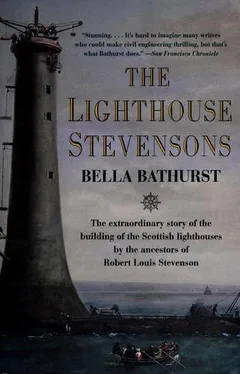 The Lighthouse StevensonsExplains how the Stevenson family built Scotland’s lighthouses and overcame the engineering, political and institutional obstacles to providing navigational safety.Free Market: The History of an IdeaFree Market: The History of an IdeaTraces how market theories developed alongside state institutions, extending the article’s examination of the public–private divide.
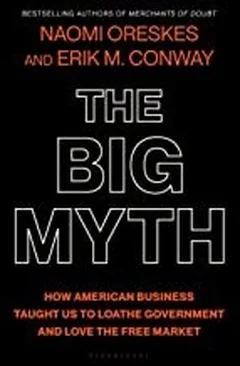 The Big Myth: How American Business Taught Us to Loathe Government and Love the Free MarketDocuments campaigns to reshape economics textbooks and public attitudes toward government, illuminating how economic stories acquire authority.
 A Libertarian Walks Into a Bear: The Utopian Plot to Liberate an American Town (And Some Bears)Reports on a New Hampshire town’s attempt to minimise government, showing the practical problems of funding and coordinating collective services.
Recommended videos
 2:18Essential Coase: The Lighthouse in EconomicsShort summary of Coase’s lighthouse paper, the article’s central study.
 7:55A Deeper Look at Public GoodsTextbook explanation of non-rival, non-excludable goods and the free-rider problem.
Cite this article
Johan Karlsson. “How the lighthouse became economics’ favourite example of a public good — and what economists got wrong.” Eikleaf, 20 May 2026, updated 2 November 2026. https://www.eikleaf.com/how-lighthouses-became-the-first-example-of-a-public-good-and-what-economists-got-wrong/
Gen AI Disclaimer
Some contents of this page were generated and/or edited with the help of a Generative AI.
Media
Susanne Jutzeler, suju-foto – Pexels
Key Sources and References
Ronald Coase, “The Lighthouse in Economics,” Journal of Law and Economics, Vol. 17, No. 2, pp. 357-376, 1974. https://doi.org/10.1086/466796
Paul Samuelson, “The Pure Theory of Public Expenditure,” Review of Economics and Statistics, Vol. 36, No. 4, pp. 387-389, 1954. https://doi.org/10.2307/1925895
Michael Pickhardt, “Fifty Years after Samuelson’s ‘The Pure Theory of Public Expenditure’: What Are We Left With?,” Journal of the History of Economic Thought, Vol. 28, No. 4, pp. 439-460, 2006. https://ideas.repec.org/a/cup/jhisec/v28y2006i04p439-460_00.html
John Stuart Mill, Principles of Political Economy, John W. Parker, London, 1848. https://www.econlib.org/library/Mill/mlP.html
Henry Sidgwick, The Principles of Political Economy, Macmillan, London, 1883.
A.C. Pigou, The Economics of Welfare, Macmillan, London, 1920. https://www.econlib.org/library/NPDBooks/Pigou/pgEW.html
Paul Samuelson and William Nordhaus, Economics, 19th edition, McGraw-Hill, 2010.
Kuniyoshi Saito, “Lighthouse Provision in Premodern Japan,” Economic Inquiry, Vol. 57, No. 3, pp. 1582-1596, 2019. https://doi.org/10.1111/ecin.12793
David van Zandt, “The Lessons of the Lighthouse: ‘Government’ or ‘Private’ Provision of Goods,” Journal of Legal Studies, Vol. 22, No. 1, pp. 47-72, January 1993. https://doi.org/10.1086/468157 · https://chicagounbound.uchicago.edu/jls/vol22/iss1/4/
Elodie Bertrand, “The Coasean Analysis of Lighthouse Financing: Myths and Realities,” Cambridge Journal of Economics, Vol. 30, No. 3, pp. 389-402, 2006. https://doi.org/10.1093/cje/bei068
Dan Bogart, Oliver Buxton Dunn, Eduard J. Alvarez-Palau, and Leigh Shaw-Taylor, “Organizations and Efficiency in Public Services: The Case of English Lighthouses Revisited,” Economic Inquiry, Vol. 60, No. 2, pp. 975-994, 2022. https://onlinelibrary.wiley.com/doi/10.1111/ecin.13060
Trinity House, “Eddystone Lighthouse.” https://www.trinityhouse.co.uk/lighthouses-and-lightvessels/eddystone-lighthouse
Trinity House, “Light Dues” (rates effective from 1 April 2026), and “How is the lighthouse service funded?” https://trinityhouse.co.uk/about-us/governance/funding/light-dues-in-the-uk · https://trinityhouse.co.uk/about-us/trinity-house-faq/how-is-the-lighthouse-service-funded
Eddystone Lighthouse Act 1709 (8 Ann. c.17), reciting the Act of 4 & 5 Anne (1705). https://vlex.co.uk/vid/861271040
James M. Buchanan, “An Economic Theory of Clubs,” Economica, Vol. 32, No. 125, pp. 1-14, 1965. https://doi.org/10.2307/2552442
Elinor Ostrom, Governing the Commons: The Evolution of Institutions for Collective Action, Cambridge University Press, 1990. https://www.cambridge.org/core/books/governing-the-commons/A8BB63BC4A1433A50A3FB92EDBBB97D5
Elinor Ostrom, “Beyond Markets and States: Polycentric Governance of Complex Economic Systems,” Nobel Prize lecture, 2009. https://www.nobelprize.org/uploads/2018/06/ostrom_lecture.pdf
Garrett Hardin, “The Tragedy of the Commons,” Science, Vol. 162, No. 3859, pp. 1243-1248, 1968. https://www.science.org/doi/10.1126/science.162.3859.1243
David Graeber, Debt: The First 5,000 Years, Melville House, New York, 2011.
Adam Smith, An Inquiry into the Nature and Causes of the Wealth of Nations, 1776, Book I, chapters 2 and 4. https://www.gutenberg.org/ebooks/3300