Last updated: · 18 min read
In brief
On 17 October, a group in Limoges set the town hall alight, and about 550,000 people marched across France, against the 200,000 forecast. The crowd came from two movements: one began with a strike at a Créteil lycée, the other with an anonymous TikTok video about fuel. Its author said he would not organise the march. Nobody spoke for the whole crowd. So the government had no single counterpart to bargain with. Pupils are due at Matignon, but fuel prices, the cause that set the date, have no delegate there.
Contents
A town hall on fire
The march in Limoges began calmly on Saturday 17 October. By the end of the afternoon a group had stormed the hôtel de ville and set its ground floor alight, and the flames soon reached the roof. Firefighters arrived shortly after six o’clock. At about half past eight the campanile, the tower that serves as the city’s emblem, collapsed, and footage of it falling spread widely online over the weekend. That evening the prefect and the mayor said the 19th-century building was largely lost.
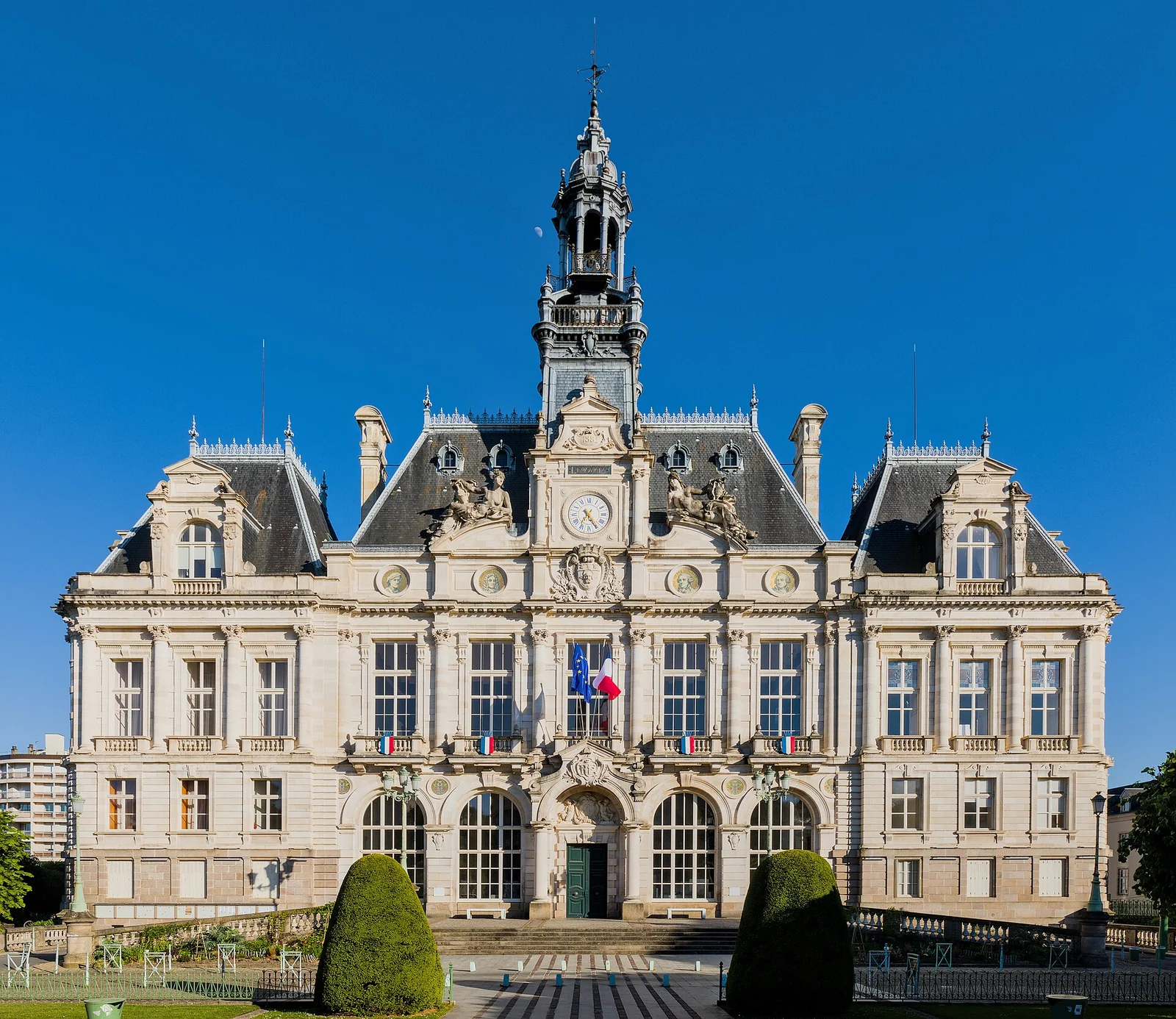
The mayor, Guillaume Guérin, said firefighters had handed him a French flag saved from the flames, and that it might be what remained of the town hall. Then he drew a line between the building and what it stood for: “C’est un monument qui brûle, mais ce n’est pas la République.” A monument was burning; the Republic, he said, would hold.
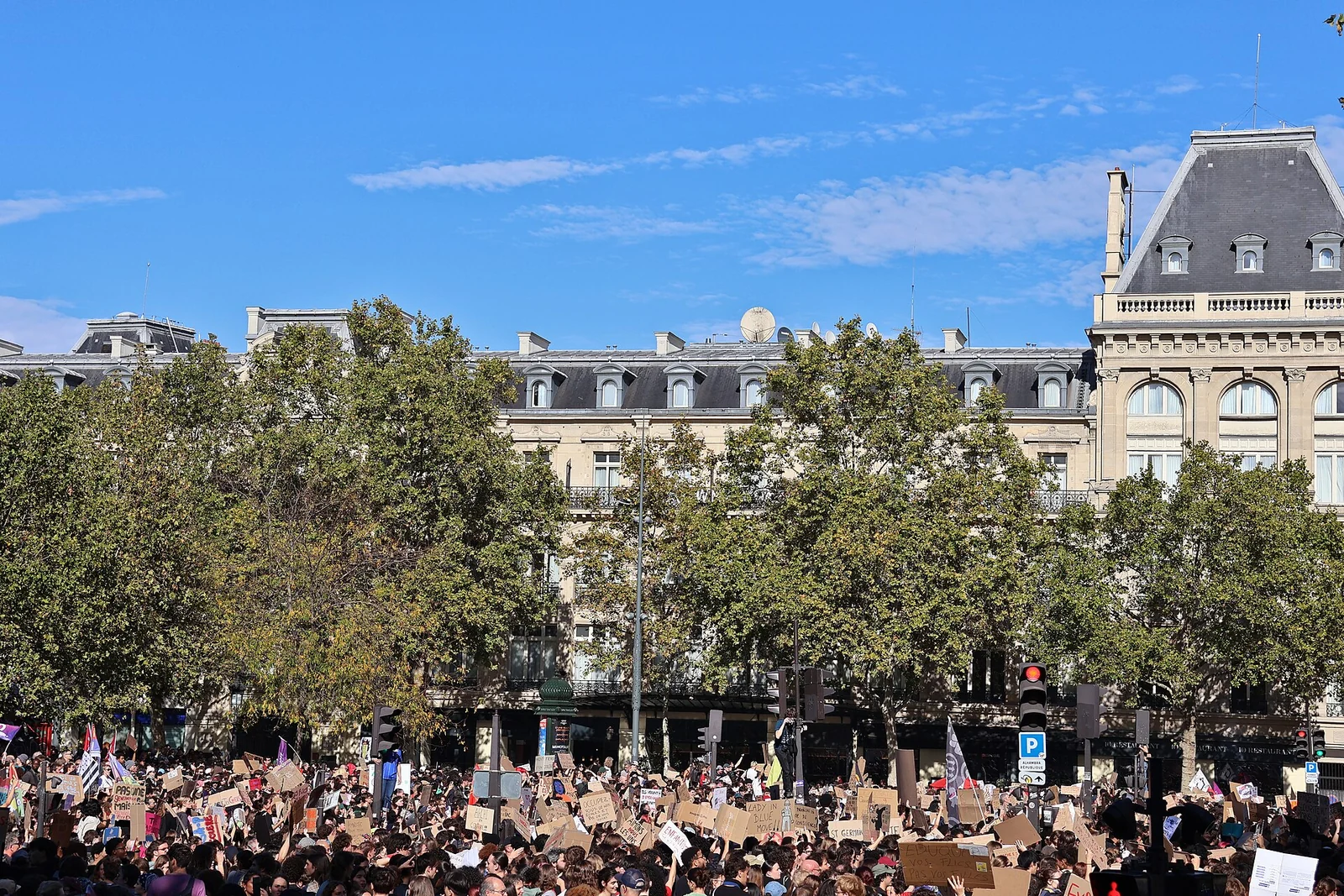
Elsewhere, in Paris, Marseille, Lyon, Bordeaux and other cities, groups looted hundreds of businesses. In the capital, meanwhile, a peaceful crowd marched toward the north-west of the city singing the national anthem and waving flags, some of them playing trumpets and violins.
The size of the day surprised the people whose job was to predict it. The intelligence services had expected about 200,000 marchers nationwide. The interior ministry counted about 550,000, in 110 marches; the organisers claimed 800,000. The crowd they had misjudged had no single origin.
It came from two movements that began separately. One began with a staff strike over unfilled posts at a single lycée, a state high school, in the Paris suburb of Créteil on 17 September. The other began earlier, with an anonymous TikTok video about the price of fuel that named 17 October as the day to march.
Two calls, one date
The fuel call came first. In early September a TikTok account posted one of the first videos to name 17 October as a day of protest against fuel prices. Within a week it had been liked nearly 300,000 times, and anonymous accounts were passing the date along. Its author was clear about his own part in it: “moi je ne l’organise pas”, he said. Someone else would have to handle the paperwork.
The anger he tapped was easy to find. On 9 September SP95-E10, the most widely used petrol, reached its highest average price since the start of the war in the Middle East, and pump prices were still setting records later that month. By August the Iran war had disrupted crude and fuel supplies, and a Russian ban on diesel exports had tightened them further. In September French consumer prices were 3.1% higher than a year earlier, a modest figure that hid what drivers paid: diesel was up 44.1%. On 22 September the government extended its fuel allowance for workers who drive to their jobs and opened it to more people, in a package of about €450 million.
The school line started with the staff. On 17 September teachers and support staff at Lycée Saint-Exupéry in Créteil stopped work over posts that had not been filled. Pupils joined them the next day, and on 21 September they blockaded the school, the day deputies from La France insoumise (LFI), the radical-left party, came to see them. A few lycées elsewhere had been blockaded since the start of term, but the lycée union USL and a source in the education administration both treat Créteil as the start of the national movement. The complaints were practical: classes too big, absent teachers who were not replaced, buildings in poor repair, timetables so long that one placard outside a Paris lycée counted more hours of lessons than of sleep. Pupils also wanted to abolish Parcoursup, the national platform that sorts school-leavers into higher education.
Then the Créteil dispute was settled. About ten days after the pupils came out, they got the replacement teachers and equipment they had asked for, and went back to class. By then their protest had travelled without them. A video interview with eight Saint-Exupéry pupils, posted on 24 September, spread across TikTok, and on 28 September the Créteil education authority itself described social networks as “un amplificateur de mobilisation”. On 8 October the education minister, Édouard Geffray, announced more than 3,000 replacement teachers for the lycées that needed them most and several hundred extra recruitments. A week later pupils were still marching, the government’s announcements having been judged insufficient.
By 16 October the two lines had joined. The call for 17 October, launched against the cost of living and the price of petrol, was gathering other grievances, and the lycée movement had become one of its catalysts. The CGT union signed up, with Solidaires and the farmers’ union Confédération paysanne. Jérôme Rodrigues, one of the faces of the 2018 yellow-vest revolt, said “les gilets jaunes doivent être solidaires des lycéens”: the yellow vests owed the pupils their support. The CFDT and Force ouvrière, two other union confederations, held back, keeping their strength for a day of strikes on 5 November that the main unions, the CGT included, had called together. On the day, those who spoke as organisers included the CGT and student organisations. Nobody spoke for the whole crowd.
How a school dispute became a cause
The policing of the blockades turned into a grievance of its own. By interior ministry figures, more than 5,000 people were arrested in the lycée movement between 21 September and 2 October. By mid-October the count had passed 6,000.
Some of the injuries were permanent. On 30 September, near Lycée Balzac in Tours, a 16-year-old was hit by a police shot and lost the use of his right eye; the prosecutor in Tours said his injuries were “compatibles” with a round from an LBD launcher, which fires hard rubber projectiles. The day before, in Alençon, an officer seized a 14-year-old girl by the neck outside her lycée, and videos of it circulated. On 5 October in Lens, a 15-year-old lost his hand when a grenade exploded near Lycée Auguste-Béhal. Witnesses disagreed about whether he had picked it up, and prosecutors said investigators had not established whether he did or whether it landed on him. The interior minister, Laurent Nuñez, then suspended one type of stun grenade against lycée demonstrators, and only against them.
The violence ran in more than one direction. By 4 October the education minister reported schools burned or ransacked and dozens of teaching staff injured. The government drew its own conclusion. On 1 October the prime minister’s office called the movement “une manœuvre organisée par La France insoumise et ses proxys de l’ultragauche”, an operation run by LFI and its ultra-left proxies; LFI’s coordinator, Manuel Bompard, said Matignon was sinking into conspiracy theory. The justice minister, Gérald Darmanin, said the country had gone from lycée demonstrations to a public-order disturbance.
Some of those who marched on 17 October read the same weeks differently. A 19-year-old in Paris, Lola, put both causes into one sentence for Reuters: “Nous nous battons parce que le coût de la vie est trop élevé, parce que le prix de l’essence est trop cher, parce que des lycéens sont victimes de violences et de blessures partout dans le pays…” Living costs, fuel, and pupils hurt across the country for asking for more teachers. On Place de la République two people climbed the statue at the centre of the square and dressed it in a yellow vest that read “2026 la police mutile les lycéens”, the police are mutilating high-school pupils.
Testimony like this does not prove that policing filled the streets on 17 October. It does show why drivers angry about fuel and pupils angry about their schools ended up on the same side of the police lines.
Saturday, and the tools of the state
The government put about 60,000 police and gendarmes on the streets on 17 October. By the interior ministry’s count, reported on 20 October, they made 2,397 arrests that day, and 997 police and gendarmes were injured. Nearly 500 more people were arrested in the following days through investigations. The Paris police prefecture said two men had died on the street “en marge des manifestations”: a marcher of 59 who collapsed on the march route on Saturday evening, and a man of 48 who collapsed near Châtelet early on Monday. Inquiries into both deaths were opened. The prefecture said the first had nothing to do with the violence or with police action; his family said it was considering a complaint if tear gas proved to be involved.
The admissions came fast. Nuñez said that in some large cities, with hundreds of shops looted, “vous ne pouvez pas regarder des commerçants et dire qu’on n’a pas perdu le contrôle”: no one could face the shopkeepers and claim that control had not been lost. He offered his resignation, and Emmanuel Macron refused it, citing the need for “un commandement continu”, unbroken command of the police. Darmanin said “Nous avons failli incontestablement ce week-end”, that the state had unquestionably failed, and added that most of those held were adults, often already known to the police, and not lycéens. The prime minister, Sébastien Lecornu, admitted that the intelligence services had not grasped how serious the situation was and that past security arrangements had been too static. Marine Le Pen of the far-right Rassemblement national and Jean-Luc Mélenchon of LFI, first and second in October’s polls for the presidential election of April 2027, both condemned the looting.
On 19 October Lecornu asked prefects, the state’s representatives in each département, to impose partial, local curfews to protect businesses. A state of emergency could be declared if needed, he said, but partial curfews seemed more appropriate. That night Place de la République and the Les Halles district in Paris were closed from 11pm to 6am, and cities including Lyon and Nice brought in curfews of their own, some for minors only.
In 2005 the state had reached for a heavier legal tool. In November that year, with riots spreading from the Paris suburbs to nearly 300 towns, Jacques Chirac declared a state of emergency under a 1955 law from the Algerian war, which allowed curfews wherever they were needed. Even then the army was not called in; asked whether it should be, Prime Minister Dominique de Villepin said France was not at that point. In 2026 the government gave the army a limited role. On 20 October Nuñez told deputies that soldiers of Opération Sentinelle would be deployed mainly on static guard duty at sensitive sites, so that police and gendarmes could be moved to crowd control.
What Sentinelle soldiers actually do

Opération Sentinelle was set up after the terrorist attacks in Paris in January 2015 to put soldiers on guard at places of worship and other sensitive sites, in support of the police and gendarmerie. Its size is easy to misread. In January 2025 the armed forces ministry put it at nearly 7,000 soldiers a day, a figure that counts those deployed and those on standby together. For the 2024 Olympics it was raised to 10,000. A headline saying that troops have been deployed in France can therefore describe a routine that has run for a decade, a temporary surge or a change of task. The October 2026 decision was a change of task: soldiers were to take over fixed guard posts so that more police could be sent to the marches. When Nuñez set out his plans for 24 October, on the 23rd, he did not mention Sentinelle at all. The units he did name, the elite RAID, GIGN and BRI squads, were to protect public buildings, away from contact with the crowds.
For 24 October Nuñez announced 70,000 police and gendarmes, 10,000 more than the week before, with armoured vehicles and water cannon. Courts fast-tracked the people arrested: in Lille, three men aged 20 to 25 with no criminal record were jailed immediately for looting a video-game shop. The National Assembly set up an inquiry into the violence and the policing strategy at the request of its speaker, Yaël Braun-Pivet; by 23 October the Rassemblement national was boycotting it after failing to win any of the inquiry’s three rapporteur posts. Curfews were to stay in force for 24 October in some cities and sensitive zones, including the area around Place de la République.
None of these steps needed anyone on the other side to agree to anything. With no single leadership to trade a concession with, the government used what it commands directly, and next it reached for the right to march.
A president’s words, a prefect’s signature
On 22 October, after a security council with the intelligence services, Macron said: “La recommandation générale, c’est qu’il n’y ait pas de manifestation dans les jours à venir.” His general advice was that there should be no demonstrations in the coming days. Only marches organised by unions would be authorised that Saturday, on routes chosen to protect shops, and requests from “des gens qui n’ont aucune légitimité pour cela”, people with no legitimacy to make them, would be refused.
French law does not hand that choice to a president. A march on a public road must be declared in advance, and the authorities may ban it, but only by a measure that is necessary, appropriate and proportionate to the risk of disorder; there is no permit to grant. In cities where the police are a national force, the prefect alone decides whether to ban a march, and the mayor has no power to do so. Nor does the law sort marchers by who organised them. “Il n’y a rien dans la loi qui permet de distinguer une manifestation organisée par un syndicat ou par un autre collectif,” said John-Christopher Rolland, a lecturer in public law at Paris Nanterre: nothing in it separates a union’s march from anyone else’s. Macron’s words could work only as a message to prefects.
Two organisations went to court. On 22 October the Association de défense des libertés constitutionnelles (Adelico) and the Syndicat de la magistrature, a judges’ union, asked the Conseil d’État, France’s highest administrative court, to suspend what they called the president’s decision. On 23 October the court rejected their appeals, on grounds that left the president’s line without legal force. His remarks, the order said, “ne révèlent pas l’existence d’une décision d’interdire toute manifestation, ni d’une instruction donnée en ce sens aux préfets”: they showed neither a decision to ban demonstrations nor an instruction to prefects to do so. It was for prefects to judge, at the moment they decided, the real scale of the risk of disorder from each march declared or planned. The government won because the court found that the president’s words had not, by themselves, banned anything or instructed anyone.
What Germany's Brokdorf ruling protects

In February 1981 opponents of a nuclear power plant under construction at Brokdorf, in West Germany, planned protests against it. Before the authorities had even been notified of them, the head of the district authority banned all protest over about 210 square kilometres around the site. More than 50,000 people demonstrated anyway. In 1985 the Federal Constitutional Court used the case to set out a rule. Unless a protest as a whole is expected to turn violent, the freedom of assembly keeps protecting its peaceful participants even when individuals or a minority among them are expected to use violence. A preventive ban on an entire event must meet strict requirements about how the risk was assessed, and the chance that some marchers will be violent does not justify it on its own. The authorities must also cooperate with organisers, and the more organisers do to keep a protest peaceful, the higher the bar for the state to intervene. Two French sociologists of policing trace part of Germany's later de-escalation practice to that duty of communication and cooperation.
Prefects, meanwhile, used the power the court had pointed to. For 24 October marches were banned in Lyon and several other cities. In Paris the prefecture at first allowed a union route from Bastille to Nation and refused one from Bastille to Opéra sought by yellow vests and the student group Interfac. Then, on the afternoon of Friday 23 October, it banned the Bastille-Nation route it had negotiated with the unions the day before. In its place it offered a route from Porte d’Italie to Porte de Vincennes along the boulevards des Maréchaux, on the edge of the city. The unions refused and challenged the decision before the Paris administrative court. Party leaders received by Lecornu at Matignon on 22 October had fared little better: the left came out disappointed that the agenda had been public order rather than a political answer to the crisis.
What the street can win
In a survey of registered voters in January 2026, only 15% said they trusted political parties and 18% the president, while 73% trusted the police and 60% their mayor. The distrust falls on the channel that is supposed to turn anger into law, and since the 2024 snap elections a fragmented parliament has jammed that channel further. None of this explains the looting. It does describe the ground on which a protest has to look for a result.
Twice in recent decades the street changed a decision, each time by changing the position of someone who had to decide. In 2006 Villepin’s government created the CPE, a first-job contract that would have let employers dismiss new workers under 26 during a two-year trial period. Parliament did debate it: the Assembly voted the amendment creating the contract during the night of 8 to 9 February. Later that day Villepin used Article 49.3 of the Constitution on the whole bill: the government staked its survival on the text, and the debate stopped. Weeks of strikes and marches followed, drawing millions, with school blockades and the first occupation of the Sorbonne since 1968. On 10 April Chirac gave in and announced the contract would be replaced. Parliament had voted; the president changed his mind.
In November 2018 the yellow vests, a movement born on social media and organised outside parties and unions, marched against a rise in fuel taxes due on 1 January 2019. The ecology minister, François de Rugy, said the government would keep to “la trajectoire prévue”, the planned course. By early December it had dropped the January rise. Later that month it passed a rise in the prime d’activité, a top-up for low earners, paid from February 2019; with the routine January rise in the minimum wage, it gave an eligible single worker without children on the minimum wage more than €100 a month extra. One yellow vest, Alain Bouché, asked on television why, if the government could do this, it had waited until there was conflict and violence.
The counter-case is 2023. Macron’s pension reform, which raised the retirement age to 64, went through the Assembly under Article 49.3 and was signed into law on 14 April 2023, although the unions had jointly asked him not to sign it. Rioting did not move it. In March, after clashes in which the entrance of Bordeaux’s city hall was set on fire, Darmanin, then interior minister, said the law should not be withdrawn because of violence. What changed it was a parliamentary bargain two years later. In October 2025 Lecornu, who needed the Socialists not to topple his government, proposed suspending the reform; the suspension was one of their conditions. The social-security financing law for 2026 suspended the rise in the retirement age and in the required contribution period until 2028, with effect from 1 September 2026.
In 2006 and 2018 the street won because someone with the power to sign had a reason to sign: a president facing weeks of blockades, a government facing rioting in many cities. When the executive could wait, as in 2023, the street lost, and what the marches could not get came later from a prime minister counting Socialist votes.
On that reading, October 2026 is a protest without a counterparty. The man who launched the date said he would not organise it. The CGT joined a call it had not written, and the CFDT and Force ouvrière stayed out of it. Concessions went to the people who could receive them: the Créteil pupils got their teachers, and the lycée organisations got meetings. On 23 October Macron received about twenty of their representatives for nearly three hours at the Élysée. They are to see Lecornu on Monday 26 October, and Macron’s entourage said the government would make commitments “dès lundi”, from Monday. The pupils said they would keep mobilising until concrete measures came. Fuel prices, the cause that set the date of 17 October, have no delegate at that table. The absence of a single organiser makes bargaining harder.
The government’s case is that it was listening, and that 17 October was a failure of intelligence and policing exploited by criminals and a small radical fringe. Before the march the Créteil pupils had won their demands, the minister had announced replacement teachers and fuel aid had been widened; afterwards officials blamed some of the violence on far-left groups and looters. Both points hold, and neither settles the dispute that filled the streets. The fuel aid was the state acting alone, nearly a month before the marches, and no one can accept a further concession on behalf of the crowd that came out over fuel. Meanwhile a policing failure on one Saturday produced a general response, a limit on who may march, which the Conseil d’État then found was not, in law, a decision at all.
Where police meet the crowd
Each of these choices ends where officers face marchers, and crowd psychologists have studied what happens there. Policing that treats a crowd as irrational and dangerous by nature tends to defeat itself: it can lead to interventions that strengthen the people in the crowd who advocate violence. Widespread conflict grows out of the encounter between police and crowd, and policing that tells groups apart can lead a crowd to restrain the violent minority in its own midst.
In 2016 two French sociologists, Olivier Fillieule and Fabien Jobard, argued that French policing resisted the de-escalation models used in Germany, Sweden and Switzerland, and that the crowd theory of Gustave Le Bon, the 19th-century writer who described crowds as irrational, remained at the heart of its philosophy. Since then France has put a doctrine on paper. A national crowd-control framework, the schéma national du maintien de l’ordre, was issued on 16 September 2020. On 10 June 2021 the Conseil d’État struck out four of its provisions, among them the “nasse”, the encirclement of a crowd that English speakers call kettling, because the text did not set out when it could be used. The ministry issued a revised version that December.
The language of October 2026 pulls two ways. On 19 October Nuñez promised to step up intervention against “les casseurs et les pilleurs”, rioters and looters, so that officers could be “mobiles et réactives” when groups broke away to loot shops. On 23 October he confirmed that LBDs and grenades could be used within the law: “C’est la proportionnalité, toujours la proportionnalité.” The mayor of Marseille, Benoît Payan, called the government’s crowd-control doctrine “inefficace”. And the police commissioners’ union said its forces were “à bout”, worn out.
The crowd research cannot show what any particular tactic did in October 2026, and it describes what policing can do rather than what it must. It does supply a test for 24 October and the days after: whether officers told to move fast against looters can still tell the looters from the crowd around them.
A building and a classroom
On 23 October Lecornu went to Limoges. The state, he said, would rebuild the town hall “à l’identique”, exactly as it was, and classify the whole building as a historic monument. Local taxpayers would not pay “un euro” towards it, and the state would pursue the civil liability of those who burned it. What happened there, he said, “n’a rien à voir avec un mouvement social ou un mouvement lycéen”. By 22 October two men were in custody. One, aged 34, was described by investigators as an ultra-left activist already on a security watch-list and was suspected of the attempted murder of a person holding public authority; thirteen municipal police officers had been inside the town hall during the attack. The other, aged 66, was arrested in the Creuse that Thursday. The accusations have not been tested in court.
What the pupils of Créteil came out for in September, teachers in front of their classes, is on the table at Matignon on Monday 26 October, where lycée representatives expect the first concrete measures. Before that came Saturday 24 October, a second national day called by unions, lycéens and the yellow-vest coordination, with 70,000 police and gendarmes announced, marches banned in several cities and the Paris route contested in court.
Related articles
- The countries that never needed a revolution — and what protects them
- Why falling crime doesn’t always empty prisons
- Why some democracies fail in ten years while others last centuries
Further reading
As an Amazon Associate, Eikleaf earns from qualifying purchases. The book links below are affiliate links: if you buy through them, we may earn a small commission at no extra cost to you.
Recommended videos
 5:24France demonstrations: Mass protests to unite students, teachers & unionsAl Jazeera on students, teachers and unions joining forces in France’s October protests.
 1:43France’s Yellow Vests to return as fuel prices soar? • FRANCE 24 EnglishFRANCE 24 on whether soaring fuel prices could bring back Yellow Vest-style protests.
 3:41Up to 500 French schools to be closed Monday as protests continue • FRANCE 24 EnglishFRANCE 24 on hundreds of schools closing as the school protests spread.
Cite this article
Owen Parker. “How France’s school protests met the cost-of-living revolt.” Eikleaf, 24 October 2026, updated 25 October 2026. https://www.eikleaf.com/how-france-s-school-protests-met-the-cost-of-living-revolt/
Gen AI Disclaimer
Some contents of this page were generated and/or edited with the help of a Generative AI.
Media
Manifestations du 17 octobre 2026 à Paris – Wikimedia Commons (Photo: Jules*, CC BY-SA 4.0)
Limoges town hall, May 2026 – Wikimedia Commons (Photo: Benjamin Smith, CC BY-SA 4.0)
Manifestation lycéenne du 6 octobre 2026 à Paris – Wikimedia Commons (Photo: FreCha, CC BY-SA 4.0)
Key Sources and References
France 3 Nouvelle-Aquitaine. “Mobilisation du 17 octobre à Limoges : la mairie de Limoges toujours en feu, le campanile, emblème de la ville, s’est effondré.” France 3 Nouvelle-Aquitaine, 17 October 2026. https://france3-regions.franceinfo.fr/nouvelle-aquitaine/haute-vienne/limoges/mobilisation-du-17-octobre-des-manifestants-mettent-le-feu-a-la-mairie-de-limoges-3435198.html
franceinfo. “‘C’est un monument qui brûle, mais ce n’est pas la République’ : l’émotion mêlée de colère du maire de Limoges devant l’incendie qui a détruit l’hôtel de ville.” franceinfo, 17–18 October 2026. https://www.franceinfo.fr/faits-divers/c-est-un-monument-qui-brule-mais-ce-n-est-pas-la-republique-l-emotion-melee-de-colere-du-maire-de-limoges-devant-l-incendie-qui-a-detruit-l-hotel-de-ville_8242447.html
Corbet, Sylvie, and Jade Le Deley. “Clashes, fires and looting break out as protesters rally across France.” Associated Press via ABC News, 17 October 2026. https://abcnews.com/International/wireStory/protesters-france-rally-rising-living-costs-joining-students-137342706
Reuters. “EN DIRECT-Journée de « colère sociale » en France, nombreuses violences en marge des cortèges.” Boursorama, 17–18 October 2026. https://www.boursorama.com/actualite-economique/actualites/en-direct-journee-de-colere-sociale-en-france-nombreuses-violences-en-marge-des-corteges-981e06cc307cb5bf1dcf475d805db316
franceinfo. “VRAI OU FAUX. Combien de personnes sont mortes en marge de la mobilisation du 17 octobre à Paris ?” franceinfo, 20 October 2026, updated 22 October 2026. https://www.franceinfo.fr/vrai-ou-fake/vrai-ou-faux-combien-de-personnes-sont-mortes-en-marge-de-la-mobilisation-du-17-octobre-a-paris_8245396.html
Reuters. “French police clash with protesters amid rally over cost of living.” CNBC, 17 October 2026. https://www.cnbc.com/2026/10/17/french-protesters-take-to-streets-over-rising-prices-and-social-strain.html
Associated Press. “French police arrest more than 1,800 people after violent protests erupt across country.” CBS News, 18 October 2026. https://www.cbsnews.com/news/protests-france-rising-living-costs-students/
franceinfo. “‘J’ai remis ma démission parce que je suis responsable de tout’, affirme Laurent Nuñez, après les heurts et pillages lors de la mobilisation du 17 octobre.” franceinfo, 19 October 2026. https://www.franceinfo.fr/societe/mobilisation-du-17-octobre/j-ai-remis-ma-demission-parce-que-je-suis-responsable-de-tout-ce-qui-se-passe-affirme-laurent-nunez-apres-les-heurts-et-pillages-lors-de-la-mobilisation-du-17-octobre_8243536.html
Le JDD. “Manifestations du 24 octobre : la DGPN demande de porter le taux de présence des policiers à 75 %.” Le Journal du Dimanche, 20 October 2026. https://www.lejdd.fr/Societe/info-jdd-manifestations-du-24-octobre-la-dgpn-demande-de-porter-le-taux-de-presence-des-policiers-a-75-186573
franceinfo. “D’où viennent les appels à un retour des ‘gilets jaunes’ le 17 octobre, dans un contexte de flambée des prix des carburants ?” franceinfo, 17 September 2026. https://www.franceinfo.fr/internet/reseaux-sociaux/d-ou-viennent-les-appels-a-un-retour-des-gilets-jaunes-le-17-octobre-dans-un-contexte-de-flambee-des-prix-des-carburants_8193398.html
ICI. “Prix des carburants : sur TikTok, des jeunes appellent à relancer le mouvement des ‘gilets jaunes’ le 17 octobre.” ICI (Radio France), 11 September 2026. https://www.ici.fr/infos/economie-social/prix-des-carburants-sur-tik-tok-des-jeunes-appellent-a-relancer-le-mouvement-des-gilets-jaunes-le-17-octobre-9122130
Reuters. “Diesel prices overtake jet fuel in Europe as global shortage widens.” Hydrocarbon Processing, 13 August 2026. https://hydrocarbonprocessing.com/news/2026/08/diesel-prices-overtake-jet-fuel-in-europe-as-global-shortage-widens/
INSEE. “En septembre 2026, les prix à la consommation augmentent de 3,1 % sur un an.” Informations rapides n° 247, 15 October 2026. https://www.insee.fr/fr/statistiques/9080209
franceinfo. “Revendications locales, vidéos virales, soutien de LFI… Comment le blocage de quelques lycées s’est transformé en un mouvement d’ampleur.” franceinfo, 1 October 2026. https://www.franceinfo.fr/societe/education/blocage-des-lycees/la-mobilisation-a-pris-une-ampleur-inattendue-comment-le-mouvement-de-blocage-des-lycees-s-est-propage-en-france_8216054.html
franceinfo. “À la genèse du mouvement lycéen, un établissement du Val-de-Marne, où le calme est revenu depuis.” franceinfo, 5 October 2026. https://www.franceinfo.fr/replay-radio/le-tour-de-la-question/a-la-genese-du-mouvement-lyceen-un-etablissement-du-val-de-marne-ou-le-calme-est-revenu-depuis_8222884.html
Magee, Caolán. “What’s behind French student protests that turned violent?” Al Jazeera, 30 September 2026. https://www.aljazeera.com/news/2026/9/30/whats-behind-french-student-protests-that-turned-violent
CIDJ. “Une « refonte » de Parcoursup annoncée par Emmanuel Macron.” CIDJ, 23 October 2026. https://www.cidj.com/s-orienter/avec-parcoursup/une-refonte-de-parcoursup-annoncee-par-emmanuel-macron
Geffray, Édouard (Minister of National Education). Post on X, 8 October 2026. https://x.com/EdouardGeffray/status/2108286208308855194
LCP. “Mobilisation du 17 octobre: des lycéens aux gilets jaunes, qui appelle à manifester et pourquoi?” LCP – Assemblée nationale, 16 October 2026. https://lcp.fr/actualites/mobilisation-du-17-octobre-des-lyceens-aux-gilets-jaunes-qui-appelle-a-manifester-et
Amnesty International France. “Mouvement lycéen : des mineurs face à la répression des forces de l’ordre.” Amnesty International France, 2 October 2026, updated 6 October 2026. https://www.amnesty.fr/actualites/france-mouvement-lyceens-blocus-lycees-point-sur-la-situation/
CNN. “The rioting across France is a symptom of a much larger public and political crisis.” CNN, 19 October 2026. https://www.cnn.com/2026/10/19/europe/france-riots-political-crisis-intl
CNN. “France promises ‘massive’ police presence this weekend as cities impose more curfews after protest violence.” CNN, 20 October 2026. https://www.cnn.com/2026/10/19/europe/france-protests-violence-wwk-intl-hnk
franceinfo. “Blocage des lycées : la main d’un adolescent arrachée par une grenade.” franceinfo, 5 October 2026. https://www.franceinfo.fr/societe/education/blocage-des-lycees/blocage-des-lycees-la-main-d-un-adolescent-arrachee-par-une-grenade_8223883.html
Al Jazeera. “Teenager loses hand in blast amid French school protest clashes.” Al Jazeera, 5 October 2026. https://www.aljazeera.com/news/2026/10/5/students-continue-to-protest-in-france-as-hundreds-of-schools-close
Reuters. “2,000 arrested in France as student protests escalate into violence.” NBC News, 2 October 2026. https://www.nbcnews.com/world/europe/france-2000-arrested-student-violence-protest-rcna601094
Radio-Canada (AFP). “France : une journée de manifestations marquée par des violences et des affrontements.” Radio-Canada, 17 October 2026. https://ici.radio-canada.ca/nouvelle/2293425/france-manifestation-colere-jeunes
Al Jazeera (with Reuters). “France announces curfews in aftermath of violent protests.” Al Jazeera, 19 October 2026. https://www.aljazeera.com/news/2026/10/19/frances-macron-declines-ministers-resignation-after-violent-protests
ICI. “Violences du 17 octobre : Laurent Nuñez admet ‘un manque d’anticipation’, l’instauration de couvre-feux attendue.” ICI (Radio France), 19 October 2026. https://www.ici.fr/infos/faits-divers-justice/violences-du-17-octobre-laurent-nunez-admet-un-manque-d-anticipation-sebastien-lecornu-reunit-une-cellule-de-crise-1550904
ABC News. “France protests cool after overnight curfews in Paris, major cities, PM says.” ABC News, 20 October 2026. https://abcnews.com/International/france-protests-cool-after-overnight-curfews-paris-major/story?id=137403836
Al Jazeera. “France PM promises more curfews as authorities seek to regain control.” Al Jazeera, 20 October 2026. https://www.aljazeera.com/news/2026/10/20/france-to-impose-new-curfews-where-required-after-calm-night
Associated Press. “France announces nightly curfews ‘for as long as necessary’.” NPR, 21 October 2026. https://www.npr.org/2026/10/21/nx-s1-6010344/france-nightly-curfews
Reuters. “France protests: Curfews calm unrest as Macron tours Gulf.” CNBC, 20 October 2026. https://www.cnbc.com/2026/10/20/france-protests-curfews-macron-gulf-trip.html
Al Jazeera. “State of emergency declared in France.” Al Jazeera, 8 November 2005. https://www.aljazeera.com/news/2005/11/8/state-of-emergency-declared-in-france
Al Jazeera. “Curfews planned in France to stop riots.” Al Jazeera, 8 November 2005. https://www.aljazeera.com/news/2005/11/8/curfews-planned-in-france-to-stop-riots
Ministère des Armées. “Opération Sentinelle : 10 ans au service des Français.” Ministère des Armées, 10 January 2025. https://www.defense.gouv.fr/actualites/operation-sentinelle-10-ans-au-service-francais
franceinfo. “Blindés, unités d’élite, 70 000 policiers et gendarmes… Laurent Nuñez détaille l’important dispositif de sécurité mobilisé pour les manifestations du 24 octobre.” franceinfo, 23 October 2026. https://www.franceinfo.fr/societe/manifestations/blindes-unites-d-elite-70-000-policiers-et-gendarmes-laurent-nunez-detaille-l-important-dispositif-de-securite-mobilise-pour-les-manifestations-du-24-octobre_8250754.html
Barbarit, Simon. “Emmanuel Macron serre la vis sur les mobilisations : jusqu’à quel point peut-on restreindre la liberté de manifester ?” Public Sénat, 22 October 2026. https://www.publicsenat.fr/actualites/politique/emmanuel-macron-serre-la-vis-sur-les-mobilisations-jusqua-quel-point-peut-on-restreindre-la-liberte-de-manifester
Le Club des juristes. “Référé-liberté déposé devant le Conseil d’État après les déclarations d’Emmanuel Macron.” Le Club des juristes, 22–23 October 2026. https://www.leclubdesjuristes.com/en-bref/refere-liberte-depose-devant-le-conseil-detat-apres-les-declarations-demmanuel-macron-18006/
Campion, Juliette, and Fabien Magnenou. “Mobilisations du 24 octobre : ‘le niveau de menace reste élevé’, affirme Sébastien Lecornu, ciblant ‘l’ultragauche’ et ‘la délinquance’.” franceinfo (live), 23–24 October 2026. https://www.franceinfo.fr/societe/mobilisation-du-17-octobre/direct-manifestations-du-24-octobre-emmanuel-macron-preside-un-conseil-de-defense-a-9-heures-avant-de-recevoir-les-lyceens-dans-l-apres-midi_8250124.html
franceinfo. “Mobilisation du 24 octobre : un référé déposé samedi matin par l’intersyndicale contre le changement de parcours de la manifestation à Paris.” franceinfo, 23 October 2026. https://www.franceinfo.fr/societe/manifestations/mobilisation-du-24-octobre-un-refere-depose-samedi-matin-par-l-intersyndicale-contre-le-changement-de-parcours-de-la-manifestation-a-paris_8251420.html
Associated Press. “Louvre and major Paris museums to close on Saturday over concerns about violence during protests.” The Globe and Mail, 23 October 2026. https://www.theglobeandmail.com/world/article-france-saturday-protests-police-louvre-closed/
Bundesverfassungsgericht. Order of 14 May 1985, 1 BvR 233/81 (Brokdorf), English abstract. https://www.bundesverfassungsgericht.de/SharedDocs/Entscheidungen/EN/1985/05/rs19850514_1bvr023381en.html
Fillieule, Olivier, and Fabien Jobard. “Un splendide isolement.” La Vie des idées, 24 May 2016. https://laviedesidees.fr/Un-splendide-isolement
Sciences Po CEVIPOF and OpinionWay. “Baromètre de la confiance politique CEVIPOF 2026 : la confiance s’effondre en politique, la proximité fait figure de refuge.” Sciences Po CEVIPOF, 9 February 2026. https://www.sciencespo.fr/cevipof/fr/actualites/barometre-de-la-confiance-politique-cevipof-2026-la-confiance-s-effondre-en-politique-la-proximite-fait-figure-de-refuge/
Assemblée nationale. Compte rendu analytique, 1re séance du 9 février 2006. https://www.assemblee-nationale.fr/12/cra/2005-2006/142.asp
Assemblée nationale. Compte rendu intégral, 2e séance du 9 février 2006. https://www.assemblee-nationale.fr/12/cri/2005-2006/20060143.asp
Al Jazeera. “France to replace youth job law.” Al Jazeera, 10 April 2006. https://www.aljazeera.com/news/2006/4/10/france-to-replace-youth-job-law
The Guardian via Mail & Guardian. “Chirac backs down and scraps youth job law.” Mail & Guardian, 11 April 2006. https://mg.co.za/article/2006-04-11-chirac-backs-down-and-scraps-youth-job-law
Le Temps (AFP). “«Gilets jaunes»: plus de 287 000 manifestants contre la hausse des taxes sur le carburant.” Le Temps, 18 November 2018. https://www.letemps.ch/monde/europe/gilets-jaunes-plus-287-000-manifestants-contre-hausse-taxes-carburant
NPR. “Macron Promises Minimum Wage Hike And Tax Cuts To End ‘Yellow Vest’ Protests.” NPR, 10 December 2018. https://www.npr.org/2018/12/10/675425153/macron-promises-minimum-wage-hike-and-tax-cuts-to-end-yellow-vest-protests
Assemblée nationale. Projet de loi n° 1516 portant mesures d’urgence économiques et sociales. 19 December 2018. https://www.assemblee-nationale.fr/15/pdf/projets/pl1516.pdf
La Libre (Belga). “La loi sur la réforme des retraites officiellement promulguée en France.” La Libre Belgique, 15 April 2023. https://www.lalibre.be/international/europe/2023/04/15/la-loi-sur-la-reforme-des-retraites-officiellement-promulguee-en-france-M43MXOZAIVEKVCWXSW4FXY5TQY/
Al Jazeera. “Calls for more pension protests as hundreds arrested in France.” Al Jazeera, 24 March 2023. https://www.aljazeera.com/news/2023/3/24/calls-for-more-pensions-protests-as-hundreds-arrested-in-france
Fau, Ludovic. “Retraites : Sébastien Lecornu propose la ‘suspension’ de la réforme jusqu’à l’élection présidentielle.” LCP – Assemblée nationale, 14 October 2025. https://lcp.fr/actualites/retraites-sebastien-lecornu-propose-la-suspension-de-la-reforme-jusqu-a-l-election
Service Public (DILA). “Suspension de la réforme des retraites : qui est concerné ?” Service-public.gouv.fr, 27 February 2026. https://www.service-public.gouv.fr/particuliers/actualites/A18825
Reicher, Stephen, Clifford Stott, John Drury, Otto Adang, Patrick Cronin and Andrew Livingstone. “Knowledge-based public order policing: principles and practice.” Policing 1, no. 4 (2007): 403–415. https://doi.org/10.1093/police/pam067 ; University of Stirling repository record: https://www.stir.ac.uk/research/hub/publication/889829
Conseil d’État. Décision n° 444849 et autres (schéma national du maintien de l’ordre), 10 June 2021. https://www.conseil-etat.fr/content/download/159935/file/444849.pdf
France 3 Nouvelle-Aquitaine. “Incendie de la mairie de Limoges : un deuxième suspect interpellé en Creuse, la garde à vue du premier requalifiée pour ‘tentative de meurtre’.” France 3 Nouvelle-Aquitaine, 22 October 2026. https://france3-regions.franceinfo.fr/nouvelle-aquitaine/haute-vienne/limoges/incendie-de-la-mairie-de-limoges-un-deuxieme-suspect-interpelle-en-creuse-la-garde-a-vue-du-premier-requalifiee-pour-tentative-de-meurtre-3437415.html
Levrel, Pierre. “Face à la flambée des prix du carburant, le gouvernement débloque 450 millions d’euros pour soutenir les travailleurs et les professionnels.” LCP – Assemblée nationale, 22 September 2026. https://lcp.fr/actualites/face-a-la-flambee-des-prix-du-carburant-le-gouvernement-debloque-450-millions-d-euros
AFP. “Le gouvernement élargit l’aide carburant des grands rouleurs jusqu’en décembre.” Connaissance des Énergies, 22 September 2026. https://www.connaissancedesenergies.org/afp/carburants-laide-aux-grands-rouleurs-prolongee-et-elargie-alors-que-les-francais-paient-des-prix-records-260922
CGT État. “5 novembre : appel à la mobilisation pour les salaires, les services publics, l’emploi et l’industrie (Intersyndicale interprofessionnelle).” CGT État, 6 October 2026. https://www.cgtetat.fr/societe-959/mobilisations/article/5-novembre-appel-a-la-mobilisation-pour-les-salaires-les-services-publics-l
Marchal, Raphaël, and Elsa Mondin-Gava. “Commission d’enquête sur le 17 octobre: après le boycott du RN, une rapporteure de l’instance annonce se mettre ‘en retrait’.” LCP – Assemblée nationale, 23 October 2026. https://lcp.fr/actualites/commission-d-enquete-sur-le-17-octobre-apres-le-boycott-du-rn-une-rapporteure-de-l
Sciences Po CEVIPOF and OpinionWay. “En quoi les Français ont-ils confiance aujourd’hui ? Le baromètre de la confiance politique, vague 17” (methodology, page 3). February 2026. https://www.sciencespo.fr/cevipof/sites/sciencespo.fr.cevipof/files/Barometre_confiance_CEVIPOFVague17_fev2026_vd1.pdf
Assemblée nationale. Dossier législatif: projet de loi de financement rectificative de la sécurité sociale pour 2023 (loi n° 2023-270 du 14 avril 2023). https://www.assemblee-nationale.fr/dyn/16/dossiers/plrfss_pour_2023
Commission nationale consultative des droits de l’homme. “Avis sur les rapports entre police et population.” CNCDH, 19 October 2023. https://www.cncdh.fr/sites/default/files/2023-10/A%20-%202023%20-%202%20-%20Avis%20Rapport%20entre%20police%20et%20population%2C%20octobre%202023_3.pdf