Last updated: · 15 min read
In brief
Give numerate Americans a data table about a skin rash cream, and they read it well. Frame the same numbers as a city’s gun ban, and the most numerate ace it only when the answer flatters their politics. Analytical skill guards well against plain mistakes and far less well against motivated ones. It can supply the arguments. Philip Tetlock tracked 284 experts for two decades, and the most certain forecasters were the least accurate. Intelligence helps, but what protects is a habit: a record of predictions you cannot edit, and curiosity when the evidence turns against you.
Contents
Give a group of Americans with high mathematical ability a statistics problem that requires valid causal inference from a data table, and they perform well. Now give them the identical problem, with the same numbers, the same table structure and the same causal challenge, but reframe it: instead of a trial for a skin rash treatment, the table is evidence about whether a city’s gun control ban reduced crime. The most numerate subjects now split furthest apart: they ace the problem when the answer flatters their view of gun control, and stumble when it doesn’t.
The experiment is Dan Kahan’s, and it goes by the name motivated numeracy. Its lesson is that cognitive ability can serve motivated reasoning as readily as it corrects it: more analytical power can simply make you more effective at being wrong. Later studies keep finding the partisan skew, though the extra amplification among the most numerate shows up less consistently. In one large preregistered rerun, better numeracy still meant more correct answers in every version of the problem, but the partisan gap did not widen as numeracy rose. Either way, being good with numbers did not cancel the partisan skew. Analytical ability guards well against straightforward error and far less well against motivated error, where the same ability can supply arguments for the mistake.
You probably arrived at this article with a background assumption that belongs in the evidence too: whatever it finds describes other people’s failures, and motivated numeracy is for people who reason less carefully than you do.
The machine runs on itself
Education here means more than credential accumulation, the years of school, degrees and institutional stamps. What education does, and what it is designed to do, is develop and reward specific cognitive tools: analytical capacity, pattern recognition, narrative construction and domain confidence. Schooling trains and rewards those tools, and the evidence that follows is about them in action, not about years spent in classrooms.
The distinction matters, because the obvious defence, “I’m reasoning from evidence, not from identity,” is exactly what those tools make it possible to believe while you’re doing the opposite.
Kahan’s study found that higher numeracy predicted correct answers on the skin cream problem. Switch to gun control, and the high-numeracy subjects didn’t stop performing better at inference; they redirected it. Liberals with high numeracy were more accurate when the data showed the ban had reduced crime; conservatives with high numeracy were more accurate when it showed the ban had increased crime. Each group’s analytical ability expressed itself in whichever direction its politics required.
The key fact is the directional flip: numeracy helped most in the politically convenient direction. Nothing in the data shows the subjects choosing to deceive themselves, and nobody needs to cheat to get this result. A skilled analyst who wants to discount a table always has legitimate questions to hand: whether the sample was representative, whether confounding variables were controlled for, whether the causal mechanism was plausible. The questions become motivated when the same scrutiny isn’t applied to data that confirms what the analyst already believes.
Kahan found the same pattern on climate when he tested whether higher science literacy and numeracy pushed people toward scientific consensus on climate risk. They did not. Among people with hierarchical and individualist cultural orientations, higher science literacy predicted greater dismissiveness of climate risk. Among those with egalitarian and communitarian orientations, it predicted greater alarm. The gap between the two groups widened as literacy increased.
The most literate members of both groups knew more, so ignorance can’t explain the split. What differed was the direction in which they applied what they knew, and that direction tracked political identity.
The science writer Chris Mooney gave the phenomenon a name: the “smart idiots” effect, in which politically sophisticated people turn out more biased, and less persuadable, than the uninformed. Mooney argued the effect runs strongest on the right — a reading Kahan himself rejected; his own data, on climate and on the gun-control table, show the pattern on both sides. The label is deliberately uncomfortable, and the observation underneath it holds up: motivated reasoning doesn’t fade as cognitive ability increases.
Education creates a specific bind. It doesn’t only develop these cognitive tools; it invests identity in them. A person who has spent years building analytical expertise, and who has been rewarded by institutions, peers and professional success for deploying it in particular directions, has more to lose from discovering the direction was wrong. The tools become harder to turn against the positions they were used to construct. No character flaw is needed for this, only cognitive development and identity formation happening in the same institution, at the same time, rewarding the same conclusions. The bind tightens with each success, since every gain in citations, reputation or institutional prestige raises the cost of a discovery that threatens the framework.
The capacities education produces, such as analytical inference, the habit of building coherent accounts from evidence and the confidence that comes from domain expertise, don’t come with instructions for when to stop trusting yourself. They are very good at producing the feeling of having reasoned correctly, and that feeling says little about accuracy.
The expert’s curse
You might grant that political belief is tribal, while maintaining that it operates in a separate compartment from your professional judgment — that in your actual field, you reason correctly. Philip Tetlock spent two decades testing that compartment.
From 1984 to about 2003, he recruited 284 experts, among them political scientists, economists, foreign policy analysts and current and former government officials, and had them make more than 80,000 predictions about political and economic events: who would win elections, whether economies would grow or contract, whether conflicts would escalate or resolve. Then he waited, and scored.
The result was embarrassing: experts performed barely better than chance and no better than an informed non-expert reading newspapers. Accuracy tracked how an expert’s knowledge was organised, not how deep it went. Experts who organised their worldview around a single explanatory framework were the worst predictors of all; Tetlock, borrowing the term from Isaiah Berlin’s 1953 essay, called them hedgehogs. Foxes, who drew on multiple frameworks and updated when evidence arrived, did better.
Confidence and accuracy ran inverse to each other: the most committed, most certain experts were the least accurate. Their rigour was real, and it went into defending a framework they could not afford to see fail.
The worst predictors did not lack knowledge. They knew their field well enough to have organised that knowledge into a coherent system, and the system had become the lens through which they perceived everything. A realist international relations theorist predicted conflicts through the logic of state power. A supply-side economist predicted downturns through the logic of incentive structures. Each framework had been built from years of evidence, which made it feel especially secure, and especially blind to what it was failing to capture. The more comprehensive the framework, the more each new event could be assimilated into it without challenge, and the less likely the framework was ever to crack.
A selection mechanism compounds this. Tetlock found that the qualities editors and television producers value most, such as decisive claims, willingness to commit and confident framing, are negatively correlated with predictive accuracy. The experts most sought after for commentary are, statistically, the most likely to be wrong. Hedgehogs make good television; foxes equivocate in ways that make producers nervous. The institutional reward structure for public expertise therefore elevates the worst performers — and rewards everyone else for sounding more like them.
In 2011, Tetlock and Barbara Mellers launched the Good Judgment Project under IARPA’s Aggregative Contingent Estimation program, a forecasting tournament run by the US intelligence community’s research agency. Its self-selected volunteers, who were not domain experts, competed against other research teams. When their pooled forecasts were set against those of professional intelligence analysts with access to classified information, the volunteers came out, by the project’s own reckoning, roughly 30% more accurate, and the best of them, eventually called superforecasters, did better still.
What superforecasters did

The habits behind those results are not glamorous. Superforecasters kept written records of their predictions before events unfolded, so they couldn't revise their memory of having been right. They tracked accuracy against a record they couldn't edit. When wrong, they updated rather than explaining the disconfirmation away as an anomaly or exceptional case. They expressed probability as calibrated estimates, specific percentages directly comparable to outcomes, rather than as directional commitments insulated from accountability. They broke large questions into smaller components where individual variables could be assessed separately.

Intelligence helps, but none of this runs on intelligence alone. All of it requires the sustained willingness to be demonstrably wrong on a record you're keeping yourself, which turns out to be hard to maintain when your professional and social identity is built around being the person who understands these things.
What the centre got wrong
The standard defence of institutional expertise runs like this: yes, individual experts err, but that’s what peer review, replication and cumulative science are for. The system self-corrects. Individual overconfidence gets averaged out, outliers get challenged, bad findings don’t survive independent scrutiny.
That is partly true, given enough time. Before accepting it, though, ask how long the self-correction took, who paid the cost during the delay, and why the field’s own internal processes failed to catch the problem first.
In 2015, the Reproducibility Project, coordinated by Brian Nosek at the University of Virginia, reported what happened when hundreds of researchers attempted to replicate 100 studies from three leading psychology journals. Only 36% replicated at the original significance threshold, and social psychology fared worst, at about 25%. Across the replications, effects came out at roughly half their original size.
The replication project measured the problem rather than diagnosing it, but methodologists had already named the prime suspects, and none of them required fraud or a few bad actors. All were the systematic product of normal operating logic: small samples treated as sufficient because results looked compelling; p-value thresholds gamed through repeated testing and selective reporting; a publication culture that rejected null results so they never entered the literature.
Peer reviewers were poorly placed to catch any of this: they had been trained in the same methods, often held the same priors and shared the same incentive structure. They were part of the system they were meant to check, so the sophistication that built the field also helped keep its errors invisible from inside.
Economic forecasting operated under different pressures but produced an equivalent blind spot through a different mechanism. In July 2007, the IMF’s World Economic Outlook Update projected global growth of 5.2% for 2007 and 2008, with the balance of risks described as “tilted modestly to the downside.” Fourteen months later, Lehman Brothers collapsed. The IMF’s Independent Evaluation Office later concluded the Fund had done a poor job of flagging the crisis or its severity.
Heterodox economists and analysts had been warning of systemic fragility for years, and the Fund saw the housing booms and the new financial instruments; it downplayed the risks they carried. Its evaluators blamed groupthink, intellectual capture and a general mindset that a major crisis in large advanced economies was unlikely, along with a culture that discouraged contrarian views and weak analysis of the financial sector. The consensus view described a stable system, and warnings premised on an unstable one struggled to register.
These two failures look different on the surface: bad incentives inside psychology, a captured way of thinking in macroeconomics. Underneath, both happened at the centre of their fields, among the people most confident in their frameworks, who were the most blind to what those frameworks produced.
The egg that wasn't killing you

Ancel Keys was a University of Minnesota physiologist who spent the 1950s and 1960s building the case that diets rich in saturated fat raised blood cholesterol and caused heart disease. His Seven Countries Study, launched in 1958 to follow middle-aged men in sixteen cohorts across seven countries, became foundational. The diet-heart idea soon reached cholesterol in food itself: in 1968 the American Heart Association advised eating less than 300 milligrams of dietary cholesterol a day and no more than three whole eggs a week.

Critics pushed back early. In 1957 the statistician Jacob Yerushalmy and the physician Herman Hilleboe, New York State's health commissioner, pointed out that Keys's famous 1953 chart plotted only six countries when comparable data existed for many more, and that the fat–heart correlation weakened once the rest were added. Researchers who challenged the diet-heart hypothesis were marginalised through the normal operation of a consensus that had crystallised around a story supported by enough data to feel unassailable; no conspiracy or corruption was needed. What kept inconvenient evidence out was the settled confidence of a field that believed it had decided the question.

In 2015, the Dietary Guidelines Advisory Committee recommended dropping the longstanding 300-milligram limit on dietary cholesterol, concluding that "available evidence shows no appreciable relationship between consumption of dietary cholesterol and serum cholesterol." The final 2015–2020 Dietary Guidelines removed the number, while still advising people to eat as little dietary cholesterol as possible within a healthy eating pattern and listing eggs among the foods that can be part of one. After nearly fifty years, the egg was largely rehabilitated. Saturated fat, the core of Keys's own hypothesis, was not: the same guidelines kept its cap at under 10% of daily calories.The plausibility trap
The failures so far are politically motivated inference that amplifies rather than corrects error, expert confidence running inverse to accuracy, review systems that let unreliable findings in and kept them there, and a dominant economic model that couldn’t encode the instability it was embedded in. They share a common mechanism, and it does not depend on stupidity or corruption. Education develops pattern recognition and narrative construction, and those capabilities are good at producing the kind of wrong belief most likely to survive.
Obviously false beliefs, such as young earth creationism, flat earth and vaccine-autism causation, do circulate among educated people, so education provides no categorical protection against them. Educated milieus are still less efficient at producing and sustaining them, because such beliefs fail surface plausibility tests quickly against accumulated knowledge and maintaining them requires sustained motivated effort that educated institutions don’t typically reward. The beliefs that propagate most effectively in educated milieus are those structurally plausible enough to pass the same tests that catch the obvious failures. Education screens out the first category far better than the second, and the second is the one its own tools produce most naturally.
Pattern recognition leaps to confident conclusions from thin evidence. It is often right, but it doesn’t come with an accuracy meter. The sensation of having recognised a pattern is not a reliable indicator of whether a pattern is there. Narrative construction connects evidence into internally coherent accounts, and coherence is what makes accounts feel true. A story that hangs together, explains multiple things in a single frame and resolves ambiguity feels like understanding. It may be understanding, but the feeling can’t tell you whether it is.
The coherence problem bites harder for educated thinkers. Building a coherent account from complex evidence requires exactly the skills education develops. The more sophisticated the thinker, the more elements they can weave into a single explanatory frame, and the more satisfying the resulting account becomes for them and for the sophisticated readers they communicate with. An elegant theory is more persuasive than a clunky one, regardless of which is more accurate. Elegance is a criterion for good writing and for careful thinking, but it is not a truth-tracking property of theories. Education teaches people to produce elegant explanations without teaching them to distrust elegance.
The best-known social psychology findings that later failed to replicate were not arbitrary or implausible. They were what a sophisticated observer of human behaviour would expect to find, which is why they got published, cited, taught and built into training programmes before anyone seriously checked.
Power posing was the claim that two minutes in an expansive posture raised testosterone, lowered cortisol and increased risk tolerance. The mechanism, body posture shaping hormonal state through feedback, was compelling. Then another team repeated the experiment with 200 participants, nearly five times the original 42, and an experimenter blind to condition. Power posing still made people feel more powerful, but it did nothing to their testosterone, cortisol or appetite for risk.
Ego depletion held that exerting self-control on one task depleted a resource that impaired performance on subsequent tasks — willpower as a fuel tank. When 23 laboratories ran a preregistered test of a standard ego-depletion task on more than 2,000 participants, the effect came out at essentially zero.
Social priming produced the famous finding that participants who read words associated with elderly stereotypes walked more slowly down a corridor afterwards. A double-blind replication with automated timing found no effect. An additional experiment found the slowing appeared only when experimenters expected it, suggesting the original result was an artifact of experimenter expectancy rather than unconscious priming.
These failures slipped past smart readers, rigorous peer review, high-prestige journals and the experts best positioned to spot problems. What eventually caught them was bigger samples, blinded experimenters, automated measurement and, for ego depletion, a plan registered before any data came in: procedures that put barriers in the way of the motivated selection that sophistication makes so fluent.
What virtue costs
The obvious response is to be more humble and hold beliefs more loosely. These injunctions are correct the way “eat less, exercise more” is correct about body weight — accurate in the abstract, useless without a specific account of what that looks like in practice and why sustaining it is so difficult.
The Good Judgment Project provides a concrete one. Superforecasters are not domain experts. They are brighter than average: in the project’s own testing they outscored other forecasters on measures of fluid and crystallised intelligence, and the researchers called above-average fluid intelligence almost a defining feature of the group. But brains came paired with something just as important: practice. Superforecasters attempted more questions and updated more often, keeping up the record described earlier, question after question for years. Intelligence makes that work easier, but it does not do the work for you.
Kahan’s work on science curiosity draws a finer line: the polarising effect of science literacy, with knowledge amplifying political divergence, didn’t apply to science curiosity, the disposition toward discovery and novelty. More scientifically curious people showed less polarised responses to politically charged scientific questions, regardless of existing political identity. Curiosity, unlike accumulated knowledge, is oriented toward the unknown, so it has less invested in what is already believed.
What protects, then, looks like a particular relationship with uncertainty, and that relationship has to be actively maintained, against the grain of institutions and identities that reward confident commitment and punish equivocation. The science curiosity finding suggests why: for the curious, a result that upends a prior belief is, at some level, interesting. For someone whose identity is invested in the prior belief, it’s threatening. Curiosity doesn’t guarantee accuracy either, but it preserves the channel through which disconfirmation can arrive, and expertise tends to close it.
Tetlock’s hedgehogs were intelligent. They had built intellectual identities around their frameworks, and the framework had become part of who they were, so their intelligence went into defending something that couldn’t afford to fail; the more of it they had, the more elaborate and airtight the defence.
Knowing this won’t help as much as you’d hope, because the mechanism doesn’t require inattention. It runs on the same kind of careful, engaged reasoning from evidence that you’ve been doing for the last fifteen minutes. That is not a reason to dismiss what you just read; the replication failures, Tetlock’s forecasting record and the IMF’s 2007 numbers are real. It is a reason to treat the feeling of having been persuaded the way a superforecaster would treat a hunch: as a probability, to be checked against what happens next.
Related articles
- The psychology of money: why smart people make predictable financial mistakes
- The science of why you can’t trust your own memory
- The biology of risk-taking: why teenagers, traders, and soldiers make the same mistakes
Further reading
As an Amazon Associate, Eikleaf earns from qualifying purchases. The book links below are affiliate links: if you buy through them, we may earn a small commission at no extra cost to you.
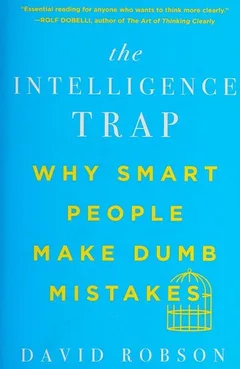 The Intelligence Trap: Why Smart People Make Dumb MistakesExplains how intelligence, education and expertise can strengthen motivated reasoning and conceal errors in individuals and institutions.
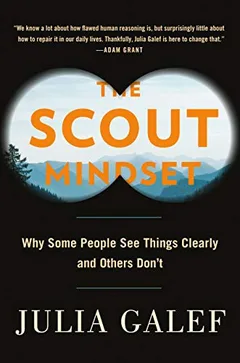 The Scout Mindset: Why Some People See Things Clearly and Others Don’tDevelops practical habits for separating beliefs from identity, testing confidence and welcoming evidence that challenges a preferred conclusion.
 How Minds Change: The New Science of Belief, Opinion and PersuasionUses reporting among former conspiracy believers, religious extremists and political campaigners to show how identity sustains beliefs and how convictions change.
 Think Again: The Power of Knowing What You Don’t KnowExamines how intellectual confidence becomes rigidity and how individuals, classrooms and organisations can make revising beliefs a routine practice.
Recommended videos
 11:38Why you think you’re right — even if you’re wrong | Julia GalefGalef’s ‘soldier vs scout’ framing of motivated reasoning: why smart people defend what they already believe.
 13:05Are Smart People Ruining Democracy? | Dan Kahan | TEDxViennaDan Kahan himself explains his motivated-numeracy findings, the article’s central experiment.
 1:35:29Superforecasting | Philip TetlockTetlock on his forecasting tournaments: why experts underperform and what makes ‘foxes’ better forecasters.
Cite this article
Ingrid Dahl. “Why educated people believe things that are not true.” Eikleaf, 8 May 2026, updated 2 November 2026. https://www.eikleaf.com/why-educated-people-believe-things-that-are-not-true/
Gen AI Disclaimer
Some contents of this page were generated and/or edited with the help of a Generative AI.
Media
Hartono Creative Studio – Pexels
Key Sources and References
Dan Kahan, Ellen Peters, Erica Cantrell Dawson & Paul Slovic, “Motivated numeracy and enlightened self-government,” Behavioural Public Policy, Vol. 1, Issue 1, pp. 54–86, 2017. https://doi.org/10.1017/bpp.2016.2
Dan Kahan, Ellen Peters, Maggie Wittlin, Paul Slovic, Lisa Larrimore Ouellette, Donald Braman & Gregory Mandel, “The polarizing impact of science literacy and numeracy on perceived climate change risks,” Nature Climate Change, Vol. 2, pp. 732–735, 2012. https://doi.org/10.1038/nclimate1547
Philip Tetlock, Expert Political Judgment: How Good Is It? How Can We Know? Princeton University Press, 2005.
Philip Tetlock & Dan Gardner, Superforecasting: The Art and Science of Prediction, Crown Publishers, 2015.
Barbara Mellers, Eric Stone, Terry Murray, Angela Minster, Nick Rohrbaugh, Michael Bishop, Eva Chen, Joshua Baker, Yuan Hou, Michael Horowitz, Lyle Ungar & Philip Tetlock, “Identifying and Cultivating Superforecasters as a Method of Improving Probabilistic Predictions,” Perspectives on Psychological Science, Vol. 10, No. 3, pp. 267–281, 2015. https://doi.org/10.1177/1745691615577794
Open Science Collaboration, “Estimating the reproducibility of psychological science,” Science, Vol. 349, Issue 6251, 2015. https://doi.org/10.1126/science.aac4716
International Monetary Fund, “IMF Survey: Global Growth Seen at 5.2 pct in 2007” (on the World Economic Outlook Update), 25 July 2007. https://www.imf.org/en/News/Articles/2015/09/28/04/53/sonew0725a
IMF Independent Evaluation Office, “IMF Performance in the Run-Up to the Financial and Economic Crisis: IMF Surveillance in 2004–07,” 2011 (summary in IEO Newsletter, Spring 2011). https://ieo.imf.org/-/media/ieo/files/publications/newsletters/english-versions/spring2011-english.pdf
Dana R. Carney, Amy J.C. Cuddy & Andy J. Yap, “Power Posing: Brief Nonverbal Displays Affect Neuroendocrine Levels and Risk Tolerance,” Psychological Science, Vol. 21, No. 10, pp. 1363–1368, 2010.
Eva Ranehill, Anna Dreber, Magnus Johannesson, Susanne Leiberg, Sunhae Sul & Roberto A. Weber, “Assessing the Robustness of Power Posing: No Effect on Hormones and Risk Tolerance in a Large Sample of Men and Women,” Psychological Science, Vol. 26, No. 5, pp. 653–656, 2015.
Roy F. Baumeister, Ellen Bratslavsky, Mark Muraven & Dianne M. Tice, “Ego Depletion: Is the Active Self a Limited Resource?”, Journal of Personality and Social Psychology, Vol. 74, No. 5, pp. 1252–1265, 1998.
Martin S. Hagger, Nikos L.D. Chatzisarantis et al., “A Multilab Preregistered Replication of the Ego-Depletion Effect,” Perspectives on Psychological Science, Vol. 11, pp. 546–573, 2016. https://doi.org/10.1177/1745691616652873
John A. Bargh, Mark Chen & Lara Burrows, “Automaticity of Social Behavior: Direct Effects of Trait Construct and Stereotype Activation on Action,” Journal of Personality and Social Psychology, Vol. 71, No. 2, pp. 230–244, 1996.
Stéphane Doyen, Olivier Klein, Cora-Lise Pichon & Axel Cleeremans, “Behavioral Priming: It’s All in the Mind, but Whose Mind?”, PLOS ONE, 2012. https://doi.org/10.1371/journal.pone.0029081
Chris Mooney, The Republican Brain: The Science of Why They Deny Science — and Reality, Wiley, 2012.
Dan M. Kahan, Asheley Landrum, Katie Carpenter, Laura Helft & Kathleen Hall Jamieson, “Science Curiosity and Political Information Processing,” Political Psychology, Vol. 38, Supplement 1, pp. 179–199, 2017. https://doi.org/10.1111/pops.12396
Ancel Keys et al., Seven Countries: A Multivariate Analysis of Death and Coronary Heart Disease, Harvard University Press, 1980.
Isaiah Berlin, The Hedgehog and the Fox: An Essay on Tolstoy’s View of History, Weidenfeld and Nicolson, 1953.
Emil Persson, David Andersson, Lina Koppel, Daniel Västfjäll & Gustav Tinghög, “A preregistered replication of motivated numeracy,” Cognition, Vol. 214, 2021. https://doi.org/10.1016/j.cognition.2021.104768
Dan Kahan, “What do I think of Mooney’s Republican Brain?”, Cultural Cognition Project blog, 2012. https://www.culturalcognition.net/blog/2012/7/27/what-do-i-think-of-mooneys-republican-brain.html
Joseph P. Simmons, Leif D. Nelson & Uri Simonsohn, “False-Positive Psychology,” Psychological Science, Vol. 22, No. 11, pp. 1359–1366, 2011. https://doi.org/10.1177/0956797611417632
Jacob Yerushalmy & Herman E. Hilleboe, “Fat in the diet and mortality from heart disease; a methodologic note,” New York State Journal of Medicine, Vol. 57, pp. 2343–2354, 1957.
Donald J. McNamara, “The Fifty Year Rehabilitation of the Egg,” Nutrients, Vol. 7, pp. 8716–8722, 2015. https://pmc.ncbi.nlm.nih.gov/articles/PMC4632449/
Today’s Dietitian, “The 2015–2020 Dietary Guidelines,” 2016. https://www.todaysdietitian.com/the-2015-2020-dietary-guidelines/
U.S. Department of Health and Human Services & U.S. Department of Agriculture, 2015–2020 Dietary Guidelines for Americans, 8th Edition, December 2015. https://odphp.health.gov/sites/default/files/2019-09/2015-2020_Dietary_Guidelines.pdf