Last updated: · 15 min read
In brief
In a brain scanner, a sixteen-year-old’s reward circuitry responds more strongly at each yellow light when two friends are watching. Alone, teenagers take about as many risks as adults. The issue is a reward system turned up by an audience, and adults carry versions of it too. A London trader’s morning testosterone predicted his afternoon profits. Acute stress knocks out working memory. Rules set in advance, like market circuit breakers, work, yet most institutions still assume a warned individual can think past it.
Contents
In a neuroimaging lab at Temple University, a sixteen-year-old lies in an MRI scanner playing a driving game. He is racing the clock down a track of 20 intersections, with money riding on how fast he finishes. At each one the light turns yellow and he has to choose: brake and sit out the wait for green, or run it and save the time — unless another car is crossing, in which case the crash costs him more time than stopping would have. Two of his friends are watching him on a monitor in the control room next door. Between runs they check in over the intercom, saying they are watching and have made predictions about how he will do, but they have been told not to push him either way, and during the drive itself they cannot speak to him. They just watch. And during the blocks when the friends are watching, the adolescent’s ventral striatum and orbitofrontal cortex respond more strongly at each decision point than they do when he drives unobserved. The audience has turned up the reward circuitry by the time the choice arrives.
What Jason Chein and his colleagues were measuring in that 2011 study was a response to the audience rather than to the risk.
The standard account of teenage risk-taking goes: the prefrontal cortex, the brain’s executive center for planning, impulse control and consequence assessment, doesn’t fully mature until the mid-twenties, and adolescents do dangerous things because they lack a complete regulatory system. Plausible and widely repeated, it is undercut by what happens when the audience goes home. Put teenagers alone in the same driving game, and they take about as many risks as adults do, which is not what a consistent cognitive deficit would produce.
If the problem were cognitive capacity alone, the size of the effect wouldn’t depend on whether anyone was watching. Yet peer presence can roughly double adolescent risk-taking in a simulated driving game, with no comparable effect in adults tested under identical conditions. That points to a specific neural circuit responding to social salience rather than general immaturity of judgment. And that circuit doesn’t fully retire with adolescence. A version of it is running in a bond trader during a bull market, and in a naval officer whose ship is taking fire.
The development gap
The model that best fits the data is Laurence Steinberg’s dual-systems framework. Two neural systems mature on different schedules. The socioemotional system, centered on the ventral striatum, orbitofrontal cortex and other limbic structures, peaks in sensitivity around mid-adolescence, then gradually declines. The cognitive control system, built around the lateral prefrontal cortex, anterior cingulate and parietal cortex, continues developing into the early-to-mid twenties. During the years when the gap between them is widest, the brakes are weak and the accelerator is running hot as well.
The socioemotional system is more sensitive to reward signals during adolescence than it will be at any later point. Steinberg’s account sets the two systems side by side and ties peer influence to the first of them, and when he tested it in people aged 10 to 30, reward seeking rose from preadolescence to mid-adolescence and then declined, while impulsivity fell steadily from age 10 onward. This is an amplification model rather than a deficit model: the adolescent brain processes reward more intensely than an adult brain does. Seen this way, the asymmetry is a temporary timing mismatch between two systems that don’t fully balance each other until the twenties, rather than a fault in the cognitive control system.
That mismatch is what makes social context so potent. Margo Gardner and Steinberg showed in 2005 that adolescents, but not adults, took significantly more risks in a simulated driving task when peers were watching. People of each age were randomly assigned to play either alone or with two same-age friends in the room. Early adolescents scored roughly twice as high on the risky driving index with peers in the room as without. Adults showed no equivalent effect. Chein’s study went inside the skull and, by putting the friends in a separate room where they could watch but not talk during the task, ruled out overt peer pressure: peer observation produced selectively elevated striatum and OFC activation in adolescent subjects, and that activity predicted the risks they went on to take. The adults’ reward circuitry didn’t respond to the audience in the same way.
Around puberty the brain’s dopamine system, the chemical backbone of the reward circuit, is extensively remodeled, with receptors in the striatum and prefrontal cortex pruned back on different schedules. That remodeling is a leading explanation for why the social salience signal hits as hard as it does. A friend watching on a screen in the next room provides no information about whether it’s safe to run a yellow light; the brain registers it as reward context. In an adolescent striatum, that context rewrites the parameters of the decision at the very moment the decision is made.
The individual-blame framework misses that this is adaptive. Adolescence is the developmental window for establishing peer bonds, finding a mate, transitioning from family to peer-group social structure. A nervous system that weighted social salience heavily would have been useful for anyone facing those tasks. The risk-taking is a side effect of a calibration that served the species well — in an environment that calibration was never designed for.
The 18-year threshold

The prefrontal cortex is among the last brain regions to complete myelination, with structural maturation continuing well into the twenties. The socioemotional/cognitive control gap doesn't close overnight — it narrows gradually across the late teens and early twenties, with significant individual variation. Voting, military service, criminal accountability as an adult: all conferred at a developmental moment when the balance between reward sensitivity and executive control is not yet at its adult equilibrium. The neuroscience doesn't invalidate the age of majority; it shows that the line falls partway through a gradual process.
The hormonal dial
The development window closes, but the adult reward circuit stays sensitive to hormones.
In 2008, John Coates and Joe Herbert took hormone measurements onto a mid-sized City of London trading floor, following 17 male traders across eight consecutive trading days and sampling their saliva twice a day for testosterone and cortisol. A trader’s testosterone at 11 a.m. predicted his afternoon profitability. On days when it was above his personal median, he made significantly more money over the following five hours than on his low-testosterone days, and 14 of the 17 traders showed the pattern. Coates and Herbert read this as testosterone emboldening risk-taking; the study itself measured profits, not risk. Either way, the hormonal state a trader carried into the heart of the trading day tracked how that day went.
Coates, who had spent years at Goldman Sachs and Deutsche Bank before becoming a neuroscientist at Cambridge, extended this finding in a 2012 book into a full account of the winner effect — a well-documented phenomenon in animal behavior in which a competitive win raises testosterone, which raises confidence and risk appetite, which increases the probability of winning again. The loop is established in non-human animal research. In male California mice, for instance, a run of victories raised testosterone and made the next victory more likely, independent of fighting ability. Coates’s inference that something structurally similar operates in human traders was explicit about its limits: the 17-trader study is observational, not experimental, and too small for confident generalization. Experimental support came later. In an experimental asset market, men with higher natural cortisol traded more actively, and in all-male and mixed markets a higher overall cortisol level predicted more unstable prices. When the researchers then dosed separate groups of young men with cortisol or testosterone before an investment game, both hormones shifted money toward riskier assets, testosterone largely by making the men more optimistic about future price movements.
The cortisol finding in Coates & Herbert may matter more than the testosterone result. Cortisol didn’t peak when losses were largest. It ran highest in the traders whose profits swung most, and across the group it rose with market volatility, in either direction. The implication is that cortisol works as a risk-detection system rather than a loss-response one, calibrating the body’s alert state to an unpredictable environment. And its effect on behavior depends on how long it stays high. A short spike can push people toward riskier bets, as those experiments found; but when Kandasamy, Coates and colleagues kept volunteers’ cortisol raised for eight days, to the levels seen in traders during volatile markets, the volunteers became markedly more risk-averse.
So the hormonal system creates two distinct failure modes. Testosterone-driven winner effects produce runaway risk appetite in conditions of success. Cortisol-driven stress responses, sustained through days of volatility, produce paralytic caution. Neither is irrational given the environment that shaped these systems. Calibrating behavior to competitive dominance and environmental unpredictability made sense for most of the period in which these hormones evolved, long before any screen displayed bid-ask spreads on credit default swaps.
One limitation the data will not carry: Coates & Herbert studied male traders exclusively. Nothing in the study speaks to women in equivalent roles, and subsequent research on sex differences in hormonal modulation of financial risk-taking is more complex and less settled than the secondary literature usually acknowledges. The gap matters, because the evidence from real trading floors covers roughly half the relevant population and nothing for the other.
When the floor moves together

If individual traders' testosterone levels are modulated by the same underlying market signals, and all traders on a floor are exposed to those signals simultaneously, then the winner effect could synchronize across a trading floor — amplifying collective risk appetite during rising markets, amplifying collective risk aversion during crashes, in a feedback loop that operates at the level of a market rather than an individual. Coates raises this possibility explicitly in his book, and it connects to the study of systemic risk: a coordinated biological response to shared environmental inputs could produce correlated behavior when correlated behavior is most dangerous. Whether this is measurable at market scale is an open research question.
What money does to the brain
The behavioral data say what hormones do to risk appetite. What they don’t account for is why financial loss registers the way it does — why a stop-loss rule that a trader agrees to in the morning becomes psychologically impossible to execute in the afternoon. Brian Knutson at Stanford put people in fMRI scanners to find out.
Knutson and Camelia Kuhnen found a clean anatomical dissociation: the ventral striatum, specifically the nucleus accumbens, activates in anticipation of financial reward, while the anterior insula activates in anticipation of financial risk and potential loss.
The anterior insula is the same region activated by physical pain, disgust and social exclusion, and its activation comes before the decision. The neural environment in which a financial choice is made is already shaped by what amounts to a pain signal before the choice is taken.
That ordering is the mechanism behind behavior that looks most irrational from outside: the trader who holds a losing position past any defensible stop-loss point, adding to it as the loss grows. Closing the position makes the loss real — which fires the insula. Holding the position keeps the loss notional, on paper, and the brain treats those two states differently. The circuits engaged in this decision predate financial markets by millions of years and were not calibrated for abstract instruments.
When losses hurt more than gains feel good

Kahneman and Tversky's loss aversion, the finding that losses register as psychologically more powerful than equivalent gains, is one of the sturdiest results in behavioral economics: across hundreds of estimates, a loss weighs roughly twice as much as an equal gain. Its neural signature runs through the reward system itself: the ventral striatum and prefrontal cortex respond more steeply to potential losses than to potential gains. Richard Thaler's endowment effect, the tendency to overvalue what you already possess relative to what you might acquire, leads straight back to the insula: insula activation while people considered selling a product they liked predicted how strongly each of them showed the effect. Both look irrational in behavioral terms; inside the brain they come from a loss-avoidance system working in a domain it was never meant to process.The prefrontal cortex goes offline
Testosterone and cortisol shift behavior gradually, through the hormonal system. Acute stress acts suddenly, on the brain’s own circuitry.
The cascade begins with the HPA axis — the hypothalamic-pituitary-adrenal stress response that floods the bloodstream with cortisol within minutes of a perceived threat. The first blow to the prefrontal cortex lands even faster than cortisol: during and immediately after a threat, surging noradrenaline and dopamine overstimulate PFC receptors and knock out working memory, the mental scratch pad the PFC uses to hold goals and override automatic, subcortical responses. Cortisol adds to the load through glucocorticoid receptors, and in animal studies, stress that persists for weeks physically shrinks the dendrites of neurons in the medial PFC. The PFC is among the brain structures most sensitive to stress, knocked offline acutely by catecholamines and reshaped chronically by stress hormones.
Lars Schwabe and Oliver Wolf reported, beginning around 2009, that stress induces a shift from goal-directed behavior, which is flexible, outcome-sensitive and able to update when circumstances change, to habit-based behavior, driven by learned stimulus-response associations that execute independently of whether the current outcome is desirable. Schwabe and Wolf’s hypothesis is influential, not settled: two preregistered exact replications could not reproduce the original effect, and a later study found no stress-driven boost to habits at all. The better-replicated finding sits underneath it: acute stress eats into working memory, the scratch pad that slow, step-by-step deliberation depends on. The less a critical decision has to be worked out from scratch in the moment, the less it leans on that scratch pad.
This is the right framing for what happens on a naval bridge when a contact classification turns ambiguous. The USS Vincennes, a US Navy Aegis cruiser operating in the Persian Gulf on July 3, 1988, shot down Iran Air Flight 655, a scheduled commercial Airbus A300 on a routine civilian flight, killing all 290 people aboard. The official investigation found that stress, task fixation, and unconscious distortion of data may have played a major role in the incident. The crew had classified the ascending commercial aircraft as a descending Iranian F-14, and continued processing incoming sensor data against that threat template despite signals inconsistent with it. The stress-driven PFC suppression framework is consistent with this pattern: the shift from deliberate evaluation to pattern-matching under acute stress is the mechanism the stress-cognition literature describes. Whether the specific neurobiological pathway was at work in the way the research models it has not been established in peer-reviewed military psychology literature; the incident is primarily analyzed through cognitive bias and naturalistic decision-making frameworks.
What the research on high-stakes performance under stress does establish is that stress reliably changes how decisions get made, and that whether it helps or hurts depends on the task and on the person. Deliberation under heavy load is fragile for everyone. The practical lesson is to do as much of the thinking as possible before the stress arrives. That is the logic of repetitive scenario training: work out and rehearse the right response in advance, while deliberation is still at full strength, so that under stress less of the decision has to be worked out on the spot.
The pharmacological question

Beta-blockers such as propranolol reduce the physiological arousal associated with acute stress by blocking adrenergic receptors, dampening the physical escalation without eliminating alertness. The best-known evidence comes from the concert hall: in double-blind trials around 1980, propranolol erased the trembling and dry mouth of stage fright in musicians and measurably improved their performances as judged by critics, without sedating them. Whether the same trick could sharpen decisions under fire is a far murkier question, tangled in ethics. A soldier whose adrenaline surge is chemically damped may make better deliberative decisions at the moment of engagement. But the acute stress response exists partly because the environment is dangerous, so damping it chemically could carry costs as well as benefits.
Building for the brain we have
After two decades of converging neuroscience, telling individuals to be more aware of their biases is neurologically incoherent advice: the stress that degrades deliberative capacity also degrades the metacognitive capacity to notice that your deliberation is degraded. “Think carefully” is of little use as an instruction to someone whose thinking apparatus is currently offline.
The institutional responses that work share a structural feature: they compensate for predictable neural failure at the system level, rather than demanding that individuals perform differently under conditions where they biologically cannot.
Some were designed explicitly in response to the science. The US Supreme Court’s 2005 ruling in Roper v. Simmons made capital punishment for juveniles categorically unconstitutional. Justice Kennedy’s majority opinion relied on scientific and sociological research establishing that juveniles characteristically lack maturity and a developed sense of responsibility, are more susceptible to outside pressure and negative influences, and have more transitory, less fixed character than adults — findings the Court drew from psychology and behavioral science without deploying explicit prefrontal-maturation language. In 2012, Miller v. Alabama extended the same logic to mandatory life-without-parole sentences for juvenile offenders; Justice Kagan’s majority opinion made the neuroscience explicit, quoting Graham v. Florida’s language that “developments in psychology and brain science continue to show fundamental differences between juvenile and adult minds,” particularly in “parts of the brain involved in behavior control.” These are clear cases of a legal institution updating its operative assumptions in response to findings from developmental psychology and brain science.
Others arrived at the same structural logic without the scientific framework. The US Army’s Commander’s Intent doctrine requires commanders to articulate the purpose and desired end-state of a mission before it begins, so that subordinates operating under acute stress can act within a pre-committed understanding of the goal rather than trying to deliberate under fire. The Army didn’t design this because someone briefed them on stress chemistry in the lateral PFC. The doctrine’s intellectual roots go back to Auftragstaktik, the Prussian mission tactics developed in the nineteenth century from post-Napoleonic lessons about command under battlefield chaos. The Army’s own mission-command doctrine traces the concept back to Auftragstaktik explicitly. What neuroscience now clarifies is why the doctrine works: the deliberative burden is offloaded before stress can suppress it. The pre-commitment to purpose happens when the PFC is functional. When stress squeezes deliberation under fire, subordinates are still acting toward a goal that was chosen deliberately, in advance.
Market-wide circuit breakers follow the same logic. The US market-wide circuit breakers, first adopted in October 1988, were recalibrated after the May 6, 2010 Flash Crash — in which a single $4.1 billion automated sell program and a cascade of vanishing buyers briefly wiped out roughly a trillion dollars of market value within minutes. The old system, keyed to 10%, 20% and 30% falls in the Dow, never tripped that afternoon. Since 2013, trading across all US stock markets halts for at least 15 minutes when the S&P 500 falls 7% or 13% from the prior day’s close before 3:25 p.m., and stops for the rest of the day at a 20% fall, and a separate limit up–limit down mechanism now polices individual stocks. Structurally, circuit breakers remove the decision from individual traders at the moment when those traders are most likely operating under peak stress and degraded prefrontal function.
Like Commander’s Intent, circuit breakers did not come from market architects reading the stress-cognition literature; they arrived because uninterrupted markets under extreme stress had failed badly enough that a structural intervention could no longer be deferred. These responses work where implemented, and the neuroscience explaining their logic has been accumulating across several disciplines for decades.
Yet they remain exceptional rather than standard, and the reason the evidence implies is unflattering: individual accountability is a simpler, more satisfying framework. Institutions built around the assignment of individual blame need a person to blame, and they don’t update easily when the evidence starts locating the failure in a process instead.
That sixteen-year-old’s reward circuitry was doing exactly what it was built to do: amplifying social salience and priming the decision environment for an audience in a context it was never calibrated for. The same architecture, differently dressed, is visible in the trader whose anterior insula fires before he decides whether to close a losing position, and in the naval officer whose acute stress response can flood the prefrontal circuits responsible for updating a threat classification in real time with stress chemicals.
We know enough of the mechanism, from specific circuits and documented failure conditions to the anatomical substrate of decisions that look like bad judgment, to build around it. Most institutions are still designed on the assumption that better-informed individuals, properly warned, can think their way past it.
Related articles
- The attention economy: why your brain was not built for the world you live in
- The moral mind: why your ethical intuitions are less reliable than you think — and what to do about it
- The science of loneliness: why isolation is killing people and what the data shows
Further reading
As an Amazon Associate, Eikleaf earns from qualifying purchases. The book links below are affiliate links: if you buy through them, we may earn a small commission at no extra cost to you.
 The Hour Between Dog and Wolf: How Risk Taking Transforms Us, Body and MindExplains the bodily changes behind financial risk-taking through trading-floor research and a narrative of traders experiencing a boom and crash.Inventing Ourselves: The Secret Life of the Teenage BrainInventing Ourselves: The Secret Life of the Teenage BrainExplains adolescent reward sensitivity, social influence and brain development, directly extending the article’s account of teenagers taking risks when watched by friends.
 Behave: The Biology of Humans at Our Best and WorstProvides the broader biological explanation for how hormones, stress, development and social circumstances alter the decisions people make.
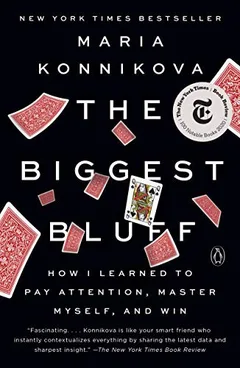 The Biggest Bluff: How I Learned to Pay Attention, Master Myself, and WinUses a psychologist’s apprenticeship in professional poker to examine emotional control, overconfidence and decisions under uncertainty.
Recommended videos
 15:13The Surprising Science of Adolescent Brains | Jennifer Pfeifer | TEDNeuroscientist Jennifer Pfeifer on what research actually shows about adolescent brains, beyond the ‘reckless teen’ stereotype.
 8:13Dr John Coates on the hormonal responses that lead city traders to make financial risksJohn Coates, the researcher behind the ‘winner effect’ in traders, on how testosterone and cortisol shift risk-taking.
 4:04The teenage brain: Why some years are (a lot) crazier than others | Robert Sapolsky | Big ThinkRobert Sapolsky on why the late-developing frontal cortex makes teenage years so risk-prone.
Cite this article
Ingrid Dahl. “The biology of risk-taking: why teenagers, traders, and soldiers make the same mistakes.” Eikleaf, 19 May 2026, updated 2 November 2026. https://www.eikleaf.com/the-biology-of-risk-taking-why-teenagers-traders-and-soldiers-make-the-same-mistakes/
Gen AI Disclaimer
Some contents of this page were generated and/or edited with the help of a Generative AI.
Media
A sign on the lighthouse structure in the Milwaukee harbor – Wikipedia
Key Sources and References
Chein, J., Albert, D., O’Brien, L., Uckert, K., & Steinberg, L. (2011). Peers increase adolescent risk taking by enhancing activity in the brain’s reward circuitry. Developmental Science, 14(2), F1–F10. https://pmc.ncbi.nlm.nih.gov/articles/PMC3075496/
Steinberg, L. (2008). A social neuroscience perspective on adolescent risk-taking. Developmental Review, 28, 78–106. https://pmc.ncbi.nlm.nih.gov/articles/PMC2396566/
Steinberg, L. (2010). A dual systems model of adolescent risk-taking. Developmental Psychobiology, 52(3), 216–224. https://doi.org/10.1002/dev.20445
Casey, B. J., Getz, S., & Galvan, A. (2008). The adolescent brain. Developmental Review, 28, 62–77. https://pmc.ncbi.nlm.nih.gov/articles/PMC2500212/
Gardner, M., & Steinberg, L. (2005). Peer influence on risk taking, risk preference, and risky decision making in adolescence and adulthood: An experimental study. Developmental Psychology, 41(4), 625–635. https://doi.org/10.1037/0012-1649.41.4.625
Coates, J. M., & Herbert, J. (2008). Endogenous steroids and financial risk taking on a London trading floor. Proceedings of the National Academy of Sciences USA, 105(16), 6167–6172. https://pmc.ncbi.nlm.nih.gov/articles/PMC2329689/
Oyegbile, T. O., & Marler, C. A. (2005). Winning fights elevates testosterone levels in California mice and enhances future ability to win fights. Hormones and Behavior, 48(3), 259–267. https://doi.org/10.1016/j.yhbeh.2005.04.007
Cueva, C., Roberts, R. E., Spencer, T., Rani, N., Tempest, M., Tobler, P. N., Herbert, J., & Rustichini, A. (2015). Cortisol and testosterone increase financial risk taking and may destabilize markets. Scientific Reports, 5, 11206. https://pmc.ncbi.nlm.nih.gov/articles/PMC4489095/
Kandasamy, N., Hardy, B., Page, L., Schaffner, M., Graggaber, J., Powlson, A. S., Fletcher, P. C., Gurnell, M., & Coates, J. (2014). Cortisol shifts financial risk preferences. Proceedings of the National Academy of Sciences USA, 111(9), 3608–3613. https://pmc.ncbi.nlm.nih.gov/articles/PMC3948282/
Coates, J. (2012). The Hour Between Dog and Wolf: Risk-Taking, Gut Feelings and the Biology of Boom and Bust. Penguin Press. Author page: https://www.4thestate.co.uk/authors/john-coates/
Kuhnen, C. M., & Knutson, B. (2005). The neural basis of financial risk taking. Neuron, 47(5), 763–770. https://doi.org/10.1016/j.neuron.2005.08.008
Knutson, B., & Bossaerts, P. (2007). Neural antecedents of financial decisions. Journal of Neuroscience, 27(31), 8174–8177. https://pmc.ncbi.nlm.nih.gov/articles/PMC6673081/
Kahneman, D., & Tversky, A. (1979). Prospect theory: An analysis of decision under risk. Econometrica, 47(2), 263–291. https://doi.org/10.2307/1914185
Brown, A. L., Imai, T., Vieider, F. M., & Camerer, C. F. (2024). Meta-analysis of empirical estimates of loss aversion. Journal of Economic Literature, 62(2), 485–516. https://www.aeaweb.org/articles?id=10.1257/jel.20221698
Tom, S. M., Fox, C. R., Trepel, C., & Poldrack, R. A. (2007). The neural basis of loss aversion in decision-making under risk. Science, 315(5811), 515–518. https://doi.org/10.1126/science.1134239
Thaler, R. H. (1980). Toward a positive theory of consumer choice. Journal of Economic Behavior and Organization, 1(1), 39–60. https://doi.org/10.1016/0167-2681(80)90051-7
Knutson, B., Wimmer, G. E., Rick, S., Hollon, N. G., Prelec, D., & Loewenstein, G. (2008). Neural antecedents of the endowment effect. Neuron, 58(5), 814–822. https://doi.org/10.1016/j.neuron.2008.05.018
McEwen, B. S., & Morrison, J. H. (2013). The brain on stress: Vulnerability and plasticity of the prefrontal cortex over the life course. Neuron, 79(1), 16–29. https://pmc.ncbi.nlm.nih.gov/articles/PMC3753223/
Schwabe, L., & Wolf, O. T. (2009). Stress prompts habit behavior in humans. Journal of Neuroscience, 29(22), 7191–7198. https://pmc.ncbi.nlm.nih.gov/articles/PMC6666491/
Smeets, T., Ashton, S. M., Roelands, S. J. A. A., & Quaedflieg, C. W. E. M. (2023). Does stress consistently favor habits over goal-directed behaviors? Data from two preregistered exact replication studies. Neurobiology of Stress, 23, 100528. https://pmc.ncbi.nlm.nih.gov/articles/PMC9969070/
Zwosta, K., Karcz, T., Möschl, M., Walser, M., Goschke, T., Ruge, H., & Wolfensteller, U. (2025). No evidence for increased habitual or decreased goal-directed action control after acute stress. PLOS ONE, 20(9), e0327807. https://pmc.ncbi.nlm.nih.gov/articles/PMC12416671/
Starcke, K., & Brand, M. (2012). Decision making under stress: A selective review. Neuroscience & Biobehavioral Reviews, 36(4), 1228–1248. https://doi.org/10.1016/j.neubiorev.2012.02.003
Fogarty, W. M. (1988). Formal investigation into the circumstances surrounding the downing of Iran Air Flight 655 on 3 July 1988. Department of Defense, United States Navy.
Christian Science Monitor (1988, August 4). Stress of first-time combat blamed for downing of Iranian jet. https://www.csmonitor.com/1988/0804/avin.html
Brantigan, C. O., Brantigan, T. A., & Joseph, N. (1982). Effect of beta blockade and beta stimulation on stage fright. American Journal of Medicine, 72(1), 88–94. https://doi.org/10.1016/0002-9343(82)90592-7
Roper v. Simmons, 543 U.S. 551 (2005). United States Supreme Court. https://www.law.cornell.edu/supct/html/03-633.ZO.html
Graham v. Florida, 560 U.S. 48 (2010). United States Supreme Court. https://www.law.cornell.edu/supct/html/08-7412.ZO.html
Miller v. Alabama, 567 U.S. 460 (2012). United States Supreme Court. https://www.law.cornell.edu/supremecourt/text/10-9646
U.S. Army (2026). ADP 6-0: Command and Control (7 July 2026; supersedes the 31 July 2019 edition). Headquarters, Department of the Army. Washington, DC. https://armypubs.army.mil/ProductMaps/PubForm/Details.aspx?PUB_ID=1033415
U.S. Commodity Futures Trading Commission & U.S. Securities and Exchange Commission (2010). Findings Regarding the Market Events of May 6, 2010. Report of the Staffs of the CFTC and SEC to the Joint Advisory Committee on Emerging Regulatory Issues. https://www.sec.gov/news/studies/2010/marketevents-report.pdf
U.S. Securities and Exchange Commission (2012). SEC approves proposals to address extraordinary volatility in individual stocks and broader stock market (Press release 2012-107). https://www.sec.gov/news/press/2012/2012-107.htm
CFA Institute Research and Policy Center. Flash crashes. https://rpc.cfainstitute.org/en/policy/positions/flash-crashes
New York Stock Exchange (2026, February). Market-Wide Circuit Breakers FAQ (v4.0). https://www.nyse.com/publicdocs/nyse/NYSE_MWCB_FAQ.pdf