Last updated: · 26 min read
In brief
In 2004 American senators fought over a programme they weren’t allowed to name, reportedly a stealth spy satellite projected to cost nearly $9.5 billion. Amateurs with binoculars had tracked the first in its series, Misty, back in 1990. Hiding rarely buys invisibility. Saying what a satellite is, what it can do and what it is for is where the real fight lies. In October 2026 Russia’s Cosmos 2612 closed to within a few hundred metres of a commercial radar satellite. The approach was public; its purpose was not.
Contents
On 8 December 2004 Senator Jay Rockefeller rose in the Senate to oppose the year’s intelligence bill because of one item in it, which he wasn’t allowed to name. The programme, he said, was “totally unjustified and very wasteful and dangerous to national security.” For two years running the Senate had voted to kill it, and both times it had been overruled in the appropriations conference. Next time, Rockefeller warned, he would probably ask for a closed session, so that senators could at least be told what they were voting on.
Outsiders filled in the blank within days. John Pike, a defence analyst, suggested to reporters that the disputed item was a stealth satellite. The Washington Post, citing officials, reported that its projected cost had gone “from $5 billion to nearly $9.5 billion,” and that it would be the third and final spacecraft in a series once known as Misty.
The series had a history that the senators couldn’t discuss: in 1990 amateur observers in Europe and Canada had tracked the first Misty. People with binoculars, in other words, had seen the thing. What it was, what it was for and whether it was worth billions could be argued in public only through riddles and leaks.
Finding a satellite was the easy part. Saying what it is, and getting anyone to believe you, is where the fight has always been.
How a secret satellite gets found
A spy satellite usually leaves clues before it reaches orbit. Rockets shed stages and nose shrouds into the sea, and ships and aircraft have to be told where to keep clear. “That gives us a clue as to the direction of the satellite,” Ted Molczan explained in 2008, when he was a Toronto energy-conservation consultant. From the hazard zones an observer can estimate the plane of the new orbit, then wait for a fresh light to cross it. Satellites shine for the same reason the Moon does. They reflect sunlight.
Molczan did much of this from his balcony or the 32nd-floor roof of his building, with binoculars, a stopwatch and star charts. The group’s quickest finds, he said, had come “within seconds of it reaching orbit.” Others “will take days, weeks, months.”
How to find a secret satellite

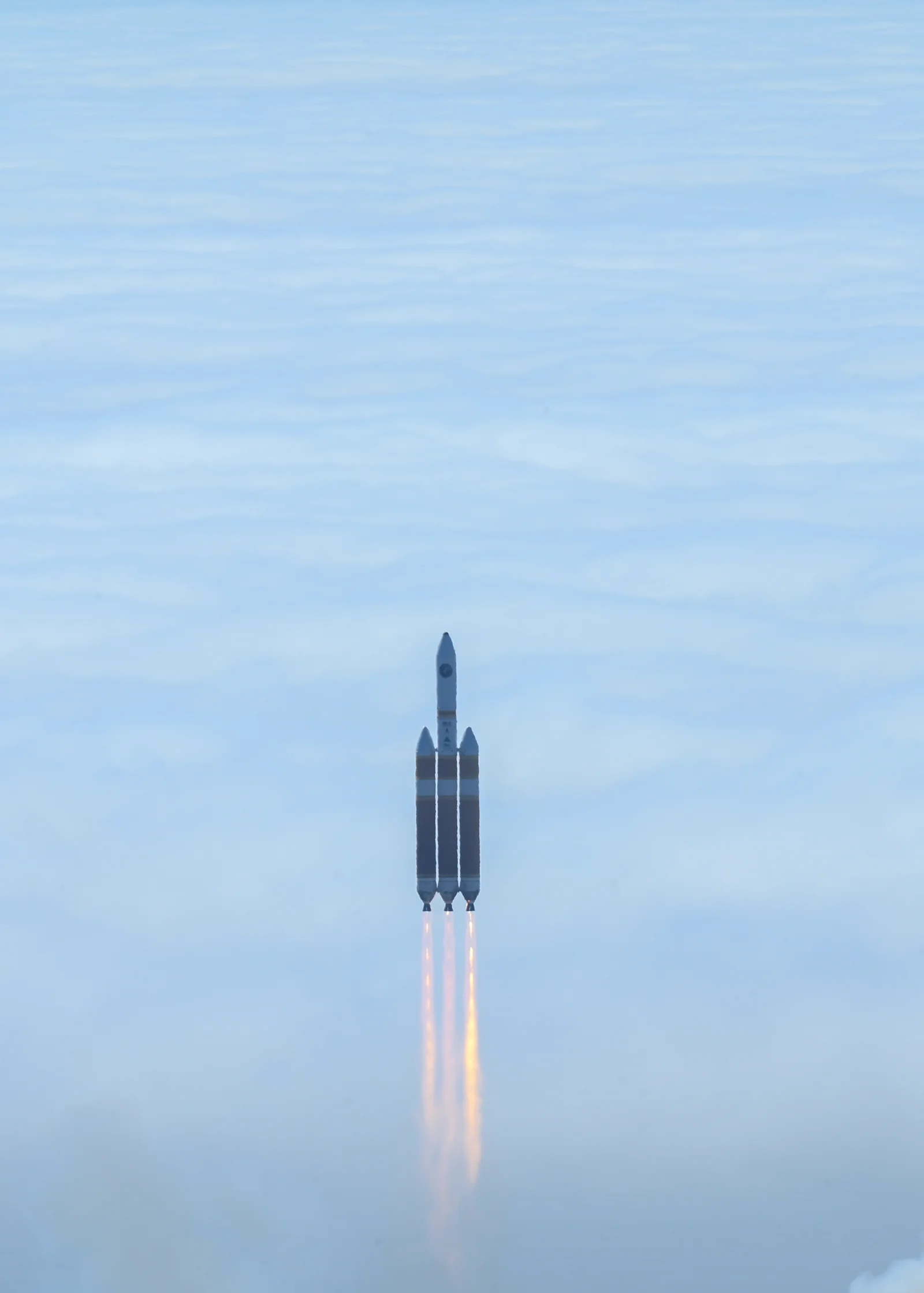
Start with a navigational warning. Before the NROL-91 launch in September 2022, warning HYDROPAC 2592/22 marked where falling hardware would land, enough to estimate the new satellite's orbital plane. Then watch that plane at the right hour. Around 04:17 UTC on 25 September, about six hours after launch and on its fourth revolution, Marco Langbroek in Leiden and Cees Bassa in Dwingeloo caught an unknown object moving as predicted. It was USA 338, at magnitude +2.5 to +3, bright enough to see with the naked eye from Leiden's town centre. Next, measure. The old way is to time the satellite as it passes between two stars about half a degree apart, roughly the width of the Moon; the newer way is low-light video stamped with GPS time. At 500 km range the angle measurement fixes the satellite to within roughly 15 to 75 metres, and timing error adds another 10 to 100 metres, for each single observation. Fit enough observations into a set of orbital elements and you can predict the next pass.
Another observer, Michael Waterman, a 64-year-old retired programmer in Hampshire, had been watching satellites since his schooldays in 1958. In December 2004 The Sunday Times put him in a “Dad’s Army” of ageing sky-watchers whose hobby had become “an improbable threat” to a $9.5 billion intelligence programme. The same article placed the leak that had put Misty in the news somewhere else entirely: the Justice Department was investigating complaints that senators had revealed a secret debate.
The core of the community is small. In January 2023 its active members numbered somewhere around 15, mostly in Britain and the Netherlands, and their shared catalogue held 222 “classified” objects. Their mailing list, SeeSat-L, is in Molczan’s words “just messages with strings of numbers and ‘Best Wishes.'”
Why do they bother? Partly because the government stopped doing it for them. Until 1983 the United States published the orbits of its spy satellites along with everything else in orbit, and in 1983 it decided to withhold the orbits of certain military satellites. Marco Langbroek, a Leiden observer now affiliated with Delft’s aerospace faculty, tells the community’s history this way: in the early days, before the Western powers had tracking networks of their own, they enlisted amateurs; “by the late 70s they no longer needed us, and the hobby went in decline.” In his telling, when the orbits went dark, the hobby had a job again.
Finding is the first rung of a ladder. Keeping hold is the second, and it never stops. An orbit is a forecast that holds only until the satellite fires its engine. NASA’s review of tracking technology says it flatly: non-cooperative tracking, “even if it is well and frequently performed, cannot anticipate satellite maneuvers.” An unannounced burn can void the prediction, and the watchers need fresh observations, sometimes a fresh search.
And a list of 222 orbits still doesn’t tell you which dot is a working spy satellite and which is a spent rocket stage. Many of those objects, the observers themselves note, are dead satellites, stages and debris from classified launches.
What an orbit does, and doesn't, tell you

Detection is the first rung. A launch warning and reflected sunlight can let an equipped observer find a satellite, when its brightness, geometry and the sky allow. Custody comes next: repeated observation keeps an object in its predicted slot, and every manoeuvre forces the prediction to be updated and can break custody. Identity is harder. It takes catalogue matching, behaviour over time and sometimes physics, such as how sunlight pushes on the object, and a dead rocket stage can look a lot like a live satellite. Capability is inferred, from imagery, from geometry, from what a country's other satellites have done. Intent sits at the top. It needs a pattern of behaviour, context, and someone with the standing to say it in public, and even then, as one observer put it in 2026, a suspicious outcome may be "difficult to unambiguously attribute." Each rung needs different evidence, and different people hold it.
What hiding can buy
So what does someone who wants to stay hidden actually try?
A patent application for a “satellite signature suppression shield,” filed in 1990 and granted in 1994, states the problem against its own interest. A satellite, it says, “which is a radiation source and a radiation reflector, is very evident in this radiation-free background.” Patent prose, but the point survives translation. A satellite reflects sunlight and gives off heat, and the sky behind it is dark and cold.
The specialists who have tried to imagine a way round this keep reaching the same place. Pike, in December 2004: “you cannot make these stealthy spy satellites disappear.” You can only shrink the signature from “the size of a city bus” to “about the size of a coffee can,” and lose it among what he then put at about 10,000 pieces of debris of that size. Brian Weeden, a former Air Force space-operations officer then at the Secure World Foundation, doubted in 2010 that a satellite could be passed off as debris at all, and asked the operator’s question: “If a satellite is stealth, how do you know where it is, especially if you should lose contact with it?” Laura Grego of the Union of Concerned Scientists, in 2018: “it’s hard to keep a satellite reliably hidden.”
Russia’s military has claimed the debris disguise is real. In April 2015 Major General Oleg Maidanovich of Russian Space Command said on the defence ministry’s television channel that his specialists had uncovered a group of spy satellites gathering Russian communications signals while masquerading as space junk. He declined to say whose they were. The broadcast added that a satellite can pretend to be junk “for years and then wakes up.”
What works is gaps. Manoeuvre while the ground telescopes below are in daylight, and so blind, as China’s SJ-21 did in 2022 when it docked with a defunct Chinese satellite. Work where sensors are thin, as they are in the Southern Hemisphere. Release a companion at a moment nobody saw, as China’s Shenlong did. The goal, as Grego describes it, is to manoeuvre so that trackers are forced into a slow search, and to use the time that buys.

A recent case is Russia’s Mozhayets-6, launched in September 2025 alongside a GLONASS navigation satellite. It spent five weeks absent from the US public catalogue until Slingshot Aerospace, a tracking company, found it after a few hours of looking. The gap was in the published catalogue, which says nothing about whether the US military had lost it.
How hard it is to see rests on an official’s word rather than a published measurement. In December 2025 Ron Lerch, a senior enlisted Space Force intelligence adviser, put Mozhayets-6 at about magnitude 16, against about 6.5 for a GPS satellite, “very difficult to see.” Higher numbers are fainter on that scale; a gap of nine and a half magnitudes is a factor of several thousand. Lerch also said China’s three Shiyan-24 satellites each had a smaller radar cross-section than the one before, evidence, in his view, of “a decades-long plan,” and called the year “a hide and seek game.”
Other work is still at the research stage. A Zhejiang University team in March 2025 described an infrared camouflage coating, tested on a satellite model outdoors and simulated in orbit, that dumps its heat in the very-long-wave infrared. And by 2024 the European Defence Fund was funding research on a stealthy inspector satellite for geostationary orbit, called NAUCRATES.
On 26 October 2026, alongside its latest count of China’s satellites, the US Defense Intelligence Agency released a picture that cuts against all this hiding: a Chinese spaceplane in orbit, photographed on 28 May 2024 by WorldView-3, a commercial satellite, turned this time on another spacecraft. Sometimes the watchers get the shape as well as the dot.
Hiding, then, buys hours, weeks, occasionally longer, of broken custody and doubt. It rarely buys invisibility. The durable hiding place is further up the ladder, in what an object is and what it’s for.
A satellite the Senate couldn’t name
The first Misty went up at 2:50 a.m. on 28 February 1990, aboard the shuttle Atlantis, in a launch window the government kept classified. It went into a 62-degree orbit, which the astronaut John Creighton later called “the only time in US manned space flight” beyond 57 degrees, and the crew knew exactly how secret that would stay. “It’s kind of hard to hide that fact after you launch, when you’re up there and the Russians are tracking you,” he said, “so that was declassified after we launched.”
The payload, in the historian Jeffrey Richelson’s account, was a CIA stealth imaging satellite, built after a 1983 Reagan-administration decision to start a stealth satellite programme, and meant to reduce the threat from Soviet anti-satellite weapons. A CIA threat analysis argued that Soviet radars and cameras were unlikely to track it. And because the programme was so tightly compartmented, the office that ran it did not consult several agencies with experience in satellite tracking, among them the Naval Research Laboratory, whose engineers “might have provided a different assessment” of how detectable it was. Secrecy kept the state’s own experts out of the question of whether its secret could be seen.
After an apparent breakup on 7 March, the Soviet press reported debris and the North American Aerospace Defense Command counted six pieces. Richelson suggests the apparent breakup “may have been a tactic to deceive.” Meanwhile Molczan and three European observers, among them Russell Eberst, a Scot once of the Royal Observatory Edinburgh, watched it manoeuvre after it left the shuttle and fitted an orbit of about 795 by 810 km at 65 degrees, one that matched no other American military spacecraft. Three of them found it again in October 1990, and it vanished around November. Richelson and Molczan both say the designers underestimated how bright it would be.
Whether the Soviets saw it is another matter. Richelson says their tracking network failed to detect it; their own press had reported the debris. Hiding from Toronto and hiding from Moscow are different achievements, and only the first one has been tested in public.
Fourteen years later, with a second Misty launched in 1999, oversight of the third ran on riddles. Rockefeller, Carl Levin, Ron Wyden and Dick Durbin refused to sign the conference report. Critics told reporters the system could take pictures only in daylight and clear weather, and one former official said it was “hard to believe a new satellite, even a stealthy one, could make much of a difference.” The projected price reached the public through anonymous officials. Steven Aftergood of the Federation of American Scientists named the asymmetry: “Industry lobbyists holding security clearances are free to advocate for their preferred programs. But critics or skeptics are not even permitted to know what is at issue.”
The end came in June 2007, when the new Director of National Intelligence, Mike McConnell, told a conference he had been advised to “kill a multibillion dollar program. I’ve done that, but word isn’t out yet.” Within days officials identified the decision as cancelling the next generation of Misty.
The people who could see the satellite were amateurs like Molczan and Eberst. The people who could see the budget were sworn not to say.
Who should publish an orbit
The second place the state decides what to say is its catalogue. Withholding began in 1983. In 1999 US Space Command restricted the orbits of some “unclassified but sensitive” satellites, most of them GPS satellites, which broadcast their own positions for a living. In 2005 the Air Force’s orbital-element database, freely available through NASA for nearly twenty years, came off the open web. Then the tide turned, partly. In October 2018 General John Hyten of Strategic Command signed a policy lifting restrictions on basic orbital data for national security satellites. One Defense Department source said people at the National Reconnaissance Office (NRO) “started breathing into bags like never before.” By August 2019 data on more than 700 previously unavailable objects had been released on Space-Track, the public catalogue. T. S. Kelso of CelesTrak, one of the sites that republish the public catalogue, found another almost 200 objects that had been stripped of their secrecy status with no orbital data supplied. In 2019 the NRO was still classifying the orbits of small non-government satellites that shared a launch with its signals-intelligence payloads. Weeden’s view of those satellites: their orbits were already well known, “so it’s not like [the previous secrecy] policy was keeping them hidden from the Russians or Chinese.”
None of this means the military can’t see. In May 2024 a Space Force general described about 600 sensors watching about 1,000 “priority targets.” A gap in the public catalogue is a decision about publication.
The gaps can put other operators at risk, though. In 2009 the crippled early-warning satellite DSP 23 drifted through geostationary orbit, at times close to expensive commercial satellites, and no data was publicly released. Its uncontrolled movement was first revealed by amateur observers and by Russia’s ISON tracking network. Langbroek, his fellow Dutch observer Cees Bassa and Molczan, writing in 2023, drew the lesson: “delusions of secrecy can in fact be dangerous.”
The case against publishing deserves a hearing. The NRO’s spokesmen have said they would rather the hobbyists didn’t publish, and suggested that foreign countries hide their activities when they know a satellite is overhead. In November 2000 Senator Bob Kerrey, co-chair of a commission on the NRO, accused people who post spy-satellite orbits online of aiding terrorists. In 2011 Dallas Boyd made the case in print for voluntary restraint.
The replies came from people who knew the trade. Allen Thomson, a former CIA physicist, replied that Kerrey should wonder why the NRO had spent “many, many billions of dollars” on systems that let national security be damaged by “a few hobbyists working part time with $50 worth of WalMart equipment.” Pike: “If Ted can track all these satellites, so can the Chinese.” The amateurs, he argued, might actually be showing what is “easily in reach” of a hostile observer.
The observers themselves have drawn the line in different places over the years. Molczan in 2008: “We’ve never withheld our information because of concerns that it would fall into the wrong hands.” Langbroek in 2012: “Information considered sensitive remains secret.” Molczan also admits he “can’t say with absolute certainty what effect you’re having.” By 2019 no government official had ever contacted him about any of it, though back in 2004 he’d said that people on the intelligence side “hate our guts.”
The safety risk that withheld orbits create for other operators is documented. The harm of amateur publication is asserted, and nobody can honestly say it has never helped an adversary. But the workable line is the one drawn in 2015 by Jonathan McDowell, a Harvard-Smithsonian astrophysicist who tracks satellites himself: “You can’t make the sky secret.” The sensors on board, what they can see and how well, can reasonably stay secret. The presence of something you can watch going overhead can’t.
The watchers go commercial
The case that shows the shift happened in January 2020. The observer Nico Janssen spotted Russia’s Kosmos 2542 manoeuvring into the same region of orbit as USA 245, an NRO satellite, and Michael Thompson, a Purdue graduate student, worked out the close approaches on SeeSat-L. In early February General John Raymond called the Russian behaviour “unusual and disturbing.” Thompson posted: “Well I guess you can’t get much higher-level confirmation than that.” Amateurs narrated first; the state confirmed.
Since then, companies have moved in. LeoLabs, which runs radars, licenses its catalogue to the Commerce Department and the Space Force. Slingshot, which found Mozhayets-6 with a network of more than 200 sensors, also developed Agatha, an AI tool designed to pick out satellites behaving differently from the rest of their constellation. Its policy chief, Audrey Schaffer, describes the company’s aim as “the most accurate, comprehensive and complete space object catalog,” which is a commercial goal as much as a public one. ExoAnalytic, which runs a large commercial telescope network, agreed in March 2026 to be bought by Anduril.
The state’s dependence is narrow and telling. Lerch credited commercial data with making it possible to discuss these satellites’ activities in public, outside the classified world. LeoLabs supplied the Shiyan-24 data; the Center for Strategic and International Studies built its analysis of Russia’s latest manoeuvres on commercial tracking. The state can still see. What it needs companies for, on Lerch’s account, is the ability to talk about what it sees.
So there are now several pictures of orbit, and they aren’t the same picture. There’s the classified military one. There’s the public catalogue, with its holes. There are licensed commercial catalogues. And there are restricted exchanges. A Space Force source confirmed a “contractual agreement” to swap tracking data with SpaceX. The service says the exchanges “do not include any classified information,” and an official said of the data, “It’s only for their internal use.” SpaceX’s own catalogue, Stargaze, “is not shared publicly.” Cole Donovan, who now campaigns with Stand Up for Science, warns that SpaceX risks becoming the “de facto source for space traffic coordination.”
Then there’s the wartime reserve. In October 2026 the Space Force awarded its first six operational monitoring contracts under CASR, its programme for calling on commercial capacity. One question is still being negotiated: whether, in war, the government gets the “right to turn off a CASR partner’s services to other customers.”
The data that lets outsiders argue about orbit is increasingly commercial. Commercial is not the same as public. And the terms on which that data would flow in a crisis aren’t settled yet.
The approach to ICEYE-X36
In April 2026 Russia launched six satellites, Cosmos 2609 to Cosmos 2614. A month later five of them spent fuel on high-energy manoeuvres to raise their inclination to match the orbital plane of ICEYE-X36, a commercial radar satellite. Cosmos 2609 came within 2.5 km on 26 May. From 30 September, Cosmos 2612 began a fresh series of manoeuvres that brought it into ICEYE-X36’s plane and altitude.
By 17 October LeoLabs had found that Cosmos 2612 had closed from more than 320 km to about 5 km in under a day. Langbroek, updating his blog from Leiden, put the closest approach early on 18 October “to within a few hundred meters or possibly (much) closer.” LeoLabs said within about 500 metres, possibly closer. Langbroek called the whole operation “completely non-consensual.” The exact minimum remains unsettled.
After that the two separated. By 22 October reporters could say the Russian satellite had “backed off from ICEYE-X36 without firing a shot.” It wasn’t quite a retreat. Late on 19 October Cosmos 2612 manoeuvred back toward X36’s altitude. Sharing an altitude is not the same as being close: two satellites at the same height can sit hundreds of kilometres apart along the orbit.
Satellites don’t spend fuel matching another spacecraft’s plane, then hold station near it, by accident. Now climb the ladder. Detection and custody: achieved, by independent sources who reconstructed an unusually close approach. Identity: a declared Russian satellite. Capability: open. The nearest precedent comes from a different satellite: in July 2020 Cosmos 2543 released an object that travelled at up to 186 metres per second relative to it, and the US military for the first time publicly accused Russia of a space-based weapons test. Russia called it an inspection. That shows what Russia has done before, not what Cosmos 2612 carries.
Intent: argued. On 21 October Brian Hardesty, an adviser to the US delegation to the Conference on Disarmament, told a UN debate that “these behaviors appear consistent with an on-orbit weapons operation.” Konstantin Vorontsov, deputy head of Russia’s delegation to the UN, accused Western countries of “repeating absurd accusations.” Even the target’s role is uncertain: ICEYE supplies Ukraine, but whether this particular satellite did is unclear.
The accuser has its own undisclosed hardware. On 14 September the Air Force Secretary, Troy Meink, acknowledged that the United States has “on-orbit space control weapons,” and declined to say what kind.
What comes next is already being bought. On 28 October Astroscale announced that its UK subsidiary had won a £15 million Ministry of Defence contract focused on orbital defence. Its head of defence, Alex Godfrey, argues that satellite-servicing technology could be adapted to guard other satellites. “In some ways it’s simpler,” he said, “because you are further away.” He has something to sell, and he also has a point: servicing a satellite and stalking one draw on the same proximity skills. What separates a bodyguard from a stalker is what an outside observer can check: whether the owner consented, what manoeuvre was flown, and whether any effect can be shown.
Run those checks on Cosmos 2612. A Russian satellite spent fuel to reach a commercial satellite’s orbit and deliberately closed in on it. That much is demonstrated. What it carries, what it was meant to do and whether ICEYE-X36 still works are not. The orbital elements showed no disturbance, but, as Langbroek wrote, “Whether it functions after the close approach, only the users can tell us.” Had it failed, he’d already warned, that would be “very suspicious, but nevertheless also difficult to unambiguously attribute.”
In Langbroek’s last update, on 21 October, the two satellites were about 480 km apart. The approach was public. Its purpose was not.
Satellites looking down at armies are the subject of “How satellites changed the economics of war without firing a single shot“. This story looks up.
⁂
Which satellite, and who says so
All of that assumed something about the first rung: that once watchers have an orbit, they know which object they have, and only its purpose is in doubt. Misty’s second launch says otherwise. After it went up in 1999 the amateur trackers followed it as before, until, as one analyst put it in 2005, “they began to suspect that they were actually following a decoy and that the satellite itself was in a different orbit.” A good orbit, possibly fitted to the wrong object. Doug Richardson, a defence writer, notes the same pattern after both Misty launches: observers first tracked the satellite, then “could find only a group of smaller multiple objects.” So how do you test which thing you’re looking at?
The object that moved like a sail
The second Misty, catalogued as USA 144, left Vandenberg on a Titan rocket on 22 May 1999. In 2004 a Russian space magazine suggested it had been placed in orbit along with “a large number of debris.” One object from that launch, 1999-028C, was bright, and trackers observed it often.
The test they applied is one of the more elegant tools amateurs have. Sunlight pushes. The push is tiny, but while the object is in sunlight it keeps adding up, and it matters far more for a light, broad object than for a dense one, the way a sheet of paper and a coin fall differently through air. In the analyst Charles Vick’s account, Molczan found that 1999-028C’s orbit was “notably influenced” by solar radiation pressure, and deduced an area-to-mass ratio of about 0.1 square metres per kilogram, 10 to 20 times what a payload would have. As of 2015 it sat in a 2,665 by 3,155 km orbit, far above the low orbits where imaging satellites work.
The measurement shows that 1999-028C is big and light for its mass. It can’t show that anyone meant it as a lure. Langbroek, who has followed it for years, writes “we suspect” it “might have been a decoy to attract attention away from the real, stealth payload,” and elsewhere lists it, more cautiously, as “a piece of debris or intentional decoy.” Debris from a launch can be broad and light too. The launch’s mission patch, which Langbroek has studied closely, carries the slogan “The Cat’s Out of the Bag!” Somebody had a sense of humour about it.
Concealment by numbers is a cousin of the decoy, and it needs no intent at all. When similar small satellites are deployed together, NASA notes, it can be hard “to determine which orbits correlate to which spacecraft,” and some “may never be positively identified at all.” A crowded rideshare launch can hand trackers a small version of their 1999 problem.
Sometimes identity arrives from the other direction, handed over by the owner. In 2019 President Trump tweeted an image of an Iranian launch-pad accident. Langbroek and Thompson matched it to USA 224, a KH-11 reconnaissance satellite, by the obliqueness of the circular launch pad in the picture, which fixed the angle the satellite must have been looking from. Langbroek then estimated the satellite’s sharpness: KH-11 mirrors are 2.4 metres across, which from the lowest point of their orbits would give, by his calculation, a theoretical resolution of “just under 10 cm.” Melissa Hanham, a satellite imagery expert, worried that adversaries would “reverse-engineer it to figure out how the sensor itself works.” In this one case identity and an estimate of capability came together, and the leak was the owner’s.
The people doing this work belong to an odd institution. Their group has no name and no leadership, and since 1994 it has run on the SeeSat-L mailing list; over one year, Molczan once estimated, 21 contributors sent in more than 21,000 observations. Many veterans learned in 1960s tracking projects such as Project Moonwatch, and Eberst has complained that too few young observers are coming up. By 2023 their approach had also fed a low-cost tracking project for the Royal Netherlands Air Force.
How sunlight reveals a lightweight object

Photons carry momentum, so sunlight falling on a satellite pushes it, very gently, away from the Sun. For most payloads the effect is small next to gravity and the drag of thin air. But it scales with how much surface the object presents compared with how much it weighs. A dense box of electronics barely notices. A sheet of foil or an inflated shell notices a lot. Over weeks and months that extra push bends the orbit in a recognisable way, which careful observers can measure from a long run of positions. That is how Molczan arrived at roughly 0.1 square metres per kilogram for 1999-028C, a value 10 to 20 times what a working payload would show. The test is good at one thing: it tells you whether an object is light for its size. It can't tell you why. A deliberate decoy and a scrap of thermal blanket from the same launch could produce the same signature, which is why the people who ran the measurement still call the decoy suspected.
Where the method runs out is Misty’s first satellite after 1990. In 2004 Molczan associated three unidentified sightings from 1996 and 1997 with it, though, as one account of those sightings puts it, “there’s no way of knowing for sure.” Another analyst, reading NORAD’s unclassified data in 2000, concluded that it was operating in May 1995 in an orbit of about 725 by 740 km. Molczan in 2001 put the odds that it was still in space at no better than 50-50.
The method is strong on orbital motion, on area relative to mass, on pattern. It’s weak on purpose. Identity can stay open for years. That’s the space states and companies fill with claims they don’t have to show.
What Congress couldn’t weigh
Misty’s builders hoped to stop the watchers at the bottom rung, with a satellite nobody could find. The idea is older than Misty. On 17 April 1963 an NRO memorandum titled “A Covert Reconnaissance Satellite” called for “reduction of radar and optical cross-sections below the detection threshold.” It also said “no vehicle to ground transmissions are permissible,” so commands would have to be sent “without verification of commands received.” Weeden’s 2010 question, how do you find your own stealthy satellite, was already written into the requirements 47 years earlier. A satellite hidden from its enemies is partly hidden from its owners, and Misty’s builders, remember, had not consulted the Navy’s trackers.
The price tag at the centre of the 2004 fight reached the public only through leaks. Unnamed officials gave the Post a projection, not money spent: the programme had “almost doubled in projected cost,” and the satellite “would probably become the largest single-item expenditure” in a roughly $40 billion intelligence budget. “With the amount of money we’re talking about here, you could build a whole new CIA,” one official said. Retellings rounded it to “over $9 billion” and “nearly $10 billion.” The figure came out of a Senate fight and a newspaper, not from the hobbyists, and the Bush administration reportedly asked the Justice Department to find the leakers.
Nobody outside could audit the trade-offs. The 1994 patent described a conical shield of thin polymer film coated with gold or aluminium, meant to suppress laser, radar, visible and infrared signatures. Whether Misty used anything like it isn’t public. Misty’s smaller satellites were reportedly harder to fit with sophisticated imaging equipment, a possible cost in capability nobody outside could check. Molczan, in 2001, offered the most concrete guess. The first Misty had been “exceedingly bright, brighter than the KH-11,” so any shield had to beat reflected sunlight, perhaps with “some kind of movable mirror surface to deflect the sunlight away from the satellites when the satellite is over known detection sites,” and the March 1990 “explosion” might have covered the deployment of “the stealth masking device.” It explains the brightness, the debris and the silence that followed. So would genuine debris; so would Richelson’s deception reading. Without design data, nobody outside can choose between them.
Zirconic and Nebula

Misty's secrecy had its own vocabulary. Richelson describes a "special compartment, designated ZIRCONIC," created inside the already highly secret BYEMAN control system to hold information about stealth satellites. Within Zirconic, another term, Nebula, covered the stealth technology itself. An anonymous analyst said in 2005 that the Reagan administration created the compartment, and that only someone with a "Zirconic clearance" was allowed to know the programme existed. The existence of the programme was itself the secret. Zirconic is often described as the name of a programme. In Richelson's account it was a security compartment, a box for information, and the programme lived inside it.
Even Misty’s death notice came out sideways. McConnell had briefed members of Congress in a secure room before he mentioned the kill at the June 2007 conference. Representative John Murtha was furious: “He takes us out to a SCIF (secret compartmented intelligence facility) to tell us about it, then he says that in public?”
The paper orbit
There is supposed to be an official answer to “which satellite is that?” Under the UN Registration Convention, adopted in 1974 and in force since 1976, a launching state must give the Secretary-General each object’s basic orbital parameters, its period, inclination, apogee and perigee, plus its “general function,” and do so “as soon as practicable.” Further detail is largely voluntary: a state “may, from time to time,” add information. The one firm follow-up duty is to notify the UN, as far as feasible and as soon as practicable, when a registered object is no longer in Earth orbit.
Look at one filing. The United States registered USA-53, the first Misty, in an orbit of about 198 by 207 km at 62 degrees. That was its initial orbit. By the time the amateurs found it, the satellite had manoeuvred to about 800 km at 65 degrees, and nothing in the convention required the United States to say so. The filing described where the satellite started, and stopped there.
McDowell, who audited these filings in the 1990s and again in 2001, keeps the problems apart, and they’re worth keeping apart. Some satellites are simply “not registered at all in violation of the Convention”; 1989-72A, for one, had never been registered. Some filings are plain mistakes, a failure to convert nautical miles to kilometres, a forgotten subtraction of the Earth’s radius, orbits that are “entirely spurious.” A UN official explained a third habit: states “mostly provide only the initial orbit,” the parking orbit before a satellite moves to where it will work. And for classified satellites McDowell’s judgement, in August 2001, was blunt: “The bulk of the information provided to the UN on classified satellites is deliberately wrong or misleading.” He also wrote, in the same clarification, that “part of the problem is deliberate neglect,” which is a different charge from deception.
The register’s figures from that period were poor. Only two of the ten classified satellites the US launched in 1999 and 2000 were listed with correct orbits. US Space Command said the country was “in full compliance with the convention.” McDowell: “It’s certainly violating the spirit of an international commitment.” Pike, less diplomatically: “It’s silly. These things are among the brightest objects in the sky.”
A sloppy administrative chain and deliberate vagueness can coexist, and an initial-orbit filing is a different problem from no filing at all: McDowell called non-registration a violation, while US Space Command maintained the country complied. The UN register has become a statement of what a state is willing to be held to. It isn’t a map of what’s up there. That’s why the public map of orbit gets drawn somewhere else, by people with telescopes, radars and, increasingly, invoices.
Related articles
- Who decides after the first strike
- Why the Arctic is becoming the world’s most contested real estate
- The floating borders: how maritime law decides who owns the sea
Further reading
As an Amazon Associate, Eikleaf earns from qualifying purchases. The book links below are affiliate links: if you buy through them, we may earn a small commission at no extra cost to you.
 The Future of Geography: How the Competition in Space Will Change Our WorldExplains why satellites, orbital geography and competing national interests make space an arena of military and political rivalry.
 When the Heavens Went on Sale: The Misfits and Geniuses Racing to Put Space Within ReachReports on Planet Labs and three launch companies, showing how private satellite businesses expanded access to orbital surveillance.Original Sin: Power, Technology and War in Outer SpaceOriginal Sin: Power, Technology and War in Outer SpaceConnects reconnaissance, satellite tracking and anti-satellite weapons to the military purposes that have shaped space technology.
Recommended videos
 24:40How to track a spy satellite |Euronews Tech TalksMarco Langbroek explains how he tracks spy satellites and what their orbital behaviour can reveal, directly extending the article’s central reporting.
 10:29What a Tweet Tells Us About US Spy SatellitesReconstructs the USA-224 identification behind Trump’s tweeted photograph, showing how geometry exposes a classified satellite while leaving capability partly uncertain.
Cite this article
Ulfur Atli. “Finding the satellite is only the beginning.” Eikleaf, 2 November 2026. https://www.eikleaf.com/finding-the-satellite-is-only-the-beginning/
Gen AI Disclaimer
Some contents of this page were generated and/or edited with the help of a Generative AI.
Media
GEODSS telescope at White Sands Missile Range – U.S. Space Force, DVIDS
Delta IV Heavy launches NROL-91 from Vandenberg – U.S. Space Force, DVIDS
Space Surveillance Telescope near Exmouth, Australia – U.S. Navy, DVIDS
Key Sources and References
John D. Rockefeller IV and Ron Wyden, remarks during “Intelligence Reform and Terrorism Prevention Act of 2004—Conference Report”, Congressional Record, vol. 150, 8 December 2004, pp. S11957–S11958, U.S. Government Printing Office. https://www.govinfo.gov/content/pkg/CREC-2004-12-08/pdf/CREC-2004-12-08-senate.pdf
Dana Priest, “New Spy Satellite Debated on Hill”, The Washington Post, 11 December 2004 (print; online 10 December). https://www.washingtonpost.com/archive/politics/2004/12/11/new-spy-satellite-debated-on-hill/8f84c587-d800-4271-abd9-372ac948831c/
Douglas Jehl, “New Spy Plan Said to Involve Satellite System”, The New York Times, 12 December 2004. https://www.nytimes.com/2004/12/12/politics/new-spy-plan-said-to-involve-satellite-system.html
Robert Siegel, “Democrat Senators Oppose, But Don’t Name, Stealth Satellite”, NPR, All Things Considered, 13 December 2004. https://www.globalsecurity.org/org/news/2004/041213-controversial-program.htm
Brian Naylor, NPR, Morning Edition, 15 December 2004. https://www.globalsecurity.org/org/news/2004/041215-unnamed-program.htm
Tony Allen-Mills, “Dad’s Army runs rings round CIA stealth satellites”, The Sunday Times, 26 December 2004. https://www.globalsecurity.org/org/news/2004/041226-cia-satellites.htm
Leonard David, “Spy satellite debate comes out in the open”, Space.com, 3 January 2005. https://www.nbcnews.com/id/wbna6782264
Tim Starks, “Fight Over Secret Satellite Program Is Revived”, CQ Today, 21 June 2007. http://public.cq.com/docs/cqt/news110-000002537553.html
Mark Mazzetti, “Spy Director Ends Program On Satellites”, The New York Times, 22 June 2007. https://www.nytimes.com/2007/06/22/us/22spy.html
Jeffrey T. Richelson (book excerpt) and documents, “The Spy Satellite So Stealthy that the Senate Couldn’t Kill It”, National Security Archive Electronic Briefing Book 143, 14 December 2004. https://nsarchive2.gwu.edu/NSAEBB/NSAEBB143/index.htm
Robert Windrem, “A spy satellite’s rise … and faked fall”, NBC News, 12 July 2001. https://www.nbcnews.com/id/wbna3077830
NASA, “STS-36” mission page. https://www.nasa.gov/mission/sts-36/
Ben Evans, “Into the Black: NASA’s Secret Shuttle Missions – Part Three”, AmericaSpace, 1 February 2012. https://www.americaspace.com/2012/02/01/into-the-black-nasas-secret-shuttle-missions-part-three/
Doug Richardson, “Space is no sanctuary”, European Security & Defence, 23 May 2023. https://euro-sd.com/2023/05/articles/31325/space-is-no-sanctuary/
Morton T. Eldridge, Karl H. McKechnie and Richard M. Hefley (Teledyne Industries), “Satellite signature suppression shield”, US Patent 5,345,238, 6 September 1994. https://patents.google.com/patent/US5345238A/en
Marco Langbroek, Cees Bassa and Ted Molczan, “Tracking the Dark Side on a Shoestring Budget”, Proceedings of the 2nd NEO and Debris Detection Conference, Darmstadt, 24–26 January 2023, ESA Space Safety Programme Office, February 2023. https://conference.sdo.esoc.esa.int/proceedings/neosst2/paper/59/NEOSST2-paper59.pdf
Marco Langbroek, “USA 338, the NROL-91 payload, observed”, SatTrackCam Leiden, 25 September 2022. https://sattrackcam.blogspot.com/2022/09/usa-338-nrol-91-payload-observed.html
NPR, “Staring into Night: Satellite Spotters Watch Back”, 8 February 2008. https://www.npr.org/transcripts/18803338
John Schwartz, “Satellite spotters often learn too much for government’s comfort”, International Herald Tribune, 5 February 2008. http://www.iht.com/bin/printfriendly.php?id=9749953
Mary Beth Griggs, “Meet the amateur astronomers who track secretive spy satellites for fun”, Popular Science, 12 January 2018. https://www.popsci.com/zuma-spy-satellite-amateur-astronomer/
Jeff Shear, “Spying on the Spooks”, Pacific Standard, 20 August 2012. https://psmag.com/?p=40856
Daniel Oberhaus, “The Amateur Astronomers Who Hunt Spy Satellites”, Supercluster, 27 June 2019. https://www.supercluster.com/editorial/meet-the-amateur-astronomers-hunting-for-spy-satellites
Ted Molczan, “Question for veteran satellite observers”, sci.astro.satellites.visual-observe, 4 January 2004. https://groups.google.com/g/sci.astro.satellites.visual-observe/c/ogcWH7XCtso
Vernon Loeb, “Panel Report Reveals Satellite Details”, The Washington Post, 24 November 2000, print; online archive displays 23 November 2000. https://www.washingtonpost.com/archive/politics/2000/11/24/panel-report-reveals-satellite-details/8c4864dc-3c91-4bf9-996d-f36ba391241b/
Bill Bard, “Amateur’s watching NRO sats”, SeeSat-L, 25 November 2000. https://www.satobs.org/seesat/Nov-2000/0208.html
Steven Aftergood, “A call for self-restraint in disclosure of sensitive information”, Federation of American Scientists, 25 May 2011 (on Dallas Boyd, “Protecting Sensitive Information: The Virtue of Self-Restraint”, Homeland Security Affairs 7, May 2011). https://fas.org/publication/self-restraint/
Allen Thomson, “‘Security’ in Space”, The Washington Post, 17 April 1999, p. A18; online archive displays 16 April 1999. https://www.washingtonpost.com/archive/opinions/1999/04/17/security-in-space/7a9184c2-5be9-4eab-af6c-cce0948e2ee7/
Steven Aftergood, Secrecy News, Federation of American Scientists, 22 February 2005. https://sgp.fas.org/news/secrecy/2005/02/022205.html
Theresa Hitchens, “Intel community’s secrecy culture frustrates DoD sat-safety effort”, Breaking Defense, 26 August 2019. https://breakingdefense.com/2019/08/intel-communitys-secrecy-culture-frustrates-dod-sat-safety-effort/
WBUR Here & Now, “Inside America’s Secret Network Of Space Planes, Satellites”, 3 June 2015. https://www.wbur.org/hereandnow/2015/06/03/secret-network-space-planes
Pam Benson, “Satellite to launch with air of intrigue about true mission”, CNN, 24 September 2010. http://edition.cnn.com/2010/US/09/24/tracking.satellite/
Laura Grego, “Lost in space? The Zuma satellite”, Union of Concerned Scientists, 13 January 2018. https://blog.ucs.org/lgrego/lost-in-space-the-zuma-satellite/
Agence France-Presse, “Official: Russia ‘Busts Satellite Spy Ring'”, Defense News, 12 April 2015. https://www.defensenews.com/air/2015/04/12/official-russia-busts-satellite-spy-ring/
The Moscow Times, “Spy Satellites Spotted ‘Disguised as Space Junk'”, 12 April 2015. https://themoscowtimes.com/2015/04/12/spy-satellites-spotted-disguised-as-space-junk-a45660
NASA Small Spacecraft Technology State of the Art, “Identification and tracking systems”, section 12.1, consulted 30 October 2026. https://www.nasa.gov/smallsat-institute/sst-soa/identification-and-tracking-systems/
Theresa Hitchens, “Hide and seek: Despite sharper eyes on the heavens, sneaky sats can still find shadows”, Breaking Defense, 7 June 2024. https://breakingdefense.com/2024/06/hide-and-seek-despite-sharper-eyes-on-the-heavens-sneaky-sats-can-still-find-shadows/
Theresa Hitchens, “China, Russia experiment with stealthy satellites, Space Force official says”, Breaking Defense, 11 December 2025. https://breakingdefense.com/2025/12/china-russia-experiment-with-stealthy-satellites-space-force-official-says/
Payload, “Slingshot spots uncataloged Russian sat in MEO”, 17 November 2025. https://payloadspace.com/slingshot-spots-uncataloged-russian-sat-in-meo/
Bing Qin, Huanzheng Zhu, Rongxuan Zhu, Meng Zhao, Min Qiu and Qiang Li, “Space-to-ground infrared camouflage with radiative heat dissipation”, Light: Science & Applications 14, article 137, 26 March 2025. DOI: 10.1038/s41377-025-01824-y. https://www.nature.com/articles/s41377-025-01824-y
Breaking Defense, “China has tripled its satellite fleet since 2018 as expansion continues: DIA”, 27 October 2026. https://breakingdefense.com/2026/10/dia-china-has-tripled-its-satellite-fleet-since-2018-as-expansion-continues/
Axios, “China’s spacecraft captured in new intel report”, 29 October 2026. https://www.axios.com/2026/10/29/china-spacecraft-photo-intelligence-report
Joseph Trevithick, “U.S. Intel Confirms This Is China’s Secret Spaceplane (Updated)”, The War Zone, 27 October 2026. https://www.twz.com/news-features/u-s-intel-confirms-this-is-chinas-secret-spaceplane
Geoff Brumfiel, “Amateurs Identify U.S. Spy Satellite Behind President Trump’s Tweet”, NPR, 2 September 2019. https://www.npr.org/2019/09/02/756673481/amateurs-identify-u-s-spy-satellite-behind-president-trumps-tweet
Marco Langbroek, “Image from Trump tweet identified as imagery by USA 224, a classified KH-11 ENHANCED CRYSTAL satellite”, SatTrackCam Leiden, 1 September 2019. https://sattrackcam.blogspot.com/2019/09/image-from-trump-tweet-identified-as.html
Marco Langbroek, “The slow, changing tumble of the USA 144 (Misty 2) decoy”, SatTrackCam Leiden, 21 September 2015. https://sattrackcam.blogspot.com/2015/09/the-slow-changing-tumble-of-usa-144.html
Marco Langbroek, “Slowly uncovering more clues in the Misty-2/USA144 patch”, SatTrackCam Leiden, 19 February 2010. https://sattrackcam.blogspot.com/2010/02/slowly-uncovering-more-clues-in-misty.html
Charles P. Vick, “MISTY / AFP-731”, GlobalSecurity.org, last updated 21 July 2011. https://www.globalsecurity.org/space/systems/afp-731.htm
Jonathan McDowell, “United States Military Spacecraft: Some Deductions From the United Nations Data”, author’s website, 23 December 1994, revised 24 September 1995. https://planet4589.org/space/un/un_paper2.html
Jonathan McDowell, “Jonathan McDowell’s Statement on United States Non-Compliance with UNR1721B”, author’s website, August 2001. https://planet4589.org/space/un/untxt.html
Jeff Hecht, “US Spy Sats In ‘Wrong’ Orbits”, New Scientist, 8 August 2001. https://www.globalsecurity.org/org/news/2001/010808-space2.htm
United Nations Office for Outer Space Affairs, Convention on Registration of Objects Launched into Outer Space, text and introduction. https://www.unoosa.org/oosa/en/ourwork/spacelaw/treaties/registration-convention.html
Michael Sheetz, “Russian spacecraft following US spy satellite in ‘disturbing’ manner, Space Force general says”, CNBC, 10 February 2020. https://www.cnbc.com/2020/02/10/space-force-russians-tracking-us-spy-satellite-unusual-and-disturbing.html
Alexandra Odynova, “U.S. Space Command calls Russian satellites’ activity ‘unusual and disturbing'”, CBS News, 12 February 2020. https://www.cbsnews.com/news/russian-satellites-fly-near-us-government-satellite-activity-unusual-disturbing-space-command/
Ted Molczan, “RE: Kosmos 2542/2543 vs USA 245?”, SeeSat-L, 10 February 2020, quoting earlier correspondence. https://www.satobs.org/seesat/Feb-2020/0077.html
NPR, “U.S. Space Force Accuses Russia Of In-Orbit Testing Of Anti-Satellite Weapon”, 23 July 2020. https://www.npr.org/2020/07/23/894905696/u-s-space-force-accuses-russia-of-in-orbit-testing-of-anti-satellite-weapon
LeoLabs, “LeoLabs Achieves Record Bookings in 2025 Fueled by Triple Digit Growth in U.S. Government Contracts”, company press release, 27 January 2026. https://leolabs.space/press/leolabs-achieves-record-bookings-in-2025-fueled-by-triple-digit-growth-in-u-s-government-contracts/
Orange County Business Journal, “Anduril agrees to buy ExoAnalytic Solutions”, 11 March 2026. https://www.ocbj.com/defense-2/anduril-agrees-to-buy-exoanalytic-solutions/
Theresa Hitchens, “EXCLUSIVE: SpaceX given unique access to DoD space tracking data, sources say”, Breaking Defense, 23 September 2026, updated 30 September 2026. https://breakingdefense.com/2026/09/exclusive-spacex-given-unique-access-to-classified-dod-space-tracking-data-sources-say/
The Guardian, “US military gives Elon Musk’s SpaceX access to sensitive tracking data”, 25 October 2026. https://www.theguardian.com/science/2026/oct/25/spacex-access-sensitive-tracking-data
SpaceX, Starlink space-safety (Stargaze) terms, consulted 30 October 2026. https://space-safety.starlink.com/terms
Theresa Hitchens, “Space Force reveals first 6 ‘operational’ contracts for civil reserve support in space monitoring”, Breaking Defense, 23 October 2026. https://breakingdefense.com/2026/10/space-force-reveals-first-6-operational-contracts-for-civil-reserve-support-in-space-monitoring/
Clayton Swope and Chantal Li, “Could Russia Be Poised to Use an On-Orbit Weapon Against a Commercial Satellite?”, Center for Strategic and International Studies, 15 October 2026. https://www.csis.org/analysis/could-russia-be-poised-use-orbit-weapon-against-commercial-satellite
Axios, “Russia nears US satellite, raising alarm about intent”, 17 October 2026. https://www.axios.com/2026/10/17/russia-ukraine-satellite-space
Marco Langbroek, “KOSMOS 2612 and ICEYE-X36: a worrisome cat-and-mouse-game in Space”, SatTrackCam Leiden, 17 October 2026, updated 21 October 2026. https://sattrackcam.blogspot.com/2026/10/kosmos-2612-and-iceye-x36-worrisome-cat.html
Ars Technica, “US official: Russia’s stalker satellite sure looks like an orbital weapon”, 22 October 2026. https://arstechnica.com/space/2026/10/russia-claims-its-stalker-satellite-is-purely-peaceful-in-character/
Mike Eckel, “US Accuses Russia Of ‘Deliberately Reckless’ Move With Military Satellite Flyby”, Radio Free Europe/Radio Liberty, 22 October 2026. https://www.rferl.org/a/russia-us-satellite-accusation-intelligence-threat/33881569.html
The War Zone, “U.S. admits it has weapons in orbit”, 14 September 2026. https://www.twz.com/space/u-s-admits-it-has-weapons-in-orbit
Y. Bar-Sever and D. Kuang, “New Empirically Derived Solar Radiation Pressure Model for Global Positioning System Satellites During Eclipse Seasons”, Interplanetary Network Progress Report 42-160, NASA Jet Propulsion Laboratory, 15 February 2005, pp. 1–4. https://ipnpr.jpl.nasa.gov/progress_report/42-160/160I.pdf
Astroscale, “Astroscale awarded £15 million MOD contract as UK government strengthens focus on resilience in space”, 28 October 2026. https://www.astroscale.com/en/news/astroscale-awarded-gbp15-million-mod-contract-as-uk-government-strengthens-focus-on-resilience-in-space
Via Satellite, “Astroscale wins new UK MoD contract focused on orbital defense”, 28 October 2026. https://www.satellitetoday.com/government-military/2026/10/28/astroscale-wins-new-uk-mod-contract-focused-on-orbital-defense/
Space.com, “Astroscale proposes fleet of bodyguard spacecraft to protect satellites from orbital attacks”, 27 October 2026. https://www.space.com/space-exploration/satellites/astroscale-proposes-fleet-of-bodyguard-spacecraft-to-protect-satellites-from-orbital-attacks