Last updated: · 15 min read
In brief
Jennifer Thompson memorised her attacker’s face during the assault, then picked Ronald Cotton from a photo array and a live lineup. He spent ten and a half years in prison before DNA matched a different man. She was neither careless nor lying. Memory is rebuilt each time it is recalled, and recall can let later information slip in. Confidence grows with retelling and reassurance, so the certainty courts treat as evidence can be a product of rehearsal and confirmation. Reforms such as blind lineups cost little, yet adoption has been slow and patchy.
Contents
In 1997, Jennifer Thompson sat across from Ronald Cotton and told him she was sorry. Cotton had spent ten and a half years in a North Carolina prison for a rape Thompson was absolutely certain he had committed. She had identified him from a photo array and picked him from a live lineup. She had testified at two trials: when the first conviction was overturned on appeal, she testified again, just as certain. In 1995 DNA evidence finally matched a different man: Bobbie Poole, already serving a life sentence for other rapes. Poole pleaded guilty.
Thompson wasn’t a bad witness. During the assault itself she had deliberately memorised her attacker’s face, thinking she would need to describe him to police. She worked carefully with detectives on a composite sketch and studied the photo arrays methodically. She told the story dozens of times, each retelling vivid, consistent and detailed.
By every standard the legal system uses to evaluate eyewitness reliability, she was its ideal. She still put an innocent man in prison for a decade, though she was neither careless nor lying.
The cause was a process that can happen to any human memory whenever it is called up, one documented in peer-reviewed literature for more than a decade before Cotton was convicted.
The model that isn’t
Memory feels, from the inside, like this: something happens; it gets stored; later you retrieve it. The fidelity degrades with time, gets distorted by interference, sharpens or blurs depending on how emotional the event was. But the basic structure of storage, retention and retrieval seems self-evidently correct. Memory is where the past lives. When you remember something, you’re accessing it.
This model is wrong at its centre. A better model exists, built on experimental evidence accumulated over more than a century, and it describes something so different from the intuitive version that it makes almost everything institutions currently do with human testimony look like a pre-scientific error nobody has got round to correcting.
One of the most influential early demonstrations came in 1932. Frederic Bartlett, a Cambridge psychologist, had participants read a Native American folk tale called “The War of the Ghosts.” He chose it specifically because it was culturally unfamiliar — participants had no pre-existing frameworks to organise its logic, no schema that would naturally assimilate it. He then asked them to recall the story at intervals, from fifteen minutes to several years later.
What they recalled was a rationalised version of the story. Details that didn’t fit their cultural frameworks were dropped or transformed into something that did. Details that weren’t in the original appeared, making the narrative feel more internally coherent. The structure shifted toward what they expected a story to look like.
The transformations followed a logic. Ghost-related elements, such as characters dying through spiritual causes and references to the supernatural, were repeatedly dropped or explained away, because they had no frame in the participants’ existing knowledge. In their place appeared more conventional narrative elements: clear motivations, familiar cause and effect, coherent time sequences. And the longer the delay, the more the story drifted. To the participants, the rationalised version was the story they had been told.
Bartlett called the underlying structures “schemas”: the prior knowledge frameworks through which memory filters and organises experience. Retrieval, Bartlett concluded, is an active construction rather than a playback: it is built from fragments using schemas and shaped by what the person already knows and believes.
The implication Bartlett left for others to develop was that if memory is reconstructive at every stage, it is also vulnerable at every stage, which raised the question of what it is vulnerable to.
What a single word does to a memory
In 1974, Elizabeth Loftus and John Palmer began to supply the answer with an experiment whose implications took decades to sink into practice.
They showed subjects short films of traffic accidents and asked them to estimate the speed of the vehicles when they hit each other. The only thing that varied was the verb: “contacted,” “hit,” “bumped,” “collided,” or “smashed.” The average estimates ran from about 32 mph for “contacted” to about 41 mph for “smashed,” a gap of nine miles per hour produced by one word in one question.
A follow-up study, in which subjects returned a week later without re-viewing the film, is where the finding becomes harder to explain away. Subjects who had received the verb “smashed” were more than twice as likely to report seeing broken glass, though there was none in the footage. Beyond biasing a numerical estimate, the word had introduced into memory a physical object that was never there.
In a related set of experiments, participants saw a series of colour slides that included a yield sign and then, in passing, as part of a memory questionnaire, were asked a question that referenced a stop sign not present in the slides. When later asked to pick which of two slides they had seen, participants who had received the misleading question were significantly more likely to choose the one with a stop sign. In their memory of the event, the question had replaced one road sign with another.
Loftus called this the misinformation effect. The research programme spent the following decades extending the finding: hammers remembered as screwdrivers; a barn appearing beside an empty country road; a victim’s injury moving from the neck to the arm — each depending on what questions had been asked after the fact. Many participants had no awareness of the substitution; they were reporting what they remembered, and the suggestion had become part of it.
What makes the finding so durable is the conditions under which all of these results held. Loftus’s subjects were not under stress. They had no reason to misremember, no advantage to gain from getting it wrong. They were ordinary people paying ordinary attention, doing their best to accurately report what they had seen. The contamination operated on them anyway, below the threshold of conscious detection.
At this stage the evidence was still behavioural: the data showed what happened without explaining why. But it closed off the most comfortable interpretation. If a single verb in a controlled laboratory question could implant a non-existent object into a subject’s memory of footage they had just watched, then the folk model was wrong, and deliberate attention on the part of a witness offered little protection, because the contamination was so hard to see from the inside.
What the behavioural evidence couldn’t yet explain was how this contamination got in. A candidate answer would come from neuroscience.
The mall, the stranger, and the 25%

The misinformation effect distorts existing memories. A related line of Loftus's research showed that entirely new memories, of events that never occurred, can be implanted too. Her student Jim Coan developed the core technique of presenting subjects with a mixture of true and fabricated childhood events and asking them to recall all of them, and Loftus later formalised the paradigm. In 1995, working with Jacqueline Pickrell, Loftus found that about a quarter of participants came to believe they had been lost in a shopping mall as a child, complete with sensory detail and emotional content, although their families confirmed it had never happened. The exact figure varies across replications depending on methodology; the core finding has been replicated many times. This kind of confabulation is a normal feature of normal memory, generating confident, detailed memories of events that did not occur, often hard to tell apart from real ones.
When retrieval becomes a rewrite
The behavioural evidence had established that post-event information enters memory and is hard to distinguish subjectively from the original trace, but not how this could happen.
In 2000, Karim Nader, Glenn Schafe, and Joseph LeDoux offered a mechanism.
The dominant model at the time held that consolidation, the biochemical process by which a memory stabilises after formation, was a one-time event. Memories were briefly unstable immediately after encoding, then set, and stayed set unless something physically disrupted the brain. Rat studies in the late 1960s had already questioned that model, but Nader’s experiments made the challenge impossible to ignore.
Working with rats and conditioned fear memories, Nader demonstrated that fully consolidated memories, once reactivated, returned to a labile, unstable state. The molecular machinery of stabilisation had to run again. Inject anisomycin, a protein synthesis inhibitor, into the amygdala shortly after the memory is reactivated, and the rats behaved as though the fear had been erased. The same injection without reactivation did nothing; given six hours too late, it did nothing. A stabilised memory, retrieved once, had become vulnerable again.
The term for this process is reconsolidation. It means a memory is a physically instantiated trace that retrieval can knock back into an unstable state, from which it must be re-stabilised. During that reconsolidation window it is susceptible to modification by whatever is present in the environment: a suggestion, a question, a new piece of information, a changed emotional state.
Not every retrieval opens the window: how old, strong and complex a memory is, and what happens during the recall, all shape whether it does. When it does open, nothing has gone wrong; this is part of how ordinary memory works.
Every time Thompson recalled her attacker’s face, whether in the photo array, in conversations with police, in preparation sessions with prosecutors or in telling the story to family and friends, she gave the memory another chance to reopen and re-stabilise in its current context. That context included what she had been told, what she had come to believe about the case and the photographs of Cotton she had seen. Each exposure to his image was a retrieval event, and so was every conversation with investigators who believed they had the right man. Every time she told the story and was confirmed in it, the memory had another chance to re-form around the confirmation.
By the time she testified at trial, she was reporting a memory that had been through dozens of these retrievals, many of them shaped by information that had arrived after the assault. Repetition had done more than deepen the original memory; it had given later information chance after chance to work its way in.
The reconsolidation finding was contested when published; LeDoux has recalled telling Nader not to run the experiment because it contradicted too much established work. The animal evidence is now overwhelming. Human evidence is more indirect, drawn from pharmacological studies and functional neuroimaging, and the translation from rat fear conditioning to human episodic memory requires care.
The framework reconsolidation established, in which retrieval is a potential write operation and not a pure read operation, is standard in the field.
Editing trauma with a beta-blocker

If the reconsolidation window is real and pharmacologically targetable, blocking it should weaken a memory's emotional force. That is the logic behind propranolol studies in PTSD: administer a beta-blocker before reactivating a traumatic memory, and you may blunt the emotional component of reconsolidation. Pooled across trials, propranolol did not show significant overall benefit for PTSD symptoms. The therapeutic application remains contested. The clinical payoff has not materialised, but for understanding normal memory the animal work matters more: it leaves little doubt that the reconsolidation window is real. The same process researchers try to trigger in the clinic can be set off when an ordinary memory is recalled, without any drug or intention, and it can edit your memories of last Tuesday.
The certainty trap
If memory is reconstructive and fallible, one defence of eyewitness evidence still seems to stand: confident witnesses should be more reliable than uncertain ones.
Under very specific conditions they are, but only at the first identification, not by the time a witness reaches the courtroom. The relationship between confidence and accuracy in eyewitness identification has two parts.
Under pristine conditions (one suspect per lineup, a suspect who does not stand out, a warning that the culprit may not be present, an officer who does not know which person is the suspect, confidence recorded immediately), high initial confidence is a reliable indicator of accuracy. A witness who is immediately and spontaneously certain is more likely to be right than one who hesitates, so confidence cannot be dismissed as meaningless.
But that diagnostic value belongs to the initial, documented statement. By the time a witness takes the stand, the memory has been through everything that happened since, and confidence expressed at trial carries little information.
Between identification and testimony, the following has typically occurred: the witness has told the story multiple times, to police, prosecutors, family and friends; they have been told, explicitly or implicitly, that they identified the right person; they have seen the defendant’s face in new contexts such as news coverage, court documents and preliminary hearings; they have absorbed details about the crime and the suspect that get incorporated into their account of what they originally witnessed. Under the reconsolidation model, each of these is a retrieval event that can open a modification window, and each reconsolidation is shaped by the context of the moment.
The result is a witness whose confidence has been steadily inflated by repetition, by social confirmation and by the coherence that comes from having told the same story many times, while the memory itself has been progressively revised, so the account a court hears carries everything that has happened to that memory since the event.
Gary Wells and Amy Bradfield demonstrated the inflation mechanism directly. In two experiments published in 1998, 352 people in total watched a security video and tried to pick the gunman out of a photo lineup that did not contain him — every one of them chose an innocent man. Some were then told: “Good. You identified the actual suspect in the case.” Compared with witnesses who heard nothing, they later recalled having been more certain at the moment of identification, said they had had a better view of the gunman, remembered his face more clearly and believed they had picked him out faster. The comment, nine words long, contained no information about whether the identification was correct, yet it reshaped how they remembered the identification itself.
Thompson got exactly this treatment. After she picked Cotton’s photo, she asked the detectives how she had done; they told her she had done great. After the live lineup, they told her he was the same man she had chosen from the photos. She later described the relief those words gave her.
Social confirmation is enough to produce certainty, and courts use certainty as evidence of accuracy. Wrongful identifications can therefore arise without anyone breaking a rule, from a system working as designed on evidence that does not behave the way the design assumes.
The courtroom still runs on a model that doesn’t exist
Ronald Cotton was convicted on January 17, 1985, and sentenced to life in prison plus 50 years. When the North Carolina Supreme Court ordered a new trial, a second jury in 1987 convicted him of both rapes, and the sentence grew to life plus 54 years.
The science that explains why Jennifer Thompson’s certainty was compatible with her error had been in the peer-reviewed literature for a decade at that point. Loftus had published her car-crash study in 1974. She had spent the decade since extending it to eyewitness testimony, publishing in mainstream psychology journals and testifying as an expert witness in courts across the country. The findings were neither obscure nor preliminary.
DNA evidence eventually identified Bobbie Poole as the actual perpetrator; in July 1995 he pleaded guilty to both attacks, and Cotton was exonerated that year. He and Thompson later wrote a memoir together, Picking Cotton, and became advocates for eyewitness reform.
Thompson had done everything a conscientious witness is supposed to do. She was alert during the attack and deliberate about memorising distinguishing features (the hairline, any scars or tattoos) while the assault was happening, thinking she would need to report them. She worked methodically with investigators and studied photo arrays without rushing or pressure.
She reported her identification with conviction, and by the folk model of memory the conviction was earned: she had attended carefully and recalled clearly.
His case is not exceptional. By 2020, the Innocence Project had found that 69 percent of the DNA exonerations in its database involved eyewitness misidentification: 252 people convicted at least partly on a mistaken identification. In 2014, the National Academy of Sciences issued a formal report reviewing decades of research on eyewitness identification. It noted that almost three-quarters of DNA exonerations had involved at least one mistaken eyewitness identification. Among its recommendations: blind lineup administration, where the officer conducting the procedure does not know which participant is the suspect; standardised instructions telling witnesses that the perpetrator may not be present; the witness’s confidence recorded verbatim at the moment of identification, before any feedback; and video recording of the whole procedure. On the long-running debate over sequential versus simultaneous lineups, the committee deliberately declined to pick a winner.
These reforms are inexpensive. Most require no new technology, only a change in procedure; recording needs little more than a camera and somewhere to keep the footage. All of them are grounded in a literature that has been building since the mid-1970s.
Adoption has been slow and patchy. By 2020, more than half of US states required at least some of these practices; Indiana passed its first eyewitness-identification law only in 2025. Expert psychological testimony that would explain the misinformation effect and the reconsolidation mechanism to juries, giving jurors the conceptual tools to evaluate what they’re hearing from the stand, is still excluded in some courts on the grounds that eyewitness reliability is within common knowledge, which it is not. In mock-trial studies that varied ten features of an identification, the witness’s confidence was the most powerful predictor of the verdict, and experienced jurors proved no better than students at telling strong identification evidence from weak. They share Thompson’s belief that certainty means accuracy, and the system was built on that belief.
The NAS report is from 2014, and the exonerations continue. The gap between what the evidence shows and what the institution does cannot be put down to courts being unaware of the research: the report was published, debated, and in many jurisdictions only partly acted on.
That makes the gap a choice, and the people bearing its cost are serving sentences they should not be serving.
Beyond the courtroom
Reforming lineup procedures, recording confidence at the moment of identification and mandating double-blind administration would reduce wrongful convictions, and these changes should be implemented everywhere.
But they address procedural contamination of a process that is already, architecturally, unreliable. The upstream problem lies in memory, which is reconstructive, malleable and revised by rehearsal. That is a structural feature of human cognition, and it operates in every domain where testimony is treated as evidence, courtrooms included.
Journalism illustrates the point. The heuristics journalists use to assess source credibility were built for a different purpose: detecting deliberate deception. Consistency across multiple interviews, specificity of detail, emotional coherence, the source’s certainty about what they witnessed — these are the cues people rely on to catch lies, and most of them are weak signals even for that. They do not correlate with accuracy when the alternative is reconstructed memory.
Consider the profile of a thoroughly reconsolidated source: someone who witnessed something years or decades ago, has told the story dozens of times since, been interviewed, seen their account validated in print, absorbed subsequent information about the events. Such a source will be consistent, because rehearsal produces consistency; specific, because repetition fills in detail; and certain, because rehearsal and confirmation manufacture confidence. By every journalistic credibility standard, they will appear reliable. They may be entirely honest and substantially wrong.
Journalistic methodology cannot tell that source from an accurate one. Its tools were designed to catch deliberate deception and have no purchase on honest error.
Jennifer Thompson did everything the folk model asks of a witness, and she told the truth as she knew it, completely and repeatedly, for more than a decade.
The process failed both her and Cotton. A justice system, or any institution built around human testimony, could instead be designed around what memory is rather than what it feels like from the inside.
Such a system would start from the mechanism instead of the feeling of certainty, which can be just as strong for reconstructed memories as for accurate ones. It would treat memory as reconstructive and open to revision with every retelling, and confidence as a byproduct of rehearsal and social reinforcement rather than as evidence of what happened.
Building it would mean rebuilding institutions around evidence they have found inconvenient: evidence that has been peer-reviewed, replicated and available since the Ford administration.
So far institutions have managed that only partly, and the cost is paid by people whose names don’t appear in research literature.
Ronald Cotton’s does.
Related articles
- How AI actually works: what the developers know that the headlines don’t
- The science of habit: why willpower doesn’t work and what does
- Why some languages have no word for a concept that shapes your entire life
Further reading
As an Amazon Associate, Eikleaf earns from qualifying purchases. The book links below are affiliate links: if you buy through them, we may earn a small commission at no extra cost to you.
 Why We Remember: Unlocking Memory’s Power to Hold On to What MattersExplains how recall updates memories and how imagination, expectations and social interactions reshape what we remember.
 Remember: The Science of Memory and the Art of ForgettingProvides an accessible explanation of memory formation, distortion and forgetting, including the effects of emotion, stress and context.
 The Seven Sins of Memory: How the Mind Forgets and RemembersExplains the mechanisms behind mistaken eyewitness identification, suggestibility and confidence in distorted recollections.
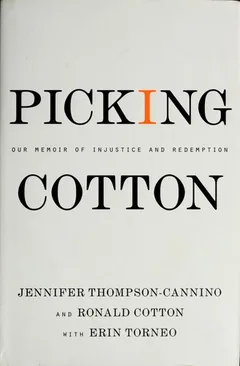 Picking Cotton: Our Memoir of Injustice and RedemptionTells the Jennifer Thompson–Ronald Cotton case from both participants’ perspectives, showing the human consequences of confident misidentification.
Recommended videos
 17:36How reliable is your memory? | Elizabeth LoftusElizabeth Loftus explains the misinformation effect and false memories from her own experiments, central to the article.
 26:00Eyewitness: How accurate is visual memory? | 60 Minutes Archive60 Minutes on the Jennifer Thompson and Ronald Cotton case, a confident eyewitness and a wrongful conviction.
 5:17Are all of your memories real? – Daniel L. SchacterAnimated primer on how memory reconstructs events and why recall can introduce errors.
Cite this article
Ingrid Dahl. “The science of why you can’t trust your own memory.” Eikleaf, 6 May 2026, updated 2 November 2026. https://www.eikleaf.com/the-science-of-why-you-cant-trust-your-own-memory/
Gen AI Disclaimer
Some contents of this page were generated and/or edited with the help of a Generative AI.
Media
Key Sources and References
Bartlett, F.C. (1932; reissued 1995 with an introduction by W. Kintsch). Remembering: A Study in Experimental and Social Psychology. Cambridge University Press. https://doi.org/10.1017/CBO9780511759185
Davies, G.M. & Gudjonsson, G.H. (2013). Looking back: Psychologists in the witness box. The Psychologist (British Psychological Society). https://bps.org.uk/psychologist/looking-back-psychologists-witness-box
Bergman, E.T. & Roediger, H.L. (1999). Can Bartlett’s repeated reproduction experiments be replicated? Memory & Cognition, 27(6), 937–947. https://doi.org/10.3758/BF03201224
Loftus, E.F. & Palmer, J.C. (1974). Reconstruction of automobile destruction: An example of the interaction between language and memory. Journal of Verbal Learning and Verbal Behavior, 13(5), 585–589. https://doi.org/10.1016/S0022-5371(74)80011-3
Loftus, E.F., Miller, D.G., & Burns, H.J. (1978). Semantic integration of verbal information into a visual memory. Journal of Experimental Psychology: Human Learning and Memory, 4(1), 19–31. https://doi.org/10.1037/0278-7393.4.1.19
Loftus, E.F. (2005). Planting misinformation in the human mind: A 30-year investigation of the malleability of memory. Learning & Memory, 12(4), 361–366. https://pubmed.ncbi.nlm.nih.gov/16027179/
Loftus, E.F. & Pickrell, J.E. (1995). The formation of false memories. Psychiatric Annals, 25(12), 720–725. https://doi.org/10.3928/0048-5713-19951201-07
Murphy, G., et al. (2023). Lost in the mall again: A preregistered replication and extension of Loftus & Pickrell (1995). Memory. https://pubmed.ncbi.nlm.nih.gov/37017540/
Misanin, J.R., Miller, R.R., & Lewis, D.J. (1968). Retrograde amnesia produced by electroconvulsive shock after reactivation of a consolidated memory trace. Science, 160(3827), 554–555. https://doi.org/10.1126/science.160.3827.554
Nader, K., Schafe, G.E., & LeDoux, J.E. (2000). Fear memories require protein synthesis in the amygdala for reconsolidation after retrieval. Nature, 406, 722–726. https://doi.org/10.1038/35021052
LeDoux, J. (2009). Manipulating memory. The Scientist. https://www.the-scientist.com/manipulating-memory-44310
Phelps, E.A. & Hofmann, S.G. (2019). Memory editing from science fiction to clinical practice. Nature, 572, 43–50. https://doi.org/10.1038/s41586-019-1433-7
Raut, S.B., Canales, J.J., Ravindran, M., Eri, R., Benedek, D.M., Ursano, R.J., & Johnson, L.R. (2022). Effects of propranolol on the modification of trauma memory reconsolidation in PTSD patients: A systematic review and meta-analysis. Journal of Psychiatric Research, 150, 246–256. https://doi.org/10.1016/j.jpsychires.2022.03.045
Wixted, J.T. & Wells, G.L. (2017). The relationship between eyewitness confidence and identification accuracy: A new synthesis. Psychological Science in the Public Interest, 18(1), 10–65. https://pubmed.ncbi.nlm.nih.gov/28395650/
Wells, G.L. & Bradfield, A.L. (1998). “Good, you identified the suspect”: Feedback to eyewitnesses distorts their reports of the witnessing experience. Journal of Applied Psychology, 83(3), 360–376. https://doi.org/10.1037/0021-9010.83.3.360
Cutler, B.L., Penrod, S.D., & Dexter, H.R. (1990). Juror sensitivity to eyewitness identification evidence. Law and Human Behavior, 14(2), 185–191. https://www.ojp.gov/ncjrs/virtual-library/abstracts/juror-sensitivity-eyewitness-identification-evidence
National Research Council (2014). Identifying the Culprit: Assessing Eyewitness Identification. Washington, DC: The National Academies Press. https://doi.org/10.17226/18891 · https://nap.nationalacademies.org/read/18891/chapter/2
DePaulo, B.M., Lindsay, J.J., Malone, B.E., Muhlenbruck, L., Charlton, K., & Cooper, H. (2003). Cues to deception. Psychological Bulletin, 129(1), 74–118. https://doi.org/10.1037/0033-2909.129.1.74
The Innocence Project (2020). How Eyewitness Misidentification Can Send Innocent People to Prison. https://innocenceproject.org/news/how-eyewitness-misidentification-can-send-innocent-people-to-prison/
The Innocence Project (2025). The Breakthrough Policy Wins We Secured That Shaped 2025. https://innocenceproject.org/news/the-breakthrough-policy-wins-we-secured-that-shaped-2025/
The Innocence Project. Ronald Cotton. https://innocenceproject.org/cases/ronald-cotton/
The Innocence Project. The Story of an Unlikely Friendship Sparked by Injustice. https://innocenceproject.org/news/the-story-of-an-unlikely-friendship-sparked-by-injustice/
PBS Frontline (2011). Eyewitness Accounts Still Prove Problematic in the Criminal Justice System. https://www.pbs.org/wgbh/frontline/article/eyewitness-accounts-still-prove-problematic-in-the-criminal-justice-system/
NPR (2009). Finding Freedom in Forgiveness. https://www.npr.org/2009/03/05/101469307/finding-freedom-in-forgiveness
Cotton, R. & Thompson-Cannino, J. (2009). Picking Cotton: Our Memoir of Injustice and Redemption. St. Martin’s Press. https://us.macmillan.com/books/9780312376536/pickingcotton/