Last updated: · 13 min read
In brief
America’s environmental agency valued a tougher fine-particle rule’s net health benefits at up to $46 billion in 2024. By January 2026 it had announced it would no longer put a dollar value on those health benefits. Both turn on one number, the value of a statistical life: $14.2 million in US transport analyses. But it follows income. Run the formula for Bangladesh and it falls to about $410,000. Leaving the number blank is a pricing decision too, and rules that once passed easily can now fail their cost-benefit test.
Contents
In February 2024, the EPA tightened its annual standard for fine particulate matter from 12 to 9 micrograms per cubic meter. The agency’s economists calculated that by 2032 the rule would be preventing up to 4,500 premature deaths a year. They put a dollar value on those deaths and found net health benefits of as much as $46 billion, up to $77 for every dollar spent. The Clean Air Act bars the agency from weighing costs when it sets such standards, so the arithmetic informed the public rather than deciding the rule. The rule went forward. It still stands: in 2026 a federal appeals court upheld it, even after the EPA itself had asked the court to throw it out.
By January 2026, the same agency announced it would no longer put a dollar value on the health benefits of cutting fine particulate matter and ozone — the pollutants behind most of the lives its air rules save. In the cost-benefit ledger, the value of those lives was effectively set to zero.
The $46 billion and the zero both turn on the same dollar figure, which economists call the value of a statistical life and which modern governments use to weigh whose safety is worth paying for.
The price on your head
“You can’t put a price on human life.” People say it without noticing what they’re proposing: that decisions about airbags, toxic-site cleanups and particulate limits should be made on something other than evidence. Modern regulators took the opposite view and spent the twentieth century building a bureaucratic apparatus to act on it.
The value of a statistical life is not a claim about what your life is worth. Thomas Schelling, who introduced the concept in 1968, was at pains to distinguish two categories of deaths: identified and statistical. The identified life, such as the child trapped in a well or the miner caught underground, commands near-unlimited resources: people watch, donate and feel the cost as personal. The statistical life is the anonymous person who will not die from particulate exposure next year because an air quality rule passed. That person has no face, no family pleading on television. They are a probability, distributed across a population, and what can be valued is the reduction in that risk.
The dominant methodology is empirical. W. Kip Viscusi of Vanderbilt University has spent decades refining the hedonic wage approach; one review he wrote with Joseph Aldy pooled more than 60 wage-risk studies from ten countries. The method reads labor markets directly: workers in high-fatality occupations such as logging, roofing and mining accept wage premiums in exchange for elevated mortality risk. If a worker requires $1,400 more per year for a job carrying a 1-in-10,000 higher annual fatality risk, the implied VSL is $14 million. Scale that preference across 10,000 workers and you have one expected additional death per year, collectively accepted for $14 million in total compensation. That review put the US median at about $7 million in 2000 dollars, roughly $13 million in today’s money, right where government figures sit now. The approach has a known limitation: it assumes workers understand and voluntarily accept occupational risk, which is questionable for low-wage, non-union workers who may have little real choice about where they work.
A second method asks people directly. Stated-preference surveys present respondents with a specified reduction in their annual mortality risk and ask how much they’d pay for it. If the mean willingness-to-pay for a 1-in-100,000 annual risk reduction is $140, the implied VSL is $14 million. This approach has its own problem: hypothetical bias, where stated preferences in surveys diverge from actual behavior when real money is involved. The two methods have different failure modes. They land in the same range, though stated-preference surveys typically come in somewhat lower, and that rough convergence is the main reason economists trust the framework.
In current US government analyses, the Department of Transportation uses $14.2 million per statistical life (2025 base year), and the Department of Health and Human Services uses $14.1 million as its central estimate. The EPA’s guidance, anchored at $7.4 million in 2006 dollars and updated for inflation and income growth, yields roughly $12 million for current analyses. That leaves a spread of about $2 million across three agencies valuing the same population. It comes from methodological disagreement about which labor market studies to use, what income adjustments to apply, and how to handle the tails of the distribution, so judgment is built into even this empirical number.
The memo behind the Pinto story

In 1973, Ford’s engineers produced a cost-benefit memo titled “Fatalities Associated with Crash-Induced Fuel Leakage and Fires.” The Grush/Saunby report calculated that modifying fuel systems across all US cars and light trucks would cost $137 million. The benefit side, which valued 180 burn deaths at $200,000 each and added burn injuries and burned vehicles, came to $49.5 million. Mark Dowie’s 1977 Mother Jones exposé “Pinto Madness” turned this into the definitive story of corporate murder-by-spreadsheet: Ford had decided that $11 per car wasn’t worth human lives.

The story that circulated omitted several things. The memo never mentioned the Pinto. It addressed rollovers across all vehicles, not the rear-end fuel tank fires that killed Pinto occupants. And the $200,000 per-life figure was NHTSA’s number, derived from the government’s own methodology rather than Ford’s accounting. The public instinct that something was wrong with valuing a human death at $200,000 was correct. The regulatory response was to keep pricing life and to price it higher: today’s $14.2 million is about seventy times NHTSA’s old figure on paper, and roughly nine times higher even after adjusting for inflation.
The machine that runs on death
Two executive orders turned VSL from an estimate into a decision rule. Ronald Reagan’s Executive Order 12291, signed in 1981, required executive-branch agencies, wherever the law allowed, to show that a major rule’s benefits outweighed its costs, and handed review to the Office of Information and Regulatory Affairs, created by Congress the year before. Clinton’s Executive Order 12866 in 1993 replaced it, softening the test to benefits that “justify” costs, but kept both the cost-benefit requirement and OIRA as its enforcer. Every significant health and safety rule from executive-branch agencies has since moved through this apparatus, and the benefits side of the ledger is dominated by the dollar value assigned to prevented deaths.
The defining case is the Clean Air Act. Looking back in 1997 at the Act’s effects from 1970 to 1990, the EPA put its central estimate of benefits at roughly 42 times its compliance costs. The EPA later estimated that by 2020 the 1990 Amendments were preventing over 230,000 premature deaths annually, with benefits exceeding costs by more than 30 to 1. Avoided premature deaths account for about 90 percent of those monetized benefits. Remove VSL from the calculation and that thirtyfold margin shrinks to a little over two to one, which still passes but rests on cleaner air’s other dividends rather than on the lives it saves. The law that has arguably saved more American lives than any other piece of domestic legislation owes almost all of its cost-benefit record to VSL.
The same VSL logic runs through the analyses behind NHTSA’s airbag requirements, the FDA’s food and drug safety rules and OSHA’s workplace exposure limits, where it is typically the largest item on the benefits side. Whether that number decides anything depends on the statute. Air quality standards must protect health whatever they cost, and OSHA’s limits on toxic substances must be as protective as is feasible; the Supreme Court has held that neither may be set by weighing costs against benefits.
The 1982 OSHA case established the template. The Office of Management and Budget had rejected the agency’s proposed hazard communication regulation, which required employers to disclose chemical hazards to workers, as too costly. OSHA itself had valued the deaths the rule would prevent by the “human capital” approach: foregone lifetime earnings, a figure roughly one-tenth the size of VSL-based estimates. On that basis the benefits fell short. OSHA appealed to Vice President George H. W. Bush, and Viscusi was brought in to settle the dispute. Valuing each statistical life with his wage-risk estimates, just over $3 million at the time and about ten times the lost-earnings figure, pushed the benefits above the costs, and the regulation was approved. VSL entered the regulatory machine to justify safety rules, but the same figure also caps them: a rule whose cost per statistical life saved runs far above the VSL figure needs other benefits to make up the difference, or it fails the test.
The exchange rate
Moving a VSL from one country to another is called benefit transfer, and it runs on a single equation: VSL(target) = VSL(base) × (Income_target / Income_base)^elasticity.
The income elasticity parameter captures how steeply VSL scales with income. Pooling wage-risk studies from mostly rich countries, Viscusi’s meta-analyses produce elasticities around 0.5 to 0.6. OECD guidance uses 0.8 for transfers between high-income countries and up to 1.0 for low-income ones; Harvard’s Lisa Robinson and James Hammitt go further, recommending 1.5 when extrapolating from the United States to low- and middle-income countries. The OECD’s 2025 update settles on 1.0 as its default and uses 1.5 as a check for poorer countries.
Run the formula for Bangladesh. US GDP per capita is about $90,000; Bangladesh’s is about $2,600. Using the DOT’s $14.2 million as the US base and an income elasticity of 1.0, Bangladesh’s VSL comes to about $410,000, one-thirty-fifth of the American figure. Swap in purchasing-power-adjusted incomes and Robinson and Hammitt’s steeper 1.5 elasticity and the answer stays in the same range: about $600,000.
None of this says Bangladeshis value their lives less; the formula says nothing about that. It measures income and follows it faithfully across borders and within them. Estimates for India, built from benefit-transfer and life-insurance proxy methods, run from $0.5 million to $1.6 million. Within Mexico, VSL ranges from $400,000 in Chiapas to $3.3 million in Mexico City, an eightfold spread inside a single country.
A safety measure costing $5 million per death prevented clears the cost-benefit test in the United States by a factor of nearly three. In Bangladesh the identical measure, against the same hazard and the same human physiology, fails by a factor of twelve, because only the income-derived VSL has changed.
On April 24, 2013, the Rana Plaza garment factory complex in Dhaka collapsed. The death toll reached 1,134. An inspection team had found cracks in the building the day before and told the owner to keep it closed. Factory owners sent the workers back in. The Accord on Fire and Building Safety, signed within weeks by international clothing brands, soon covered about 1,700 factories, with repair bills that labor monitors expected to top $1 billion. Where the formula puts the VSL at a few hundred thousand dollars, the cost-benefit arithmetic for mandated building safety inspection starts from a much lower bar: every prevented death counts for roughly one-thirty-fifth of what it would in the United States, so a safety program has to cost that much less per life saved before the numbers support it.
The strongest defense of locally calibrated VSL comes from Lisa Robinson, James Hammitt and Lucy O’Keeffe, who argue that income-adjusted figures produce better policy outcomes in lower-income countries than imposing a rich-country baseline would. Their reasoning: money spent on small risk reductions is money not spent on food, housing, schooling or medicine. An American VSL applied in Bangladesh would make almost any life-saving rule look like a bargain on paper, committing a poor population to spend far more on risk reduction than its own resources and preferences support.
The argument is technically coherent, but stated plainly it describes a global regulatory system in which the less wealthy a population, the less its government is expected to spend to keep it alive.
The evidence underneath is thin. By 2019, researchers had found just 26 VSL studies from the 172 countries classed as low- or middle-income. The largest pooled analysis yet, published in 2025, gathers more than 4,000 estimates but covers only 49 countries, and most of the studies behind them come from Europe and North America. For most poorer countries, the figure is transferred from evidence gathered elsewhere rather than measured.
The senior death discount

In 2003, the EPA ran an alternative, age-adjusted analysis of its Clear Skies Initiative that valued the lives of Americans over 70 at $2.3 million, against $3.7 million for younger adults, nearly 40 percent less. Seniors turned out to protest at the agency’s public hearings; AARP called the method discriminatory. In May 2003, Administrator Christie Whitman announced that the EPA would not use age-adjusted analysis in decision-making, and the agency has not returned to it.

Americans found that discount politically intolerable and generated enough pressure to reverse the decision. The income adjustment between countries, which would value risk reductions for a Bangladeshi at a small fraction of those for an American, has seen no such reversal: income-differentiated values remain the default in international guidance.The number and its absence
Defenders of the framework point to what came before it. Carter had required agencies to analyze the economic consequences of big rules from 1978, but nothing obliged benefits to outweigh costs until Reagan’s 1981 executive order made a cost-benefit test mandatory for major regulations. Before then, safety decisions were driven largely by political negotiation, industry pressure and crisis response. Regulations appeared after catastrophes visible enough to generate public outrage, such as mine collapses, chemical spills and the Cuyahoga River burning in 1969. The chronic, statistical deaths from air pollution, from low-level carcinogen exposure and from occupational hazards that killed slowly over decades never produced a single visible disaster; some still drew rules, such as OSHA’s 1978 cotton-dust standard against the slow lung disease of textile workers. Cass Sunstein, who ran the Office of Information and Regulatory Affairs under Obama, describes this as availability bias: humans respond to vivid, concentrated catastrophes and ignore diffuse, probabilistic ones regardless of which kills more people. VSL and cost-benefit analysis exist, in part, to correct for that bias by forcing regulatory attention onto the chronic, statistical deaths that the political system would otherwise ignore in favor of dramatic ones. Without the number, government spending on mortality risk reduction is allocated by media coverage and political salience, not by lives saved per dollar.
Frank Ackerman and Lisa Heinzerling attack the framework from the opposite direction. In their account, cost-benefit analysis trades one set of distortions for another. It privileges outcomes that can be monetized over values that resist quantification: equity, dignity, the fair distribution of risk across people who didn’t choose it, obligations to people not yet born. Their objection is structural: the willingness-to-pay principle at VSL’s foundation systematically undervalues the interests of people with less money to express as preference. Ackerman and Heinzerling were describing a domestic distortion. The arithmetic in the previous section is what that distortion looks like scaled to a global income distribution.
The pre-VSL regulatory world let the politically visible deaths draw most of the response. The VSL-based world is structurally biased in the direction of wealth.
Then, in January 2026, the EPA stopped putting a dollar value on the health benefits of cutting PM2.5 and ozone. The change appeared first in the agency’s economic analysis of a final rule on stationary combustion turbines.
The agency’s stated rationale: “to rectify this error, the EPA is no longer monetizing benefits from PM2.5 and ozone but will continue to quantify the emissions until the Agency is confident enough in the modeling to properly monetize those impacts.” Industry compliance costs were still tallied as before; health benefits were not. Sunstein, who had worked on Reagan’s cost-benefit order as a young Justice Department lawyer, warned when the plan was first reported that it would be a departure from the longstanding practice of both Democratic and Republican administrations and “a really low moment for the EPA.”
The EPA’s own January 2026 analysis concedes that avoided PM2.5 and ozone impacts supplied “most, if not all, of the monetized benefits of many air regulations.” Strip them out and, for many of those rules, the benefit column shrinks to a sliver or to nothing at all, while the cost column stays full. Rules that once passed easily can now fail their cost-benefit test on paper, though nothing has changed about the regulation, the hazard or the people being protected; one column of the spreadsheet has been emptied.
The February 2024 rule and the January 2026 decision sit less than two years apart in the same agency’s history. Scaled down to Bangladeshi incomes, the number sets a far lower bar for what building safety is worth paying for. Taken off the ledger in Washington, it hollows out the mechanism that had been justifying protection for four decades.
Declining to put a dollar value on the lives cleaner air saves is itself a pricing decision, the most consequential version of the choice the original methodology was making all along.
Related articles
- How your ZIP code predicts your life expectancy better than your genes
- The underground economy that sustains the world’s poorest countries
- How algorithms became regulators: when private code functions as law without the accountability of law
Further reading
As an Amazon Associate, Eikleaf earns from qualifying purchases. The book links below are affiliate links: if you buy through them, we may earn a small commission at no extra cost to you.
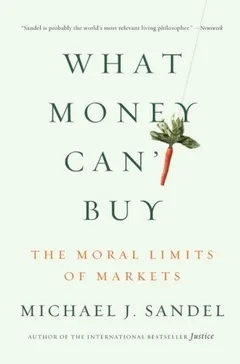 What Money Can’t Buy: The Moral Limits of MarketsExamines the ethical consequences of pricing death, health and pollution, complementing the article’s explanation of statistical-life valuation.
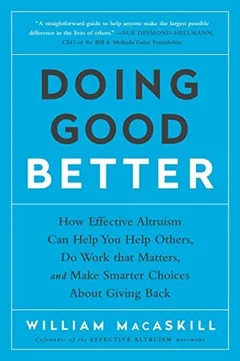 Doing Good Better: How Effective Altruism Can Help You Help Others, Do Work that Matters, and Make Smarter Choices about Giving BackExplains how costs per life saved and health benefits guide resource allocation, extending the article’s questions about anonymous lives and international inequality.
 What Is Life Worth? New Edition with Reflections 25 Years After 9/11Shows how income-based compensation formulas affect bereaved families, illuminating the distinction between statistical lives and identified victims.
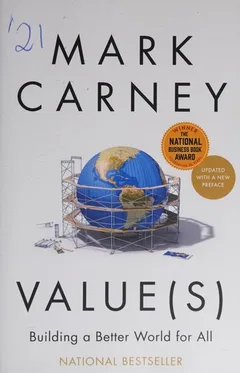 Values: Building a Better World for AllConnects monetary valuations of life during Covid and climate policy to the broader relationship between market prices and public values.
Recommended videos
 6:31Why The US Government Values Your Life at $10,041,645Half as Interesting on how US agencies settle on a dollar value for a statistical life.
 14:35How Much Is a Human Worth? (according to engineers)Practical Engineering on how engineers use the value of a life to decide on safety spending.
 27:59What is the Value of Statistical Life?OECD discussion of how VSL is estimated and used across countries.
Cite this article
Lena Martin. “The invisible market that prices human life.” Eikleaf, 18 May 2026, updated 2 November 2026. https://www.eikleaf.com/the-invisible-market-that-prices-human-life/
Gen AI Disclaimer
Some contents of this page were generated and/or edited with the help of a Generative AI.
Media
Key Sources and References
Thomas Schelling, “The Life You Save May Be Your Own,” in S.B. Chase Jr., ed., Problems in Public Expenditure Analysis, Washington DC: Brookings Institution, 1968, pp. 127–162.
W. Kip Viscusi and Joseph E. Aldy, “The Value of a Statistical Life: A Critical Review of Market Estimates throughout the World,” Journal of Risk and Uncertainty 27(1), 2003 (NBER Working Paper 9487). https://www.nber.org/papers/w9487
W. Kip Viscusi, “The Value of Life,” Harvard John M. Olin Center for Law, Economics, and Business Discussion Paper No. 517, 2005 (archived copy). https://web.archive.org/web/20120218215307/http://www.law.harvard.edu/programs/olin_center/papers/pdf/Viscusi_517.pdf
W. Kip Viscusi, “Valuing Risks to Life: Ethical Issues and Policy Challenges” (presentation slides, including the 1982 hazard communication debate), National Academies. https://sites.nationalacademies.org/cs/groups/pgasite/documents/webpage/pga_070268.pdf
U.S. Department of Transportation, “Departmental Guidance on Valuation of a Statistical Life in Economic Analysis,” 2025 (archived copy). https://web.archive.org/web/20260915112955/https://www.transportation.gov/office-policy/transportation-policy/revised-departmental-guidance-on-valuation-of-a-statistical-life-in-economic-analysis
U.S. Department of Health and Human Services, ASPE, “HHS Standard Values for Regulatory Analysis, 2026,” Data Point, March 10, 2026. https://aspe.hhs.gov/sites/default/files/documents/2d83af5823915d81871334ee08ad03d9/Standard-RIA-Values-2026.pdf
U.S. Environmental Protection Agency, “Mortality Risk Valuation.” Central estimate: $7.4 million (2006 dollars), updated to year of analysis. https://www.epa.gov/environmental-economics/mortality-risk-valuation
U.S. Bureau of Labor Statistics, Consumer Price Index for All Urban Consumers (CPIAUCSL), via FRED, Federal Reserve Bank of St. Louis (archived copy). https://web.archive.org/web/20260102001629/https://fred.stlouisfed.org/series/CPIAUCSL
Executive Order 12044, “Improving Government Regulations,” March 23, 1978. The American Presidency Project. https://www.presidency.ucsb.edu/documents/executive-order-12044-improving-government-regulations
Executive Order 12291, “Federal Regulation,” signed February 17, 1981; 46 FR 13193, February 19, 1981. https://www.archives.gov/federal-register/codification/executive-order/12291.html
Executive Order 12866, Federal Register, October 4, 1993. https://www.archives.gov/files/federal-register/executive-orders/pdf/12866.pdf
Congressional Research Service, “The Office of Information and Regulatory Affairs: Overview and Major Responsibilities,” R48546, 2025. https://www.congress.gov/crs_external_products/R/PDF/R48546/R48546.2.pdf
U.S. Environmental Protection Agency, “The Benefits and Costs of the Clean Air Act, 1970 to 1990: Retrospective Study,” EPA 410-R-97-002, October 1997. https://www.epa.gov/sites/default/files/2015-06/documents/contsetc.pdf
U.S. Environmental Protection Agency, “The Benefits and Costs of the Clean Air Act from 1990 to 2020: Second Prospective Study,” EPA-410-R-11-002, March 2011. https://www.epa.gov/clean-air-act-overview/benefits-and-costs-clean-air-act-1990-2020-second-prospective-study
U.S. Environmental Protection Agency, “Final Regulatory Impact Analysis: Reconsideration of the National Ambient Air Quality Standards for Particulate Matter,” February 2024; and “Final Reconsideration of the National Ambient Air Quality Standards for Particulate Matter (PM).” https://www.epa.gov/system/files/documents/2024-02/naaqs_pm_reconsideration_ria_final.pdf · https://www.epa.gov/pm-pollution/final-reconsideration-national-ambient-air-quality-standards-particulate-matter-pm
U.S. Environmental Protection Agency, Region 3, letter to the District of Columbia on PM2.5 designations (records the D.C. Circuit’s decision upholding the 2024 standard), 2026. https://www.epa.gov/system/files/documents/2026-10/region-3_d.c-120-day-letter_2026.pdf
Whitman v. American Trucking Associations, Inc., 531 U.S. 457 (2001), U.S. Supreme Court. https://www.law.cornell.edu/supremecourt/text/531/457
American Textile Manufacturers Institute, Inc. v. Donovan, 452 U.S. 490 (1981), U.S. Supreme Court (OSHA cotton dust standard). https://www.law.cornell.edu/supremecourt/text/452/490
Ford Motor Company, Grush and Saunby, “Fatalities Associated with Crash-Induced Fuel Leakage and Fires,” Environmental and Safety Engineering, 1973. https://www.autosafety.org/wp-content/uploads/import/phpq3mJ7F_FordMemo.pdf
Mark Dowie, “Pinto Madness,” Mother Jones, September/October 1977. https://www.motherjones.com/politics/1977/09/pinto-madness/
World Bank, World Development Indicators: GDP per capita (current US$) and GNI per capita, PPP, United States and Bangladesh, 2025. https://api.worldbank.org/v2/country/USA;BGD/indicator/NY.GDP.PCAP.CD?format=json&date=2023:2025 · https://api.worldbank.org/v2/country/USA;BGD/indicator/NY.GNP.PCAP.PP.CD?format=json&date=2023:2025
Sarath Guttikunda and Sai Krishna Dammalapati, “Value of Statistical Life (VSL) to Support Cost-Benefit Analysis of India’s Air Quality Management,” SIM-air Working Paper No. 55-2024, UrbanEmissions.Info, 2024. doi:10.2139/ssrn.5250231. https://urbanemissions.info/wp-content/uploads/docs/SIM-55-2024.pdf
Luis Armando Becerra-Pérez, Roberto Alonso Ramos-Alvarez, Juan J. DelaCruz, and Benjamín García-Páez, “Value per Statistical Life at the Sub-National Level as a Tool for Assessing Public Health and Environmental Problems,” Inquiry: A Journal of Medical Care Organization, Provision and Financing, SAGE, 2024. https://pmc.ncbi.nlm.nih.gov/articles/PMC11032065/
“Day after cracks were found, Bangladesh factory collapse leaves 125-plus dead,” Christian Science Monitor, April 24, 2013. https://www.csmonitor.com/World/Asia-South-Central/2013/0424/Day-after-cracks-were-found-Bangladesh-factory-collapse-leaves-125-plus-dead
Congressional Research Service, “Bangladesh Apparel Factory Collapse: Background in Brief,” R43085, 2014. https://www.everycrsreport.com/files/20140206_R43085_f4293560985542e3d7091502d903d5daa177d9e1.html
“1,700 Factories Now Covered by Bangladesh Accord,” Occupational Health & Safety, June 7, 2014 (Accord on Fire and Building Safety in Bangladesh, 2013). https://ohsonline.com/articles/2014/06/07/bangladesh-garment-accord.aspx
Lisa Robinson, James Hammitt, and Lucy O’Keeffe, “Valuing Mortality Risk Reductions in Global Benefit-Cost Analysis,” Journal of Benefit-Cost Analysis, 2019, 10(S1): 15–50. doi:10.1017/bca.2018.26. https://pmc.ncbi.nlm.nih.gov/articles/PMC7473065/
OECD, Mortality Risk Valuation in Environment, Health and Transport Policies, OECD Publishing, 2012. ISBN 9789264130807. https://www.oecd.org/en/publications/mortality-risk-valuation-in-environment-health-and-transport-policies_9789264130807-en.html
OECD, Mortality Risk Valuation in Policy Assessment: A Global Meta-analysis of Value of Statistical Life Studies, OECD Publishing, October 2025; launch event, EAERE, October 1, 2025. https://www.oecd.org/en/publications/mortality-risk-valuation-in-policy-assessment_76ca89a2-en.html · https://www.eaere.org/events/other-events/evaluating-the-economic-benefits-of-environmental-policies-that-save-lives/
Julian Sanchez, “Cost of Living,” Reason, July 16, 2003 (EPA’s age-adjusted Clear Skies analysis and its withdrawal). https://reason.com/2003/07/16/cost-of-living/
Cass Sunstein, The Cost-Benefit Revolution, MIT Press, 2018 (archived publisher page). https://web.archive.org/web/20240917143305/http://mitpress.mit.edu/9780262038140/the-cost-benefit-revolution/
Cass Sunstein, “Will the EPA Stop Considering Lives Saved?” Substack, January 12, 2026. https://casssunstein.substack.com/p/will-the-epa-stop-considering-lives
Harvard Law School, faculty profile: Cass R. Sunstein. https://hls.harvard.edu/faculty/cass-r-sunstein/
Frank Ackerman and Lisa Heinzerling, Priceless: On Knowing the Price of Everything and the Value of Nothing, The New Press, 2004. https://thenewpress.org/books/priceless/
U.S. Environmental Protection Agency, “Economic Impact Analysis for the New Source Performance Standards Review for Stationary Combustion Turbines: Final Rule,” EPA-452/R-26-002, January 2026. https://www.epa.gov/system/files/documents/2026-01/combustion_turbines_eia_final_2026-01.pdf
Harvard Law School Environmental & Energy Law Program, “EPA Ceased Monetization of Public Health Benefits in Air Regulations,” Regulatory Tracker, 2026. https://eelp.law.harvard.edu/tracker/epa-ceased-monetization-of-public-health-benefits-in-air-regulations/
Bryan Hubbell and Alan Krupnick, “How the US Environmental Protection Agency Got It Wrong About Monetizing Benefits of Air Pollution Regulations,” Resources for the Future, January 2026. https://www.rff.org/publications/reports/how-the-us-environmental-protection-agency-got-it-wrong-about-monetizing-benefits-of-air-pollution-regulations/