Last updated: · 14 min read
In brief
When Germany switched off its last three reactors in 2023, hardly anyone noticed, and its grid kept burning coal and gas. In 2024 the world’s 417 reactors made more electricity than wind or solar, around the clock and carbon-free. The most common threat to them is economic. A reactor can be safe to run and still lose money when cheap gas and renewables drive wholesale prices down. When New York’s Indian Point closed, gas filled the gap. Spain’s Almaraz, cleared as safe, is due to shut in 2030 unless Madrid moves again.
Contents
On April 15, 2023, Germany switched off its last three nuclear reactors, Isar 2, Emsland and Neckarwestheim 2, while its gas-fired fleet kept running. The lights didn’t flicker and the grid held; outside the energy press, hardly anyone noticed. Other sources absorbed the missing output, which is what makes the cost of closing a reactor so easy to miss.
A counterfactual analysis by PwC Spain, publicized by the Spanish industry group Foro Nuclear, modeled what would have happened had Germany kept the seventeen reactors it was running in 2010 on the grid, with their output displacing fossil generation, and estimated that 94% of Germany’s 2024 electricity generation would have been emission-free. The measured reality is not in dispute either. Fossil gas supplied about 15% of the electricity Germany fed into its grid in 2024, rising to 16% in 2025, and coal still sat above 22%. In January 2026 Berlin agreed with Brussels to tender 12 GW of new, mostly gas-fired capacity, scaled back from the 20 GW it originally wanted, for plants slated to burn fossil gas well into the 2040s.
A country that talks about climate more earnestly than almost any other in Europe removed zero-carbon generation that could have pushed more coal and gas off its grid, and kept burning both, as a deliberate policy sustained over two decades and celebrated as a moral accomplishment. The US has made the same trade one plant at a time, and Spain still has a schedule for making it.
The invisible fleet
Public argument about nuclear power tends to dwell on catastrophe, Chernobyl and Fukushima, or on the future: small modular reactors, fusion, technologies that might eventually be built if the funding holds and the physics cooperates. Far less attention goes to the technology that already exists and, until solar caught up in 2025, produced more low-carbon electricity than any single source except hydropower.
The global nuclear fleet, 417 operational reactors in 31 countries at the end of 2024, generated a record 2,667 TWh of electricity that year. That was more than wind or solar produced that year, though solar is growing so fast that it drew level with nuclear in 2025, by one count already passing it, and Ember expects both solar and wind to overtake nuclear in 2026. Nuclear supplies roughly 9% of the world’s electricity, the lowest share in four decades and down from 17.5% in 1996, even as its absolute output hits an all-time peak. The share fell because global electricity demand has more than doubled since 1996 while nuclear output stayed roughly flat; almost all that growth was met by gas, coal and, more recently, renewables.
The US fleet runs at a capacity factor of about 91%, which means it delivers roughly 91% of the electricity it could produce running flat-out all year, more than any other energy source. These plants don’t wait for wind or stop when the sun goes down. US plants typically run for 18 to 24 months between refueling outages, producing zero-carbon electricity around the clock.
The fleet is old. About two-thirds of operational capacity, nearly 300 reactors, has run for over 30 years, and the average reactor in advanced economies is more than 36 years old. Age hasn’t degraded performance, the World Nuclear Association argues, with older reactors posting some of the highest capacity factors in the world.
France’s 57 reactors give it one of the lowest-carbon electricity grids in Europe — around 40 grams of CO2-equivalent per kilowatt-hour in 2024, counting each source’s full lifecycle emissions, against more than 330 in Germany.
All of this clean energy is connected to grids, staffed and running right now, and the most common threat to it is economic: a reactor can be safe to run and still lose money.
Death by spreadsheet
In liberalized electricity markets, the kind found across most of Europe, much of the United States and a growing number of other countries, generators earn their revenue mainly from the wholesale spot price. That price is set by marginal cost: the cost of the most expensive plant needed to meet demand at any given moment. Nuclear plants have very high capital costs, already sunk. They have very low fuel costs, because uranium is cheap. But they carry significant fixed operating costs that cannot be avoided: staffing (a large plant employs hundreds of permanent staff), maintenance, regulatory compliance, waste handling, security. These costs stay the same whether the plant runs or not; they are the price of being available.
When wholesale prices fall, driven down by cheap natural gas and by zero-marginal-cost renewables flooding the market during peak hours, nuclear’s revenue drops below what it costs to keep the doors open. The plant is profitable to run for one more hour, because its marginal cost is among the lowest on the grid. But it is unprofitable to keep open for one more year, because what it earns over that year, after fuel and other running costs, no longer covers its fixed costs.
An “uneconomic” nuclear plant, then, is one that produces electricity cheaply yet earns too little from the market to cover the cost of being there to produce it.
The Union of Concerned Scientists counted more than a third of US nuclear plants as unprofitable or scheduled for closure in 2018, with a combined annual shortfall of roughly $814 million. That is a small sum in the context of the US energy system, but in a deregulated market with no mechanism for compensating zero-carbon baseload it was enough to kill plant after plant.
Since 2013, thirteen US reactors have shut down, nearly 10% of the American nuclear fleet’s capacity. Vermont Yankee closed in 2014, Pilgrim in 2019 and Indian Point in 2021, all three run by Entergy. In each case the operator pointed to low wholesale power prices driven by cheap natural gas, and to rising operating costs; at Indian Point, the shutdown was also part of a 2017 settlement with New York State, which had fought the plant’s relicensing for a decade. Vermont Yankee and Pilgrim had won 20-year license renewals from the NRC less than three and a half years before Entergy announced their closure. The NRC, as the safety regulator, had said they were safe to operate for two decades more. Wholesale power prices, which no safety regulator weighs, said they weren’t worth keeping.
And the mechanism doesn’t stop with past closures. In Spain, the government’s plan to end all nuclear by 2035 still puts seven operational reactors on a political countdown. Almaraz was due to go first, in 2027 and 2028. Only after a fresh energy-price shock, driven by the crisis in the Middle East, did Madrid relent: in August 2026 it granted Almaraz a reprieve to June 2030, with the phase-out itself left intact. In the US, the Section 45U production tax credit created by the Inflation Reduction Act expires in 2032. Without renewal, plants selling into competitive wholesale markets return to the economic exposure that closed thirteen reactors before them. The European Commission warned in March 2026 against premature closure of nuclear plants, but it lacks the authority to prevent it.
How a cheap-to-run plant loses money: the merit order

Electricity markets dispatch generators in order of marginal cost, cheapest first. Wind and solar have a marginal cost of effectively zero: once built, the fuel is free. When they generate, they push the market clearing price down. Gas plants typically set the price when renewables aren't generating. Nuclear sits in between, with a low marginal cost because fuel is cheap, and high fixed costs for staff, maintenance, compliance and security. When cheap gas and zero-cost renewables push wholesale prices below nuclear's total operating cost for enough hours of the year, the plant loses money, even though every megawatt-hour it produces costs almost nothing at the margin. The spot price pays for the next unit of energy. Some markets, such as PJM in the eastern US, add capacity payments for being available, but neither pays a plant for being zero-carbon unless a carbon price or a state program steps in. That design undervalues any generator whose main benefit, round-the-clock zero-carbon output, doesn't show up in the price.
The replacement problem
When a nuclear plant closes, something has to generate the electricity it was producing. Wind and solar on their own can’t replicate what nuclear provided: their output depends on weather, and matching a reactor’s round-the-clock, rain-or-shine output takes storage, transmission or other firm supply as well. In the closures studied so far, most of the gap has been filled by fossil fuel.
Indian Point, in New York, was a two-gigawatt plant. Its last reactor closed on April 30, 2021; Unit 2 had shut a year earlier. By 2022, natural gas and dual-fuel plants supplied more than half of the power on New York’s grid, up from about 40% in 2017, before the shutdown began. Three gas-fired plants in the region, Bayonne, CPV Valley and Cricket Valley, were built or expanded to fill the void, together replacing about 90% of Indian Point’s nameplate capacity with combustion.
Indian Point’s absence added an estimated 8 million tonnes of CO2 in 2022 that would not have been emitted had the plant kept running. That is roughly the entire annual fossil CO2 output of Costa Rica, a country of 5.1 million people.
The pattern holds across the country. Across US nuclear closures from 1993 to 2022, a closure raises annual state-level per capita carbon emissions by 6–8% on average, by one econometric estimate, through substitution toward fossil fuel generation, above all coal. Massachusetts, New York and Pennsylvania showed the same dynamic after their reactor shutdowns: renewables grew in all three states, but natural gas filled most of the void.
Germany offers the largest-scale version of the same story: a modeled grid that would have been almost entirely emission-free had the nuclear fleet been retained, against a real one still burning gas and coal, with a government tendering 12 GW of new, mostly gas-fired capacity. Germany’s coal burn has fallen since 2023 as renewables grew and demand dropped, but every terawatt-hour the reactors could have supplied would have pushed out more of the gas and coal still running. The choice was made repeatedly over more than a decade, in full knowledge of what the emissions arithmetic would produce.
The damage goes beyond carbon. Researchers modeled what would happen if the entire US nuclear fleet were retired and its output replaced by existing coal, gas and oil plants. Replacing nuclear with fossil generation raises fine particulate matter and ground-level ozone. They estimated 5,200 additional premature deaths a year from the added air pollution alone, people who die of respiratory and cardiovascular disease because a zero-emission plant was replaced by one that burns fuel. They put the climate damages from a single year of the replacement emissions at $11–180 billion.
The rescues and their limits
New York pioneered Zero-Emission Credits in 2016, requiring utilities to purchase credits from in-state nuclear plants as compensation for their carbon-free attribute. The program kept Ginna, Nine Mile Point and FitzPatrick running. Exelon bought FitzPatrick from Entergy because the credits made continued operation financially viable. In January 2026 the state Public Service Commission extended the program through 2049; these four upstate reactors now provide more than 40% of New York’s zero-emission power. So New York created a program to save nuclear plants upstate while celebrating the closure of Indian Point downstate, then watched gas take Indian Point’s place.
Illinois adopted a similar model. At the federal level, the Inflation Reduction Act’s Section 45U production tax credit offers up to 1.5¢/kWh for existing nuclear plants through 2032, a credit designed explicitly to prevent economic closures. In the first half of 2026, §45U credits traded at an average of about $0.96 per dollar of credit value, the highest price of any category on the transferable tax credit market.
Diablo Canyon, California’s last nuclear plant, was scheduled for closure in 2024–2025 under a 2016 agreement between PG&E and environmental groups. Governor Newsom signed SB 846 in September 2022 reversing the decision. In April 2026 the NRC approved a 20-year license renewal, clearing the reactors to run to 2044 and 2045, though operating past 2030 still needs a vote of the California Legislature. Across the Atlantic, Belgium’s parliament voted 102–8 in May 2025 to repeal its 2003 nuclear phase-out law entirely. That law had also banned new reactors; its repeal reopens the door to life extensions and new build, and the government has set a goal of 4 GW of nuclear in the mix.
The politics have shifted far enough that in May 2025 President Trump signed four executive orders aimed at cementing US leadership in nuclear energy, including a push for 5 GW of power uprates, which squeeze more output from reactors already built.
But every intervention listed here was built for particular plants and depends on the politics that produced it. Capacity markets pay for availability and Europe’s carbon price raises the costs of fossil rivals, but no major wholesale market pays existing nuclear for its zero-carbon output as a matter of course. Every rescue requires its own political fight, legislation and subsidy mechanism. The §45U credit carries no guarantee of renewal, and the next administration can revoke an executive order. Where no political champion will spend capital on the fight, plants close. And once they close, the option to reverse that decision is, for practical purposes, gone.
What "we can always restart it later" costs

Palisades, Michigan, closed in May 2022 and is attempting to become the first US commercial reactor to restart after entering decommissioning. The attempt is backed by $1.52 billion in DOE loan guarantees, a loan Holtec must repay, plus $300 million from the state of Michigan. The restart, first promised for late 2025, slipped into 2026 while crews repaired thousands of cracked steam generator tubes. Fuel loading finally began at the end of August 2026, then stopped when a fuel assembly ended up tilted inside the reactor core; by mid-October Holtec still had not named a restart date. The $814 million a year that would have brought every unprofitable US nuclear plant back to break-even in 2018 is less than half of the public money committed to restarting Palisades alone, though most of the Palisades money is a loan rather than a grant. Once a plant shuts down, the specialized workforce disperses, fuel is removed, systems degrade and its regulatory status changes, so a restart becomes a billion-dollar, multi-year construction project requiring fresh NRC approvals at every stage. For the overwhelming majority of closed reactors, restart will never be attempted, which makes closure permanent in practice.
Why nuclear cannot make its own case
The problem is well documented. The economic mechanism is understood, the emissions consequences are measured to the megatonne, and policy instruments exist and have been deployed successfully in specific cases. Yet the political response still trails the closures it is trying to prevent.
The nuclear sector’s default public posture is defensive: it responds to safety fears with data about safety, which concedes that safety is the relevant question for existing plants. When someone asks whether a nuclear plant should stay open, the industry answers with probability-of-core-damage-per-reactor-year. To the public, that sounds like talk about damage. The industry’s trade group does make the climate argument, that the US nuclear fleet is the country’s largest single source of carbon-free electricity, and that closing it hands its output to gas. Its most prominent champions, though, have come from outside the industry: climate scientists like James Hansen, energy modelers and heterodox environmentalists who broke with their organizations over the issue.
Then there’s the organized opposition. The Sierra Club calls its opposition to nuclear energy “unequivocal,” with no exception for existing plants. NRDC senior analyst Mohit Chhabra wrote in June 2021 that the organization had “been working for years to retire the aging Diablo Canyon nuclear power plant.” NRDC celebrated the closure of Indian Point that same year. At Indian Point, the direct consequence of the closure these organizations fought for was more natural gas combustion and higher carbon emissions, an outcome they nominally oppose. Diablo Canyon escaped the same fate only because California’s legislature overrode the closure deal in 2022.
In March 2026 NRDC shifted. It filed comments with the NRC backing the license transfer that is an early step toward restarting Iowa’s Duane Arnold reactor, while stressing that it had not yet taken a position on the restart itself. President Manish Bapna called it the first time in the group’s history that it had acted in support of an individual nuclear power plant. The filing spelled out why: coal generation in Iowa jumped 32% between 2024 and 2025, and CO2 emissions from the state’s power plants rose 24% in a single year. It was a narrow, heavily caveated shift from a group that had spent years campaigning to close individual plants.
The political asymmetry underneath all this is structural. Closing a nuclear plant satisfies an organized, funded environmental constituency and imposes no visible cost, because the emissions increase is spread across a whole grid and shows up only later, in generation data. Keeping a plant open has organized backers too, chiefly the unions whose members work there, and in Illinois they helped win two rescue laws; but their stake is local, and ratepayers don’t march for baseload. Saving one still requires a governor or a legislator to spend political capital fighting opponents who will name them publicly, run campaigns against them and frame the issue as a safety question.
That asymmetry explains why governments act against their own stated decarbonization targets, even though they know the emissions consequences because they publish them: the political costs of keeping nuclear plants open are concentrated, while the climate costs of closing them are diffuse and invisible.
Meanwhile the fleet keeps aging. License extensions buy twenty years when they’re granted, yet the political machinery for converting a 20-year license extension into 20 years of zero-carbon generation barely exists anywhere in the world.
Spain is following Germany’s road. Almaraz, its largest nuclear plant, sits on the dry plains of Extremadura in western Spain. The two-gigawatt plant generates more than 7% of the country’s electricity, enough for four million homes. Until the summer of 2026, Unit 1 was due to shut in 2027 and Unit 2 in 2028. Those dates had nothing to do with the reactors’ condition; they came from a political timetable set by a government committed to ending all Spanish nuclear by 2035.
Iberdrola, Endesa, and Naturgy asked for a three-year reprieve. It took a clean bill of health from the Nuclear Safety Council and a new energy-price shock before Madrid granted it: in August 2026 the government extended Almaraz’s license to June 2030. Ascó, Vandellós, Cofrentes and Trillo remain on the phase-out schedule, all due to go dark by 2035.
Almaraz has bought itself less than three years. Unless Madrid moves again, in 2030 Spain will switch off a plant its safety regulator has just cleared to run, and something else will have to generate more than 7% of the country’s electricity.
Related articles
- The myth of nuclear zero: why the demand at the heart of the Iran talks cannot be met as written
- The rare earth supply chain: the hidden dependency behind every modern device
- What emergency oil stockpiles can and cannot do
Further reading
As an Amazon Associate, Eikleaf earns from qualifying purchases. The book links below are affiliate links: if you buy through them, we may earn a small commission at no extra cost to you.
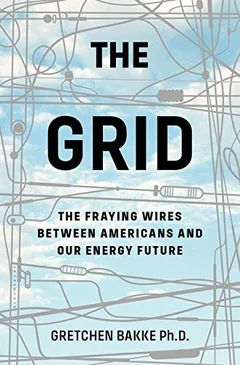 The Grid: The Fraying Wires Between Americans and Our Energy FutureExplains how utility economics, regulation and grid reliability shape which generators survive and how replacement electricity reaches consumers.Going Nuclear: How the Atom Will Save the PlanetGoing Nuclear: How the Atom Will Save the PlanetExplains reactor operation, radiation, waste and nuclear economics behind the article’s case for retaining dependable low-carbon generation.
 Superpower: One Man’s Quest to Transform American EnergyFollows a transmission developer’s struggle with utilities, finance and regulation, illustrating the infrastructure obstacles to replacing retired generating capacity.
 Energy: A Human HistoryPlaces nuclear generation within the history of energy transitions and explains the political and economic obstacles to replacing established energy systems.
Recommended videos
 9:25Why nuclear plants are shutting downVox on how electricity markets push working nuclear plants to close.
 26:40Diablo Canyon: California’s Last Nuclear Power Plant | Earth Focus | S5 E5PBS SoCal on the fight over California’s last nuclear plant, Diablo Canyon.
 13:04Is Germany’s nuclear exit a mistake?DW Planet A on whether Germany’s nuclear exit was a mistake and what replaced it.
Cite this article
Ulfur Atli. “The nuclear plants that nobody talks about — and why they matter more than the famous ones.” Eikleaf, 17 May 2026, updated 2 November 2026. https://www.eikleaf.com/the-nuclear-plants-that-nobody-talks-about-and-why-they-matter-more-than-the-famous-ones/
Gen AI Disclaimer
Some contents of this page were generated and/or edited with the help of a Generative AI.
Media
Area of the Isar nuclear power plant – Wikipedia
Key Sources and References
World Nuclear Association, World Nuclear Performance Report 2025. Nuclear generation reached a record 2,667 TWh in 2024; global average capacity factor 83%; older reactors among the best performers. https://world-nuclear.org/news-and-media/press-statements/world-nuclear-performance-report-2025-nuclear-delivers-record-breaking-year-in-electricity-generation
IAEA, Nuclear Power Reactors in the World (RDS-2/45), 2025. 417 operational reactors in 31 countries; 298 reactors (264.3 GWe) over 30 years; France 57 reactors. https://www-pub.iaea.org/MTCD/Publications/PDF/RDS-2-45_web.pdf
Ember, Global Electricity Review 2025. Nuclear 9% of global generation; hydro 14.3%, wind 8.1%, solar 6.9%. https://ember-energy.org/latest-insights/global-electricity-review-2025/
Ember, Global Electricity Review 2026. Solar generation up 30% to 2,778 TWh in 2025, drawing close to nuclear; solar and wind expected to overtake nuclear in 2026. https://ember-energy.org/latest-insights/global-electricity-review-2026/
pv magazine, “Solar surpasses nuclear power globally for first time” (World Nuclear Industry Status Report 2026), September 29, 2026. Nuclear share of global generation peaked at 17.5% in 1996; solar passed nuclear’s 2025 output of 2,703 TWh. https://www.pv-magazine.com/2026/09/29/solar-surpasses-nuclear-power-globally-for-first-time/
U.S. Energy Information Administration, Electric Power Monthly Table 6.07.B. US nuclear capacity factor 90.8% (2024), 91.0% (2025). https://www.eia.gov/electricity/monthly/epm_table_grapher.php?t=epmt_6_07_b
U.S. Energy Information Administration, Today in Energy: nuclear plants refuel every 18 to 24 months. https://www.eia.gov/todayinenergy/detail.php?id=37252
U.S. Energy Information Administration, “The United States operates the world’s largest nuclear power plant fleet.” France 57 reactors. https://www.eia.gov/todayinenergy/detail.php?id=65104
Congressional Research Service, “U.S. Nuclear Plant Shutdowns, State Interventions, and Policy Concerns” (R46820), updated February 2022. Twelve reactors (9,436 MW) shut down from 2013 through April 2021; Palisades (772 MW) scheduled to close May 2022. https://www.congress.gov/crs-product/R46820
IEA, The Path to a New Era for Nuclear Energy, 2025. Average age of reactors in advanced economies more than 36 years. https://www.iea.org/reports/the-path-to-a-new-era-for-nuclear-energy/executive-summary
Our World in Data (Ember / Energy Institute data), Lifecycle carbon intensity of electricity. Lifecycle greenhouse-gas emissions: France about 40 g CO2e/kWh, Germany about 336 g CO2e/kWh in 2024. https://ourworldindata.org/grapher/carbon-intensity-electricity
PwC Spain counterfactual analysis of Germany’s nuclear phase-out, publicized by Foro Nuclear and reported by NucNet, March 24, 2025. https://www.nucnet.org/news/germany-s-nuclear-phaseout-has-increased-co2-emissions-and-prices-analysis-suggests-3-1-2025 · https://www.foronuclear.org/en/updates/in-depth/germanys-nuclear-shutdown-mistake-rising-prices-increased-emissions-and-economic-recession/
Clean Energy Wire, “Germany’s coal power production drops to lowest level in 60 years in 2023” and “Q&A – Germany’s nuclear exit one year after.” Fossil generation and coal fell after April 2023 as renewables grew, demand dropped and imports rose. https://www.cleanenergywire.org/news/germanys-coal-power-production-drops-lowest-level-60-years-2023 · https://www.cleanenergywire.org/factsheets/qa-germanys-nuclear-exit-one-year-after
pv magazine, “Photovoltaics reach 16.1% share of Germany’s electricity generation in 2025” (Destatis data), March 2026. Gas 14.8% (2024) and 16.1% (2025) of grid electricity; coal 22.5% (2024). https://www.pv-magazine.com/2026/03/09/photovoltaics-reach-16-1-share-of-germanys-electricity-generation-in-2025/
Enerdata, “Germany agrees with the EU on 12 GW power plant tender in 2026,” January 2026. https://www.enerdata.net/publications/daily-energy-news/germany-agrees-eu-12-gw-power-plant-tender-2026.html
Union of Concerned Scientists, “The Nuclear Power Dilemma: Declining Profits, Plant Closures, and the Threat of Rising Carbon Emissions,” October 2018. 21 of 60 US facilities unprofitable; $814M annual shortfall. https://www.ucs.org/resources/nuclear-power-dilemma
PJM, Capacity Market (Reliability Pricing Model). Capacity payments to secure resources available to meet future demand. https://www.pjm.com/markets-and-operations/rpm/
World Nuclear News, “US nuclear regulator OKs Vermont Yankee extension,” March 2011, and “Entergy opts to shut Vermont Yankee,” August 2013. https://world-nuclear-news.org/Articles/US-nuclear-regulator-OKs-Vermont-Yankee-extension · https://wnn.world-nuclear.org/articles/entergy-opts-to-shut-vermont-yankee
Federal Register 83 FR 47648–47650, Indian Point renewed operating licenses issued September 17, 2018. https://www.govinfo.gov/content/pkg/FR-2018-09-20/html/2018-20450.htm
U.S. Energy Information Administration, “New York’s Indian Point nuclear power plant closes after 59 years of operation,” 2021. https://www.eia.gov/todayinenergy/detail.php?id=47776
Foundation for Research on Equal Opportunity (FREOPP), “Autopsy of a Perfect Policy Failure: The Closure of Indian Point.” 8.03 million metric tons additional CO2 in 2022; gas and dual-fuel share of New York generation 39.5% (2017) to 51.9% (2022). https://freopp.org/whitepapers/autopsy-of-a-perfect-policy-failure-the-closure-of-indian-point/
Our World in Data (Global Carbon Project), Annual CO2 emissions. Costa Rica about 8 million tonnes of fossil CO2 in 2022. https://ourworldindata.org/grapher/annual-co2-emissions-per-country
Luke Petach, “Forgoing Nuclear: Nuclear Power Plant Closures and Carbon Emissions in the United States,” Southern Economic Journal 93(1), 252–273, July 2026 (published online September 12, 2025). DOI 10.1002/soej.12793. 6–8% increase in state-level per capita carbon emissions per closure. https://onlinelibrary.wiley.com/doi/full/10.1002/soej.12793
E&E News, “3 States with Shuttered Nuclear Plants See Emissions Rise,” 2022. https://www.eenews.net/articles/3-states-with-shuttered-nuclear-plants-see-emissions-rise/
Freese et al., “Nuclear power generation phase-outs redistribute US air quality and climate-related mortality risk,” Nature Energy, Vol. 8, April 2023. Full-fleet phase-out scenario: 5,200 additional annual mortalities; $11–180 billion climate damages. https://www.nature.com/articles/s41560-023-01241-8
World Nuclear News, “New York approves clean energy standard,” August 2016. https://world-nuclear-news.org/Articles/New-York-approves-clean-energy-standard
New York Public Service Commission, Zero-Emission Credit program extension through 2049, January 2026. https://dps.ny.gov/news/commission-announces-extension-nuclear-power-credit-program
Crux, “Understanding the §45U tax credit for existing nuclear power plants,” 2026. §45U credits averaged $0.958 and made up 11.8% of transfer volume in H1 2026. https://www.crux.com/blog/understanding-the-45u-tax-credit-for-existing-nuclear-power-plants
American Nuclear Society, “NRC approves Diablo Canyon license renewal, extension,” April 2026. https://www.ans.org/news/step-1775241106/
NucNet, Belgian parliament vote 102–8 to repeal 2003 nuclear phase-out law, May 2025. Government goal of 4 GW of nuclear. https://www.nucnet.org/news/belgium-parliament-votes-to-abandon-nuclear-phaseout-plans-5-5-2025
U.S. Department of Energy, Office of Nuclear Energy, “9 Key Takeaways from President Trump’s Executive Orders on Nuclear Energy,” June 10, 2025 (orders signed May 23, 2025). Goal of 5 GW power uprates to existing reactors. https://www.energy.gov/ne/articles/9-key-takeaways-president-trumps-executive-orders-nuclear-energy
U.S. Department of Energy, Palisades Nuclear Plant loan guarantee disbursements, $1.52 billion total. https://www.energy.gov/articles/doe-approves-sixth-loan-disbursement-restart-palisades-nuclear-plant
Michigan Strategic Fund, FY25 Targeted Energy Investment Status Report (Section 811), September 30, 2025. $300 million in state funding for the Palisades restart, all disbursed. https://www.michiganbusiness.org/globalassets/documents/reports/legislative-reports/fy25-targeted-energy-investment-status-report-9-30-25.pdf
Michigan Public, “Palisades nuclear plant restart plans pushed back to early 2026,” December 2025, and American Nuclear Society, “Palisades: restart projects, Holtec IPO, lawsuit dismissal—but no restart date,” July 2026. https://www.michiganpublic.org/environment-climate-change/2025-12-17/palisades-nuclear-plant-restart-plans-pushed-back-to-early-2026 · https://www.ans.org/news/2026-07-08/article-8187/palisades-restart-projects-holtec-ipo-lawsuit-dismissal-but-no-restart-date/
Michigan Public, “Fuel loading begins at Palisades nuclear plant,” September 1, 2026, and U.S. Nuclear Regulatory Commission, “NRC Reviewing Palisades License Amendment Request, Public Comment Opportunity Open,” October 6, 2026 (request to move a tilted fuel assembly from the core to the spent fuel pool). https://www.michiganpublic.org/economy/2026-09-01/fuel-loading-begins-at-palisades-nuclear-plant · https://www.nrc.gov/about-nrc/news-releases/2026/palisades-requests-license-amendment-review
Sierra Club, Nuclear Free Future campaign. “The Sierra Club remains unequivocally opposed to nuclear energy.” https://www.sierraclub.org/nuclear-free · http://web.archive.org/web/20260913224716/https://www.sierraclub.org/nuclear-free
Nuclear Energy Institute, “NEI’s Korsnick: No Climate Solution Without Nuclear,” 2018. Maria Korsnick on closures raising emissions as retired units are replaced by gas; and “Maria Korsnick’s Remarks at the Annual State of the Energy Industry Forum,” 2021: the US fleet as America’s largest source of carbon-free power. https://www.nei.org/news/2018/nei-korsnick-washington-post-energy-202-live · https://www.nei.org/news/2021/korsnick-usea-speech-2021
IBEW, “IBEW Members in Illinois Helped Save Nuclear Jobs, Again,” 2021. Union campaign behind the 2016 and 2021 Illinois laws that kept nuclear plants open. https://ibew.org/ibew-members-in-illinois-helped-save-nuclear-jobs-again/
NRDC, Mohit Chhabra, “CPUC’s Clean Energy Order: Necessary, Timely, and Ambitious,” June 2021. Statement on working to retire Diablo Canyon. https://www.nrdc.org/bio/mohit-chhabra/cpucs-clean-energy-order-necessary-timely-and-ambitious · http://web.archive.org/web/20241207091937/https://www.nrdc.org/bio/mohit-chhabra/cpucs-clean-energy-order-necessary-timely-and-ambitious
NRDC, comments to NRC supporting Duane Arnold license transfer, Docket NRC-2026-0298, March 2, 2026. Iowa coal generation up 32% and power-plant CO2 emissions (EPA Clean Air Markets data) up 24% from 2024 to 2025. https://www.nrdc.org/sites/default/files/2026-03/NRDC_Comments_Docket_NRC-2026-0298_2Mar2026.pdf
Axios, “How AI’s power demand shifts resistance to nuclear power,” March 16, 2026. Manish Bapna quote on NRDC’s first support of an individual nuclear plant. https://www.axios.com/2026/03/16/environmental-ai-power-nuclear-demand
NucNet, Almaraz extension request by Iberdrola, Endesa, Naturgy for three-year extension to mid-2030, 2025. https://www.nucnet.org/news/spain-s-energy-ministry-confirms-request-for-almaraz-nuclear-plant-extension-11-0-2025
World Nuclear News, “Spanish regulator supports Almaraz licence extension,” July 2026. https://wnn.world-nuclear.org/articles/spanish-regulator-supports-almaraz-licence-extension
World Nuclear News, “Government approves extended operation of Almaraz plant,” August 14, 2026. Licence extended to June 2030; 2035 phase-out of the remaining fleet unchanged. https://wnn.world-nuclear.org/articles/government-approves-extended-operation-of-almaraz-plant
Boletín Oficial del Estado, Ministry order renewing the Almaraz operating authorization (BOE-A-2026-17756), August 14, 2026. Extension of about 31 and 19 months for Units I and II; 2035 end date of the fleet unchanged; reasons cited include the Middle East crisis and fossil-fuel price volatility. https://www.boe.es/boe/dias/2026/08/14/pdfs/BOE-A-2026-17756.pdf