Last updated: · 18 min read
In brief
In a Nairobi hotel, a World Food Programme veteran set out containers of rice, lentils and oil, the largest holding 2,100 calories. The last was empty, standing for almost half of Kenya’s Kakuma camp, who would get nothing. A cut in aid is on record first; its harm surfaces later, tangled with infection, dirty water and war. Kakuma has the cut and some harm on record. At least 54 children died in its hospital in 2025 with complications brought on by malnutrition. Gaza’s cut, 500,000 people dropped in October 2026, so far has only the decision on record.
Contents
On 18 July 2025, in a meeting room at the Tribe Hotel in Nairobi, a World Food Programme veteran named Dragica Pajevic set out a row of Tupperware containers for a team of President Donald Trump’s top foreign aid advisers. They held different amounts of dry rice, lentils and oil. The largest held 2,100 calories, the standard daily figure per person around which emergency rations are planned. The next held 840, the amount a fifth of the refugees in Kenya’s Kakuma camp were set to receive in August. Another third of the camp would get just over 400. The last container was empty. It stood for almost half the camp, the people who would get nothing at all.
ProPublica, which reconstructed the evening from the accounts of six people familiar with the trip and from internal government records, reports that the response was muted. One of the visitors did not speak and spent much of the meal looking at his phone. About 720,000 refugees in Kenya relied on WFP to survive, and after providing $112 million in 2024, the United States had cut off the agency’s Kenya funding in January 2025 without warning.
The 2,100 figure describes a population, not a person. WFP and UNHCR, the UN refugee agency, use it as the average when they plan rations in the early stage of a crisis, when people have no other food, and individual needs vary around it.
Fifteen months after that dinner, on 19 October 2026, the same agency announced a cut in Gaza. In October it was reaching 1.1 million people there with food and cash, down from 1.6 million in September. Families still receiving food got half rations: one food parcel instead of two, and a smaller bag of wheat flour. WFP’s country director, Shaun Hughes, said the cut was “not because we don’t have humanitarian access to deliver food; that’s because we don’t have funding.” Carl Skau, the agency’s acting executive director, said: “This is only because we have less funding.” Access to Gaza had its own troubles that month. Israel halted commercial shipments into the territory on 14 October and announced on 19 October that they would gradually resume. But WFP put this particular cut down to money.
Agencies can document a reduction in assistance before they can measure its effects on health. Those effects surface later and unevenly, mixed up with infection, dirty water and war, and they are documented by investigations, surveys and models that each answer a narrower question than the one everyone is asking. Kakuma, followed from that hotel dinner into 2026, has both the decision and some of its consequences on record. Gaza, in October 2026, so far has only the decision.
Who pays, and with what strings
WFP has no budget in the sense that a national ministry has one. It receives no dues and no share of the UN’s assessed contributions. On average more than 60 governments fund it, and all government support is voluntary. Its income rises and falls with decisions made in other capitals.
Those decisions moved fast. Contributions to WFP totalled $9.76 billion in 2024 and $6.52 billion in 2025, a fall of about a third in a single year. By 19 October 2026 the total for 2026 stood at $5.72 billion, with ten weeks of the year left to run. The fall was not WFP’s alone. On the OECD’s preliminary figures, total aid from the rich donor governments of its Development Assistance Committee fell 23.1% in 2025 after inflation, the largest annual drop on record, and their humanitarian aid fell 35.8%.
In November 2025, WFP said 318 million people faced acute hunger going into 2026. Funding cuts, it said, were forcing it to prioritise about a third of them, 110 million people, at a cost of $13 billion, and it warned that it might receive close to half of that. Need, planned reach and expected money are different measures. A shortfall in the money can mean fewer people helped, smaller rations or help that ends sooner.
The money also arrives with instructions attached. In 2024, 78% of all contributions to WFP were tightly earmarked, tied by the donor to a particular country or activity. Only 6% came with no strings at all, and 11% counted as flexible, a category that also includes money a donor ties to a region or a theme instead of a country. Flexible money lets WFP itself choose the country and the activity a contribution pays for, and WFP describes it as what allows the agency to respond immediately, bridging critical gaps until earmarked funds arrive. When donors lose interest in a crisis, what WFP can steer there on its own authority comes out of that small flexible share, which every other crisis is competing for too.
The largest donor changed the rules at the end of 2025. On 29 December the United States pledged an initial $2 billion for UN humanitarian aid in 2026, to be routed through OCHA, the UN’s humanitarian coordination office, instead of being handed to individual agencies. It warned those agencies to “adapt, shrink or die”. Jeremy Lewin, the US official presenting the pledge in Geneva, called it an initial anchor commitment tied to 17 countries. He also said that, by US calculations, the pooled model was about twice as efficient as the old system, and that achieving the same life-saving impact the old way would have cost nearly $4 billion. That is a claim about value for money, and no published evaluation yet tests it. In May 2026 the United States added $1.8 billion, bringing its total under the arrangement to $3.8 billion across 21 countries.
From pledge to plate
Money with strings arrives on its own schedule, and food has a schedule of its own. Between a donor’s decision and a family’s ration sit three parts of the machine, and each runs dry in a different way.
The first is food that has to be bought and moved. WFP’s Global Commodity Management Facility exists to shorten that journey by buying food before country offices ask for it. In 2018 its purchases had an average lead time of 34 days, 86 days faster than WFP’s conventional process, which works out at about four months without it. Stock bought ahead is the cushion that absorbs a late pledge. When the money that replenishes it stops, the cushion runs down.
The second is money lent before it arrives. Under internal project lending, a programme can spend funds advanced against contributions that donors are forecast to make, with the forecast serving as collateral; in 2024 WFP advanced $1.9 billion this way to 57 operations. A separate fund, the Immediate Response Account, advances money for life-threatening situations where no forecast contribution exists. It is refilled by donors, internal transfers and repayments, and in 2024 it raised $274 million against a target of $400 million. Both instruments lean on the future. A forecast that never turns into a payment leaves nothing to borrow against. Advances can bridge a delay, but they cannot replace money that never comes.
The third is cash. A cash transfer needs no food shipment, and WFP also uses advances to pay transfers before contributions are confirmed, but when the money runs short the transfer shrinks with it. In Gaza in October 2026, the 75,000 families who receive cash from WFP had their monthly payments cut from 1,250 shekels to 750, or from $400 to $240. In Kakuma, the monthly cash transfers that refugees used to buy protein and vegetables, to go with the rice, lentils and oil WFP distributed, ended in June 2025.
Kakuma shows what a broken schedule looks like. When the US money stopped in January 2025, WFP’s Kenya operation had no time to find other support or to import the food it needed for the rest of the year. ProPublica reports that the failure to extend the funding blew up the timetable WFP needed to ship food to the camp by summer. In mid-May a USAID memo warned that without more money, WFP rations in Kenya would fall from what it called normal levels of 60% to 20%, putting nearly 1 million people at risk. The extension came in late September. That year’s US money came to $66 million, 40% less than the year before, and it arrived nine months into the year.
In Gaza the warning was public and the timing explicit. In July 2026, the month in which 220,000 households there had their food rations halved, WFP said it would have to make much deeper cuts by October unless more funding came in, and it named donor fatigue as the main issue. In October the cuts came.
Somalia 2011: warned in time, helped too late

The early-warning systems watching Somalia in 2010 and 2011 did their job. The emergency was detected in a timely way. What broke was the connection between knowing and helping. Through that period the people of southern Somalia were becoming increasingly isolated from food and livelihoods assistance, as humanitarian agencies progressively withdrew from most of the south and some donors interrupted humanitarian funding to those regions. By July 2011 the United Nations had declared famine in several regions, using the criteria of the Integrated Food Security Phase Classification (IPC). By then excess mortality was near its peak, at about 30,000 excess deaths a month between May and August 2011. The researchers who later estimated the toll recorded a consensus that the humanitarian response had been "mostly late and insufficient".
Dividing the pot
Once the pipeline is short, someone has to divide what is left. WFP’s own description of that moment is blunt: country offices are forced to prioritise by choosing one or a mix of three approaches, which are reducing rations, reducing how long assistance lasts, or reducing the number of people who get it. Every cut is some blend of those three levers, and each spreads the shortage differently.
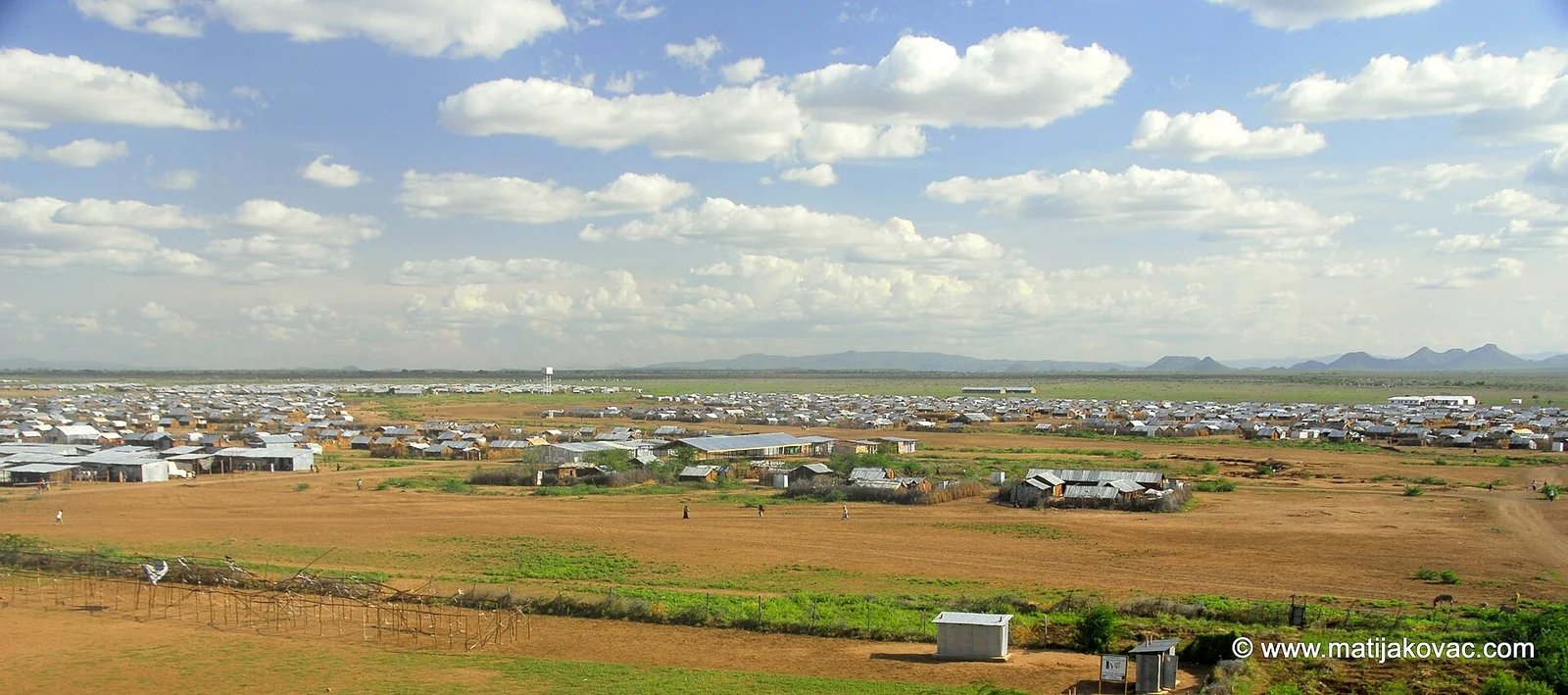
Kakuma got smaller rations, handed out less often, to fewer people. WFP cut rations to the lowest level in the camp’s history and moved from monthly distributions to one every other month. Then it determined that in August 2025 only half of the camp’s roughly 308,000 people would receive food at all. Most learned which half they were in from a number stamped on the back of their ration card. Six months earlier, on 4 February 2025, Secretary of State Marco Rubio had told reporters that any programme “providing food or medicine or anything that is saving lives and is immediate and urgent” was “not included in the freeze”.
Gaza in October 2026 pulled two levers at once: 500,000 fewer people on the monthly list, and half rations for families still receiving food parcels. Cash payments shrank too. Hot meals for people unable to cook fell from 250,000 a day to 150,000, and families in hard-to-reach areas, including those near the yellow line that marks Israeli military control, would get a hot meal every other day instead of daily. Who keeps what is a further decision, made inside the smaller pot. Skau said WFP would do its best to prioritise those in most need, adding that “this is not an easy exercise”, and that services were likely to focus on the sick, children at risk of malnutrition, and people “whose safety is at risk and who are often pushed to move”. WFP also named a short list of programmes it could keep running.
In Sudan the main lever was the ration itself. In September 2026, in Tawila camp in Darfur, WFP was handing out half rations: food meant to last two weeks, distributed once a month. In El Obeid, where displaced people from across the country have gathered, the agency said it was “providing less and less” as funding ran dry, and was prioritising the newly arrived.
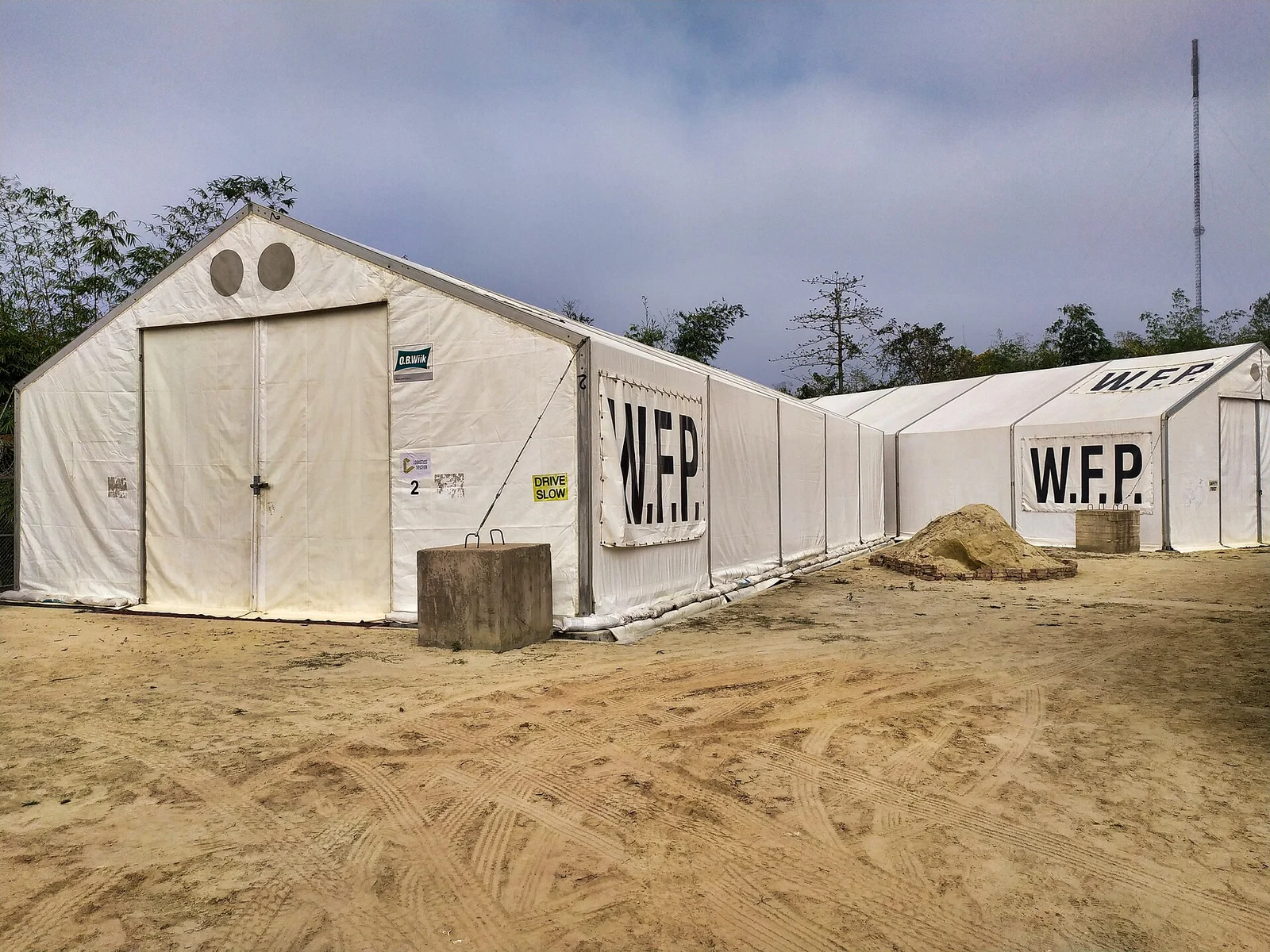
The lever that sounds gentlest is targeting, which gives different households different amounts by assessed need. In April 2026 WFP moved nearly 1.2 million Rohingya refugees in Bangladesh from a flat $12 per person per month to three tiers: $12, $10 or $7 in the Cox’s Bazar camps, and $13, $11 or $8 on Bhasan Char, where market costs are higher. WFP said the change was not driven by funding considerations, while placing it in a context of global funding constraints that require careful prioritisation. It said its food-gap analysis showed that even the lowest tier met minimum food needs, and it defined a ration cut as assistance falling below 2,100 calories a day. Bangladesh’s refugee relief commissioner, Mohammad Mizanur Rahman, said a ration cut was precisely what the change meant for the Rohingya. Reports differ on how big the bottom tier is. AP put it in April at about 17% of refugees, IPS in September at almost 70% of households. The figures use different dates and different units, and neither report reconciles them.
Uganda shows how deep prioritisation can go. In its refugee settlements in 2025, some refugees judged less vulnerable received just 22% of a full ration.
What a thinner ration does
Each lever changes what people put in a pot, and in eastern Chad repeated nutrition surveys tracked what that did to children’s growth. In 2014 the general ration in the refugee camps there, which had provided 2,100 kcal per person per day, was cut by 40–60% because of funding constraints. At the same time children aged 6 to 23 months began receiving a small daily nutrient supplement. A team of nutrition researchers analysed repeated camp surveys from 2010 to 2017. Over the whole period, the prevalence of stunting (being too short for one’s age) and wasting (being too thin for one’s height) fell. But after the cut, trends that had been improving slowed or reversed: height-for-age among children aged 24 to 59 months, and weight-for-height among younger children. The authors concluded that the change had adverse effects on child growth. They also wrote that causality cannot be inferred. Surveys of different children at different times can show a trend bending. They cannot rule out everything else that changed in the camps in 2014.
Uganda supplies a closer look at the plate. WFP tracked 294 refugee households that had been in its most vulnerable group and were then cut back or removed, comparing September 2024 with June and July 2025. In the households with the deepest cuts, the food consumption score, the index WFP uses as a proxy for household food security, fell by a fifth on average. The tracked households were those WFP managed to follow across both rounds, not a representative sample. The report also recorded that dairy consumption nearly vanished, down 96.3%, and that meat, fish and eggs fell 35.6%.
The groundnut gap

Between February and October 1990, about 18,000 cases of pellagra were reported among roughly 286,000 Mozambican refugees in Malawi, about 6% of them. Pellagra is caused by a lack of niacin, and in these camps it showed as dermatitis. The outbreak followed a five-month halt in groundnut distribution. Groundnuts were the ration's major source of niacin, and UNHCR and WFP could not obtain them. The sources describe a supply failure and mention no budget decision. A case-control study found that eating groundnuts daily protected against the disease, as did owning a garden and milling maize at home. Women were affected at 7.8 times the rate of men. There had been 1,169 cases in the whole of 1989. Relief workers distributed niacin tablets in August 1990, and the recommended remedies included buying groundnuts on the world market and fortifying the ration. The following year the CDC observed that micronutrient deficiency disorders, pellagra among them, had become major problems in refugee populations that depend on international relief for their food.
The Rohingya camps in Bangladesh offer rates measured before and after a cut, with no comparison group. In 2023 WFP cut the monthly voucher from $12 to $10 in March and to $8 in June, then restored $10 from 1 January 2024 and $12 later that year. Before the cuts, about 12% of children under five were acutely malnourished. Afterwards, global acute malnutrition among children reached 15.1%, above the emergency threshold set by the WHO and the highest rate ever recorded in the camps. The same year brought fires, cyclones and floods. The rates rose in a year of several shocks, and the record does not separate one from the others.
Diet matters for survival because of what undernutrition does to a body’s defences. Undernutrition in all its forms, including fetal growth restriction, stunting, wasting, vitamin A and zinc deficiency and suboptimal breastfeeding, was estimated to cause 45% of deaths among children under five worldwide in 2011. Across ten studies of under-fives in low- and middle-income countries, children who were at once stunted, wasted and underweight had 12.3 times the mortality hazard of children with none of those deficits. In the refugee camps of Thailand in 1979–80, Somalia in 1980–85 and Sudan in 1984–85, a review of the mortality data concluded that most deaths could have been prevented by adequate food rations, clean water, measles immunisation and oral rehydration. None of these figures counts deaths caused by a ration cut. They describe how risk builds in a body that is short of food and exposed to infection, and why food is one defence among several.
What each kind of evidence can establish
If harm runs through bodies that also face infection, bad water and missing health care, the question becomes what can actually be counted.
The most direct evidence is the documented death, and in Kakuma that record comes mainly from one investigation. ProPublica reported in December 2025 that at least 54 children had died in the camp’s hospital that year with complications brought on by malnutrition, and found, while reporting in the camp, that many refugees, mostly children, died because their malnourished bodies could not fight off infections. One of them was Santina, seven months old. In June 2025 her family was allotted 630 calories per person per day. Her mother stopped producing enough breastmilk. Santina was diagnosed with marasmus, the severe wasting form of malnutrition, developed pneumonia and died. A doctor and nutrition specialist with the International Rescue Committee said she almost certainly would have survived if she had not been malnourished. On 6 May 2025 the US embassy in Nairobi had cabled that declining food assistance had “already contributed to several deaths”. A senior State Department official told ProPublica that no one had died as a result of foreign aid cuts. The record holds named deaths, a clinician’s judgement, a government’s own cable and a flat denial. It is also mostly one outlet’s reporting from one camp. AP, reporting from Kakuma in June 2025, confirmed that rations had been halved, and a nutrition officer at the camp’s largest hospital told it that 15 children had died there in April, up from a monthly average of five.
Another method counts deaths afterwards, across a whole population. For southern and central Somalia between October 2010 and April 2012, researchers estimated about 258,000 excess deaths, 133,000 of them children under five, over and above roughly 290,000 deaths expected in the same area over the same period. Deaths above that expected level came to an estimated 10% of the region’s children under five. The estimate was released in May 2013, about a year after the period ended. Its authors could not attribute portions of the toll to any single cause, and they treat it as the combined impact of drought, reduced humanitarian assistance, high food prices and civil strife. This method produces a defensible number for a whole population, late, and for all the causes together.
Models look forward. One, built on all USAID funding in 133 countries from 2001 to 2021, projected more than 14 million additional deaths by 2030 under its scenario of steep funding cuts, with an uncertainty interval of roughly 8.5 million to 19.7 million. It covers everything USAID funded, so it is no tally of food-ration cuts, and it is a conditional projection, not a count. ALNAP’s review of the state of the humanitarian system describes global modelling of the 2025 cuts as carrying “varying levels of certainty”.
Attribution is harder still while a crisis is running. In Sudan, an alert issued on 12 October 2026 by the IPC, the multi-agency system that classifies the severity of food crises, named conflict, mass displacement, severe drought and inadequate humanitarian funding together as drivers of a rapidly deteriorating situation in Greater Darfur and Kordofan. The WHO added that health care there was extremely limited, often entirely inaccessible, and clean water increasingly scarce, leaving a poorly nourished population highly vulnerable to disease and death; malnourished people are more susceptible to severe cholera and measles. The alert does not say how much of the harm comes from the funding shortfall.
The Gaza cut has an announcement date, 19 October 2026, and a shorter list. Whatever it does to the 500,000 people no longer on it will be established, if at all, by one of these methods, and each will answer only part of the question.
Can targeting close the gap?
The strongest answer to all of this is that budgets were never unlimited and a smaller pot can be spent better. Targeting puts the most food where hunger is worst, and WFP says its Rohingya tiers keep even the lowest group at minimum needs. The United States says pooling its money doubles what each dollar buys.
One test is what happens when money comes back. From December 2025, WFP gave refugees in Kenya’s camps who fell into categories 1, 2 and 3, together 94% of them, 60%, 40% and 20% of the minimum food basket, and gave category 4 nothing. In February 2026 the first two categories were raised to 80% and 60%. FEWS NET, the early-warning network that tracks food crises, judged in April that assistance was still insufficient to fill the gap, and that many households were likely to sell or barter part of their rations to cover other needs after cuts to support for fuel and medicine. In September it expected Crisis outcomes, phase 3 on the IPC’s five-phase scale, to persist in Kakuma and Kalobeyei through January 2027, with WFP food the primary source for most households and preventing worse outcomes. More money moved the percentages up. No category got back to the full basket.
Another is whether people on the lower tiers can close the rest of the gap themselves. Rohingya refugees are legally barred from working in Bangladesh. In Gaza, the unemployment rate was 81% in July 2026, and the labour force participation rate in 2025 was 38%. The food-gap analysis behind WFP’s statement that $7 covers minimum needs does not appear in published form, so the claim can be repeated but not checked.
Afghanistan shows what happens when there is food in the markets but people cannot pay for it. In October 2026 FAO and WFP reported improved harvests and greater food availability. They still projected that about 19.2 million people would face high levels of acute food insecurity in the November to April lean season, up from 17.4 million a year earlier. They named high food and transport costs, scarce work and declining humanitarian assistance, and said many families without income cannot afford a nutritious diet even when food is available. Targeting can steer more help to households with fewer alternatives. Whether the lower tiers leave enough to eat where people cannot earn has not been shown.
For now
On 19 October 2026, the day it announced the Gaza cut, WFP asked for $450 million to keep critical operations going in Gaza and the West Bank for six months, from October 2026 to March 2027. For now, it said, it could still support bakeries that cover a third of Gaza’s bread needs, give nutrition assistance to 300,000 women and children, and provide school snacks for 200,000 children. How long that list holds depends on whether the appeal is met.
Related articles
- The science of infectious disease: why pandemics follow predictable patterns
- Why the world’s best agricultural land is increasingly owned by foreign governments
- How colonialism created the conditions for today’s global obesity epidemic
Further reading
As an Amazon Associate, Eikleaf earns from qualifying purchases. The book links below are affiliate links: if you buy through them, we may earn a small commission at no extra cost to you.
 Mass Starvation: The History and Future of FamineA leading famine scholar on why modern famines are political and how aid shortfalls make them worse.
 Poverty and Famines: An Essay on Entitlement and DeprivationThe classic showing that famines are about access to food rather than food supply.Famine: A Short HistoryFamine: A Short HistoryA concise history of famine and famine relief.
Recommended videos
 2:30WFP cuts food aid to 500,000 Palestinians in Gaza amid funding crisisAl Jazeera report on WFP dropping 500,000 people in Gaza from food aid.
 1:04Funding shortages force World Food Programme to cut aid to Gaza. #Gaza #Aid #BBCNewsBBC short on the funding shortfall behind the Gaza cut.
 3:32Starvation alert as children fill Kenya refugee ward after US aid cuts | BBC NewsBBC on children going hungry in Kakuma after rations were cut there.
Cite this article
Johan Karlsson. “The arithmetic of a ration cut.” Eikleaf, 24 October 2026, updated 25 October 2026. https://www.eikleaf.com/the-arithmetic-of-a-ration-cut/
Gen AI Disclaimer
Some contents of this page were generated and/or edited with the help of a Generative AI.
Media
Humanitarian Aid at the Zikim Crossing – U.S. Army / DVIDS
Kakuma Refugee Camp – Wikimedia Commons (Photo: Mr.matija.kovac, CC BY-SA 3.0)
Mobile Storage Unit of WFP, Balukhali – Wikimedia Commons (Photo: Rocky Masum, CC BY-SA 4.0)
Key Sources and References
Murphy, Brett, and Anna Maria Barry-Jester. “After Trump Cuts to Kenya Food Aid, Children Died of Starvation.” Photography by Brian Otieno. ProPublica, 17 December 2025. https://www.propublica.org/article/kenya-trump-usaid-world-food-program-starvation-children-deaths
Field Exchange, Emergency Nutrition Network. “Summary of the revised joint WFP/UNHCR Guidelines for Estimating Food and Nutritional Needs in Emergencies.” https://ennonline.net/fex/3/summary
World Food Programme. “Funding cuts force WFP to drastically reduce lifesaving assistance in Gaza.” 19 October 2026. https://www.wfp.org/news/funding-cuts-force-wfp-drastically-reduce-lifesaving-assistance-gaza
Reuters (via Al-Monitor). “World Food Programme cuts aid to 500,000 Palestinians in Gaza, cites funding shortages.” 19 October 2026. https://www.al-monitor.com/originals/2026/10/world-food-programme-cuts-aid-500000-palestinians-gaza-cites-funding-shortages
UN News. “Gaza: Funding cuts leave half a million without food assistance.” 19 October 2026. https://news.un.org/en/story/2026/10/1168622
AFP (via Kuwait Times). “UN agency cuts Gaza food ‘lifeline’ over funding shortfall.” 19 October 2026. https://kuwaittimes.com/article/51917/world/un-agency-cuts-gaza-food-lifeline-over-funding-shortfall/
The National. “World Food Programme to cut aid to half a million people in Gaza amid funding shortfall.” 19 October 2026. https://www.thenationalnews.com/news/mena/2026/10/19/gaza-aid-cuts-food-wfp/
Al Jazeera. “Gaza children face worsening food shortages as prices rise and aid is cut.” 21 October 2026. https://www.aljazeera.com/features/2026/10/21/gaza-children-face-worsening-food-shortages-as-prices-rise-and-aid-is-cut
Reuters (via Al-Monitor). “Israel to resume commercial shipments to Gaza after Hamas fee dispute.” 19 October 2026. https://www.al-monitor.com/originals/2026/10/israel-resume-commercial-shipments-gaza-after-hamas-fee-dispute
Associated Press (via ABC News). “Commercial goods are no longer entering Gaza, raising fears of worsening shortages in the territory.” 15 October 2026. https://abcnews.com/International/wireStory/commercial-goods-longer-entering-gaza-raising-fears-worsening-137281567
World Food Programme. “Funding and donors.” https://www.wfp.org/funding-and-donors
World Food Programme. “Contributions to WFP in 2024”, “Contributions to WFP in 2025” and “Contributions to WFP in 2026” (2026 figures as of 19 October 2026). https://www.wfp.org/funding/2024 ; https://www.wfp.org/funding/2025 ; https://www.wfp.org/funding/2026
Hellenic Aid, Ministry of Foreign Affairs of Greece. “Preliminary Official Development Assistance (ODA) Levels in 2025.” 21 April 2026. https://hellenicaid.mfa.gr/en/preliminary-official-development-assistance-oda-levels-in-2025/
AFP (via Arab News). “UN says lacks billions of dollars to feed world’s hungry.” 18 November 2025. https://www.arabnews.com/node/2623061/amp
World Food Programme. “Annual Report on Flexible Funding 2024.” June 2025. https://docs.wfp.org/api/documents/WFP-0000167322/download/
World Food Programme. “Flexible Funding.” https://www.wfp.org/flexible-funding
AFP (via EWN). “US pledges $2 bn for UN aid, with ‘adapt, shrink or die’ warning.” 29 December 2025. https://www.ewn.co.za/2025/12/29/us-pledges-2-bn-for-un-aid-with-adapt-shrink-or-die-warning
UN Geneva. “OCHA – U.S. Mission at Geneva joint press conference, 29 December 2025” (transcript). https://www.unognewsroom.org/teleprompter/en/2956/ocha-u-s-mission-at-geneva-joint-press-conference-29-december-2025
WFP Executive Board. “Report on the utilization of WFP’s advance financing mechanisms (1 January–31 December 2018).” WFP/EB.A/2019/6-H/1, 2019. https://executiveboard.wfp.org/document_download/WFP-0000105963
WFP Executive Board. “Report on the utilization of WFP’s advance financing mechanisms (1 January–31 December 2021).” Annual session, June 2022. https://executiveboard.wfp.org/document_download/WFP-0000138209
World Food Programme. “Annual performance report of the World Food Programme for 2024.” UN Economic and Social Council, E/2026/14, 10 December 2025. https://digitallibrary.un.org/record/4096195/files/E_2026_14-EN.pdf
Radio Free Europe/Radio Liberty. “US Pledges Fresh $1.8 Billion For UN Aid Operations, Including Ukraine.” 14 May 2026. https://www.rferl.org/a/us-un-aid-global-ukraine/33757137.html
Associated Press (via Arab News). “Food rations are halved in one of Africa’s largest refugee camps after US aid cuts.” 20 June 2025. https://www.arabnews.com/node/2605153/world
Reuters (via Al-Monitor). “WFP warns of deeper cuts in Gaza aid due to donor fatigue.” 24 July 2026. https://www.al-monitor.com/originals/2026/07/wfp-warns-deeper-cuts-gaza-aid-due-donor-fatigue
Checchi, Francesco and Robinson, W. Courtland. “Mortality among populations of southern and central Somalia affected by severe food insecurity and famine during 2010–2012.” FAO/FSNAU and FEWS NET, May 2013. https://fsnau.org/downloads/Somalia_Mortality_Estimates_Final_Report_8May2013_upload.pdf
FSNAU and FEWS NET. “Technical Release: Study suggests 258,000 Somalis died due to severe food insecurity and famine.” 2 May 2013. https://fsnau.org/in-focus/technical-release-study-suggests-258000-somalis-died-due-severe-food-insecurity-and-famine-
World Food Programme. “Food Security Impact of Reduction in WFP Funding.” April 2025 (posted online 22 July 2025). https://docs.wfp.org/api/documents/WFP-0000166581/download/
The National. “WFP warns Sudan food aid could be cut within weeks as 20 million face acute hunger.” 14 September 2026. https://www.thenationalnews.com/news/us/2026/09/14/wfp-warns-sudan-food-aid-could-be-cut-within-weeks-as-20-million-face-acute-hunger/
World Food Programme. “Sudan fallout: how shrinking aid is deepening one of the world’s biggest hunger crises.” 22 September 2026. https://www.wfp.org/stories/sudan-fallout-how-shrinking-aid-deepening-one-worlds-biggest-hunger-crises
World Food Programme. “WFP Introduces Needs Based Food Assistance Approach for Rohingya Refugees in Bangladesh.” 3 April 2026. https://www.wfp.org/news/wfp-introduces-needs-based-food-assistance-approach-rohingya-refugees-bangladesh
Associated Press (via WLRN). “Food assistance slashed for hundreds of thousands of Rohingya refugees trapped in Bangladesh camps.” 1 April 2026. https://www.wlrn.org/national-politics/2026-04-01/food-assistance-slashed-for-hundreds-of-thousands-of-rohingya-refugees-trapped-in-bangladesh-camps
Zonaid, Mohammed. “Rohingya Camps: Children in Frontline of Food Rationing Crisis.” Inter Press Service, 28 September 2026. https://www.ipsnews.net/2026/09/rohingya-camps-children-in-frontline-of-food-rationing-crisis/
World Food Programme. “A lifeline at risk: food assistance at a breaking point” (Uganda). September 2025. https://docs.wfp.org/api/documents/WFP-0000168973/download
Fenn, Bridget, Myatt, Mark, Mates, Emily, Black, Robert E., Wilkinson, Caroline and Khara, Tanya. “Effects on child growth of a reduction in the general food distribution ration and provision of small-quantity lipid-based nutrient supplements in refugee camps in eastern Chad.” BMJ Nutrition, Prevention & Health 4(1):235–242, 2021. https://pmc.ncbi.nlm.nih.gov/articles/PMC8258085/
Malfait, Philippe and others. “An outbreak of pellagra related to changes in dietary niacin among Mozambican refugees in Malawi.” International Journal of Epidemiology 22(3):504–511, 1993. https://pubmed.ncbi.nlm.nih.gov/8359968/
Centers for Disease Control. “Outbreak of pellagra among Mozambican refugees — Malawi, 1990.” MMWR 40(13):209–213, 1991. https://pubmed.ncbi.nlm.nih.gov/1900911/
Arab News. “UN restores Rohingya food rations amid acute malnutrition spike in refugee camps.” 31 December 2023. https://www.arabnews.com/node/2434336/world
World Food Programme. “Food ration cuts in Bangladesh: a year of struggles and hope for Rohingya refugees.” European Commission, Directorate-General for European Civil Protection and Humanitarian Aid Operations (ECHO), 1 May 2024. https://civil-protection-humanitarian-aid.ec.europa.eu/news-stories/stories/food-ration-cuts-bangladesh-year-struggles-and-hope-rohingya-refugees_en
World Health Organization. “UN: Global child deaths down by almost half since 1990.” 13 September 2013. https://www.who.int/news-room/detail/13-09-2013-un-global-child-deaths-down-by-almost-half-since-1990
Black, Robert E. and others. “Maternal and child undernutrition and overweight in low-income and middle-income countries.” The Lancet 382(9890):427–451, 2013. https://pubmed.ncbi.nlm.nih.gov/23746772/
McDonald, Christine M., Olofin, Ibironke and others. “The effect of multiple anthropometric deficits on child mortality: meta-analysis of individual data in 10 prospective studies from developing countries.” American Journal of Clinical Nutrition 97(4):896–901, 2013. https://pubmed.ncbi.nlm.nih.gov/23426036/
Toole, Michael J. and Waldman, Ronald J. “An analysis of mortality trends among refugee populations in Somalia, Sudan, and Thailand.” Bulletin of the World Health Organization, 1988. https://pmc.ncbi.nlm.nih.gov/articles/PMC2491046/
Cavalcanti, Daniella M. and others. “Evaluating the impact of two decades of USAID interventions and projecting the effects of defunding on mortality up to 2030: a retrospective impact evaluation and forecasting analysis.” The Lancet 406:283–294, 2025. https://pubmed.ncbi.nlm.nih.gov/40609560/
ALNAP. “The State of the Humanitarian System 2026, chapter 1.1: The reality of funding gaps.” 2026. https://alnap.org/help-library/resources/sohs-2026/chapter-1-prioritisation-under-pressure/1-1-the-reality-of-funding-gaps/
World Health Organization. “IPC Sudan Food Insecurity and Malnutrition Alert.” 12 October 2026. https://www.who.int/news/item/12-10-2026-ipc-sudan-food-insecurity-and-malnutrition-alert
FEWS NET. “Kenya Food Security Outlook, February–September 2026.” https://fews.net/east-africa/kenya/food-security-outlook/february-2026/print
FEWS NET. “Kenya Food Security Outlook Update, April–September 2026.” https://fews.net/east-africa/kenya/food-security-outlook-update/april-2026/print
FEWS NET. “Kenya Key Message Update, September 2026.” https://fews.net/east-africa/kenya/key-message-update/september-2026
UK Home Office. “Country policy and information note: humanitarian situation in Gaza, Palestine, September 2026.” https://www.gov.uk/government/publications/palestine-country-policy-and-information-notes/country-policy-and-information-note-humanitarian-situation-in-gaza-palestine-september-2026-accessible-version
FAO and WFP. “Food insecurity and child malnutrition worsen in Afghanistan despite strong agricultural season.” 15 October 2026. https://www.wfp.org/news/food-insecurity-and-child-malnutrition-worsen-afghanistan-despite-strong-agricultural-season