Last updated: · 15 min read
In brief
Switzerland will not fight in your war, yet its soldiers take their service rifles home. Great Powers guaranteed its neutrality in 1815 because it suited them, so the Swiss learned never to rely on the document alone. In 1940 the army planned to abandon Bern and Zurich and fight on from Alpine fortresses. Rifles were not the whole story. Swiss banks held German gold, and the franc was the only freely convertible currency left to the Reich. Neutrality is still managed case by case, and voters have refused, by 70 to 30, to lock it into a rigid constitutional formula.
Contents
Switzerland, the European country that will not fight in your war, keeps more citizens on its military rolls per capita than most countries that will, and its soldiers take their service rifles home.
Its militia army counts around 147,000 assigned personnel, most of them civilians between stints of service. The country is constitutionally committed to not taking sides, and its voters in September 2026 threw out, by 70 to 30, a proposal to lock that commitment into a rigid constitutional formula. In 1940 it drew up military plans to abandon its own lowland cities and fight on from mountain fortresses rather than capitulate.
The Document of 1815
Swiss neutrality is centuries older than its legal guarantee: the Confederation stopped expanding after its defeat at Marignano in 1515, and its Diet issued its first formal declaration of neutrality in 1674. What turned that habit into international law was a contract, and like most contracts, it served the interests of the powers that guaranteed it at least as much as those of the country it protected.
On March 20, 1815, at the Congress of Vienna, the eight powers that had signed the Treaty of Paris issued a Declaration promising to recognize and guarantee Switzerland’s “perpetual neutrality”. The Swiss Diet, meeting in Zurich, accepted it on May 27. The formal act of recognition followed in Paris on November 20, 1815, signed on the same day as the Second Treaty of Paris by six of the eight, without Spain and Sweden.
The text was short and drafted largely by a Genevan diplomat, Charles Pictet de Rochemont. It did not list Swiss obligations. It declared that Swiss neutrality, the inviolability of Swiss territory, and Switzerland’s independence “from all foreign influence” were in the true interests of the whole of Europe, and the Powers guaranteed the integrity and inviolability of Swiss territory within its new borders. The detailed duties of a neutral, such as allowing no troop passage and no recruiting for belligerents, were only codified in full in 1907. Swiss regiments kept serving foreign crowns until 1859, when the federal state banned service in foreign non-national units without its permission; a general ban on mercenary service came only with the Military Criminal Code of 1927.
As for neutrality itself, the Great Powers adopted it and wrote it into European law because Swiss neutrality served their purposes. France and Austria were coming out of twenty years of continent-rearranging warfare. The last thing either power needed was the other absorbing a strategically positioned alpine territory between them, and a permanently neutral Switzerland was a buffer neither could weaponize.
The Hague Conventions of 1907, together with the customary neutrality law around them, spelled out what neutrality requires of a state during active conflict: neutral states may not supply belligerents with weapons from their own state stocks or grant them state credits for war purposes, must not let combatant corps be formed or recruiting offices open on their territory, and must intern any troops from either side who cross into their borders. Under Article 9 of Hague Convention V, any restriction a neutral state places on private arms exports must apply equally to all belligerents, or it becomes a violation of neutrality itself.
Hague Convention V (1907): Key Obligations for Neutral States

Articles 1–19 carry the substantive rules on neutral powers and persons in land warfare; the rest are final clauses. The core rules: a neutral state may not let belligerents move troops or supplies across its territory, may not let them use it for military communications infrastructure, and must intern any belligerent troops who enter it. Article 9 sets the impartiality requirement: any restriction a neutral imposes on arms exports or communications must apply equally to all belligerents, not selectively. The flip side is Article 10: a neutral state that resists attempts to violate its neutrality, even by force, is not committing a hostile act, the rule Switzerland's military posture rests on.
The Swiss Federal Constitution never defines what neutrality means. Articles 173 and 185 give the Federal Assembly and the Federal Council the duty to “safeguard” it and stop there. That ambiguity gives Switzerland interpretive latitude it has used repeatedly, and that voters chose to keep in September 2026, when they rejected a constitutional initiative that would have removed it.
The 1815 arrangement set the terms Switzerland has lived under ever since: the guarantee lasted only as long as the guarantors found Swiss neutrality useful, so Switzerland could never rely on the document alone. It had to maintain the conditions under which powerful states would find neutrality worth respecting.
The Price of Being Believed
Swiss military planners have worked since 1815 on the assumption that a neutrality nobody defends is one any belligerent can ignore, and that assumption explains why the country that will not take sides keeps so many of its citizens trained to fight.
Switzerland pays for that credibility with a militia army and mandatory service for all male citizens. About 70% of young men assessed at recruitment are found fit for military service, and basic training runs 18 weeks, or 23 for special forces.
Defense spending rose from about $6.5 billion in 2024 to $7.6 billion in 2025, about 9% more in real terms, with the rest of the jump reflecting a stronger franc. That is roughly 0.76% of GDP, modest by NATO standards, but in December 2024 parliament voted to push it to 1% by 2032.
Civilians, for their part, own about 28 firearms per 100 residents, among the highest rates in Europe. The home storage of service rifles traces to the logic of the militia model: if mobilization needs to happen fast, you can’t afford to wait for soldiers to collect their weapons from central depots. Soldiers still take their service rifles home today. What changed in 2007 was the ammunition: parliament ordered the sealed tins of “pocket ammunition” that soldiers kept beside their rifles to be returned to central depots, and since 2010 soldiers may also leave the rifle itself at an army depot free of charge. The principle, however, didn’t change: a trained civilian population with weapons at home still counts as part of the country’s defense.
A neutral state must be expensive enough to invade that no belligerent views seizure as strategically cheap. Switzerland’s geography raised that cost, since mountains are among the oldest force multipliers in warfare, and a trained population ready to use them raised it further. In 1939 that cost still rested more on terrain and willingness than on equipment: the army had no operational plans, too little heavy artillery and almost no tanks or aircraft, and it had secretly agreed with France to fight together if the Wehrmacht attacked.
The Réduit National (National Redoubt)

In the summer of 1940, with France fallen and the Axis powers now encircling Switzerland, General Henri Guisan issued his defense orders at the Rütli meadow, a site chosen for its symbolism as the birthplace of the Swiss Confederation. The plan known as the Réduit national called for pulling the bulk of the army back from the border and the populated lowlands and concentrating it in fortified Alpine positions. Cities, including Bern and Zurich, would be left to whatever fate the Germans chose. The aim was to make occupation prohibitively costly: even if the Wehrmacht took the cities, it would face a fortified Alpine interior that would tie down more divisions than Switzerland was worth. It was never tested, and historians still debate how much it deterred Berlin: the Bergier Commission concluded that Switzerland's real security strategy after 1940 combined the Réduit with economic cooperation with the Axis.
The army also protected something beyond territory: a Switzerland that could be seized quickly and cheaply would have ceased to function as neutral ground, and as neutral ground it was worth a great deal to parties on both sides of both world wars.
The Vault at the Center of Europe
Military deterrence explains why Switzerland was hard to take. Its banks help explain why Germany, above all, found it more useful left alone.
Plenty of countries with armies didn’t come through the two world wars intact; Switzerland also had something the belligerents could use, and its banking system was a large part of it.
Swiss banking privacy has roots in 1713, when Geneva established regulations protecting account holder information. But the operative legal moment is the Federal Banking Act of 1934, which made it a criminal offense for banks to reveal account holder information. The standard explanation, that this was designed to protect Jewish depositors from Nazi persecution, is false.
The secrecy article was already in the Federal Council’s first draft of the law in February 1933, weeks after Hitler took power, and it passed unchanged into the 1934 Act. The real motivations were Depression-era worries about banking stability, since the crisis had hit Swiss banks hard, and French pressure that followed an October 1932 raid on the Paris office of the Basler Handelsbank (Commercial Bank of Basel), which exposed more than 1,000 French clients, among them politicians, clergy and businessmen, hiding money from the tax authorities. The Jewish protection narrative was fabricated by Swiss banks in the 1960s and officially endorsed by the Swiss Federal Council in 1970. It is a more sympathetic story than the real one, which is roughly that Swiss law made it easier to hide money from governments that were asking inconvenient questions.
The banking system did serve Jewish depositors, as it served everyone with money to protect. But the secrecy law was written to shield foreign money fleeing tax collectors and unstable economies, and its role in protecting Jewish assets during the Nazi period was incidental.
During the First World War, Swiss banks became the monetary refuge of choice for European capital. Surrounding states were at war; their financial systems were either mobilized for the war effort, subject to capital controls, or unreliable. Switzerland’s banks were none of those things, and capital from the warring states flowed into them.
During the Second World War, the picture is darker. Swiss banks did extensive business with the Axis. They held German gold, cleared transactions for the Reich, and maintained business relationships that the Hague rules largely permitted, since those rules restricted military rather than private commercial activity. The Swiss state went further, though: it granted Germany and Italy state credits for war-material purchases and exported arms from federal factories, breaching neutrality law in ways that served one side more than the other. The Bergier Commission was eventually set up to examine that record, by a unanimous vote of the Swiss parliament, but only after international pressure that took decades to become unavoidable.
The Bergier Commission

The commission, formally the Independent Commission of Experts Switzerland – Second World War and named after its chairman, historian Jean-François Bergier, was established by Federal Decree in December 1996 after sustained international pressure over Swiss wartime conduct. It presented its final report in March 2002, alongside 25 volumes of detailed studies. Its key findings: Switzerland accepted looted gold from Nazi Germany; the Swiss National Bank's governing board knew or should have known that gold bought from the Reichsbank had been looted from occupied territories; and Swiss banks had hidden behind banking secrecy to turn away survivors and heirs, demanding, for instance, death certificates for people murdered in Auschwitz, for whom none existed. In May 1995, more than a year and a half before the Commission was created, President Kaspar Villiger had already apologized before parliament for Switzerland's wartime refugee policy.

Several separate responses ran alongside the Commission's work. The Swiss Fund for Needy Victims of the Holocaust/Shoah, established in 1997, awarded close to CHF 300 million to survivors before closing in 2002. A far larger idea, a Swiss Solidarity Foundation, was meant for victims of poverty and violence worldwide, Holocaust survivors among them. Meant to be financed from Switzerland's surplus central-bank gold, 500 tonnes of it under the government's 2000 plan, it was finally to receive a third of the returns on that surplus, sharing them with the state pension fund and the cantons. It died in September 2002, when voters rejected the gold counter-proposal by 51.8% to 48.2%.

Separately, the Volcker Committee, led by former U.S. Federal Reserve chairman Paul Volcker, audited dormant accounts in Swiss banks; in December 1999 it identified 53,886 accounts with a probable or possible relationship to victims of Nazi persecution.

In August 1998, before the Volcker audit concluded, UBS and Credit Suisse agreed to pay USD 1.25 billion to settle class-action lawsuits brought in New York on behalf of Holocaust victims, a campaign the World Jewish Congress had spearheaded.
For Germany, that business mattered. The Swiss franc was the only freely convertible currency left to the Reich and its partners, and the Reichsbank called its gold and currency dealings in Switzerland vital to the war, since some scarce raw materials could be bought only for hard currency. In November 1940 an economist at the Bank for International Settlements reported that Reichsbank vice-president Emil Puhl regarded the franc’s convertibility as a reason for leaving Switzerland free, and the National Bank forwarded the letter to the Federal Council. The Allies treated the same services as a problem. They froze Swiss assets in the United States from June 1941, blacklisted Swiss firms that kept supplying the Axis, and in 1946 made Switzerland pay to settle claims over gold Germany had looted. Swiss finance may well have bought some security from Berlin, alongside the army, the Alpine transit routes and the trade in goods, but it was one reason among several, and the National Bank directors who claimed after the war that it had kept the Wehrmacht out were making that case in their own defence.
Staying out of the war kept Switzerland open for business, and being open for business gave its most dangerous neighbour a reason to leave it standing. The banking system that resulted served everyone’s money and asked no political questions.
The Modern Pressure Test
On February 28, 2022, four days after Russia invaded Ukraine, Switzerland announced it was adopting the EU’s entire sanctions package against Russia.
Switzerland had restricted dealings with a permanent member of the UN Security Council before, as when it stopped arms exports to China after the Tiananmen crackdown in 1989, but it had never adopted a full economic sanctions regime against one without a UN mandate. No such mandate was possible, since Russia’s veto ruled out Security Council sanctions against Russia. Switzerland’s legal justification rested on other foundations: the 2002 Embargo Act, which authorizes Switzerland to align with non-military sanctions from major trading partners, and the neutrality-law distinction between military participation, which the 1907 Hague Conventions prohibit, and economic or political measures, which they do not. The implementing ordinance rests on Article 184(3) of the Constitution, which lets the Federal Council issue time-limited ordinances to safeguard the country’s interests, together with Article 2 of the Embargo Act.
The contrast with 2014 shows what changed. When Russia annexed Crimea, Switzerland declined to adopt the EU sanctions, limiting itself to measures that stopped them from being circumvented via Swiss territory, plus import, export and investment restrictions on Crimea and Sevastopol. That stance drew criticism from EU members at the time, but it fitted Switzerland’s long habit of treating economic sanctions as discretionary in ways that military neutrality was not. 2022 was different in degree and in political cost. President Ignazio Cassis called the invasion an “attack on sovereignty, freedom, democracy,” added that “playing into the hands of an aggressor is not neutral,” and the government crossed a line it had explicitly avoided for eight years.
Adopting sanctions, though, did not settle whether they would hold, and on that question the modern story looks most like the wartime one.
Public Eye, a Swiss investigative organization, traced how Geneva’s commodity traders, long embedded in the Russian oil and gas markets, set up “legally independent” subsidiaries in Dubai, which imposes no sanctions on Russia, and kept transacting through them. The legal position was explicit and official: SECO, the State Secretariat for Economic Affairs, stated that “legally independent subsidiaries of Swiss companies abroad” are “generally not bound by Swiss sanctions provisions”, a consequence of the principle of territoriality. A Dubai-registered entity with a Swiss citizen as director and a parent company in Geneva could, on paper, operate as a separate legal person and keep trading Russian oil.
Switzerland implemented successive EU sanctions packages and adopted most of the 14th in October 2024, but it declined to copy the EU’s new rule obliging companies to use their “best efforts” to make their third-country subsidiaries respect the sanctions. Its stated reasons were legal, not neutrality: such an extraterritorial duty clashes with the principle of territoriality, and existing law already lets prosecutors pursue firms that steer evasion from Swiss soil. SECO began probing specific firms. The Swiss Attorney General opened preliminary investigations. Those cases turn on what was steered from Switzerland; routing trade through a foreign subsidiary is not, in itself, a breach of Swiss sanctions law.
The Federal Council, meanwhile, was fighting a different battle at home. In November 2024, it formally recommended that the people and the cantons reject the Neutrality Initiative, a popular initiative backed by the Swiss People’s Party that sought to enshrine “permanent and armed” neutrality in the constitution. The initiative would have barred Switzerland from joining any military or defense alliance, and from cooperating with one unless the country was attacked or an attack was being prepared. It would also have banned sanctions against warring states, except those decided by the United Nations and measures to stop sanctions being circumvented via Switzerland. For a war waged by a UNSC permanent member, that would have ruled out sanctions like those Switzerland adopted against Russia. The National Council rejected it by 128 votes to 60 in March 2026, but as a citizens’ initiative that had cleared the signature threshold, it went to the people anyway. On September 27, 2026, voters rejected it by 70.2% to 29.8%, and not a single canton said yes.
Had it passed, it would have fixed the government’s neutrality policy in the constitution and taken away the discretion the Federal Council used in 2022 to adopt Russia sanctions, and that Switzerland has used at every significant geopolitical turn since 1815.
And then there is the EU. The “Bilaterals III” package, a set of Switzerland-EU agreements covering free movement of persons, transport, electricity, food safety and health, was concluded in substance in December 2024 and formally signed in March 2026. Switzerland is not an EU member, and the package does not change that. The bilateral approach applies the same architecture to economics: buy access to the single market without membership, at the price of taking over EU rules in the sectors covered, through Switzerland’s own approval procedures and with negotiated exceptions. Switzerland pays a “Swiss contribution” to reduce economic and social disparities in the EU: CHF 350 million a year for 2030–36 under the new package once it takes effect, spent directly on jointly agreed programmes in partner states rather than paid into the EU budget. The contribution is part of what Switzerland pays for access without membership, the economic counterpart of the 1815 arrangement.
Switzerland manages its neutrality case by case, deciding what it costs to stay useful to the powers that matter, and in 2026 the government fought for, and kept, its own room to maneuver. That room has never belonged to Switzerland alone: its legal guarantee was granted by Great Powers who guaranteed it for their own reasons, and a country useful to everyone ends up serving some of the worst regimes of its time.
The system’s worst episodes have each leaned on a Swiss legal rule. Banking secrecy let Swiss banks turn away survivors’ heirs; the principle of territoriality lets a Geneva trader’s Dubai subsidiary keep selling Russian oil.
Related articles
- The invention of the nation-state: why the world’s default political unit is only 200 years old and already cracking
- The countries that never needed a revolution — and what protects them
- Why certain cities became financial capitals — and others, equally positioned, did not
Further reading
As an Amazon Associate, Eikleaf earns from qualifying purchases. The book links below are affiliate links: if you buy through them, we may earn a small commission at no extra cost to you.
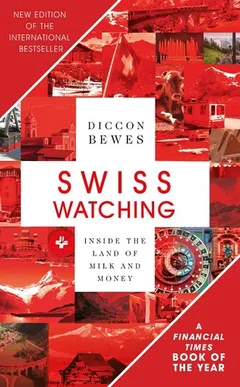 Swiss Watching: Inside the Land of Milk and MoneyExplains the political institutions, public attitudes and banking traditions that sustain Switzerland’s distinctive approach to neutrality.
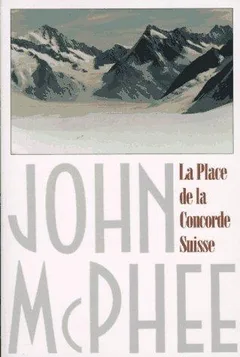 La Place de la Concorde SuisseFollows Swiss reservists during Alpine exercises to show how civilian life, mobilisation and territorial defence underpin armed neutrality.
 The World for Sale: Money, Power, and the Traders Who Barter the Earth’s ResourcesExplains how Swiss commodity-trading houses gained geopolitical influence through dealings with sanctioned states and governments at war.
 Moneyland: The Inside Story of the Crooks and Kleptocrats Who Rule the WorldTraces Swiss banking secrecy and the wider offshore system that lets foreign elites shelter wealth beyond their governments’ reach.
Recommended videos
 14:53How Switzerland Stayed NeutralHow Switzerland’s geography, army and banking let it stay out of the world wars, the architecture the article dissects.
 17:29Can Switzerland Stay Neutral?Recent analysis of the pressures on Swiss neutrality since Russia’s invasion of Ukraine and whether the model can survive.
 4:10What does Switzerland’s neutrality vote mean for NATO and Russia? | DW NewsNews explainer on Switzerland’s 2026 neutrality vote and what it means for its relations with NATO and Russia.
Cite this article
Owen Parker. “How Switzerland stays neutral — the actual legal and military architecture behind it.” Eikleaf, 18 May 2026, updated 2 November 2026. https://www.eikleaf.com/how-switzerland-stays-neutral-the-actual-legal-and-military-architecture-behind-it/
Gen AI Disclaimer
Some contents of this page were generated and/or edited with the help of a Generative AI.
Media
Christian Wasserfallen – Pexels
Key Sources and References
Declaration of the Powers on the Affairs of the Helvetic Confederacy, Vienna, 20 March 1815 (Annex XI A), and Act of Acceptance of the Swiss Diet, 27 May 1815 (Annex XI B), Final Act of the Congress of Vienna.
Act on the Recognition and Guarantee of the Perpetual Neutrality of Switzerland, Paris, 20 November 1815 (full text) — MJP, Université de Perpignan. https://mjp.univ-perp.fr/constit/ch1815n.htm
Neutralität (Neutrality) — Historical Dictionary of Switzerland (HLS), in German. https://hls-dhs-dss.ch/de/articles/016572/2010-11-09/
Fremde Dienste (Foreign military service) — Historical Dictionary of Switzerland (HLS), in German. https://hls-dhs-dss.ch/de/articles/008608/2023-10-31/
Hague Convention V Respecting the Rights and Duties of Neutral Powers and Persons in Case of War on Land, 18 October 1907 — Avalon Project, Yale Law School. https://avalon.law.yale.edu/20th_century/hague05.asp
Federal Constitution of the Swiss Confederation, Articles 173, 184, 185 — Fedlex. https://www.fedlex.admin.ch/filestore/fedlex.data.admin.ch/eli/cc/1999/404/20240303/en/html/fedlex-data-admin-ch-eli-cc-1999-404-20240303-en-html-1.html
Federal Act on the Implementation of International Sanctions (Embargo Act), 22 March 2002.
Ordinance on Measures in Connection with the Situation in Ukraine (SR 946.231.176.72), preamble — text copy. https://lexaris.de/book/version/documentflat/head/223364
Swiss Armed Forces — Federal Department of Defence, Civil Protection and Sport. https://www.vtg.admin.ch/en
Militärdiensttauglichkeit weiterhin konstant bei rund 70 Prozent — Swiss Armed Forces. https://www.vtg.admin.ch/de/newsvtg-militaerdiensttauglichkeit-weiterhin-konstant-bei-rund-70-prozent
Number of Swiss armed forces exceeds specified limit — SWI swissinfo.ch. https://www.swissinfo.ch/eng/swiss-politics/swiss-armed-forces-have-around-147000-personnel/88040089
Small Arms Survey (2018), Civilian Held Firearms Annexe, Switzerland estimate 2017. https://www.smallarmssurvey.org/sites/default/files/resources/SAS-BP-Civilian-held-firearms-annexe.pdf
SIPRI Military Expenditure Database 1949–2025 — Stockholm International Peace Research Institute. https://www.sipri.org/databases/milex
Swiss Parliament approves extra CHF 4 billion for army — SWI swissinfo.ch, 2024. https://www.swissinfo.ch/eng/swiss-politics/4-billion-more-for-the-army-offset-by-other-items/87579804
Swiss parliament approves 2025 budget (1% of GDP for defense by 2032) — SWI swissinfo.ch, December 2024. https://www.swissinfo.ch/eng/swiss-politics/swiss-parliament-approves-2025-budget/88614639
No ammunition to be returned to Swiss households — blue News. https://www.bluewin.ch/en/news/switzerland/no-ammunition-to-be-returned-to-swiss-households-2992976.html
Gun debate sets sights on army ammo — SWI swissinfo.ch, 2007. https://www.swissinfo.ch/eng/gun-debate-sets-sights-on-army-ammo/5838898
Independent Commission of Experts Switzerland — Second World War (Bergier Commission), Switzerland, National Socialism and the Second World War: Final Report, 2002; Commission overview. https://www.uek.ch/en/schlussbericht/synthesis/ueke.pdf · https://www.uek.ch/en/uekinkuerze.htm
Remembering the Second World War – but how? — Swiss National Museum blog, 2026. https://blog.nationalmuseum.ch/en/2026/01/remembering-the-second-world-war-but-how/
Federal Act on Banks and Savings Banks, November 8, 1934 — Swiss Federal Legislation (Fedlex). https://www.fedlex.admin.ch/eli/cc/51/117_121_129/de
Guex, S. (2000), “The Origins of the Swiss Banking Secrecy Law and Its Repercussions for Swiss Federal Policy”, Business History Review 74(2). https://doi.org/10.2307/3116693
Pruska, A. (2015), “U.S.-Swiss Relations in the Context of Swiss Banking Secrecy”, Ad Americam 16. https://journals.akademicka.pl/adamericam/article/view/3205/2855
The Origins of Secret Swiss Bank Accounts — JSTOR Daily. https://daily.jstor.org/origins-secret-swiss-bank-accounts/
Holocaust fund closes another chapter in Swiss wartime past — SWI swissinfo.ch, 2002. https://swissinfo.ch/eng/life-aging/holocaust-fund-closes-another-chapter-in-swiss-wartime-past/2688406
Solidarity Foundation: the road to the vote — SWI swissinfo.ch, 2002; Switzerland referendum, 22 September 2002 — IFES ElectionGuide. https://www.swissinfo.ch/eng/banking-fintech/solidarity-foundation-the-road-to-the-vote/2936992 · https://www.electionguide.org/elections/id/64 · Counter-proposal “Gold for AHV, cantons and foundation”, vote of 22 September 2002 — Swissvotes. https://swissvotes.ch/vote/489.20
Volcker report presents Swiss bank probe result — SWI swissinfo.ch, December 1999. https://www.swissinfo.ch/eng/banking-fintech/volcker-report-presents-swiss-bank-probe-result/1385624
Volcker commission reaches end of the road — SWI swissinfo.ch, 2000. https://www.swissinfo.ch/eng/demographics/volcker-commission-reaches-end-of-the-road/1425876
Swiss Banks Holocaust Settlement — Claims Conference. https://www.claimscon.org/about/history/closed-programs/swiss-banks-settlement/
Twenty years ago: when Swiss banks settled with Holocaust survivors — SWI swissinfo.ch, 2018. https://www.swissinfo.ch/eng/business/twenty-years-ago_when-swiss-banks-settled-with-holocaust-survivors/44315844
Situation in Ukraine: Federal Council decides on further measures to prevent the circumvention of international sanctions — Swiss Federal Council, August 27, 2014. https://www.admin.ch/en/nsb?id=54221
Swiss stance on Russia sanctions divides opinions — SWI swissinfo.ch, August 26, 2014. https://www.swissinfo.ch/eng/politics/swiss-stance-on-russia-sanctions-divides-opinions/40571478
Balancing business and human rights: timeline of 75 years of Swiss-Chinese relations — SWI swissinfo.ch. https://www.swissinfo.ch/eng/swiss-diplomacy/balancing-business-and-human-rights-timeline-of-75-years-of-swiss-chinese-relations/88725809
Switzerland adopts EU sanctions against Russia — Federal Council, February 28, 2022. https://www.admin.ch/gov/en/start/documentation/media-releases.msg-id-87386.html
Switzerland imposes full EU sanctions against Russia — SWI swissinfo.ch, February 28, 2022. https://www.swissinfo.ch/eng/politics/switzerland-imposes-full-eu-sanctions-against-russia/47388280
Public Eye — Russian oil trade: Dubai pulls out all the stops to edge out Switzerland. https://www.publiceye.ch/en/topics/commodities/russian-oil-trade-dubai-pulls-out-all-the-stops-to-edge-out-switzerland
Public Eye — Sanctions on Russian oil: Switzerland’s enforcement refusal leaves its traders to regulate themselves. https://www.publiceye.ch/en/media-corner/press-releases/detail/sanctions-on-russian-oil-switzerlands-enforcement-refusal-leaves-its-traders-to-regulate-themselves
Swiss-owned company’s Russian gold trades expose gap in Western sanctions — SWI swissinfo.ch (Financial Times). https://www.swissinfo.ch/eng/business/swiss-owned-company-s-russian-gold-trades-expose-gap-in-western-sanctions/48441180
Ukraine: Switzerland implements further measures in 14th EU sanctions package — Federal Council, October 16, 2024. https://www.admin.ch/gov/en/start/documentation/media-releases.msg-id-102820.html
No extraterritorial extension of Swiss sanctions — MME, October 17, 2024. https://www.mme.ch/en/magazine/articles/no-extraterritorial-extension-of-swiss-sanctions
Swiss authorities investigate firms dodging Russia sanctions — SWI swissinfo.ch, October 2024. https://www.swissinfo.ch/eng/swiss-authorities-investigate-firms-dodging-russia-sanctions/87753203
Swiss government rejects neutrality initiative — SWI swissinfo.ch, November 27, 2024. https://www.swissinfo.ch/eng/swiss-politics/swiss-government-rejects-neutrality-initiative/88352809
House of Representatives rejects neutrality initiative (128–60) — SWI swissinfo.ch, March 5, 2026. https://www.swissinfo.ch/eng/swiss-politics/swiss-parliament-rejects-neutrality-initiative/91044053
How the neutrality initiative could affect Swiss policy — SWI swissinfo.ch, 2026. https://www.swissinfo.ch/eng/neutrality/how-the-neutrality-initiative-could-affect-swiss-policy/90344837
Neutrality initiative (vote of 27 September 2026) — FDFA. https://www.eda.admin.ch/en/neutrality-initiative-2026
Swiss papers: neutrality vote a “total defeat” for People’s Party — SWI swissinfo.ch, September 28, 2026. https://www.swissinfo.ch/eng/swiss-democracy/swiss-papers-neutrality-vote-a-total-defeat-for-peoples-party/92130615
Package Switzerland-EU (Bilaterals III) — FDFA Europe Division. https://www.europa.eda.admin.ch/en/package-switzerland-eu
Content of the Switzerland-EU package — FDFA Europe Division. https://www.europa.eda.admin.ch/en/content-package-switzerland-eu
Factsheet: Swiss contribution — FDFA Europe Division. https://www.europa.eda.admin.ch/dam/en/sd-web/ct-spg6N7nu4/Schweizer%20Beitrag_EN.pdf