Last updated: · 15 min read
In brief
In Mina, near Mecca, more than 100,000 air-conditioned tents stand empty for all but a few days a year. They exist because Hajj pilgrims cannot take their custom elsewhere: being there on those days is the requirement. Remove the alternatives and the market’s check largely disappears, so prices, investment and the city bend around the peak. Mecca has cleared most of its historic center for pilgrims, and the state that sets the quota also controls the main contractor. Santiago de Compostela is drifting the other way, as more of its record crowds are walkers with other trails to choose.
Contents
The Mina valley lies about six kilometers east of Mecca, hemmed in by bare, rugged ridges. Every year, for a handful of days during the Hajj, it holds more than a million people. The tents are permanent structures: more than 100,000 of them, built from fiberglass coated in Teflon, each equipped with air conditioning, most of them built on a standard 8-by-8-meter module, grouped into walled camps served by kitchens, bathrooms, and plumbing. The camp zone covers about 7.8 square kilometers, of which only 4.8 are flat enough to use; the rest is mountain. The infrastructure is built to accommodate up to three million simultaneous occupants.
For the rest of the year, the tents stand empty. No hotel chain builds rooms for a few days of use, and no convention center that sits vacant for 98 percent of its operating life remains a rational investment.
The Mina tent city exists because the demand that fills it cannot be moved. Pilgrims do not come in those few days because the prices are competitive or because Mina beat some alternative. They come because being there on those specific days is the requirement, and the requirement is non-negotiable.
That’s the economic question the pilgrimage city poses, and conventional tourism theory does not prepare you for it: what happens to prices, investment and the city itself when visitors cannot take their custom elsewhere?
The mechanism
Standard tourism economics runs on substitutability. A traveler who finds Barcelona overpriced in August can go to Lisbon, or wait until October, or skip the trip entirely.
That elasticity disciplines supply: prices that rise too far, or quality that falls too low, translate into fewer visitors, which pushes the price back down. The market, in theory, equilibrates. Remove substitutability entirely and you remove the feedback mechanism with it.
The supplier then faces a demand curve that is, within broad limits, vertical. Raising prices does not send visitors elsewhere, because there is no elsewhere, and the vendor at a captive location charges what the traffic will bear. The limit is money. Cost does turn pilgrims away: Bangladesh filled only about 87,000 of its 127,000 Hajj places in 2025, and officials blamed high airfares.
The Hajj visa quota system shows how this works. Saudi Arabia’s Ministry of Hajj and Umrah allocates permits in proportion to each country’s Muslim population, roughly one per thousand: Indonesia gets 221,000 slots, India about 175,000. The allocation can also be cut at will. Nigeria’s nominal 95,000 was pared back to an operational 50,000 for 2026 after slots went unused the year before. A pilgrim cannot pay to enlarge their country’s quota, because it is fixed bureaucratically; what the system offers is rationed access to a monopoly supplier, and the supplier is a sovereign state.
Inside the quota, there is a market. Accommodation, food and transport are priced and sold, mostly in packages bought along with the permit, and those prices face demand that has already been locked in. The pilgrim who spent years on a waiting list and liquidated savings to get there is not going to turn around over the cost of a hotel room in Mecca.
Hajj sits at one extreme of constrained demand. Other pilgrimages bind more loosely, through custom, family expectation or personal devotion rather than a religious duty. Where each site sits on that spectrum explains the different structures they produce.
Mecca: the infrastructure of compulsion
Mecca’s permanent population is about 2.4 million, as of 2022. The Hajj record was set in 2012, when more than three million pilgrims took part, a peak not approached since. In 2019, the last year before the pandemic, about 2.5 million pilgrims performed Hajj. In 2025, 1.67 million did, the lowest non-pandemic figure in more than three decades, and in 2026, 1.71 million. Those numbers are capped by the permit quota, which sits below demand.
The city, then, must maintain infrastructure for a population that can swell by 70 percent within a few days and that more than doubled in the record year of 2012. The schedule is set by the Islamic lunar calendar rather than by market signals. And the state that manages this both controls access and, since December 2025, owns the primary contractor.
That contractor is Saudi Binladin Group, the company that built the infrastructure of modern Saudi Arabia and has been the main executor of every major Grand Mosque expansion. After a debt-to-equity conversion of about SAR 23 billion in liabilities in December 2025, the Saudi Ministry of Finance owns 86 percent of its parent company, Binladin International Holding Group. The state that sets the quota therefore also controls the contractor.
The redevelopment has not gone unchallenged. Heritage campaigners, journalists, and at least one foreign government have protested specific demolitions for more than two decades. Those objections have rarely changed the outcome: each project is presented as a service to pilgrims, and the building has continued.
The money involved is hard to pin down, because Saudi Arabia does not publish unified accounts for the Hajj economy. The King Abdullah expansion of the Grand Mosque alone was announced at SR80 billion, roughly $21-22 billion at prevailing exchange rates, covering a new building, courtyard expansion, walkways, tunnels and utilities. The broader Mecca redevelopment, with its hotel towers, transport corridors and service infrastructure stretching out from the mosque’s perimeter, comes on top of that and has never been reported as a single total.
The most visible result is the Abraj Al-Bait complex, whose central Mecca Royal Clock Tower is the fourth-tallest building on earth, built on the site of the Ajyad Fortress — an Ottoman citadel demolished by Saudi authorities in January 2002 to clear the land for the development. Turkey’s government condemned it at the time, comparing the demolition to the Taliban’s destruction of the Buddhas of Bamiyan. The Saudi justification was the one given for every demolition decision in Mecca for the past four decades: more space was needed for pilgrims.
Irfan Al-Alawi, director of the Islamic Heritage Research Foundation, has documented the demolitions for years. The Art Newspaper estimated in 2015 that more than 90 percent of the old quarters of Mecca and Medina have been razed. What was the built environment of one of the oldest continuously inhabited cities in the Islamic world has been largely cleared and replaced by infrastructure scaled to periodic peak demand.
Constrained demand, pressed to its extreme, produces a city that optimizes entirely for the days of maximum occupancy and accepts the cost of keeping that capacity empty the rest of the year. From the state’s perspective, that can be economically coherent: with some 1.7 million Hajj pilgrims a year, each spending thousands of dollars in the in-kingdom economy, a few days of guaranteed use can justify the fixed cost of the Mina tent city, though no public accounts show whether it does. What was cleared to make room had not been generating comparable revenue: the Ottoman streetscape and the fortress on the hill.
Vision 2030 extends the logic further. The target is capacity to receive 30 million Umrah pilgrims from abroad each year by 2030; in 2019 there were 8.5 million. Umrah, the lesser pilgrimage, can be made at almost any time of year, with no fixed quota (permits pause only for the weeks around the Hajj), and it is the real engine of the expansion: more pilgrims need more infrastructure, and more of Mecca is cleared to receive them.
The 2015 Hajj disasters

Two catastrophes struck within a single pilgrimage season. On September 11, 2015, a crawler crane operated by Saudi Binladin Group collapsed into the Grand Mosque during construction operations, killing at least 107 people. A Saudi investigative committee blamed a violent storm and found Saudi Binladin Group partly responsible: the crane had been left in a position that violated the manufacturer's operating instructions. King Salman barred the company from new government contracts.

On September 24, 2015, a crowd crush in Mina killed at least 769 people by the Saudi official count, which has never been updated. The Associated Press, tallying the deaths that foreign governments reported country by country, counted at least 2,411, more than three times the official figure. King Salman ordered an investigation into the crush; its findings have never been published.
Kumbh Mela: the paradox of informal scale
The official count for the 2025 Maha Kumbh Mela in Prayagraj, India, is 660 million over 45 days, including about 76 million on the single peak day of Mauni Amavasya, January 29. Uttar Pradesh Chief Minister Yogi Adityanath cited it, and every government communication about the event repeated it.
If accurate, this makes the Kumbh Mela the largest human gathering in recorded history. Over six weeks, that is nearly twice the population of the United States, a comparison Prime Minister Narendra Modi made himself.
The figure almost certainly does not measure what it seems to: the number of different people who came. The Comptroller and Auditor General of India, auditing the 2013 Maha Kumbh at the same site, found that “no scientific criterion/method was adopted for assessing the number of pilgrims/visitors,” and that the same mistakes kept recurring from one mela to the next. The 2025 figure is best read as a count of visits, not visitors: the officer running the mela’s command center acknowledged that the same person could be counted again on each day they came to the ghats. A devotee who bathes on four auspicious days can count as four.
Use 660 million as the base for any model that needs unique visitors, such as spending per pilgrim, and the results are correspondingly inflated. The Confederation of All India Traders estimated total economic transactions at more than ₹3 lakh crore, about $34 billion. What that means per person depends entirely on whether the denominator is 660 million visits or a substantially smaller count of unique individuals, and nobody has that number.
The Uttar Pradesh government’s allocation of about $730 million was earmarked for roads, bridges and sanitation: a railway overbridge, toilets, hospitals and expanded road networks. That money bought coordination, but much of the coordination at the mela was already in place before the state spent any of it.
The 13 Akharas, orders of ascetics with centuries-old precedence rights over bathing times, lead the ceremonial processions to the river on the most auspicious days; in 2025 those processions were renamed from Shahi Snan to Amrit Snan. Their order of precedence is older than the modern Indian state. Refined over generations and arbitrated by their own council, the Akhil Bharatiya Akhara Parishad, it settles who bathes when, and the mela administration and police build the day’s timetable around it.
The informal economy sits on top of what the state did buy. A vendor with a pitch near the bathing ghats on a peak day can have few competitors within practical walking distance, and a pilgrim who has traveled 800 kilometers to be at the river on Mauni Amavasya is unlikely to walk past a chai stall over a few rupees. It is the pricing of the airport newsstand or the stadium concession: where leaving is impractical, the vendor can charge more.
A captive pitch can carry a price of its own. In India’s crowded bazaars, access to one is often bought with an unofficial payment known as hafta. Such payments are by nature undocumented, and no reliable figure exists for how much changed hands at the 2025 mela, or whether anything did.
The Kumbh’s paradox is that this informal layer, the Akharas’ precedence and the ghat vendors with their informal trade, does work the formal infrastructure cannot do on its own. The state’s money bought roads and toilets. It did not buy the social order that tells tens of millions of people where to go and when to bathe. Neither layer, though, could make the peak day safe. Before dawn on Mauni Amavasya, a crush near the Sangam killed at least 30 people by the first official count, later revised to 37. The BBC later found evidence of four separate crushes across Prayagraj that day and verified at least 82 deaths. The Akharas called off their morning procession.
The Kumbh economy runs on institutions the state didn’t build and on informal trade no one has ever measured, while government investment is tied to attendance figures that neither the government nor anyone else can verify.
The counting controversy

The 660 million figure cited by UP Chief Minister Yogi Adityanath has no independent methodological validation. The national auditor's review of the 2013 Maha Kumbh, the last full Kumbh at the same site, found no scientific method behind the count, and the 2025 headline is best read as visits, not visitors. Repeat counting is built into the method, so a model that needs unique visitors cannot start from the headline figure.Santiago de Compostela: when pilgrims have options
The Mina tent city sits empty for all but a few days a year, and the Kumbh grounds clear after 45 days. Pilgrims arrive in Santiago every day of every year, and its old town is built around that steady flow.
In 2025 almost 531,000 pilgrims collected their Compostela certificate, a record; in 2022, the second year of the pandemic-extended Holy Year (Xacobeo), the count was about 438,000. Who is walking, though, has changed.
Santiago has a permanent population of around 100,000. It is Galicia’s regional capital, with a university, government offices, and a functioning urban economy that would survive the closure of the Cathedral. The old town’s economy is a different matter. Rúa do Franco runs from the Cathedral’s Praza do Obradoiro to the Porta Faxeira, and its name recalls the medieval “Franks”, the pilgrims arriving from beyond the Pyrenees. Its taverns grew up serving people who had just finished a pilgrimage, and it is lined end to end with restaurants and bars that students crowd at night. The economic geography of the historic center is organized around the moment of arrival: people at the end of days of walking, with money left and nothing urgent to spend it on.
Pilgrims in 2010 generated an estimated €60-100 million in gross value added in Galicia and roughly 1,400 to 2,200 jobs, most of that activity in retail and travel services. That spending is why the change in who walks the Camino matters more than the headline attendance figures suggest.
By October 2025, nearly 47 percent of the pilgrims registering at Santiago’s Pilgrim’s Welcome Office gave purely religious reasons for their pilgrimage, about a third cited religious alongside other reasons, and about one in five were walking for entirely non-religious purposes; for the year as a whole, diocesan figures put the share walking for religious reasons at about 44 percent. The split sounds majority-religious. For the economics, though, the distinction that matters is between captive and substitutable demand. The pilgrim who walks the Camino Francés because she is completing a personal challenge she could equally have found on the GR10 across the Pyrenees or the Tour du Mont Blanc is a consumer with alternatives. She arrived in Santiago because the Camino appealed to her in a comparison with other options. The pilgrim who walks out of devotion to St. James, for whom Santiago is the pilgrimage, is not making that comparison, and another trail would not do instead.
Much of the Camino’s growth over the past two decades came as the route opened itself to the challenge-tourism market. Routes were mapped, waymarked, and promoted to a global audience that had no particular stake in St. James. That market is real and large, and it helped carry Santiago’s pilgrim numbers past half a million a year, up from about 350,000 as recently as 2019. The more of that traffic comes from walkers with alternatives, the more the Camino’s demand responds to price and to competing trails, as a city break’s does.
Holy Years, which fall at irregular intervals, complicate the picture. During Holy Years, the Cathedral’s Holy Door (Porta Santa) is open, and the Church grants a plenary indulgence to those who visit the Apostle’s tomb and meet the usual conditions of prayer, confession, and communion, a religious incentive tied to the calendar rather than to the walk. Holy Years have historically produced spikes: 2022, the extended Xacobeo, drew about 90,000 more pilgrims than 2019, the last normal year before the pandemic. But the ordinary years since have beaten it, with close to 500,000 in 2024 and the record in 2025. A Holy Year still adds a religious reason to come on top of the trend, and an old-town economy that depends on pilgrims can plan around it; how large that boost is cannot be read from totals the pandemic distorted.
Holy Year mathematics

A Xacobeo year is declared when July 25, the feast of St. James, falls on a Sunday. Its timing is calendar arithmetic: the structure of the Gregorian calendar decides when it recurs, and the Church has stretched one into a second year only in exceptional circumstances, most recently in the pandemic. The years come irregularly: 2010, 2021 (extended to 2022), 2027, then 2032 and 2038. For a city whose major infrastructure investment decisions, tourism campaigns, and hostel capacity plans are calibrated around this cycle, the planning horizon is set by a calendar rule no one can adjust.
What the mechanism reveals
Return to Mina in the off-season. The tents stand empty: capacity for three million people in a valley with no pilgrims in it.
The infrastructure is purpose-built and will be used, so this is not waste in the ordinary sense. It does show an economy working by unusual investment logic. A conventional tourism asset used a few days a year would struggle to pass a rate-of-return test; you build permanent infrastructure for a few days of use per year only when those days of demand are guaranteed, at scale, and the builder can carry the cost the rest of the year.
India is now formalizing the infrastructure around a coordination system it didn’t build and cannot replicate. The UP government’s investment in Prayagraj is permanent: bridges, roads, and sanitation that serve the city between Kumbhs. That’s the difference from Mecca. The Saudi state controls access and owns most of the main contractor’s parent company; the Indian state is buying into a system whose bathing days are still ordered by the Akharas’ precedence. The headline figures do not say who captures the economic surplus from 2025’s attendance, whether the state, the formal operators, the informal ghat vendors or the Akharas themselves.
The Camino de Santiago is now one of the world’s most recognizable long-distance walking brands, and the brand reaches well beyond Catholicism. Trail runners, backpackers, secular seekers and people in the middle of some life transition who needed the route to hand them a structure now walk the same stones and sleep in the same hostels as the pilgrims.
But a growing share of the Camino’s economy rests on the spending of people who, confronted with a closed Pilgrim’s Office or an equally appealing alternative route, would make a different choice. An old town built for customers who had no substitute now serves more and more who do.
Mecca faces little of that risk: sovereign control of a single sacred site and a religious duty combine into a constraint tight enough that the demand curve stays close to vertical, bending only where cost puts the journey out of reach. Sustaining it has meant clearing most of the historic city around the Grand Mosque.
In India, the Kumbh’s social architecture predates the state, while its formalization is recent. The political incentives to inflate attendance figures are growing faster than the methodology to verify them, and public spending is being justified by figures nobody has checked.
Mina’s tents can stand empty most of the year because they were built for a few days of guaranteed occupation. The restaurants and bars of Santiago’s old town have no such guarantee, and may someday need to justify themselves on ordinary economic terms.
Related articles
- Why so many of the world’s fastest-growing cities are in one region
- What Saudi Arabia’s military spending cannot guarantee
- The economics of trust: what happens to a society when the thing that makes markets work starts to disappear
Further reading
As an Amazon Associate, Eikleaf earns from qualifying purchases. The book links below are affiliate links: if you buy through them, we may earn a small commission at no extra cost to you.
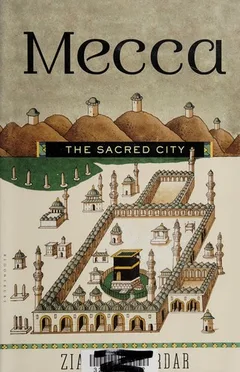 Mecca: The Sacred CityExplains how pilgrimage income and Saudi redevelopment transformed Mecca’s streets, historic buildings, hotels and shopping infrastructure.
 Overbooked: The Exploding Business of Travel and TourismShows how mass arrivals reshape host economies, public infrastructure, housing and heritage, providing a broader comparison for pilgrimage cities.
 Pilgrimage: Journeys of MeaningCompares Mecca, the Kumbh Mela and Santiago, helping explain the religious and secular motivations behind their visitor demand.
 The Last Resort: A Chronicle of Paradise, Profit, and Peril at the BeachProvides a comparison with resort economies, tracing how concentrated visitor spending drives construction, local inequality and economic dependence.
Recommended videos
 16:13Is the Hajj becoming too commercial? | DW NewsExamines rising Hajj costs and Saudi Arabia’s commercial push around Mecca.
 24:20Maha Kumbh Mela: Understanding The Economics Of Snaan, Daan & Bhagwaan | KumbhonomicsIndian business channel on the economics of the 2025 Maha Kumbh Mela: spending, infrastructure and local business.
 30:38Overtourism on the Camino | ARTE.tv CultureARTE report on how growing pilgrim numbers are straining towns along the Camino de Santiago.
Cite this article
Lena Martin. “The economics of pilgrimage: what happens to a city when millions arrive at once.” Eikleaf, 20 May 2026, updated 2 November 2026. https://www.eikleaf.com/the-economics-of-pilgrimage-what-happens-to-a-city-when-millions-arrive-at-once/
Gen AI Disclaimer
Some contents of this page were generated and/or edited with the help of a Generative AI.
Media
Key Sources and References
Saudi Press Agency. “Advanced Mina Tents Equipped with Highest Safety Standards, Integrated Services for Hajj Pilgrims.” SPA. 2024. https://spa.gov.sa/en/N2123834
Arab News. “ThePlace: Mina, the valley of the Pilgrims.” 2018. https://www.arabnews.com/saudi-arabia/theplace-mina-the-valley-of-the-pilgrims-1361536
Arab News. “Saudi interior minister meets Hajj officials from Iran, Indonesia and Egypt as pilgrim arrivals accelerate” (Indonesia’s quota of 221,000). May 2026. https://www.arabnews.com/saudi-arabia/saudi-interior-minister-meets-hajj-officials-from-iran-indonesia-and-egypt-as-pilgrim-arrivals-accelerate-2644395
The Hitavada. “India’s Haj quota fixed at 175,025 for 2026.” November 11, 2025. https://www.thehitavada.com/Encyc/2025/11/11/indias-haj-quota-fixed-at-175025-for-2026.html
Arab News Pakistan. “Pakistan seeks increase in Hajj quota in line with population.” January 15, 2026. https://www.arabnews.pk/pakistan/pakistan-seeks-increase-in-hajj-quota-in-line-with-population-2629377
Voice of Nigeria. “Nigerian pilgrims form major contingent at 1447 AH Hajj.” 2026. https://von.gov.ng/nigerian-pilgrims-form-major-contingent-at-1447-ah-hajj/
Arab News. “Bangladesh reduces Hajj package fee after failure to fill quota.” September 29, 2025. https://www.arabnews.com/node/2617165
City Population. “Makkah (Mecca)” — population at the Saudi census of May 10, 2022. https://citypopulation.de/en/saudiarabia/makkah/
General Authority for Statistics, Saudi Arabia (GASTAT). “Hajj Statistics 2026-1447 AH.” 2026. https://www.stats.gov.sa/documents/d/guest/hajj-report-1447h-en
General Authority for Statistics, Saudi Arabia (GASTAT). “Total number of pilgrims performing Hajj 1446H (2025) reaches 1,673,230.” 2025. https://www.stats.gov.sa/en/w/news/49
General Authority for Statistics, Saudi Arabia (GASTAT). “Hajj Statistics.” Historical Hajj pilgrim data. https://www.stats.gov.sa/en/w/hajj-statistics
Khaleej Times / AFP. “Hajj pilgrim turnout lowest in 3 decades, excluding Covid years.” June 2025. https://www.khaleejtimes.com/world/gulf/hajj-pilgrim-turnout-lowest-in-30-years
Al Arabiya English. “Hajj 2024 in numbers: Annual pilgrimage draws over 1.83 mln worshipers.” June 2024. https://english.alarabiya.net/News/saudi-arabia/2024/06/16/hajj-2024-in-numbers-annual-pilgrimage-draws-over-1-83-mln-worshipers-
Salaam Gateway. “Saudi receives 1.67 million pilgrims for Hajj 2025.” 2025. https://salaamgateway.com/story/saudi-receives-167-million-pilgrims-for-hajj-2025
Arab News. “King Abdullah launches SR80 billion Haram expansion project.” Arab News. 2011. https://www.arabnews.com/node/388203
Arab News. “Saudi Finance Ministry acquires 86% stake in Binladin Group through debt-to-equity conversion.” Arab News. December 2025. https://www.arabnews.com/node/2627743/business-economy
Zawya. “Saudi ministry takes 86% stake in Binladin Group after debt settlement.” January 5, 2026. https://www.zawya.com/en/capital-markets/equities/saudi-ministry-takes-86-stake-in-binladin-group-after-debt-settlement-371355
Binladin International Holding Group. “History.” Accessed October 14, 2026. https://www.bihg.sa/history/
CNN. “Crane collapse kills 107 people at mosque in Mecca days before Hajj.” September 12, 2015. https://www.cnn.com/2015/09/12/middleeast/saudi-arabia-mecca-crane-collapse
Construction Dive. “Saudi officials: Binladin construction firm bears ‘partial responsibility’ for Mecca crane collapse.” September 16, 2015. https://www.constructiondive.com/news/saudi-officials-binladin-construction-firm-bears-partial-responsibility/405650/
Associated Press, via The Philadelphia Inquirer. “Hajj stampede deaths at 2,411.” December 11, 2015. https://www.inquirer.com/philly/news/nation_world/20151211_Hajj_stampede_deaths_at_2_411.html
Times of Israel. “Hajj stampede death toll tops 2,400, hundreds missing.” December 2015. https://www.timesofisrael.com/hajj-stampede-death-toll-tops-2400-hundreds-missing/
World Socialist Web Site. “Saudi government demolishes historic Ottoman castle.” January 28, 2002. https://www.wsws.org/en/articles/2002/01/fort-j28.html
Encyclopædia Britannica. “Abraj al-Bayt.” https://www.britannica.com/topic/Abraj-al-Bayt
Art Newspaper. “Why is Saudi Arabia destroying the cultural heritage of Mecca and Medina?” November 2015. https://www.theartnewspaper.com/2015/11/19/why-is-saudi-arabia-destroying-the-cultural-heritage-of-mecca-and-medina
Middle East Eye. “Saudi ‘cultural vandalism’ of Muslim heritage continues.” 2015. https://www.middleeasteye.net/features/saudi-cultural-vandalism-muslim-heritage-continues
Pilgrim Experience Program (Saudi Vision 2030). “About the Program.” https://pep.gov.sa/en/about
Pilgrim Experience Program. “Interior Ministry Announces Hajj 1447 AH Arrangements to Ensure Pilgrim Safety.” April 12, 2026. https://pep.gov.sa/en/news/926
DD News. “Mahakumbh 2025 concludes, attracting over 660 million visitors.” February 27, 2025. https://ddnews.gov.in/en/mahakumbh-2025-concludes-attracting-over-660-million-visitors/
IANS. “As Maha Kumbh nears one month, over 1.44 crore devotees take dip in Sangam daily.” February 10, 2025. https://ianslive.in/as-maha-kumbh-nears-one-month-over-144-crore-devotees-take-dip-in-sangam-daily–20250210172103
The Wire. “66 Crore Visitors, 30 Dead in Stampede, Why Govt’s Maha Kumbh Numbers Don’t Add Up.” The Wire. 2025. https://m.thewire.in/article/government/66-crore-visitors-30-dead-in-stampede-why-govts-maha-kumbh-numbers-dont-add-up
Comptroller and Auditor General of India. Report No. 3 of 2014: Performance Audit of Maha Kumbh Mela 2013 (Uttar Pradesh). 2014. https://cag.gov.in/en/audit-report/details/9271
IANS. “45-day Maha Kumbh generates over Rs 3 lakh crore, boosts state’s economy.” February 27, 2025. https://ianslive.in/45-day-maha-kumbh-generates-over-rs-3-lakh-crore-boosts-states-economy–20250227095704
Dr. Syama Prasad Mookerjee Research Foundation. “Case Study: Economic and Digital Impact of Maha Kumbh on Uttar Pradesh’s Economy.” 2025. https://spmrf.org/case-study-economic-and-digital-impact-of-maha-kumbh-on-uttar-pradeshs-economy-and-role-of-the-unsung-heroes/
Business Standard. “Mahakumbh 2025: Amrit Snan on Makar Sankranti as devotees gather at Triveni Sangam.” January 2025. https://www.business-standard.com/india-news/mahakumbh-2025-amrit-snan-sankranti-devotees-gather-triveni-sangam-125011400180_1.html
The Tribune / PTI. “Akharas call off Mauni Amavasya Amrit Snan after near-stampede at Maha Kumbh.” January 29, 2025. https://www.tribuneindia.com/news/india/akharas-call-off-mauni-amavasya-amrit-snan-after-near-stampede-at-maha-kumbh-mahant-ravindra-puri
Scroll.in. “Maha Kumbh stampede: Opposition accuses UP government of hiding actual toll, cites BBC report.” 2025. https://scroll.in/latest/1083388/maha-kumbh-stampede-opposition-accuses-up-government-of-hiding-actual-toll-cites-bbc-report
BBC News. “BBC investigation reveals hidden deaths at India festival crush.” June 30, 2025. https://www.bbc.com/news/articles/cr5v2my4mz9o
Pilgrimaps. “Camino de Santiago: a new peak in pilgrim numbers.” 2026. https://www.pilgrimaps.com/camino-de-santiago-a-new-peak-in-pilgrim-numbers/
Follow the Camino. “Camino Statistics for 2025: The Year a Pilgrimage Confirmed Its Global Dimension.” 2026. https://followthecamino.com/en/camino-statistics-for-2025-the-year-a-pilgrimage-confirmed-its-global-dimension/
Pilgrim’s Welcome Office, Cathedral of Santiago. Statistics page. https://oficinadelperegrino.com/en/statistics/
EWTN Noticias / ACI Prensa. “El peregrino 500.000 a Santiago de Compostela del año 2025 fue un colombiano.” 2025. https://www.ewtnnews.com/es/mundo/espana/el-peregrino-500000-a-santiago-de-compostela-del-ano-2025-fue-un-colombiano
Arzobispado de Oviedo. “La Iglesia debe trabajar por mantener el carácter espiritual del Camino de Santiago.” July 24, 2026. https://iglesiadeasturias.org/la-iglesia-debe-trabajar-por-mantener-el-caracter-espiritual-del-camino-de-santiago/
Vivecamino. “The Camino de Santiago in 2022: How many pilgrims walked it?” 2023. https://vivecamino.com/en/the-camino-de-santiago-in-2022-how-may-pilgrims-walked-it-no-812/
Instituto Nacional de Estadística (INE). “Población por municipios: Santiago de Compostela” (table 2868). 2025. https://www.ine.es/jaxiT3/Tabla.htm?t=2868
Pilgrim.es. “Rúa do Franco.” https://www.pilgrim.es/santiago-de-compostela/rua-do-franco/
Graave, E.J.E., Klijs, J., and Heijman, W. “The Economic Impact of Pilgrimage: An economic impact analysis of pilgrimage expenditures in Galicia.” International Journal of Religious Tourism and Pilgrimage, Vol. 5, Issue 3 (2018). doi:10.21427/D7DD83. https://arrow.tudublin.ie/ijrtp/vol5/iss3/7/
Pilgrim.es. “Xacobeo 2027.” https://www.pilgrim.es/en/xacobeo-2027/
Gronze. “Ampliación a 2022 del Año Santo: ¿qué hay detrás?” https://www.gronze.com/articulos/ampliacion-2022-ano-santo-que-hay-detras-21272