The diamond market is built on manufactured scarcity, engineered culture and, where necessary, blood.
The Jeweler’s Offer
Suppose you try to sell a ring back. The woman behind the counter looks at it for about four seconds. It is a round brilliant, 1.2 carats, VS2 clarity, set in platinum. The receipt from three years ago says $8,400. She sets it back on the glass counter and tells you she can offer $900, maybe $950 if you can wait a few weeks. She is not trying to cheat you.
You can walk out and try five more stores, or an online resale platform. Unless you are very lucky, very patient, or know someone in the trade, you will usually be offered far less than you paid for a stone that was sold to you, perhaps sincerely and perhaps with real affection, as a store of value, a symbol of permanence, an investment in love. The gap between what you paid and what you can get was built into the market on purpose.
What You Are Buying
A diamond is carbon. Specifically, it is carbon atoms arranged in a crystal lattice under extreme heat and pressure, typically 150 to 200 kilometers beneath the Earth’s surface, mostly between one and three and a half billion years ago. It is the hardest natural substance on Earth. It refracts light with unusual efficiency, which produces the sparkle that has transfixed humans across cultures for thousands of years.
None of that, by itself, determines scarcity. Diamond as a material is not rare: most of what mines recover is industrial or near-gem material, and the industrial market is now supplied almost entirely by synthetic stone. Gem-quality diamonds are less common, since only a fraction of recovered rough meets the clarity, color, cut and size thresholds demanded by jewelry markets. That fraction is real; what producers manage is the degree of scarcity in the gem segment. Global output, roughly 110 to 130 million carats a year in the early 2020s and under 100 million in 2025, when producers cut output in the face of weak prices, reflects what the industry chooses to extract and sell, not only what the ground contains. How many gem-quality diamonds reach market in a given year is a business decision, made by a small number of companies with a shared interest in keeping supply tight.
What makes a gem diamond economically valuable is the story attached to it. You are paying for a narrative about love, permanence, status and worth, one constructed deliberately, in boardrooms and advertising agencies, beginning in the late 1930s.
The 4Cs: Real Properties, Artificial Thresholds

The Gemological Institute of America's 4C grading system of cut, color, clarity and carat describes real physical properties of real stones. The problem is in how those grades translate to price. A color grade of D versus E, both in GIA’s ‘colorless’ range, represents a difference that is invisible to the untrained eye and subtle even to a trained grader comparing master stones, yet it can command a substantial price premium. Similarly, VS1 and VS2 clarity grades both mean very slightly included: the inclusions are assessed under 10x magnification and are almost never visible to the naked eye. The consumer paying a premium for these distinctions is paying for a difference they cannot see, recorded on a laboratory certificate. The industry profits from the precision of its grading because that precision sorts stones into price tiers the buyer cannot verify without specialized equipment.
What It Costs: The Numbers
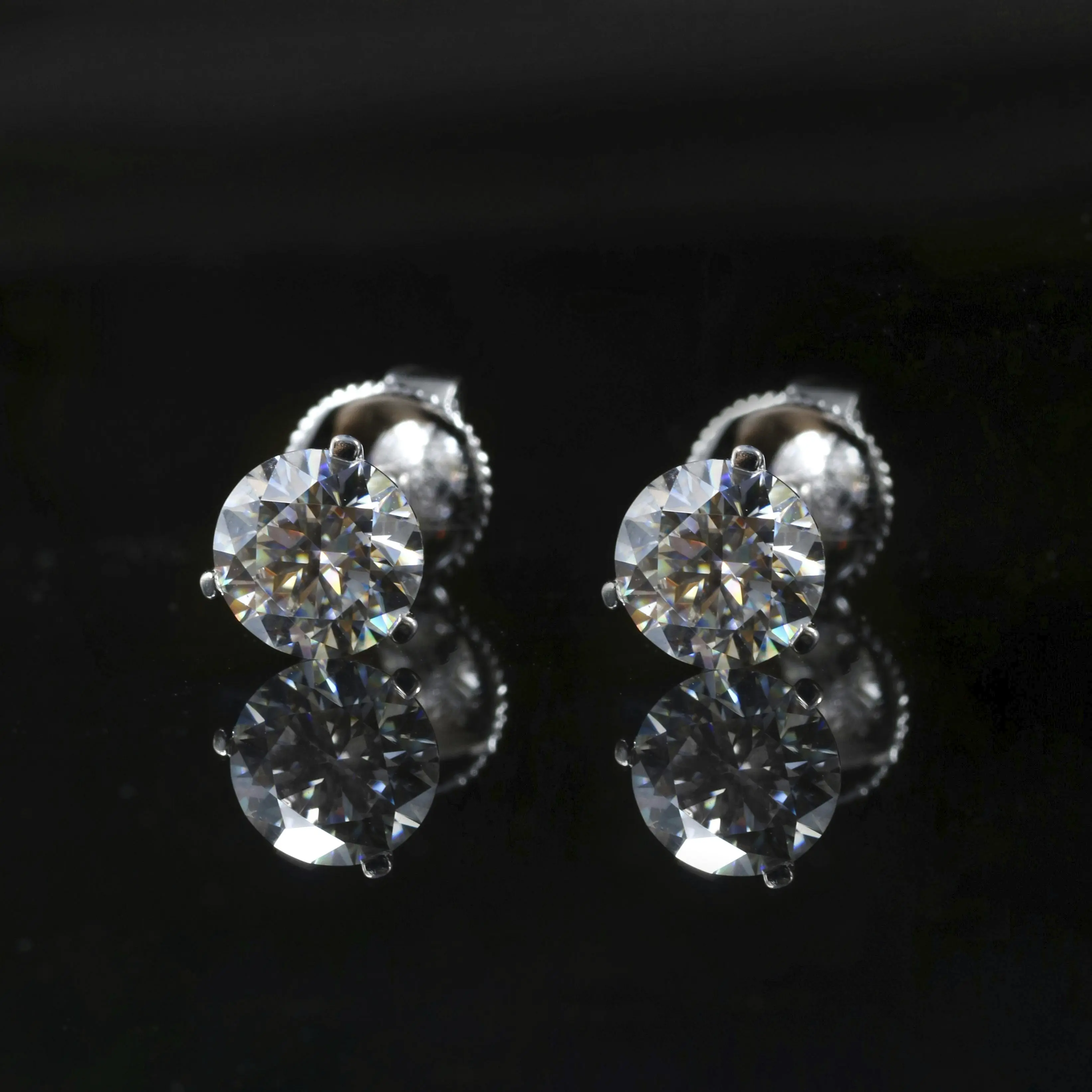
The question has a rough numerical answer. Take a typical natural-diamond engagement ring: a round brilliant of about one carat, in the G–H color and VS–SI clarity range, in a simple gold or platinum solitaire. Among US couples married in 2025, those who chose a natural diamond spent about $7,000 on the ring on average, while the average across all engagement rings, most of them now lab-grown, was $4,600. The table below breaks down an illustrative $7,500 natural-diamond ring. Only some stages can be anchored to published figures; the others are estimates, and the last row is what is left over.
| Cost component | Illustrative amount | Share of $7,500 | Basis |
| Mining the rough (average operating cost) | $300 | 4.0% | De Beers unit cost of about $75 per carat (2023) × about 4 carats of run-of-mine rough per polished gem carat (estimate) |
| Cutting and polishing | $100 | 1.3% | De Beers data for 2013: $10–50 per carat in India, $60–150 in southern African centers (generous estimate for a one-carat stone) |
| GIA grading report with laser inscription | $134 | 1.8% | GIA US fee schedule, 2026 ($119 + $15) |
| Retailer’s markup * | $3,750 | 50.0% | Traditional ‘keystone’ (cost-doubling) markup; actual markups vary |
| Everything else: the miner’s capital costs, royalties, overheads and margin; cutters’, traders’ and manufacturers’ margins; the metal setting; insurance and logistics | $3,216 | 42.9% | Remainder ($7,500 minus the rows above); not separately observable |
| Consumer pays | $7,500 | 100% |
* The retailer’s markup is the difference between what the store pays for the ring and what it charges. Out of it come rent, staff, security, insurance, marketing and the cost of financing stock, and then profit. For comparison, Signet Jewelers, the largest US jewelry chain, reports a gross margin of about 40 percent of sales. Because that figure is struck after store occupancy and distribution costs, Signet’s markup over the merchandise itself is higher.
The mining cost: $300
De Beers guided to an operating cost of about $75 per recovered carat for 2023 (the actual figure was $71), and sold its rough that year for an average of $147 a carat. Both are averages across all qualities, including near-gem and industrial material. Allowing for roughly half the weight being lost in cutting and for the large share of recovered rough that is not gem quality, a fair estimate is that about four carats of average rough are mined for every polished gem carat — roughly $300 of mining cost. Rough good enough for a one-carat G–H, VS–SI stone sells for far more than the $147 average, so the miner’s margin on this particular stone cannot be read from De Beers’ accounts.
That margin has also shrunk sharply: De Beers’ average realized price fell to $105 a carat in the first half of 2026, and the company reported an underlying EBITDA loss of $511 million for 2025.
The miner’s margin, however, does not capture De Beers’ full influence on the retail price. For most of the twentieth century De Beers controlled the large majority of the world’s rough supply and spent heavily to create demand, and the $7,500 price level rests on market conditions it built. What the same stone would cost in a fully competitive market is unknowable, since no such market has ever existed, but on the estimates in the table the physical inputs of mining, cutting and grading come to well under $1,000. Every other number in the table sits on top of a price level that the cartel era established.
The polisher’s wage
In 2013 cutting and polishing cost $10 to $50 per carat in India, against $60 to $150 in southern African centers such as Botswana, Namibia and South Africa. The wage paid to the individual polisher is only part of that cost. India’s cost advantage is a large part of why India, chiefly Surat, now cuts and polishes around 90 percent of the world’s diamonds by volume, though many large, high-value stones are still cut elsewhere. The factory owner keeps what is left of the factory’s price after wages and overheads. The polisher receives only a small fraction of what the finished ring sells for.
The retailer’s share
The jewelry store’s share is the largest single slice of the price. Under a traditional keystone markup the store charges about double what it paid and keeps roughly half the price, around $3,750 on a $7,500 ring, though actual markups vary widely. Much of what the store pays out of that is fixed: rent, staff and security cost the same whether it sells one stone that month or twenty, and profit is what remains. Signet Jewelers, the biggest US chain, has reported operating margins of between about 2 and 12 percent of sales in recent years. Inventory also moves slowly: even Signet holds roughly five to six months of stock, and individual natural stones at smaller jewelers can sit for a year or more, accumulating carrying costs. What the breakdown does convey is the ratio that matters: on these estimates, the physical costs of mining, cutting and grading the stone come to only a few hundred dollars. Almost everything else is captured along the chain — by the miner, the traders and manufacturers, and the retailer who ties the stone to an emotion.
The Same Purchase, Two Prices

US couples married in 2025 who chose a natural diamond spent about $7,000 on the engagement ring on average, for an average center stone of about 1.6 carats. Couples who chose lab-grown, 61 percent of all engagement rings, spent about $4,300 for an average 2.0-carat stone. A lab-grown diamond is essentially the same material as a mined one, and carat for carat it retailed for roughly 70 to 90 percent less in early-2024 analyst estimates; lab-grown prices have kept falling since. The price difference is overwhelmingly the story: the geological history, the scarcity narrative, the marketing. If you buy the natural stone knowing this, you are making a considered choice about what you value. If you buy it believing the price reflects the stone's intrinsic properties, you are paying for a fiction.
De Beers: How the Cartel Held
The scarcity behind diamond prices has been maintained by a supply cartel that held its position through economic warfare, political manipulation, the co-option of states and, in its earliest decades, physical violence and imprisonment.
Cecil Rhodes arrived in Kimberley in 1871 at eighteen years old. Over the next two decades, with backing from Alfred Beit and the Rothschild bank, and through legal maneuvering, share acquisitions and relentless pressure on rivals, he consolidated the Kimberley mines into a single company and came to control some 90 percent of the world’s diamond output. De Beers Consolidated Mines was formed in 1888. The point of the amalgamation was to end competition between producers and keep supply in line with demand.
The mechanism for maintaining control was simple and ruthless: sell through De Beers or face its stockpile. The company held vast reserves of rough diamonds sorted by size and quality, which gave it the ability to flood world markets should its control be threatened. The best-known test came in 1981, when Zaire stopped selling its industrial-grade diamonds through the single-channel Central Selling Organisation. De Beers flooded the market with industrial diamonds from its stockpile, prices for Zairian goods collapsed, and by 1983 Zaire was back, on far less favorable terms than before.
The ‘sightholder’ system turned this power into ritual. A few hundred approved buyers, fewer than 200 by the 1990s, were summoned to London about ten times a year. Each was handed a box of rough diamonds chosen by De Beers, at a price set by De Beers. The buyer could look, but could not pick the stones or haggle: the box was taken whole or refused, and buyers who refused risked not being invited back. Losing your place, in an industry where De Beers controlled 80 to 90 percent of global rough supply for most of the twentieth century, could mean your business was finished.
De Beers was indicted in the United States in 1994 for conspiring with General Electric to fix the price of industrial diamonds. GE was tried and acquitted. De Beers, with no US presence, stayed beyond the court’s reach, and for a decade its executives risked arrest if they traveled to the United States. It pleaded guilty in July 2004 and paid a $10 million criminal fine, small beside its 2003 sales of about $5.5 billion. Separately, De Beers settled a civil class action, without admitting wrongdoing, by agreeing to pay $295 million to US buyers of diamonds purchased between the mid-1990s and March 2006; the deal was approved in 2008. The plaintiffs had alleged decades of price-fixing. No one went to prison, and the Oppenheimer family’s fortune remained intact.
During World War II, De Beers restricted American access to industrial diamonds required for precision manufacturing and weapons production. The United States needed them and could not obtain sufficient quantities because De Beers feared that a post-war US military stockpile, once demobilized, would be sold onto the open market and depress prices. The journalist Janine Roberts writes that former CIA Director Admiral Stansfield Turner later made the same charge. The Michigan State economist Walter Adams called De Beers’ wartime conduct ‘truly shameful.’ De Beers eventually released more supply, but only under arrangements that kept the company in control, including placing the supply organization in Canada.
The Compound System

The closed compound system that De Beers introduced at Kimberley in 1885–86 was, in effect, a prison run by a corporation. The compound held approximately 3,000 Black workers within a 25-acre enclosure surrounded by a 12-foot wall of brick and corrugated iron, with netting over the entire structure to prevent diamonds being thrown out. Workers lived under contract for periods of three to six months. They could not leave without permission, women could not enter, and family visits were prohibited. Workers finishing their contracts were stripped, washed and searched before they were permitted to leave, and discharged men were confined for several days so that any swallowed diamonds would pass through their bodies. In 1885, De Beers became the first private company in South Africa to employ convict labor, and it built a company-operated branch prison on its own property. The closed compound became a model for the migrant-labor compounds and hostels later used across South African mining.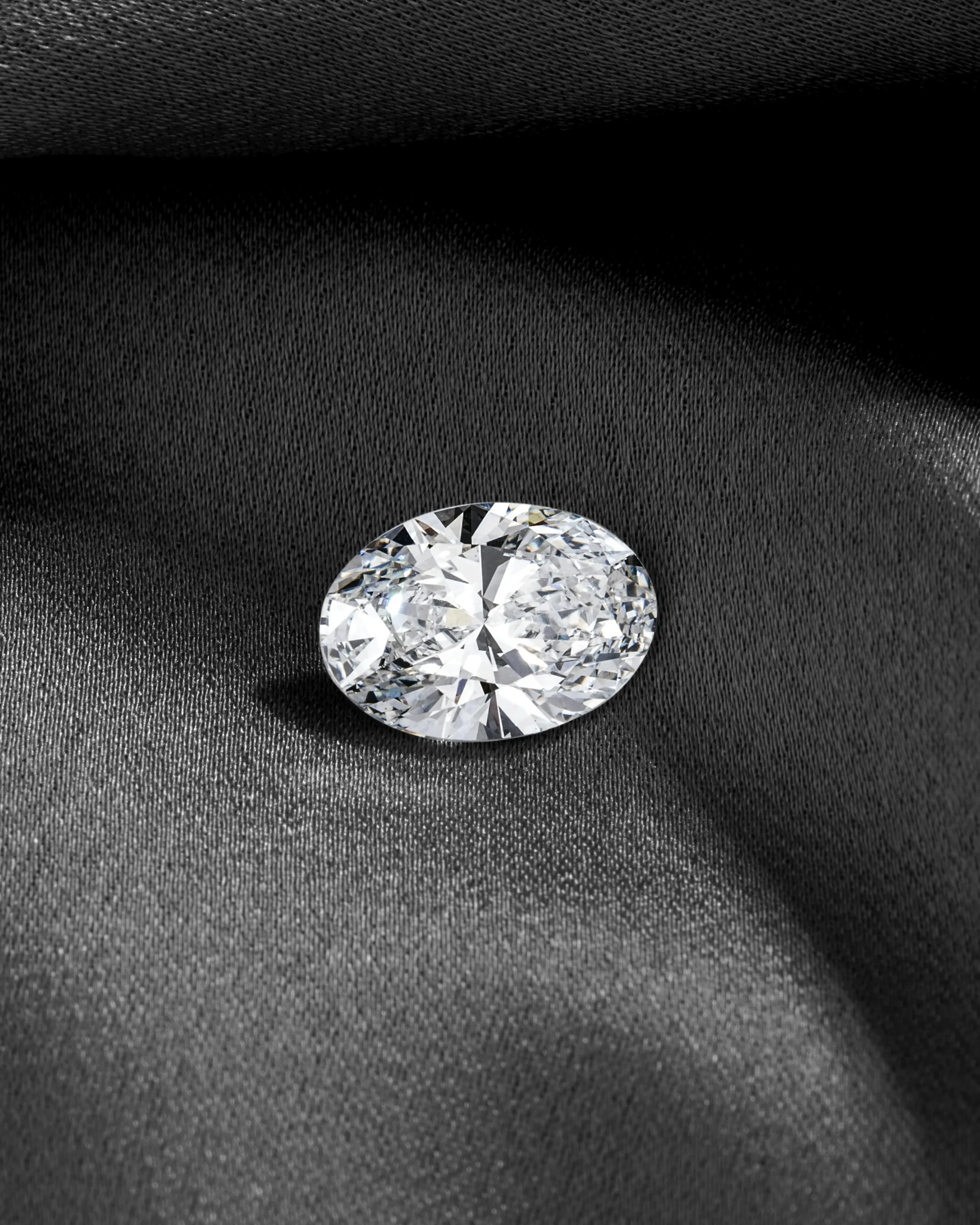
Manufacturing a Tradition
In 1938, De Beers had a problem. American diamond sales had slumped through the Depression and the company was sitting on a large stockpile of unsold rough. Its chairman, Ernest Oppenheimer, had held the post since 1929, having won it, the financial writer Albert Alletzhauser says, partly by threatening to flood the market unless the board gave it to him. He needed a way to create demand.
He hired an advertising agency. The Philadelphia firm N.W. Ayer & Son was retained by De Beers in 1938 with a specific brief: make Americans see a diamond engagement ring as a necessity. The agency set itself the goal ‘to create a situation where almost every person pledging marriage feels compelled to acquire a diamond engagement ring.’
It worked: the campaign is widely cited as one of the most effective demand-creation efforts in commercial history. Before the Second World War only about one American engagement ring in ten contained a diamond; by the late twentieth century roughly eight in ten did. The slogan ‘A Diamond is Forever,’ written by Ayer copywriter Frances Gerety in 1947, was named the best advertising slogan of the twentieth century by Advertising Age in 1999.
The slogan also carried a commercial instruction: keep the diamond. A stone that stays in a family never enters the secondary market and never competes with new ones, which kept prices high and the cartel’s stockpile necessary.
The campaign was subsequently deployed globally. Japan is the most instructive case. In 1967, when De Beers and its agency J. Walter Thompson began marketing diamond rings in Japan, about 5 percent of Japanese brides received a diamond engagement ring. The campaign presented diamond rings as a sign of modern Western values and romantic seriousness. By 1981, the figure had risen to 60 percent. As a mass custom, the diamond engagement ring in Japan is less than sixty years old, and it was built by a South African mining company working through an American advertising agency.
De Beers did not discover the two-months-salary rule, the idea that an engagement ring should cost two months of the giver’s income. Its early advertising suggested one month’s salary as the appropriate spend. In the 1980s its advertisements raised the benchmark to two months, asking: ‘How else could two months’ salary last forever?’ The rule took hold in American culture so effectively that it is still repeated today as if it reflected some independent standard of romantic sincerity.
The Engagement Ring Before 1938

Diamond engagement rings existed before the De Beers campaign and had become fashionable among the well-off around the turn of the century, but they were far from standard practice. Engagement rings, where given at all, were often set with sapphires, rubies, emeralds, or semi-precious stones. The diamond engagement ring was a luxury of the wealthy, and the middle class did not expect one. De Beers and N.W. Ayer & Son turned it into a mass custom, with pricing norms, ritual significance and guilt for men who could not or would not comply. Through advertising, not buying a diamond ring became a statement about the quality of your love.
The Resale Trap
The jeweler’s $900 offer for an $8,400 ring is the ordinary outcome of a resale market that is structurally suppressed.
Unlike gold, silver, platinum, or nearly any other precious material, diamonds have no standardized commodity market. There is no exchange where stones trade at a single public price the way gold does; the trade’s price lists and dealer networks quote asking prices, and they are not open to consumers. A diamond’s value at any given moment is whatever a willing buyer and seller agree on, in a transaction where the seller almost always has less information and less leverage than the buyer.
Gold trades at a published spot price. Sell your gold ring and you will receive close to the metal’s market value, minus the jeweler’s margin. Sell a diamond of equivalent retail purchase price and you will typically be offered substantially less than you paid. The diamond has not degraded. The retail price you paid was never the stone’s resale value: it covered the retail chain’s costs and margins and the mythology attached to the stone, and none of that survives the trip back across the counter.
The secondary market’s suppression serves the primary market perfectly. If diamonds could be resold at close to their purchase price, every diamond ever sold would compete with new ones, prices would fall, and managed scarcity could not survive millions of resale stones entering the market. Instead, the ‘A Diamond is Forever’ campaign gave people a cultural reason never to sell.
The resale trap has a second side, which has to do with timing and has been plain since 2022. Polished diamond prices move with the Rapaport benchmark, which in turn responds to rough supply and demand. Natural diamond prices peaked in 2021 to 2022 as post-pandemic consumer spending surged and supply chains remained constrained. From that peak through the end of 2024, asking prices for one-carat natural polished diamonds fell by more than 40 percent on Rapaport’s index, and they fell roughly another 10 percent in 2025. A consumer who paid a 2022 retail premium for a natural stone and tries to resell today faces two compounding losses: the structural gap between retail and wholesale value, and the decline in the wholesale benchmark itself. Over the same period, gold more than doubled in price.
After the Monopoly
The story most people know about De Beers ends in the early 2000s, when the monopoly appeared to break down. Producers in Australia and Canada began selling independently, and a 2006 European Commission antitrust decision required De Beers to phase out its purchases of Russian rough from ALROSA, ending them from 2009. De Beers’ share of global rough supply fell from about 90 percent in the 1980s to roughly 30 percent by the late 2010s, and to about a fifth of world output by volume in 2024–25. The narrative that followed was one of market liberalization.
What replaced the De Beers monopoly was a pair of dominant producers with the same interest in tight supply. ALROSA, Russia’s state-controlled miner, produces roughly 30 percent of the world’s rough diamonds by volume, more than any other company. Its board has included senior government officials. Its interests in maintaining high diamond prices are structurally identical to De Beers’. Neither company has any incentive to flood the market; both accumulate stockpiles and advocate supply restraint.
Pricing power in the trade has never depended on volume alone. Polished diamonds are priced against the Rapaport Price List, a weekly asking-price benchmark, and dealers quote prices as a percentage above or below ‘Rap.’ For decades De Beers’ rough prices set the tone for that whole chain. Its grip has weakened: by 2025 De Beers was cutting prices and running at a loss, and its owner Anglo American, which holds 85 percent, has been selling the company since 2024. In July 2026 Botswana’s government said Anglo had chosen a consortium led by former De Beers chief executive Gareth Penny as preferred bidder, though Anglo said it was not exclusive with any bidder. Botswana, which owns the other 15 percent, holds pre-emption rights, and no sale had closed by October 2026. Even so, De Beers’ sight prices remain a key reference for the trade.
The deeper history lies in ALROSA’s relationship with De Beers over the preceding decades. The Soviet Union began producing diamonds commercially in the 1950s from the kimberlite deposits of Yakutia. Those diamonds threatened to flood the market and destroy De Beers’ pricing. Rather than compete, De Beers negotiated. The two companies reached supply-coordination agreements that brought Soviet production inside the cartel’s orbit; their precise terms were never made public. From the 1950s on, the ‘Western’ diamond monopoly ran, in operational terms, as a Cold War co-management arrangement.
After Russia’s 2022 invasion of Ukraine, the United States and Britain sanctioned ALROSA and the US banned direct imports of Russian diamonds. The trade kept flowing. Most Russian rough went to India, mainly Surat, for cutting, and because cutting legally changed a stone’s country of origin, it could re-enter Western markets as an ‘Indian’ polished diamond. Belgium, the EU’s diamond hub, kept importing Russian rough directly until the EU’s own ban took effect on January 1, 2024. Only from March 1, 2024, did the G7 extend its ban to Russian diamonds polished in third countries, first for stones of 1 carat and above, then from that September for 0.5 carat. The mine-to-market traceability system the G7 promised has been repeatedly delayed. Since January 2026, EU importers of polished stones of 0.5 carat or more must make reasonable efforts to verify origin and file a due-diligence statement with each customs declaration, but no digital tracing system is required.
The Botswana Exception
Debswana, formed in 1968–69 as a joint venture between De Beers and the Government of Botswana, runs the Jwaneng and Orapa mines, two of the most valuable diamond deposits on earth; the government has held 50 percent of it since a 1975 renegotiation. Diamonds supplied about 80 percent of Botswana’s export earnings through most of the 2010s and early 2020s and, in good years, a third or more of government revenue, though the 2023–25 slump cut mineral revenue to under a tenth of government revenue in 2024/25 and pushed the economy into recession. Botswana’s GDP per capita has grown from under $100 at independence in 1966, among the lowest in the world, to upper-middle-income status today. The diamond industry is a material part of that story, and it is a story that functions as the industry’s most credible rebuttal: if De Beers were purely extractive, the argument goes, Botswana would look like Sierra Leone or Angola, and it does not.
Botswana’s success was negotiated, carefully and over decades, beginning with the Seretse Khama government’s 1967 law vesting mineral rights in the state, and the 1975 renegotiation with De Beers that gave the government a 50 percent share of Debswana’s diamond profits. Botswana had the political clarity, and the bargaining power of sitting on some of the richest deposits in the world, to insist on that arrangement, and it insisted. Most diamond-producing countries did not achieve a comparable deal. Their governments lacked the leverage or the institutional capacity, or in some cases were too compromised to demand it.
Botswana shows what a government with rich deposits and the will to bargain hard could win from De Beers. The Sierra Leone and Angola cases below show what happened where those conditions were absent, and even within Botswana the benefits have not reached everyone. The forced removal of the San people from the Central Kalahari Game Reserve, which coincided with De Beers’ exploration license for the Gope deposit inside the reserve, is also part of the Botswana diamond story.
The premium that funds Botswana’s government revenue is the same constructed scarcity premium paid by consumers in New York, London and Tokyo who have no idea what they are paying for. Under that pricing architecture the Botswana government collects the premium and the world’s consumers pay it.
The Kimberley Process: What It Certifies

The Kimberley Process Certification Scheme, established in 2003 following the Sierra Leone and Angola blood diamond scandals, certifies only that rough diamonds are not ‘conflict diamonds’: stones sold by rebel movements to finance wars against legitimate governments. It does not certify that the diamond was produced without forced labor, that no workers were killed in its extraction, that the country of origin listed on the certificate is accurate, or that no human rights violations occurred at any point in the supply chain. In December 2011 Global Witness withdrew. It had helped create the Kimberley Process and had been an official observer since 2003, and its announcement said the scheme had ‘become an accomplice to diamond laundering.’ Its co-founder Charmian Gooch wrote that the decision to endorse exports from Zimbabwe’s Marange fields had turned it into ‘a cynical corporate accreditation scheme.’ The Kimberley Process continued without them, and continues today; India holds its chair in 2026.
The Certification Problem
The GIA’s grading standards are rigorous and have been a consistent source of friction with dealers who prefer looser interpretation. Its record is not spotless: in 2005 it dismissed four employees of its New York laboratory after an internal investigation into grading practices there. But the grading system’s larger effect is a pricing structure that consumers cannot independently verify, and the cause lies mainly in how the industry uses the grades the GIA produces.
The problem is the price cliff. At every grade boundary the price moves because the certificate says the grade has changed, even where the perceptible quality has not. Take the VS1–VS2 boundary from the box above, a distinction made under 10x magnification: it can carry a noticeable price difference on a one-carat stone, for a difference the buyer cannot see.
The larger certification problem sits below the GIA, in a proliferation of lower-tier independent grading laboratories with demonstrably looser standards. The EGL network was the most prominent example: in 2013 overseas EGL laboratories graded some stones as much as three color grades higher than GIA, IGI and EGL USA, which graded broadly in line with one another. In the same 2013 comparison IGI, the International Gemological Institute, graded in the same ballpark as the GIA. It is now owned by Blackstone, has been listed in India since December 2024, and certifies most of the world’s lab-grown diamonds. Even so, grades from different laboratories are not interchangeable, and many dealers price stones accordingly; a buyer comparing certificates from different labs is not necessarily comparing like with like.
The GIA, a nonprofit, earns most of its operating revenue from services paid for by the trade, chiefly laboratory grading, supplemented by royalties and a large investment portfolio. This creates a structural dependency, even if it does not translate into grade inflation at the GIA itself: the industry’s ability to charge premiums at every grade boundary depends on consumers trusting GIA certificates, which means the industry has a direct financial interest in the GIA’s continued authority. The GIA’s integrity is, paradoxically, something the industry needs to protect in order to keep extracting the premiums it creates. That does not make the GIA corrupt, but it makes the institution useful to the trade in ways the GIA itself may not fully control.
The Lab-Grown Test
If natural diamond value came from physical properties such as hardness, optical performance and chemical structure, a laboratory-grown diamond, which shares those properties, should sell for about the same price as a mined one. Instead it sells at a steep discount, and the industry argues that it should, because it lacks the geological history and the scarcity premium.
A laboratory-grown diamond has essentially the same chemical composition, crystal structure and principal physical properties as a mined one: the same hardness, the same refractive index, carbon atoms arranged in the same lattice. The differences lie in microscopic growth features and trace impurities that only laboratory instruments can reliably detect; a trained gemologist with standard equipment cannot reliably tell the two apart. Until 2025 the GIA graded laboratory diamonds on the same D-to-Z color and clarity scales it uses for mined stones; since October 1, 2025, it describes colorless and near-colorless lab-grown diamonds only as ‘premium’ or ‘standard,’ saying the natural-diamond terms should not describe ‘a manufactured product.’
The cost to produce a laboratory diamond has fallen dramatically. Bain & Company estimated that growing a carat by chemical vapor deposition cost about $4,000 in 2008 and $300 to $500 by 2018, and costs have kept falling since as capacity in India and China has grown. In early 2024 the analyst Paul Zimnisky put lab-grown retail prices at roughly 70 to 90 percent below comparable mined stones, up from roughly 28 to 40 percent in 2018, and the gap has widened further since. The price is collapsing because no artificial scarcity mechanism controls supply. Anyone with the capital to build the relevant reactor can produce diamonds, so supply is, in principle, unlimited.
The industry’s response has been largely psychological. The Natural Diamond Council (which relaunched as The Diamond Collective in September 2026) has run advertising campaigns emphasizing ‘realness’ and ‘rarity.’ In 2018 De Beers launched its own lab-grown brand, Lightbox, positioning it deliberately as inexpensive fashion jewelry rather than bridal and pricing it at a flat $800 per carat to reinforce the message that lab-growns are ‘less than.’ In May 2025, citing a roughly 90 percent fall in lab-grown wholesale prices since Lightbox’s launch, De Beers announced it would close the brand and focus its jewelry business entirely on natural diamonds; its Element Six unit still makes synthetic diamonds for industrial uses. The argument being made, openly, is that a mined diamond is worth more because it was not made in a factory in a matter of weeks.
If accepted, this argument places a mined diamond’s extra value in its story, since the carbon is identical, and that story is owned by a marketing apparatus that has been running for nearly ninety years.
Where Lab-Grown Prices Are Heading

Lab-grown diamond prices have fallen steeply, and it is not obvious where the floor lies. Chemical vapor deposition technology continues to improve in efficiency. Forecasts differ in emphasis: some analysts expect lab-grown prices to keep falling as reactor capacity grows, others think most of the decline has already happened. Either way, the mined diamond market faces a competitor that is all but physically identical and costs a fraction of the price, and its central answer has been persuasion: that the story attached to a mined stone is worth thousands of dollars more than the one a buyer could attach to a lab-grown stone. Whether that persuasion will hold is the central business question of the diamond industry in the 2020s.
The Bodies in the Supply Chain
The diamond industry’s record of violence runs from 1884 to 2019, from southern and western Africa to Siberia. It includes acts directly committed by companies and states in the industry, acts funded by diamond revenues, and acts of structural violence embedded in labor systems that persist today.
Kimberley, 1884: The Strike That Was Shot
In April 1884, white miners at the De Beers, Kimberley, Bultfontein, and Dutoitspan diamond mines went on strike. Their grievance was that the mining companies had extended to them a practice that had been imposed on Black workers since the mines began: mandatory strip searches at the end of every shift. When they struck, mine managers, the Commissioner of Police, and armed special constables assembled at the mine perimeter. On April 29, police and militia opened fire. Seven white miners were shot dead. Black workers, who had endured the same strip-searching for years with no vote and no union, were not passive: at least a thousand of them joined the strikers’ march that day, and when De Beers opened its closed compound in 1886, its workers struck for about a week.
Kimberley, 1888: Fire in the De Beers Mine
On July 11, 1888, a hauling wire broke at the De Beers Mine in Kimberley. The skip fell, breaking oil lamps, and ignited the wooden shaft casing. Smoke filled the galleries. In all, 202 workers died. Rhodes’s economies on safety have been blamed by his recent biographer William Kelleher Storey for the accidents that followed, this fire included, though contemporary reports disagreed about exactly how it started.
Angola and Sierra Leone: Diamonds as Weapons of War
In Sierra Leone, the Revolutionary United Front made amputation a signature tactic. A UN panel of experts in 2000 called diamonds ‘a major and primary source of income’ for the rebels, worth an estimated $25 million to $125 million a year. Victims were reportedly asked to choose between ‘long sleeves’ (amputation at the wrist) and ‘short sleeves’ (amputation at the elbow or above). Before the 1996 elections, rebels told some victims their hands were being cut off so that they could not vote; others were sent to carry a message to the government. Children were abducted and forced to fight, and some were forced to execute their own parents. Eleven years of war, from 1991 to 2002, killed tens of thousands of people and left many survivors mutilated. The RUF’s three senior surviving commanders were convicted of war crimes and crimes against humanity in 2009 and sentenced to terms of up to 52 years.
The diamonds that funded these atrocities moved through Liberia and on to the trading centers, including Antwerp, that handled legitimate stones. De Beers, the main buyer of rough diamonds, bought Angolan stones on the open market through most of the 1990s, until in 1999 it announced it would stop buying any Angolan diamonds outside its contracted supply.
In Angola, UNITA financed its war largely with diamonds through the 1990s, in a civil war that killed an estimated 500,000 Angolans. Savimbi’s forces mined civilian roads, burned villages and carried out massacres. The UN Security Council banned imports of unofficial Angolan diamonds in 1998.
Zimbabwe, Marange, 2008: A Massacre in Real Time
The operation was called Hakudzokwi, or Operation No Return. On October 27, 2008, Zimbabwean military helicopters with mounted automatic rifles flew over the Chiadzwa diamond fields in Marange and opened fire on artisanal miners working below. Soldiers on the ground pursued fleeing miners with AK-47 rifles. People were trapped and died in tunnels in the stampede. Soldiers forced surviving miners to dig mass graves for those who had been killed. Over three weeks, the military killed at least 214 people, by Human Rights Watch’s count; the US State Department cited NGO estimates that security forces killed 200 to 300 people in the Chiadzwa fields.
After the massacre, the military ran the fields with forced labor, children included, and officers ran private diamond smuggling syndicates. The Kimberley Process was presented with Human Rights Watch’s findings and its own review mission’s recommendation to suspend Zimbabwe. The scheme decides by consensus, and there was none: in November 2009 it adopted a work plan instead. Marange exports, halted for a time, resumed under a Kimberley Process monitor in 2010, and in 2011 the scheme approved exports from Marange companies outright. Global Witness resigned from the Kimberley Process in December 2011, citing above all the scheme’s 2011 decision to approve exports from Marange companies, as well as its failures over Côte d’Ivoire and Venezuela. Diamonds that left Marange in 2010 and 2011, with the massacre already on record, reached the global market as certified conflict-free stones.
Yakutia, 2008: A Union Organizer Taken Into the Forest
Valentin Urusov was an electrician at an ALROSA subsidiary in Udachny, a diamond-mining town near the Arctic Circle. In June 2008 he set up an independent trade union, Profsvoboda, as an alternative to the company-backed union, and it quickly signed up about a thousand members. On September 3, 2008, men led by the head of the local federal drug-control service seized him; by his account they drove him into the taiga, handcuffed him, forced him to his knees and fired three shots over his head.
He was then charged with possessing hashish oil, allegedly found in his pocket during a search witnessed by an ALROSA security chief — evidence he and his supporters say was planted. He was sentenced to six years, later reduced to five. The drug-control chief who led the operation was later convicted of fraud and abuse of authority over payments he allegedly received from ALROSA, though he denied any link to Urusov’s case. Urusov was released early, in March 2013, after about four and a half years in custody.
When the Mir underground mine was commissioned in 2009, the most prominent independent union organizer in the region had just been jailed, and no independent union represented its miners. On August 4, 2017, water from an aquifer exposed by the old open pit broke into the mine. Of 151 workers underground, 142 were brought out that day and one more the next; eight men were never recovered. In 2019 the mine’s former head, Alexei Burkser, was charged with breaching safety rules — and was found dead in his cell the next day.
So What Is a Diamond Worth?
On the estimates above, the physical costs of mining, cutting and grading a one-carat diamond come to a few hundred dollars, and the person who polished the stone receives only a small part of that. The ring in the breakdown sells for $7,500. The rest pays for everything the table cannot see: the miner’s capital and royalties, the margins along the chain, the store, and the story and brand that make the price possible at all.
The personal value is the one variable the industry cannot manufacture, and it has spent most of its money convincing you that it equals the market value. A diamond can have enormous personal value as an heirloom, a symbol or an object whose beauty you enjoy, while still being a poor financial transaction. You can know exactly how overpriced something is and still want it. The problem is buying it believing the price measures the stone.
Lab-grown diamonds have exposed the construction. Physically all but identical, they sell for far less, and in 2024, for the first time, they made up the majority of engagement ring center stones in the United States. De Beers long marketed lab-grown diamonds as ‘fashion’ rather than ‘bridal,’ because the bridal market is where the premium lives, and in 2025 announced it was abandoning lab-grown jewelry altogether to concentrate on natural stones.
Whether natural diamonds hold their price over the next twenty years depends above all on whether the story holds, and in nearly ninety years it has never faced a physically identical competitor at a fraction of the price.
Back to the Jeweler’s Counter
The woman looking at the $8,400 ring and offering $900 is a clear-eyed participant in a market whose prices she did not set and cannot change. Those prices were set by the system that sold you the ring at $8,400 in the first place, a system that for a century kept supply tight and demand hot, and where necessary used political influence, economic warfare and physical violence to keep its grip.
You can buy a diamond knowing all of this. People buy Ferraris knowing they are paying for a brand rather than transportation, and first-class tickets knowing economy gets there at the same time. The transaction becomes irrational when it rests on false premises: that you are purchasing scarcity, that you are making an investment, that the tradition is ancient, that the stone’s value is inherent.
None of those premises survives the record. The scarcity is managed; the investment can lose much of its resale value the moment you walk out the door; the mass tradition is less than sixty years old in Japan and under ninety in America, and in both countries it was built by De Beers’ advertising agencies, N.W. Ayer & Son in the United States and J. Walter Thompson in Japan.
Appendix: Documented Timeline of Violence and Criminal Conduct in the Diamond Industry
This appendix sets out the incidents described in the main text, and some others, in chronological order.
| 1871–1888 | Cecil Rhodes and partner C.D. Rudd buy up Kimberley claims, backed by Alfred Beit and, for the 1888 amalgamation, the Rothschild bank. Thousands of small claimholders are bought out or squeezed out as the mines consolidate into a handful of companies and then into De Beers Consolidated Mines (1888). |
| April 29, 1884 | White miners strike at De Beers, Kimberley, Bultfontein, and Dutoitspan mines to protest mandatory strip searches. Mine officials, police, special constables and strikebreakers open fire on the strikers’ march, which at least 1,000 Black people had joined. Seven white miners are killed and about 40 wounded. Black workers, searched for years with no legal recourse, go on strike when De Beers’ closed compound opens in 1886. |
| 1885–1886 | De Beers introduces closed compounds at Kimberley as mining moves underground: 12-foot walls, wire netting overhead, strip searches, no family visits, and confinement of departing workers so swallowed diamonds would pass. In 1885 De Beers becomes the first private organization in South Africa to employ convict labor and builds a company-controlled branch prison. The compound becomes a model for later migrant-labor compounds in South African mining. |
| July 11, 1888 | A hauling wire breaks at the De Beers Mine in Kimberley, igniting the wooden shaft casing. 202 workers are killed. Rhodes’s economies on safety have been blamed, by his biographer William Kelleher Storey among others, for this and other accidents. |
| 1939–1945 | De Beers restricts American access to industrial diamonds required for wartime manufacturing, fearing a post-war US military stockpile will depress prices. Journalist Janine Roberts reports that former CIA Director Admiral Stansfield Turner later made the same charge. Michigan State economist Walter Adams calls it ‘truly shameful.’ De Beers releases supply only under arrangements keeping the company in control. The US Justice Department files an antitrust suit in 1945; in De Beers Consolidated Mines v. United States (1945) the Supreme Court overturns an order freezing the companies’ US assets, and the case never brings De Beers, which has no US presence, to trial. |
| 1990s–2002 | UNITA finances its war largely with diamonds. De Beers, the main buyer of rough, buys Angolan diamonds on the open market until 1999. The civil war (1975–2002) kills an estimated 500,000 Angolans. The UN Security Council bans imports of unofficial Angolan diamonds in 1998 (Resolution 1173). |
| 1991–2002 | The Revolutionary United Front in Sierra Leone sustains an eleven-year civil war with diamond revenues a UN panel estimated at $25 to $125 million per year. The RUF makes amputation of civilians’ hands and arms a signature tactic. Tens of thousands of people are killed, and many survivors are left mutilated. The RUF’s three senior surviving commanders are convicted of war crimes and crimes against humanity in 2009, sentenced to 25 to 52 years. |
| 1994–2004 | De Beers is indicted by the US Department of Justice for conspiring with General Electric to fix industrial diamond prices; GE is tried and acquitted. De Beers executives cannot enter the United States for a decade for fear of arrest. The company pleads guilty in 2004, paying a $10 million fine. A civil class-action settlement, assembled in 2005–06 and approved in 2008, totals $295 million for US buyers of diamonds purchased up to March 2006. |
| 1997–2011 | Botswana’s government forcibly removes San (Bushmen) people from the Central Kalahari Game Reserve in three waves (1997, 2002, 2005). A borehole is cemented shut to make their land uninhabitable. De Beers holds the exploration license for the Gope diamond deposit inside the reserve at the time of the removals. The Botswana High Court rules in 2006 that the removals were unlawful. |
| October 27 – November 16, 2008 | Operation Hakudzokwi (‘Operation No Return’). Zimbabwean military helicopters with mounted automatic rifles fly over the Chiadzwa diamond fields and open fire on miners. Soldiers pursue fleeing miners with AK-47 rifles. Survivors are forced to dig mass graves. At least 214 people are killed. Forced labor, including of children, and army-run smuggling follow. |
| 2008–2011 | The Kimberley Process is presented with documented evidence of the Marange massacre and ongoing human rights abuses. With no consensus to suspend Zimbabwe, it adopts a work plan instead; monitored Marange exports resume in 2010 and are approved outright in 2011. Global Witness withdraws from the Kimberley Process in December 2011, saying it has ‘become an accomplice to diamond laundering’; its co-founder Charmian Gooch calls it ‘a cynical corporate accreditation scheme.’ |
| September 2008 – March 2013 | Valentin Urusov, electrician at an ALROSA subsidiary in Udachny, Yakutia, who founded the independent union Profsvoboda, is seized, driven into the taiga, handcuffed, forced to kneel and has three shots fired over his head, by his account. He is charged with possessing hashish oil — evidence his supporters say was planted — and sentenced to six years, cut to five. A court orders his release on March 6, 2013, after about four and a half years in custody. The local drug-control chief who led the operation is later convicted of fraud and abuse of authority. |
| August 4, 2017 | Water floods the Mir underground diamond mine operated by ALROSA in Yakutia. Of 151 workers underground, 142 are brought to the surface that day and one more the next; eight men are never recovered. In 2019 the mine’s former head, Alexei Burkser, is charged with safety violations. He is found dead in his prison cell the day after being charged, with signs of suicide. |
| 2022 – present | The US and UK sanction ALROSA (2022); the EU and G7 ban Russian diamonds from January 1, 2024, and close the third-country ‘polishing loophole’ from March 1, 2024. Until then, Russian rough cut in India legally entered Western markets as Indian-origin goods. Full traceability has been repeatedly postponed. |
Gen AI Disclaimer
Some contents of this page were generated and/or edited with the help of a Generative AI.
Media
Cathodoluminescence image of a diamond, taken in a scanning electron microscope – Wikipedia
Key Sources and References
GIA. The Extraordinary Backstory of Natural Diamonds. Gems & Gemology, Fall 2024. (Formation depth of 150–200 km; ages up to about 3.5 billion years.) gia.edu https://gia.edu/gems-gemology/fall-2024-diamond-reflections
GIA. Diamond Description. (Diamond is typically about 99.95 percent carbon; hardness and optical properties.) gia.edu https://www.gia.edu/diamond-description
Kimberley Process Statistics. Annual Global Summary 2025. (World rough diamond production by year; 98.8 million carats in 2025.) kimberleyprocessstatistics.org https://kimberleyprocessstatistics.org/static/pdfs/public_statistics/2025/2025GlobalSummary.pdf
US Geological Survey. Mineral Commodity Summaries 2026: Diamond (industrial). pubs.usgs.gov https://pubs.usgs.gov/periodicals/mcs2026/mcs2026-diamond.pdf
US Geological Survey. Mineral Commodity Summaries 2026: Gemstones. (Share of gem and near-gem output.) pubs.usgs.gov https://pubs.usgs.gov/periodicals/mcs2026/mcs2026-gemstones.pdf
GIA. Diamond Color (4Cs). (D, E and F are all ‘colorless’; differences invisible to the untrained eye but significant in price.) gia.edu https://www.gia.edu/gia-about/4cs-color
GIA. Diamond Clarity (4Cs). gia.edu https://www.gia.edu/gia-about/4cs-clarity
GIA 4Cs. VVS vs. VS Diamonds. (VS inclusions almost never visible to the naked eye.) 4cs.gia.edu https://4cs.gia.edu/en-us/blog/vvs-diamond-versus-vs-diamond/
JCK. Lab diamonds dominate the engagement market. 25 February 2026. (The Knot 2026 Real Weddings Study: average ring $4,600 and 1.9 ct; lab-grown 61 percent.) jckonline.com https://www.jckonline.com/editorial-article/lab-diamonds-engagement-market/
IDEX Online. Coverage of The Knot 2026 Real Weddings Study. 1 March 2026. (Lab-grown 61 percent of engagement rings in 2025; natural about $7,000 for 1.6 ct; lab-grown $4,300 for 2.0 ct.) idexonline.com https://www.idexonline.com/FullArticle?Id=51079
IDEX Online. Coverage of The Knot 2025 Real Weddings Study. 12 March 2025. (Lab-grown 52 percent of engagement rings in 2024.) idexonline.com https://www.idexonline.com/FullArticle?Id=50291
De Beers Group. Production report for the third quarter of 2023. (Unit cost guidance of about $75 per carat for 2023.) debeersgroup.com https://www.debeersgroup.com/news-insights/latest-group-news/2023/production-report-for-the-third-quarter-of-2023
De Beers Group. Preliminary financial results for 2023. February 2024. (Actual unit cost $71 per carat; average realized price $147 per carat; capital expenditure reported separately.) debeersgroup.com https://www.debeersgroup.com/news-insights/latest-group-news/2024/preliminary-financial-results-for-2023
De Beers Group. Preliminary financial results for 2024. February 2025. (Rough price cuts; Lightbox.) debeersgroup.com https://www.debeersgroup.com/news-insights/latest-group-news/2025/preliminary-financial-results-for-2024
De Beers Group. Production report for the fourth quarter of 2025. (Production of 21.7 million carats in 2025; realized price.) debeersgroup.com https://www.debeersgroup.com/news-insights/latest-group-news/2026/production-report-for-the-fourth-quarter-of-2025
De Beers Group. Production report for the second quarter of 2026. (Average realized price $105 per carat in the first half of 2026.) debeersgroup.com https://www.debeersgroup.com/news-insights/latest-group-news/2026/production-report-for-the-second-quarter-of-2026
Engineering News. De Beers loss widens to $511m amid ongoing diamond market challenges. 20 February 2026. engineeringnews.co.za https://www.engineeringnews.co.za/article/de-beers-loss-widens-to-511m-amid-ongoing-diamond-market-challenges-2026-02-20
Mail & Guardian. Africa’s diamantaires in the rough. 11 December 2014. (De Beers data for 2013: cutting and polishing costs of $10–50 per carat in India, $60–150 in southern Africa.) mg.co.za https://mg.co.za/business/2014-12-11-africa-s-diamantaires-in-the-rough/
Gem & Jewellery Export Promotion Council (India). (India cuts and polishes about 90 percent of the world’s diamonds by volume.) gjepc.org https://gjepc.org/
GIA. Natural diamond D-to-Z fee schedule, Q3 2026 (USD). (Diamond Grading Report $119 for 1.00–1.19 ct; laser inscription $15 for 1.00–1.49 ct.) gia.edu https://www.gia.edu/dam/jcr:5708468f-2a9d-4a14-9b9b-70760d00b36c/Diamond_DZ__FeeSchedule_MASTER_Q3%202026_USD.pdf
Signet Jewelers. Fiscal 2026 Annual Report. (Gross margin of about 39–40 percent; cost of sales includes occupancy and distribution costs; inventory.) s26.q4cdn.com https://s26.q4cdn.com/755441662/files/doc_financials/annual/SIG-fy26-AR.pdf
Signet Jewelers. Operating income, fiscal 2022–2026 (SEC XBRL data). (Operating margin of about 2–12 percent; 5.8 percent in fiscal 2026.) data.sec.gov https://data.sec.gov/api/xbrl/companyconcept/CIK0000832988/us-gaap/OperatingIncomeLoss.json
Paul Zimnisky. LGD forecasted to generate $10B in incremental diamond jewelry demand by ’26. January 2024. (Lab-grown retail discount of 70–90 percent.) paulzimnisky.com https://www.paulzimnisky.com/LGD-Forecasted-to-Generate-10B-in-Incremental-Diamond-Jewelry-Demand-by-26
Paul Zimnisky. The price of lab-created diamonds relative to natural continues to fall. March 2018. (Discount of about 10 percent in 2016 and 28–40 percent in 2018.) paulzimnisky.com https://www.paulzimnisky.com/the-price-of-lab-created-diamonds-relative-to-natural-continues-to-fall
Bain & Company / AWDC. The Global Diamond Industry 2018. (CVD production cost of $300–500 per carat in 2018, against $4,000 in 2008.) bain.com https://www.bain.com/contentassets/a53a9fa8bf5247a3b7bb0b10561510c2/bain_diamond_report_2018.pdf
BriteCo. The Average Engagement Ring Cost. August 2025. (Lab-grown rings average $5,188 against $10,760 for natural; lab-grown ‘cheaper on average… by 50% or more’.) brite.co https://brite.co/research/average-engagement-ring-cost
Media Education Foundation / Frontline. The Diamond Empire (transcript). 1994. (De Beers’ control of about 80 percent of rough sales; sights; Alletzhauser on Oppenheimer; wartime restrictions; Walter Adams.) mediaed.org https://www.mediaed.org/transcripts/The-Diamond-Empire-Transcript.pdf
Priceonomics. Diamonds Are Bullshit. 2013. (Summarizing Epstein on the sightholder system, resale losses and the salary benchmark.) priceonomics.com https://priceonomics.com/diamonds-are-bullshit/
South African History Online. Cecil John Rhodes. sahistory.org.za https://www.sahistory.org.za/people/cecil-john-rhodes
Piers Brendon. Diamonds Bust (review of William Kelleher Storey, The Colonialist). Literary Review, July 2025. (Rhodes controlling 90 percent of world output; economies on safety.) literaryreview.co.uk https://literaryreview.co.uk/diamonds-bust
Britannica. Cecil Rhodes. britannica.com https://www.britannica.com/biography/Cecil-Rhodes
US Department of Justice. De Beers Centenary AG pleads guilty to price-fixing indictment. 13 July 2004. ($10 million fine; GE acquitted.) justice.gov https://www.justice.gov/archive/atr/public/press_releases/2004/204592.htm
Associated Press / NBC News. De Beers pleads guilty in price fixing case. 13 July 2004. nbcnews.com https://www.nbcnews.com/id/wbna5431319
Mail & Guardian. De Beers to pay $295m in price-fixing settlement. 10 January 2008. (Settlement for US purchases from 1994 to March 2006.) mg.co.za https://mg.co.za/article/2008-01-10-de-beers-to-pay-295m-in-pricefixing-settlement
Janine P. Roberts. Glitter & Greed: The Secret World of the Diamond Empire. 2003. (Stansfield Turner’s charge.)
University of Edinburgh, Whites Writing Whiteness. De Beers compound c1886. (Size, wall, netting, contracts, searches and confinement on discharge; strike on the compound’s first day.) whiteswritingwhiteness.ed.ac.uk https://www.whiteswritingwhiteness.ed.ac.uk/traces/de-beers-compound-1886/
R.V. Turrell. Kimberley’s Model Compounds. Journal of African History 25(1), 1984. cambridge.org https://www.cambridge.org/core/journals/journal-of-african-history/article/kimberleys-model-compounds/8EB77A2ECB52C14B39061DC8B9C5DCDA
South African History Online. A History of Prison Labour in South Africa. (De Beers as the first private employer of convict labor, 1885.) sahistory.org.za https://www.sahistory.org.za/article/history-prison-labour-south-africa
Museum of Fine Arts, Boston. Diamond engagement ring, object note. (N.W. Ayer hired in 1938; ‘A Diamond Is Forever’, 1947; diamonds reserved for the wealthiest before the 1870s.) mfa.org https://www.mfa.org/node/118686
GIA. Engagement Rings through the Ages. (Nineteenth-century wealth and African mines made diamonds available to a wider public; the solitaire engagement ring became fashionable after the 1886 Tiffany setting.) gia.edu https://www.gia.edu/gia-news-research-engagement-rings-through-ages
J. Courtney Sullivan. How Diamonds Became Forever. The New York Times, 5 May 2013 (credited reprint). rubel-menasche.com https://www.rubel-menasche.com/en/how-diamonds-became-forever/
VOA Learning English. ‘A Diamond Is Forever’: How Four Words Changed an Industry. 2007. learningenglish.voanews.com https://learningenglish.voanews.com/a/a-23-2007-03-22-voa1-83131822/126825.html
John McDonough and Karen Egolf (eds.). The Advertising Age Encyclopedia of Advertising. Fitzroy Dearborn, 2002 (preview). (Advertising Age named the slogan the best of the century in 1999.) api.pageplace.de https://api.pageplace.de/preview/DT0400.9781135949068_A25162561/preview-9781135949068_A25162561.pdf
Edward Jay Epstein. Have You Ever Tried to Sell a Diamond? The Atlantic, February 1982. (Resale; Japan campaign by J. Walter Thompson; about 5 percent in 1967 and 60 percent by 1981.) theatlantic.com https://www.theatlantic.com/magazine/archive/1982/02/have-you-ever-tried-to-sell-a-diamond/304575/
Christian Science Monitor. Review of Edward Jay Epstein, The Rise and Fall of Diamonds. 7 July 1982. csmonitor.com https://www.csmonitor.com/1982/0707/070702.html
Debora L. Spar. Markets: Continuity and Change in the International Diamond Market. Journal of Economic Perspectives 20(3), 2006, pp. 195–208. (Zaire’s 1981 break with De Beers, the stockpile response and the 1983 return.) aeaweb.org https://www.aeaweb.org/articles?id=10.1257/jep.20.3.195
Rapaport. Diamond Market Worsens in September 2023 (press release). (RapNet index for 1-carat diamonds down 25.9 percent year on year.) s24.q4cdn.com https://s24.q4cdn.com/622300748/files/doc_news/Rapaport-Press-Release-Diamond-Market-Worsens-in-September-2023.pdf
World Gold Council. Gold Demand Trends: Full Year 2024. gold.org https://www.gold.org/goldhub/research/gold-demand-trends/gold-demand-trends-full-year-2024
World Gold Council. Gold Demand Trends: Q2 2026. gold.org https://www.gold.org/goldhub/research/gold-demand-trends/gold-demand-trends-q2-2026
European Commission. Commission makes De Beers’ commitments legally binding (IP/06/204). 22 February 2006. (Phase-out of De Beers’ purchases from ALROSA.) ec.europa.eu https://ec.europa.eu/commission/presscorner/api/documents?reference=IP/06/204&language=en
US Treasury. Press release jy0608. 24 February 2022. (ALROSA about 28 percent of global production.) home.treasury.gov https://home.treasury.gov/news/press-releases/jy0608
US Treasury. Press release jy0707 (ALROSA designated). 7 April 2022. home.treasury.gov https://home.treasury.gov/news/press-releases/jy0707
UK Government. Foreign Secretary announces 65 new Russian sanctions. 24 March 2022. gov.uk https://www.gov.uk/government/news/foreign-secretary-announces-65-new-russian-sanctions-to-cut-off-vital-industries-fuelling-putins-war-machine
Office of Foreign Assets Control. Determination: prohibitions related to imports of certain categories of diamonds. 8 February 2024. ofac.treasury.gov https://ofac.treasury.gov/media/932611/download?inline
G7 Leaders’ Statement. 6 December 2023. (Ban on Russian diamonds, including those processed in third countries.) bidenwhitehouse.archives.gov https://bidenwhitehouse.archives.gov/briefing-room/statements-releases/2023/12/06/g7-leaders-statement-6/
IPIS. G7 targets Russian diamonds – Q&A. October 2023. (Origin rules before the ban; Antwerp’s trade in Russian rough.) ipisresearch.be https://ipisresearch.be/g7-targets-russian-diamonds-qa/
UK Government. Joint statement on G7 diamond sanctions. 27 November 2024. (Traceability timeline.) gov.uk https://www.gov.uk/government/news/joint-statement-on-g7-diamond-sanctions
Antwerp World Diamond Centre. Update January 1, 2026. (EU due-diligence statements for polished diamonds of 0.5 carat and above.) awdc.be https://www.awdc.be/update-january-1-2026
Anglo American. Interim Results 2026. 30 July 2026. angloamerican.com https://www.angloamerican.com/media/press-releases/2026/30-07-2026
National Jeweler. Anglo reportedly selects Gareth Penny’s consortium as top bidder for De Beers. July 2026. nationaljeweler.com https://nationaljeweler.com/articles/15150-anglo-reportedly-selects-gareth-penny-s-consortium-as-top-bidder-for-de-beers
Financial Mail. The race for De Beers is still wide open. 31 July 2026. financial-mail-prod-383389740755.newsteam.io https://financial-mail-prod-383389740755.newsteam.io/2026-07-30-the-race-for-de-beers-is-still-wide-open/
IMF. Botswana: 2025 Article IV Consultation. December 2025. (Diamond share of exports and government revenue; 2024 recession.) imf.org https://www.imf.org/en/publications/cr/issues/2025/12/08/botswana-2025-article-iv-consultation-press-release-staff-report-and-statement-by-the-572347
World Bank. GDP per capita (current US$), Botswana, 1966–2025. api.worldbank.org https://api.worldbank.org/v2/country/BWA/indicator/NY.GDP.PCAP.CD?format=json&date=1966:2025&per_page=100
Daron Acemoglu, Simon Johnson and James A. Robinson. An African Success Story: Botswana. MIT working paper, 2001. (1967 Mines and Minerals Act; 1975 renegotiation to a 50 percent share of diamond profits.) economics.mit.edu https://economics.mit.edu/sites/default/files/publications/An%20African%20Success%20Story%20Botswana.pdf
Debswana. Our History. debswana.com https://www.debswana.com/about-us/our-history
Survival International. The Bushmen. (Removals from the Central Kalahari Game Reserve; Gope; 2006 High Court ruling.) survivalinternational.org https://www.survivalinternational.org/tribes/bushmen
Kimberley Process. What is the Kimberley Process? kimberleyprocess.com https://www.kimberleyprocess.com/en/what-kp
Global Witness. Global Witness leaves Kimberley Process, calls for diamond trade to be held accountable. 2 December 2011. (‘Accomplice to diamond laundering’.) globalwitness.org https://www.globalwitness.org/en/archive/global-witness-leaves-kimberley-process-calls-diamond-trade-be-held-accountable/
Charmian Gooch. Why we are leaving the Kimberley Process. Global Witness, 3 December 2011. (‘Cynical corporate accreditation scheme’.) globalwitness.org https://www.globalwitness.org/en/archive/why-we-are-leaving-kimberley-process-message-global-witness-founding-director-charmian-gooch/
JCK. Diamond grading labs using different standards, survey finds. 10 June 2013. jckonline.com https://www.jckonline.com/editorial-article/diamond-grading-labs-using-different-standards-survey-finds/
JCK. Yonelunas resigns; four GIA lab workers fired after internal investigation. 18 October 2005. jckonline.com https://www.jckonline.com/editorial-article/yonelunas-resigns-four-gia-lab-workers-fired-after-internal-investigation/
ProPublica Nonprofit Explorer. Gemological Institute of America, Form 990 data. projects.propublica.org https://projects.propublica.org/nonprofits/organizations/953797687
IGI. Annual Report 2024. investor.igi.org https://investor.igi.org/wp-content/uploads/2025/06/Annual-Report-2024.pdf
GIA. New descriptive terminology for laboratory-grown diamonds. 2 June 2025. gia.edu https://www.gia.edu/gia-news-press/new-descriptive-terminology-for-laboratory-grown-diamonds
Sally Eaton-Magaña, Matthew F. Hardman and Shoko Odake. Laboratory-Grown Diamonds: An Update on Identification and Products Evaluated at GIA. Gems & Gemology 60(2), Summer 2024. (How laboratories identify lab-grown stones.) gia.edu https://www.gia.edu/gems-gemology/summer-2024-gia-update-on-laboratory-grown-diamonds
De Beers Group. De Beers Group announces intention to close Lightbox business. 8 May 2025. debeersgroup.com https://www.debeersgroup.com/news-insights/latest-group-news/2025/de-beers-group-announces-intention-to-close-lightbox-business
PR Newswire. The Natural Diamond Council relaunches as The Diamond Collective. 22 September 2026. prnewswire.com https://www.prnewswire.com/news-releases/the-natural-diamond-council-relaunches-as-the-diamond-collective-with-a-new-strategy-to-reignite-desire-for-natural-diamonds-302886368.html
Kimberley City Info. Today in Kimberley’s History — 29 April. (1884 strike and shootings; at least 1,000 Black marchers.) kimberley.org.za https://www.kimberley.org.za/today-in-kimberleys-history-29-april/
Kimberley City Info. Today in Kimberley’s History — 11 July. (1888 De Beers Mine fire; 202 dead.) kimberley.org.za https://www.kimberley.org.za/today-kimberleys-history-11-july/
UN Security Council. Report of the Panel of Experts on Sierra Leone, S/2000/1195. 20 December 2000. (RUF diamond income of $25–125 million a year; trade through Liberia.) documents.un.org https://documents.un.org/api/symbol/access?s=S/2000/1195&l=en&t=pdf
Human Rights Watch. Sowing Terror: Atrocities against Civilians in Sierra Leone. 1998. hrw.org https://www.hrw.org/reports98/sierra/Sier988-03.htm
Human Rights Watch. Getting Away with Murder, Mutilation, Rape. 1999. hrw.org https://www.hrw.org/reports/1999/sierra/SIERLE99-03.htm
Human Rights Watch. The Armed Conflict in Sierra Leone. 11 April 2012. hrw.org https://www.hrw.org/news/2012/04/11/armed-conflict-sierra-leone
Reed Brody. If Charles Taylor can be tried for war crimes, why not Kissinger? Human Rights Watch, 10 May 2012. hrw.org https://www.hrw.org/news/2012/05/10/if-charles-taylor-can-be-tried-war-crimes-why-not-kissinger
Al Jazeera. Sierra Leone ex-rebels sentenced. 9 April 2009. (‘Long sleeve’ and ‘short sleeve’ amputations; sentences of 25 to 52 years.) aljazeera.com https://www.aljazeera.com/news/2009/4/9/sierra-leone-ex-rebels-sentenced
UN Panel of Experts on violations of Security Council sanctions against UNITA. Final report, 2000 (via Global Policy Forum). (De Beers as main buyer of rough; end of open-market Angolan purchases in 1999.) archive.globalpolicy.org https://archive.globalpolicy.org/component/content/article/202-sanctions/41606-final-report-of-the-un-panel-of-experts.html
Global Witness. A Rough Trade: The Role of Companies and Governments in the Angolan Conflict. December 1998. globalwitness.org https://www.globalwitness.org/en/archive/rough-trade/
UN Security Council. Resolution 1173 (1998). docs.un.org https://docs.un.org/en/S/RES/1173(1998)
Human Rights Watch. Diamonds in the Rough: Human Rights Abuses in the Marange Diamond Fields of Zimbabwe. June 2009. hrw.org https://www.hrw.org/report/2009/06/26/diamonds-rough/human-rights-abuses-marange-diamond-fields-zimbabwe
US Department of State. 2008 Country Reports on Human Rights Practices: Zimbabwe (via UNHCR Refworld archive). webarchive.archive.unhcr.org https://webarchive.archive.unhcr.org/20230606172930oe_/https://www.refworld.org/docid/49a8f13d0.html
n+1. A Worker’s Struggle (translated from Russian Reporter). 25 January 2013. nplusonemag.com https://www.nplusonemag.com/online-only/online-only/a-worker-s-struggle/
ILO Committee on Freedom of Association. 368th report (GB.318/INS/5/1), 2013. (Urusov’s release by court decision of 6 March 2013.) ilo.org https://www.ilo.org/sites/default/files/wcmsp5/groups/public/@ed_norm/@relconf/documents/meetingdocument/wcms_216617.pdf
Novaya Gazeta. Rescuers locate presumed position of miners at the Mir mine. 14 August 2017. novayagazeta.ru https://novayagazeta.ru/amp/articles/2017/08/14/134392-spasateli-nashli-predpolagaemoe-mestonahozhdenie-shahterov-na-rudnike-mir
Al Jazeera. Russian diamond mine boss found dead in prison cell. 8 October 2019. aljazeera.com https://www.aljazeera.com/news/2019/10/8/russian-diamond-mine-boss-found-dead-in-prison-cell
US Supreme Court. De Beers Consolidated Mines v. United States, 325 U.S. 212 (1945). govinfo.gov https://www.govinfo.gov/content/pkg/USREPORTS-325/pdf/USREPORTS-325-212.pdf
Tom Zoellner. The Heartless Stone: A Journey Through the World of Diamonds, Deceit and Desire. St. Martin’s Press, 2006.