Last updated: · 13 min read
In brief
Registering one small garment workshop in Lima took six hours a day for 289 days, and $1,231, thirty-one times the monthly minimum wage. Staying informal was the rational choice, and in sub-Saharan Africa 89.2% of employment is informal. These workers built their own systems instead: savings circles, hawala transfers, food stalls that feed most households in cities like Lusaka. Governments answer with registration drives. But a tax ID brings a tax bill quickly, not working courts, credit or a pension. Until those institutions improve, formal status will keep looking like a bad trade.
Contents
The numbers are precise enough to be insulting. In Lima, Peru, Hernando de Soto’s research team spent six hours a day for 289 days working through the bureaucratic requirements to register a single small garment workshop. The legal cost came to $1,231, thirty-one times the monthly minimum wage, and all it bought was permission to exist in the formal economy’s ledgers.
For a worker at the bottom of the income distribution, attempting to legitimize a one-person garment workshop in a Lima backstreet, that is an entry price equal to more than two and a half years of baseline wages, payable before a single thread is bought or an hour of labour paid. At that price, the rational response is to stay informal and build something real inside the system’s blind spot.
That calculation points back at the system that set the price. Who designed the entry requirements at $1,231, and for which customer? And what do hundreds of millions of similar calculations, made across five continents over decades, say about what the formal economy is for?
The scale
The common frame treats the informal economy mainly as a site of evasion, crime or failure. Its size and its make-up point somewhere else.
Across 158 countries between 1991 and 2015, the economists Leandro Medina and Friedrich Schneider put the average shadow economy at about 32% of GDP. Earlier estimates put the developing-country average at around 36–37% of GDP in 1999, and in Bolivia and Zimbabwe the shadow economy came to more than 60% of GDP. In countries like these, informality is most of the economy.
In emerging and developing economies, more than 70% of all employment is informal, and in Africa the share climbs higher: 89.2% of employment in sub-Saharan Africa is informal, and more than 90% in Central, Eastern and Western Africa. The informal economy there contributes roughly 36% of GDP, an estimate of activity that is difficult to measure. For women the share is higher still: 92.1% of employed women in sub-Saharan Africa work informally, against 86.4% of men.
These numbers encompass street vending, subsistence farming, domestic labour, the construction crews that build the apartment blocks housing the urban middle class, and the transport networks that move people when no licensed service will. They do not include money laundering, organised crime, or the elaborate offshore structuring by which corporations and wealthy individuals shift profits across borders to minimize tax exposure. The informal economy, as measured and discussed here, is the economy of the poor, and the one in which more than half the world’s workers earn their living.
Informal workers are regularly framed as cheats, evading their obligations to the social compact and refusing to contribute to the systems that sustain shared public goods. Yet the people selling tomatoes from a roadside table in Lusaka or driving a shared taxi in Lagos are building a parallel system because the official one either actively excluded them or priced entry beyond their reach.
The measurement problem

Measuring an economy that by definition avoids official recording is treacherous. The dominant approaches include MIMIC models (Multiple Indicators Multiple Causes), which infer the size of the shadow economy from observable correlates like cash holdings, electricity use and labour market participation, and currency-demand models, which estimate informal activity by tracking excess money supply. Medina and Schneider build their estimates on the MIMIC approach, cross-checked against currency-demand estimates. The most substantive published critique comes from Edgar Feige, who concluded that MIMIC estimates suffer from conceptual flaws, arbitrary data manipulation and insufficient documentation for replication. What all parties agree on is that the informal economy is large and its measurement imprecise. Official statistics almost certainly undercount it; whether model-based estimates like Schneider's get its size right is what the two sides dispute.
The logic of exclusion
The Lima finding was a structural exhibit. In two books, de Soto argued that the high cost of legal registration reflected institutions built to serve elites and established economic actors with an interest in limiting competition. On this reading, informality was the predictable result of formal institutions that worked as exclusion mechanisms, rather than a failure of aspirational workers to join the formal economy.
The academic literature since has refined the argument and largely backed it. In cross-country regressions across large samples of developed and developing economies, the extractiveness of a country’s institutions is a significant predictor of the size of its informal economy, and larger informal sectors go hand in hand with deeper distrust of formal institutions. Where people experience formal institutions as extraction rather than service, the rational response is to route as much economic life as possible outside them. The theory predicts that institutions come first and informality second, and the cross-country evidence is consistent with that ordering.
Formalization also carries a running cost. Across five Andean countries, effective formalization tax rates are estimated to range from 8.5% in Venezuela to 42% in Colombia, with the highest rates falling on low-earning self-employed workers, the people for whom the margin between staying in business and failing is thinnest. In four of the five countries, the formalization cost, expressed as a share of earnings, is highest at the bottom of the income distribution and falls as income rises; only in Venezuela, where personal income tax bites hardest at the top, does the curve turn back up.
De Soto’s “dead capital” argument extended the analysis: informal workers might hold assets such as homes, workshops and equipment, but without formal title or registration those assets couldn’t be leveraged as collateral, so the formal credit system stayed closed to them. The record on whether formalization reliably delivered credit after the fact is mixed; land titling programmes in Peru and elsewhere did not consistently translate into bank lending to newly titled owners. For workers at the bottom of the distribution, the promised integration into capital markets largely didn’t materialize, while the tax obligation did.
Access to justice is limited in the same way. In a global survey, just 17% of respondents who faced a legal problem took it to any authority or third party for mediation or adjudication, let alone to a formal court. The rest handled their problems through direct negotiation, gave up, or absorbed the loss. For workers in informal settings, with no employment contract, no enforceable lease and no legal record of a transaction, that is the daily condition of working life.
What the informal economy builds
Rotating savings and credit associations, or ROSCAs, appear in virtually every region of the developing world under different names: tontines in West Africa, chamas in Kenya, hui in China, tandas in Mexico, gameya in Egypt. The basic mechanism is the same everywhere. A group of people pool fixed contributions at regular intervals, and each member takes the lump sum in rotation, usually with no interest, no collateral requirement and no credit history check.
The commitment device is social, since leaving is possible but costly to a member’s reputation. Among ROSCA members in western Kenya, Mary Kay Gugerty concluded that the group’s social structure is what lets people save at all when, left to themselves, their plans to save keep giving way to spending in the moment.
For people who cannot use banks because they lack the documentation, the minimum balance, or a branch within reasonable distance, ROSCAs are a sophisticated institution adapted to real constraints.
The hawala system operates on a similar principle of trust-based obligation. A worker in the Gulf states with family in Pakistan or Bangladesh can typically transfer money through hawala brokers faster and more cheaply than through the formal banking channels available to them. Even the IMF, which studied the system largely in the context of post-9/11 regulatory concern, acknowledges its functional advantages and its operational efficiency in regions where formal financial infrastructure is inadequate.
Informal food systems sustain urban populations in sub-Saharan Africa at a scale that no formal retail chain approaches. In cities including Maputo, Harare, Lusaka and Blantyre, over 90% of households visit informal retail points at least weekly. The formal supermarket is a middle-class institution, geographically and economically out of reach for the majority of urban residents. For most households in these cities, the food vendor outside the bus station and the woman selling cooked food from a table near the market are the main food system.
Informal construction crews build the cities of the global South. Apartment buildings, market structures and the incremental self-built housing that shelters the urban majority in cities from Accra to Nairobi to Dhaka are built by unlicensed workers whose skills were developed outside any formal credential system. The buildings often work, while the workers who built them remain invisible.
The costs of the informal economy are real, and they fall hardest on the people with the least capacity to absorb them. When an employer decides not to pay, there is no enforceable contract; when a street vendor gets ill and can’t work, there is no sick pay. Thirty years of labour accumulate no pension, and there is no legal recourse when a landlord seizes goods. Women are overrepresented in the most precarious informal work, such as domestic labour, street food vending and piece-rate home production, where working conditions are least visible and legal protection is weakest. Across most of sub-Saharan Africa, women are more likely than men to work informally. The informal economy sustains and exploits at the same time, and it is mainly the people with the fewest alternatives who experience both.
M-Pesa and the formal-informal boundary

Tavneet Suri and William Jack estimate that access to M-Pesa, Kenya's mobile money platform, increased per capita consumption and lifted approximately 194,000 Kenyan households out of poverty. Women gained in particular: roughly 185,000 of them shifted from subsistence farming into business or retail work, enabled by the financial infrastructure M-Pesa provided. M-Pesa is neither entirely formal nor informal. It operates within a licensed regulatory framework, serves populations that formal banking had not reached, and spread without any mandate because people found it useful. It shows that the formal-informal boundary is a spectrum and that innovations along it can deliver material gains without full institutional integration.The formalization agenda: whose project is this?
The case for formalization, stated at its best, is coherent. The ILO’s Recommendation 204, adopted in 2015, frames the goal around extending social protection and rights to workers. Where courts work, social protection systems pay out, the cost of registration is proportionate to income and trust in institutions is adequate, formalization can deliver real improvements in worker welfare.
The problem is that those conditions are absent at the bottom of the distribution in exactly the countries where formalization campaigns are most actively promoted.
The clearest empirical evidence of the distributional problem comes from Bolivia, which has among the highest informality rates in Latin America. David McKenzie and Yaye Seynabou Sakho used firms’ distance from a tax registration office as an instrument for formalization, which let them identify its causal effect on profits. Tax registration raised profits for the mid-sized firms in their sample but lowered them for both the smallest and the largest. The window in which formalization pays is narrow, and it excludes the most marginal operations, whose workers most need the social protection formalization is supposed to deliver.
The pattern is not confined to Bolivia. The formalization tax-rate estimates show the same structure: the effective burden falls heaviest on those with the smallest margins. The state captures revenue from the formalised worker, while the social protection benefits that formalization is supposed to unlock arrive, when they arrive at all, on a different timeline and through other institutions with their own political priorities.
In Vietnam, formalization increased the likelihood of tax payment by 20% and the amount of taxes paid by 93%. Revenue gains from formalization are immediate and measurable, and they show up in the next budget cycle. The social protection side of the ledger looks different. Across sub-Saharan Africa, contributory pension schemes reach only a sliver of the workforce: on average just 10.6% of the working-age population contributes to one, and in more than half the countries with data the figure is below 6%. These are the countries, and the workers, to whom the formalization agenda promises integration into social protection systems.
The evidence also complicates the familiar buffer-stock theory of informal employment. Conventional wisdom held that the informal sector absorbed shocks: when the formal economy contracted, displaced workers fell into informality, cushioning the blow. During recessions, the informal sector contracts in parallel with the formal economy instead of absorbing the displaced, moving in sync with the formal cycle while offering none of its protections.
The state’s interest is plain. Revenue from formalization is a number that goes in a budget forecast. The gains from improving court systems, reducing corruption and strengthening social protection administration are diffuse and slow, and they cannot be expressed as a budget line. That asymmetry gives states a strong incentive to favour registration campaigns over the harder work of institutional improvement, an incentive that does not align with the interests of the workers being formalized.
ILO Recommendation 204 and the gap between commitment and delivery

The ILO's Recommendation 204, adopted in 2015, is the international community's most substantive commitment to managing the transition from informal to formal employment. Its framework puts rights at the centre: social protection extension, decent work standards and worker organization stand alongside simplified registration and tax regimes, which it treats as tools for the transition rather than its purpose. The trouble lies in implementation. The Recommendation sets no order of priority, and the registration and tax-compliance components are the easiest for governments to pursue first, because those are legible to treasury ministries and measurable in annual budget reviews. The rights and protection components require institutional investment that produces no near-term measurable return. That makes Recommendation 204 a useful benchmark, because the gap between what it calls for and what national programmes deliver is so consistently wide.
The institutional failure at the centre
Reclassifying a worker, by giving them a tax ID or adding them to a formal register, does not change the institutions that made informality rational. The evidence points to the arrow running from institutional quality to informality, not the reverse. A worker who gets a registration number ends up with a tax obligation and without the courts, the credit, or the social protection that formal status nominally confers, and so is materially worse off.
Daron Acemoglu, Simon Johnson and James Robinson traced the mechanism to colonial rule. Europeans, they argued, built extractive institutions in high-mortality colonies and settlement-oriented institutions in low-mortality ones; using settler mortality as an instrument for institutional quality, they demonstrated the persistent effect of those colonial origins on current economic outcomes. Extractive institutions were built to transfer resources from the colony to the metropole, not to provide services to the population they governed. Trust in such institutions is chronically low because historically they didn’t serve the people they now govern.
Where informality has come down, the cases point to institutional improvement rather than registration drives. Georgia after the Rose Revolution is an instructive recent case: from 2004 the Saakashvili government undertook substantive institutional restructuring, with tax simplification, anti-corruption measures and an administrative overhaul. Informality fell over the following decade, more modestly than the reforms’ reputation suggests: World Bank estimates put the shadow economy at about 66% of GDP in 2003 and 60% in 2012, while the self-employed share of workers dropped from 66% to 53%, and income under-reporting declined after the 2005 tax reform. The change did not come from a registration campaign. Karine Torosyan and Randall Filer, who tracked income under-reporting through the reform, credit much of the decline in under-reporting to tougher tax enforcement rather than lower rates, which points to a state that had become more capable of running its own tax system. That is consistent with the wider evidence, which points to institutional capacity coming first and formalization following.
For a government, the incentive is concrete. A simplified business registration portal generates a revenue number that goes in next year’s budget proposal and can be presented to the IMF as fiscal improvement. Reducing corruption in the judiciary produces gains that are long-lagged and contested in measurement, and it is politically dangerous because it implicates powerful actors. Governments that pick legible revenue over deeper reform are responding rationally to their own incentive structure.
The gap between what multilateral institutions such as the World Bank, the ILO and the IMF say about informality and what national programmes deliver reflects a conflict between two real goals: the stated one of improving conditions for informal workers, and the operational one of expanding the state’s revenue base, which is the one that gets funded.
Who the system was built for
The $1,231 and the 289 days in Lima were the accurate price of a system built for someone else: established commercial interests, educated professionals and already-capitalized businesses that could absorb entry costs as a rounding error. The garment workshop in the backstreet was not among them.
The informal economy has persisted across five continents and several generations of development policy because formal institutions have not offered, and in many cases were not designed to offer, a better deal to the majority of the population. The people inside it did the arithmetic, and the alternatives on offer repeatedly failed to deliver what was promised.
Standard policy prescriptions such as simplified registration, reduced compliance costs, tax enforcement and mobile-first bureaucracy reduce friction at the margin, but they leave untouched the structure that makes the margin the decisive variable in the first place. A cheaper registration portal does not fix courts that don’t work, and a tax ID does not create a pension system that pays out.
For the garment worker in that backstreet, registering would still mean taking on a tax obligation without the courts, the credit or the social protection that formal status nominally confers. A lower entry price does not build the institutional trust that would make that trade worth making.
Related articles
- The remittance economy: how migrants send home more money than all foreign aid combined — and what that does to the countries receiving it
- Why cities don’t work the way their planners intended — and why the best ones were never planned at all
- The hidden architecture of tax havens: more legitimate than you think
Further reading
As an Amazon Associate, Eikleaf earns from qualifying purchases. The book links below are affiliate links: if you buy through them, we may earn a small commission at no extra cost to you.
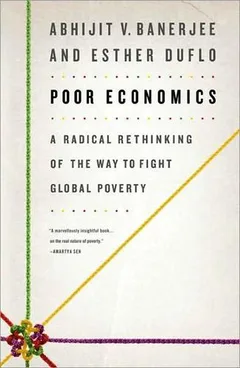 Poor Economics: A Radical Rethinking of the Way to Fight Global PovertyExplains why poor households combine informal borrowing, saving and tiny businesses, and why apparently helpful interventions can disappoint.
 The Mystery of Capital: Why Capitalism Triumphs in the West and Fails Everywhere ElseDevelops the article’s argument about exclusion from legal property systems, while proposing formal titles as a remedy whose limits the article examines.
 Secondhand: Travels in the New Global Garage SaleFollows used-goods traders and repair businesses through global markets, showing the skills and livelihoods behind commerce often dismissed as waste.
 Behind the Beautiful Forevers: Life, Death, and Hope in a Mumbai UndercityShows how Mumbai waste pickers and recyclers earn a living while police, courts and local power brokers shape their chances of escaping poverty.
Recommended videos
 9:01The Underground Economy: Crash Course Economics #32Crash Course on what the underground economy is and why it is so large.
 12:30Robert Neuwirth: The power of the informal economyRobert Neuwirth on the scale and inventiveness of informal markets.
 24:24How the informal economy shapes South Sudan’s future | Africa’s New Directions E1 | DocumentaryAl Jazeera documentary on how South Sudan’s informal economy keeps people afloat.
Cite this article
Lena Martin. “The underground economy that sustains the world’s poorest countries.” Eikleaf, 8 May 2026, updated 2 November 2026. https://www.eikleaf.com/the-underground-economy-that-sustains-half-the-worlds-poorest-countries/
Gen AI Disclaimer
Some contents of this page were generated and/or edited with the help of a Generative AI.
Media
Key Sources and References
Medina, Leandro and Friedrich Schneider. “Shadow Economies Around the World: What Did We Learn Over the Last 20 Years?” IMF Working Paper WP/18/17, International Monetary Fund, 2018. https://www.elibrary.imf.org/view/journals/001/2018/017/article-A001-en.xml
Schneider, Friedrich, Andreas Buehn, and Claudio E. Montenegro. “New Estimates for the Shadow Economies all over the World.” International Economic Journal, Vol. 24, No. 4, pp. 443–461, 2010 (revised version of World Bank Policy Research Working Paper No. 5356). https://ideas.repec.org/a/taf/intecj/v24y2010i4p443-461.html · http://documents1.worldbank.org/curated/en/311991468037132740/txt/WPS5356.txt
World Bank. “The Long Shadow of Informality: Challenges and Policies.” World Bank Group, 2021. https://www.worldbank.org/en/research/publication/informal-economy
International Labour Organization. “Women and Men in the Informal Economy: A Statistical Picture.” Third Edition. ILO, Geneva, 2018. https://www.ilo.org/sites/default/files/wcmsp5/groups/public/@dgreports/@dcomm/documents/publication/wcms_626831.pdf
International Labour Organization. “More than 60 per cent of the world’s employed population are in the informal economy.” ILO news release, 2018. https://www.ilo.org/resource/news/more-60-cent-world%E2%80%99s-employed-population-are-informal-economy
De Soto, Hernando. “The Other Path: The Invisible Revolution in the Third World.” Harper & Row, 1989. Originally published in Spanish as El Otro Sendero, Lima, 1986. https://minneapolisfed.org/article/1989/the-other-path-the-invisible-revolution-in-the-third-world
De Soto, Hernando. “The Mystery of Capital: Why Capitalism Triumphs in the West and Fails Everywhere Else.” Basic Books, 2000. https://www.basicbooks.com/titles/hernando-de-soto/the-mystery-of-capital/9780465016150/
Fracasso, Andrea, Giuseppe Vittucci Marzetti, and Diego Coletto. “Informal Economy and Extractive Institutions.” Review of Economics and Institutions, Vol. 9, No. 1, 2018. https://rei.unipg.it/rei/article/view/240
Jara, H. Xavier, María Cecilia Deza Delgado, Nicolás Oliva, and Javier Torres. “Financial Disincentives to Formal Employment and Tax-Benefit Systems in Latin America.” International Tax and Public Finance, Vol. 30, No. 1, pp. 69–113, 2023. https://faculty.up.edu.pe/en/publications/financial-disincentives-to-formal-employment-and-tax-benefit-syst
Calderón Cockburn, Julio. “The Mystery of Credit.” Land Lines, Lincoln Institute of Land Policy, April 2002. https://www.lincolninst.edu/publications/articles/mystery-credit/
World Justice Project. “Global Insights on Access to Justice 2019.” World Justice Project, Washington DC, 2019. https://worldjusticeproject.org/news/groundbreaking-study-reveals-unmet-legal-needs-worldwide
Gugerty, Mary Kay. “You Can’t Save Alone: Commitment in Rotating Savings and Credit Associations in Kenya.” Economic Development and Cultural Change, Vol. 55, No. 2, pp. 251–282, University of Chicago Press, 2007. https://microfinancegateway.org/paper/2005/01/you-cant-save-alone-commitment-rotating-savings-and-credit-associations-kenya
El Qorchi, Mohammed, Samuel Munzele Maimbo, and John F. Wilson. “Informal Funds Transfer Systems: An Analysis of the Informal Hawala System.” IMF Occasional Paper No. 222, International Monetary Fund, 2003. https://www.elibrary.imf.org/display/book/9781589062269/9781589062269.xml
GAIN (Global Alliance for Improved Nutrition). “Informal Food Retail in Urban Areas.” GAIN Health, 2020. https://www.gainhealth.org/sites/default/files/publications/documents/informal-food-retail-in-urban-areas.pdf
Boly, Amadou. “The Effects of Formalization on Small and Medium-Sized Enterprise Tax Payments: Panel Evidence from Viet Nam.” Asian Development Review, Vol. 37, No. 1, pp. 140–158, MIT Press / Asian Development Bank, 2020. https://ideas.repec.org/a/tpr/adbadr/v37y2020i1p140-158.html
McKenzie, David and Yaye Seynabou Sakho. “Does It Pay Firms to Register for Taxes? The Impact of Formality on Firm Profitability.” Journal of Development Economics, Vol. 91, No. 1, pp. 15–24, 2010. https://ideas.repec.org/a/eee/deveco/v91y2010i1p15-24.html
Suri, Tavneet and William Jack. “The Long-Run Poverty and Gender Impacts of Mobile Money.” Science, Vol. 354, No. 6317, pp. 1288–1292, 2016. https://www.findevgateway.org/paper/2016/12/long-run-poverty-and-gender-impacts-mobile-money
Guven, Melis. “Extending Pension Coverage to the Informal Sector in Africa.” Social Protection and Jobs Discussion Paper No. 1933, World Bank, 2019. https://documents1.worldbank.org/curated/en/153021563855893271/pdf/Extending-Pension-Coverage-to-the-Informal-Sector-in-Africa.pdf
International Labour Organization. “Transition from the Informal to the Formal Economy.” Recommendation 204. ILO, Geneva, 2015. https://www.ilo.org/resource/ilc/104/recommendation-no-204-concerning-transition-informal-formal-economy · https://www.sacp.org.za/sites/default/files/documents/ILO-R204.pdf
Feige, Edgar L. “Professor Schneider’s Shadow Economy: What Do We Really Know? A Rejoinder.” Journal of Tax Administration, Vol. 2, No. 2, 2016. https://ideas.repec.org/p/pra/mprapa/71903.html
Acemoglu, Daron, Simon Johnson, and James A. Robinson. “The Colonial Origins of Comparative Development: An Empirical Investigation.” American Economic Review, Vol. 91, No. 5, pp. 1369–1401, 2001. https://www.aeaweb.org/articles?id=10.1257/aer.91.5.1369
Torosyan, Karine and Randall K. Filer. “Tax Reform in Georgia and the Size of the Shadow Economy.” IZA Discussion Paper No. 6912, 2012; published in Economics of Transition, Vol. 22, No. 1, pp. 179–210, 2014. https://iza.org/publications/dp/6912
FactCheck Georgia. “Under the United National Movement’s rule, the share of the shadow economy decreased from 70% to 5%” (fact-check citing World Bank estimates). FactCheck.ge, 2023. https://factcheck.ge/en/story/41635–under-the-united-national-movement-s-rule-the-share-of-the-shadow-economy-decreased-from-70-to-5