Last updated: · 17 min read
In brief
After the 2004 tsunami, a helicopter photographed a Sentinelese man on his beach, arrow aimed at the aircraft. India bars anyone from approaching his island, yet his people have never been asked what they want. Asking would mean contact. Without a medical team on hand, contact has killed anywhere from a quarter to most of a community. In Brazil the policy is failing anyway, as illegal gold miners and missionaries push past underfunded agencies. Whether those agencies are funded next year is decided far from the forest.
Contents
When John Allen Chau was killed on North Sentinel Island in November 2018, the editorial verdict arrived before anyone had decided whether his body could be recovered from the beach, and it never was. Within days the consensus was settled: Chau was reckless, theologically deluded, and had endangered the very people he claimed to love. The last charge, at least, is hard to dispute. But most of the coverage in those weeks treated something else as equally obvious — that India’s legal prohibition on approaching the island was sound and needed no examination. The law was the natural backdrop to a story about individual folly, and few asked whether the law itself was right.
Under it, a state has decided, on behalf of a group of people it has never spoken to, that those people want no contact with the outside world. It enforces this through coast guard and naval patrols and criminal prosecution. The people being “protected” have expressed no view on the policy — though they have expressed, repeatedly and with arrows, a view on visitors. Whether those arrows mean “go away forever” or “go away today” or something else, nobody can say, because asking would require the kind of approach the policy is designed to prevent.
The Sentinelese can neither consent to the arrangement nor reject it. They exist, legally, as wards of a state whose language they do not speak, administered under a regulation drafted in 1956, thirteen years before the first message crossed the ARPANET.
The legal architecture of isolation
The primary legal instrument is the Andaman and Nicobar Islands (Protection of Aboriginal Tribes) Regulation, 1956. Under it, North Sentinel Island is a tribal reserve, and the reserve takes in the coastal sea up to five kilometres, about three miles, from the high-water mark. In mid-2018, months before Chau’s death, the Ministry of Home Affairs removed North Sentinel from the Restricted Area Permit list for foreign visitors; the change opened nothing, because the tribal-reserve ban stayed fully in force.
Coast Guard and Navy patrols keep boats out of the buffer, and the fishermen who ferried Chau there were arrested. The regulation is Indian law, applied to a people who were on the island long before India existed as a state.
Brazil’s equivalent is more elaborate. FUNAI, the Fundação Nacional dos Povos Indígenas, has operated a formal non-contact policy since 1987. As of December 2025 FUNAI held 115 records of isolated indigenous peoples in Brazil, 29 of them confirmed. The Catholic Indigenist Missionary Council (Cimi) counts 119, and Survival International puts the figure at 124, more than in any other country. FUNAI implements the policy through Ethno-environmental Protection Fronts, monitoring and buffer teams whose job is to observe, document, and intercept intruders.
Brazil’s 1988 Constitution recognises indigenous peoples’ rights to their lands, customs, and social organisation. ILO Convention 169, adopted in 1989, obliges governments to consult indigenous peoples in good faith on measures that affect them, and the UN Declaration on the Rights of Indigenous Peoples, adopted in 2007, affirms their right to self-determination and requires their free, prior, and informed consent (FPIC) before they are relocated. For legislative and administrative measures that may affect them, states must consult them in good faith, through their own representative institutions, in order to obtain that consent. FPIC was designed to prevent states and corporations from making decisions on behalf of indigenous peoples without asking. Obtaining it from a group that cannot be approached without risking a deadly epidemic is all but impossible: consent requires contact, and contact carries disease.
The legal framework that exists to protect indigenous autonomy therefore has no way to ask peoples who cannot be approached. Inter-American human-rights bodies fill the gap with a presumption: they treat a people’s isolation as its exercise of self-determination, and hold that contact should happen only at that people’s own initiative. The protection rests on reading avoidance as refusal, and no outsider can test that reading without breaking it.
Who are the Sentinelese?

North Sentinel Island sits in the Bay of Bengal, roughly 50 kilometres west of Sri Vijaya Puram (formerly Port Blair), the capital of the Andaman and Nicobar Islands. Survival International estimates the Sentinelese at 50 to 150 people; reliable figures do not exist, and counting from boats and aircraft is imprecise. What is known comes almost entirely from observation at a distance. They hunt, fish, and gather. Their material culture includes metal tools, almost certainly salvaged from shipwrecks, which suggest some historical, indirect awareness of the outside world.

In the aftermath of the 2004 Indian Ocean tsunami, a coast guard helicopter flew over the island and photographed a Sentinelese man running across the beach, bow drawn, arrow levelled at the aircraft. The photograph circulated worldwide, and its meaning was unambiguous: the Sentinelese had survived the tsunami and were in no mood for visitors.

From 1967, Indian anthropologists led by Triloknath Pandit, head of the Anthropological Survey of India's regional centre in the islands, made repeated visits to the island, leaving coconuts and other gifts on the beach and often retreating under a hail of arrows. In January 1991 that changed: the Sentinelese came down to the water unarmed and took coconuts from the visitors' hands. The gift-giving visits ended in the mid-1990s, and India reverted to watching from a distance. The brief window of tentative exchange is the closest thing to mutual communication the Sentinelese have had with the outside world in recorded history, and the decision to end it was India's.
What Chau was doing, and what it means
Chau paid a crew of fishermen ₹25,000, roughly $350, to run him out to North Sentinel Island, slipping past the patrols in the dark of 14–15 November 2018. On 15 November he approached by kayak. A Sentinelese boy fired a metal-tipped arrow that struck the waterproof Bible Chau was holding in front of his chest. He retreated. On the morning of 16 November he went ashore again, alone, and the boat left him there. The next day the fishermen saw, from offshore, what appeared to be his body being buried on the beach. Chau’s diary, recovered through his friend in Port Blair, described his mission in terms that were earnest to the point of being impossible to read without discomfort.
Chau was affiliated with All Nations, an evangelical organisation that had trained him extensively, including mock scenarios with staff playing hostile tribespeople. His theology was that of the “unreached peoples” movement, prominent within evangelical circles through Ethnos360 (formerly New Tribes Mission) and the Youth With A Mission network, which holds that the Great Commission in Matthew 28:19-20 requires that the gospel reach every people group on earth before Christ’s return. In the Joshua Project, an evangelical database of the world’s people groups, the Sentinelese are listed as unreached.
The universal response was to treat this as self-evidently absurd, the theology of a man who had gone off the edge, though the organisations that hold it have been sending missionaries to remote tribes since the 1940s. What Chau did was illegal and epidemiologically dangerous, and it killed him. It was also the logical outcome of a coherent worldview held by millions of people. Dismissing it as individual eccentricity is easier than engaging with what it represents: an organised, well-funded position on exactly the same question that states and NGOs have a position on — what should happen to the people on that island?
However wrong, Chau’s position pitted the claim that those people have a right to hear the gospel against the claim that they have a right to be left alone. Behind both sits the question of who gets to make that call.
The unreached peoples movement

The Joshua Project is an evangelical research initiative that catalogues some 16,400 people groups by their exposure to Christianity, counting each group once in every country where it lives. Groups classified as "unreached" number more than 7,000: no more than 2% evangelical and 5% Christian, with no indigenous community of believers able to evangelise the rest without outside help. The project maps them geographically and tracks missionary progress.

Ethnos360 was founded in the United States in 1942 with the explicit purpose of reaching the world's most isolated tribal populations. It operates across dozens of countries through a global partner network. Youth With A Mission (YWAM) is a decentralised evangelical network with presence in virtually every country on earth. All Nations, Chau's organisation, runs a training programme that includes preparation for contact with hostile communities.

The theological logic is internally consistent: if salvation is real and eternal, and if some people groups will die without ever hearing the gospel, then the risk of carrying disease to a people can look smaller than the risk of leaving them unreached.
The epidemiological floor
Contact kills indigenous people in enormous numbers. Measles, influenza and malaria accounted for most of the epidemics that struck indigenous societies in Greater Amazonia between 1875 and 2008, and mortality across those epidemics averaged approximately 25% per year.
Rates have declined over time, and contacts modelled for 2015 predicted roughly 10% annual mortality, which is still catastrophic for any small population.
After FUNAI made first contact with the Matis in the mid-1970s, successive epidemics, one of them carried in by a FUNAI team, left just 87 by 1983, down from 135 shortly before; the Matis say they had been far more numerous before FUNAI arrived. The Panará, contacted in 1973 as the military government drove the BR-163 highway through their territory, numbered several hundred before contact; by 1975, when the survivors were moved to the Xingu Indigenous Park, only 79 were left. New Tribes Mission missionaries made first definitive contact with the Zo’é in northern Brazil in 1987, after years of gift drops from the air; between 1982 and 1988 about a quarter of the Zo’é died from flu, malaria and other diseases to which they had no immunity. The Nahua of Peru faced a similar trajectory after 1984, when paths cut for oil exploration let loggers into their territory: within a few years, around 50 to 60 percent of the population had died.
The decline in mortality rates is real and reflects improvements in epidemiological response; in the best-run contacts, teams treating the sick around the clock have brought deaths close to zero. But that response requires immediate, well-resourced medical deployment at the moment of contact, in remote Amazonian territories often days or weeks from the nearest hospital.
The lower rate is still a model’s prediction, while the collapses of the Panará and the Zo’é are on record. The freedom to choose contact means little when exercising it, without a medical team on hand, has historically killed anywhere from a quarter to most of the community making the choice.
The paternalism charge
Even so, someone is making this decision, and the mortality data do not change that. The paternalism critique starts there: states, NGOs, and international bodies have decided, without consulting the people concerned, that isolated peoples should remain isolated.
They have built legal frameworks and enforcement agencies around this conclusion without asking, because asking is the thing the policy prohibits. The result, on this view, is permanent administered isolation, built and maintained by people who have never consulted those it was built for.
The critique has serious advocates. The anthropologists Robert Walker and Kim Hill have argued that governments violate their responsibility to isolated peoples by adopting a permanent non-contact policy. Isolated populations are not viable in the long term, they argued, because they face accidental contact, extractive encroachment and demographic attrition. Well-organised, medically prepared contact is today, in their view, both humane and achievable. On that reasoning, refusing contact amounts to withholding medical care and options available to every other human population.
The philosopher Brian Wong goes further, adapting a Samaritan rescue principle to argue that contact can be obligatory where it would bring goods such as modern medicine and longer lives, provided the people contacted would consent to it if they knew the consequences. Arguments like these show what liberal political philosophy looks like when it runs into a case it was never designed for: people who cannot be asked.
The FPIC principle was designed to prevent states from overriding indigenous agency. Applied to uncontacted groups, it is turned around: states decide on behalf of people without any input from them, and the only route to contact left open is the one a group takes itself, as seven people did in Brazil’s Acre state in 2014, emerging from the forest after fleeing attacks across the border in Peru.
The answer from epidemiology, and its limits
The strongest response to the paternalism critique is the epidemiological floor already described, where choosing contact without immediate medical care has cost communities a quarter of their people or more.
In that position, the choice lies between dying from a decision you made and being prevented from making a lethal decision by someone who can’t ask you about it first.
Survival International holds that uncontacted peoples “choose to have no interaction with the mainstream society,” and that “it is their choice, and their right.” It is the most defensible practical stance available, and it has support among anthropologists. The Sentinelese case makes this stark. They’ve demonstrated, over decades of observation and several direct contact attempts, both awareness of outsiders and a sustained resistance to them, broken only by the brief, tentative gift exchanges of the early 1990s. The 2004 tsunami provided the most striking evidence: when a Coast Guard helicopter flew over to check on them after the wave, the Sentinelese were alive, on their beach, and firing arrows at the aircraft.
But the protection-as-consent argument can’t answer the harder question: we don’t know what isolated peoples would want if they could make an informed choice — with access to information about what contact means and what medicine can do. The Sentinelese who fired an arrow at Chau’s Bible were defending their territory against an intruder. That shows what they think of intruders, and says little about what they would choose if they knew what the choice involved.
Survival International’s claim that they have chosen also passes over how contact has actually come about. Nobody asked the Panará before the highway went through, or the Zo’é before the missionaries arrived. In every historical case, contact came through extractive pressure, missionary ambition or state policy, and nobody had first found a way to ask the question and get a meaningful answer.
Are "uncontacted" peoples really uncontacted?

The word is imprecise. Many groups described as "uncontacted" have had sporadic historical contact with rubber tappers, missionaries, or disease vectors, and have retreated into isolation afterwards. Others have traded with intermediary groups, and have material culture, including metal tools, that demonstrates indirect contact with the outside world. The Sentinelese almost certainly salvaged metal from the 1981 wreck of the MV Primrose, which ran aground on their reef and was abandoned.

FUNAI, for this reason, prefers the term "isolated" over "uncontacted." The distinction matters because these peoples have had some exposure to the outside world and have chosen, or been forced by disease, to maintain distance from it. That choice, or that trajectory, is what the policy is attempting to protect, imperfect as it is.The policy is failing anyway
While that argument goes on, the Amazon is answering a different question every day: what happens when the institutions enforcing the policy run out of money, staff, and political protection.
Brazil is where the answer is most visible. Most of Brazil’s artisanal gold mining, known as garimpo, occurs within the Amazon biome. Between 1985 and 2022, the area of garimpo extraction grew roughly twelvefold, to around 2,600 square kilometres, and at least 77% of the area mined in 2022 showed explicit signs of illegality. Indigenous territories, where mining of any kind is prohibited, lost 13,000 hectares of forest to illegal gold mining in 2023 alone.
The Sararé Indigenous Territory, home to the Nambikwara people in Mato Grosso, became the indigenous area most impacted by illegal mining in 2025. From January 2024 to August 2025, illegal gold mining destroyed more than 3,000 hectares of forest within the territory, more than 4% of its area. By 2025 government agents estimated about 2,000 miners on the land. The miners respond to gold prices set in London and Shanghai.
Missionary pressure has also operated through institutional channels. In February 2020, the Bolsonaro government appointed Ricardo Lopes Dias, a long-serving missionary with Ethnos360/New Tribes Mission, to head FUNAI’s isolated and recently contacted tribes department, giving him access to location data for more than 100 registered isolated groups. Brazil’s Federal Prosecutor’s Office sought his suspension, warning of potential “genocide” and “ethnocide”; in May 2020 an appellate judge suspended the appointment. In June the Superior Court of Justice cleared his return, and in November 2020 he was dismissed.
Missionaries have also worked around the institutional layer entirely. Solar-powered audio devices playing Bible recordings in Portuguese, not in any indigenous language, have been found among the recently contacted Korubo in the Javari Valley, home to the largest concentration of isolated groups in Brazil. State agents protecting the region have also spotted drones over its protected areas. The technology is cheaper and more deniable than a contact mission, and it still puts outsiders within reach of people with no immunity to what they carry. Survival International estimates that one in six uncontacted peoples worldwide faces an active missionary threat, meaning documented, organised efforts to make contact.
FUNAI’s capacity to respond has been systematically eroded. Under the Bolsonaro government (2019–2022), experienced personnel were replaced with staff without relevant knowledge, and by 2022 only four in every ten posts in the agency were filled. Deforestation in Amazon indigenous territories during Bolsonaro’s first three years was 138% higher than in the preceding three years. The Lula government has partially reversed these trends, most visibly in the 2023 operations to evict miners from Yanomami territory, but structural recovery of FUNAI’s capacity is incomplete.
The Yanomami collapse

The Yanomami are not an uncontacted people; they have had sustained contact with the outside world for decades, and they show what happens after the policy fails.

Every hair sample taken from Yanomami in nine villages in Roraima contained mercury, in tests whose results were published in 2024. Eighty-four percent of those tested had levels above 2.0 micrograms per gram of hair, the threshold for mandatory health reporting in Brazil. The contamination came from illegal gold mining in their territory, which uses mercury in the gold amalgamation process. By early 2023, six in ten Yanomami children under five were malnourished, and at least 570 Yanomami children had died of preventable causes, including malnutrition, malaria and diarrhoea, during the four years of the Bolsonaro government.

The Yanomami had constitutional protections, FUNAI and international attention, and under a government hostile to enforcing them, those protections did not keep the miners out.
In October 2025 Survival International published a landmark global survey that identified at least 196 uncontacted peoples in 10 countries. By its estimate, nine out of ten face threats from extractive industries, and half could vanish within a decade without stronger protections.
Fiona Watson, Survival’s research and advocacy director, called these “silent genocides — there are no TV crews, no journalists. But they are happening, and they’re happening now.”
Who is deciding
In practice, the decision is made by a short list of agencies, organisations and individuals, each with its own interests and vulnerabilities.
FUNAI is a chronically underfunded Brazilian federal agency whose political independence varies with the government in power. India’s Coast Guard and Navy patrol an exclusion zone around North Sentinel Island with no mechanism for communicating with the Sentinelese in any direction. Survival International is a London-based NGO making claims about the preferences of groups it has never spoken to. Evangelical organisations have their own theological agenda. Illegal miners are responding to commodity prices. The Brazilian president, whoever holds the office, sets the political climate that determines whether FUNAI functions or decays.
None of these actors has the consent of the peoples they are acting on or against.
FUNAI’s legitimacy is statutory: it derives from the Brazilian Constitution of 1988, a document the isolated peoples it covers played no part in drafting. India’s authority over the island derives from a 1956 regulation, issued by a post-colonial state, applied to a people whose only face-to-face peaceful exchange with that state was a few coconuts handed across the surf in the early 1990s. Neither fact delegitimises the law by itself, since laws have to come from somewhere, but that is what the authority rests on.
The miners and missionaries have no authority at all. They are more powerful, financially and numerically, than the institutions theoretically constraining them.
On the evidence so far, the people who most reliably keep isolated peoples isolated are the state bureaucracies and NGOs who believe in the policy. Protection therefore depends entirely on the institutional health of underfunded agencies operating in politically hostile environments, and on NGOs competing for attention in a news cycle full of more photogenic emergencies. The extractive economy needs no such institutions; it advances whenever they weaken, as it did in Brazil between 2019 and 2022.
Two trajectories
In the first, the policy holds: institutions survive, buffer zones are maintained, miners and missionaries are kept at a distance, and isolated peoples live out their lives in the territories they have occupied, uncontacted, for as long as the arrangement holds or until they walk out of the forest themselves. Even success means isolation managed from outside without end — peoples frozen in a condition outsiders have decided is their authentic state, protected from history by the political will of states whose relationship to them is entirely asymmetric.
In the second trajectory, the policy fails: the miners arrive, the missionaries plant audio devices on the forest floor, and the buffer zones erode under commodity prices and bureaucratic decay. Contact made this way comes with no medical team waiting, and the record of such contact is epidemics that kill anywhere from a quarter of the community to most of it. The survivors join the ranks of recently contacted peoples living in the wreckage, as the Yanomami and the Zo’é have, and the Panará did before they rebuilt.
The first is better, given everything we know about the second, yet it has no endpoint, no moment at which the question of what they would want, given genuine options, gets answered.
The policy that governs the lives of isolated peoples is written in languages they have never heard and enforced by states with which they have no sustained relationship. Whether the institution that keeps the boats away this year will still be funded next year is decided in places they have never seen.
Related articles
- The last territories with no permanent population — and who is quietly claiming them
- How colonialism created the conditions for today’s global obesity epidemic
- Why the world’s largest landowners are not who you expect
Further reading
As an Amazon Associate, Eikleaf earns from qualifying purchases. The book links below are affiliate links: if you buy through them, we may earn a small commission at no extra cost to you.
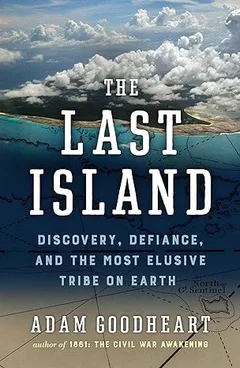 The Last Island: Discovery, Defiance, and the Most Elusive Tribe on EarthExamines North Sentinel Island, Chau’s death, and the history of outsiders’ attempts to contact the Andaman peoples.We Will Be Jaguars: A Memoir of My PeopleWe Will Be Jaguars: A Memoir of My PeopleA Waorani leader recounts missionary intervention, cultural disruption, and her people’s struggle to decide what happens to their territory.The Unconquered: In Search of the Amazon’s Last Uncontacted TribesThe Unconquered: In Search of the Amazon’s Last Uncontacted TribesFollows Sydney Possuelo’s expedition and shows how Brazil’s non-contact policy works amid territorial threats and practical uncertainty.The Falling Sky: Words of a Yanomami ShamanThe Falling Sky: Words of a Yanomami ShamanConnects the article’s evidence about epidemics, missionaries, and gold mining to a Yanomami survivor’s life and understanding of the forest.
Recommended videos
 11:26Can Peru continue to protect its uncontacted, indigenous tribe? – BBC World ServiceBBC report from Peru on protecting an uncontacted people from loggers and outsiders, the policy dilemma the article raises.
 26:13Who are the Sentinelese really?Archaeologist’s careful overview of what is actually known about the Sentinelese and their history of contact.
 1:43:37The Mission to Contact (Full Episode) | Nat Geo DocumentaryNational Geographic documentary on John Allen Chau’s fatal 2018 attempt to reach North Sentinel, the missionary threat the article mentions.
Cite this article
Ingrid Dahl. “The last peoples with no contact with the outside world — and who decides whether to leave them alone.” Eikleaf, 6 May 2026, updated 2 November 2026. https://www.eikleaf.com/the-last-peoples-with-no-contact-with-the-outside-world-and-who-decides-whether-to-leave-them-alone/
Gen AI Disclaimer
Some contents of this page were generated and/or edited with the help of a Generative AI.
Media
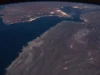
North Sentinel Island imaged by a Sentinel 2 satellite. – Wikipedia
Key Sources and References
Walker RS, Sattenspiel L, Hill KR. Mortality from contact-related epidemics among indigenous populations in Greater Amazonia. Scientific Reports. 2015;5:14032. doi:10.1038/srep14032. https://www.nature.com/articles/srep14032
Walker RS, Hill K. Protecting isolated tribes. Science. 2015;348(6239):1061. doi:10.1126/science.aac6540. https://www.science.org/doi/10.1126/science.aac6540
Wong B. Should We Contact Uncontacted Peoples?: A Case for a Samaritan Rescue Principle. Practical Ethics (Oxford Uehiro Centre). March 2019. https://blog.practicalethics.ox.ac.uk/2019/03/oxford-uehiro-prize-in-practical-ethics-should-we-contact-uncontacted-peoples-a-case-for-a-samaritan-rescue-principle/
Perry A. The Last Days of John Allen Chau. Outside Online. July 2019. https://www.outsideonline.com/outdoor-adventure/exploration-survival/john-allen-chau-life-death-north-sentinel/
Sohn T. Inside the Story of John Allen Chau’s Ill-Fated Trip to a Remote Island. Smithsonian Magazine. December 7, 2018. https://www.smithsonianmag.com/history/inside-story-john-allen-chaus-ill-fated-trip-remote-island-180970971/
The News Minute. John Chau’s death in Andaman: Are foreigners allowed to enter North Sentinel island? November 2018. https://www.thenewsminute.com/amp/story/news/john-chaus-death-andaman-are-foreigners-allowed-enter-north-sentinel-island-92050
Survival International. The Sentinelese. https://www.survivalinternational.org/peoples/sentinelese
Goodheart A. The Last Island of the Savages. The American Scholar. 5 September 2000. https://theamericanscholar.org/the-last-island-of-the-savages/
Press Information Bureau, Ministry of Home Affairs (India). Government has decided to rename the capital of Andaman & Nicobar Islands Port Blair as “Sri Vijaya Puram”. 13 September 2024. https://www.pib.gov.in/PressReleasePage.aspx?PRID=2054647
Gulf Times / DPA. Respect Sentinelese tribe, says expert. November 2018. https://www.gulf-times.com/story/614578/respect-sentinelese-tribe-says-expert
Survival International. Why Uncontacted Tribes Should Be Left Alone. First published in Time, 30 November 2018. https://www.survivalinternational.org/articles/3603-Leave%20uncontacted%20tribes%20alone
Survival International. ‘Violent attacks’ caused uncontacted Indians to emerge. July 2014. https://www.survivalinternational.org/news/10361
Internet Society. Brief History of the Internet. https://www.internetsociety.org/internet/history-internet/brief-history-internet/
United Nations. United Nations Declaration on the Rights of Indigenous Peoples. 2007. https://www.un.org/development/desa/indigenouspeoples/wp-content/uploads/sites/19/2018/11/UNDRIP_E_web.pdf
OHCHR. Free, Prior and Informed Consent of Indigenous Peoples. https://www.ohchr.org/sites/default/files/Documents/Issues/IPeoples/FreePriorandInformedConsent.pdf
Inter-American Commission on Human Rights. Indigenous Peoples in Voluntary Isolation and Initial Contact in the Americas: Recommendations for the Full Respect of Their Human Rights. OEA/Ser.L/V/II. Doc. 47/13. 30 December 2013. https://www.oas.org/en/iachr/indigenous/docs/pdf/report-indigenous-peoples-voluntary-isolation.pdf
Joshua Project. Definitions. https://joshuaproject.net/help/definitions
Ethnos360. About. https://ethnos360.org/about
Matis people. Indigenous Peoples in Brazil (ISA/Pib Socioambiental). https://pib.socioambiental.org/en/Povo:Matis
Panará people. Indigenous Peoples in Brazil (ISA/Pib Socioambiental). https://pib.socioambiental.org/en/Povo:Panar%C3%A1
Believe.Earth. The indigenous tribe that escaped genocide. 2018. https://believe.earth/en/os-indigenas-que-escaparam-exterminio/
Survival International. The Zo’é. https://www.survivalinternational.org/tribes/zoe
Survival International. Shell (Nahua first contact, 1984). https://www.survivalinternational.org/about/shell
Cortinhas Ferreira Neto L, Diniz CG, Maretto RV, et al. Uncontrolled Illegal Mining and Garimpo in the Brazilian Amazon. Nature Communications. 2024;15:9847. doi:10.1038/s41467-024-54220-2. https://www.nature.com/articles/s41467-024-54220-2
de Santi A. Brazil’s illegal gold miners carve out new Amazon hotspots in conservation units. Mongabay. December 2024. https://news.mongabay.com/2024/12/brazils-illegal-gold-miners-carve-out-new-amazon-hotspots-in-conservation-units/
Mongabay. One small Indigenous territory emerges as illegal mining hotspot in Brazil’s Amazon. November 2025. https://news.mongabay.com/short-article/2025/11/sarare-illegal-mining-hotspot-in-brazils-amazon/
Survival International. Uncontacted Indigenous Peoples: at the Edge of Survival. October 2025. https://www.survivalinternational.org/documents/UIPR
Branford S. Report urges full protection of world’s 196 uncontacted Indigenous peoples. Mongabay. 27 October 2025. https://news.mongabay.com/2025/10/report-urges-full-protection-of-worlds-196-uncontacted-indigenous-peoples/
PBS NewsHour. Without stronger protections, uncontacted Indigenous groups could vanish within a decade, experts say. October 27, 2025. https://www.pbs.org/newshour/world/without-stronger-protections-uncontacted-indigenous-groups-could-vanish-within-a-decade-experts-say
NBC News. Why the survival of uncontacted Indigenous peoples is under growing threat. October 27, 2025. https://www.nbcnews.com/world/latin-america/uncontacted-indigenous-peoples-tribes-growing-threat-new-report-rcna239988
Portal Amazônia. Brasil tem 119 povos indígenas vivendo isolados, aponta publicação do Cimi. 2 April 2025. https://portalamazonia.com/amazonia/povos-indigenas-isolados-cimi/
Portal Amazônia. Brasil lidera número de povos isolados, mas há lacunas na proteção. 14 December 2025. https://portalamazonia.com/amazonia/brasil-lidera-povos-isolados/
Mongabay. Politicized Indigenous affairs agency puts Brazil’s uncontacted groups at risk. February 2022. https://news.mongabay.com/2022/02/politicized-indigenous-affairs-agency-puts-brazils-uncontacted-groups-at-risk/
Mongabay. Brazil judge blocks appointment of missionary to indigenous agency. May 2020. https://news.mongabay.com/2020/05/brazil-judge-blocks-appointment-of-missionary-to-indigenous-agency/
Radioagência Nacional (EBC). STJ libera nomeação de servidor ligado a entidade missionária para área de índios isolados da Funai. June 2020. https://agenciabrasil.ebc.com.br/radioagencia-nacional/geral/audio/2020-06/stj-libera-nomeacao-de-servidor-ligado-entidade
Survival International. Top missionary official in Brazil forced out for second time. 27 November 2020. https://www.survivalinternational.org/news/12507
Survival International. An evangelical missionary has access to the locations of Brazil’s uncontacted tribes. 2020. https://www.survivalinternational.org/articles/evangelical-missionary-Brazil-uncontacted-tribes
Pulitzer Center. ‘A Computer, a Radio, a Drone and a Shotgun’: How Missionaries Are Reaching Out to Brazil’s Isolated Peoples. https://pulitzercenter.org/stories/computer-radio-drone-and-shotgun-how-missionaries-are-reaching-out-brazils-isolated-peoples
Pulitzer Center. Missionaries Using Secret Audio Devices To Evangelise Brazil’s Isolated Peoples. https://pulitzercenter.org/stories/missionaries-using-secret-audio-devices-evangelise-brazils-isolated-peoples
Popular Science. Missionaries accused of illegally giving gadgets to isolated Amazon tribe. 2025. https://www.popsci.com/technology/missionary-gadget-amazon-tribe-contact/
Brazil Reports. The Future of Funai (Part 1): Brazil’s indigenous protectors denounce the dismantling of their institution during Bolsonaro government. 2022. https://www.brazilreports.com/the-future-of-funai-part-1-brazils-indigenous-protectors-denounce-the-dismantling-of-their-institution-during-bolsonaro-government/3322/
Human Rights Watch. Brazil: Indigenous Rights Under Serious Threat. August 9, 2022. https://www.hrw.org/news/2022/08/09/brazil-indigenous-rights-under-serious-threat
Fiocruz/Fiotec. Nine Yanomami villages harassed by mining with mercury contamination. 2024. https://www.fiotec.fiocruz.br/en/news/8532-nine-yanomami-villages-harrassed-by-mining-with-mercury-contamination
Mongabay. Yanomami health disaster prompts outrage as Lula vows to tackle crisis. January 2023. https://news.mongabay.com/2023/01/yanomami-health-disaster-prompts-outrage-as-lula-vows-to-tackle-crisis/