Last updated: · 25 min read
In brief
Every couple of months a University of Chicago lab pours about 100 litres of liquid helium onto its magnets. This year its regular supplier offered half. Yet American helium exports were reported up 70 per cent after war with Iran shut off Qatar’s. The shortage isn’t in the rock. It’s in a narrow chain of liquefiers, insulated boxes that keep their cargo for weeks, and contracts that sell the output years ahead. When supply fails, a handful of gas companies decide whose share shrinks, and the lab has no seat at that table.
Contents
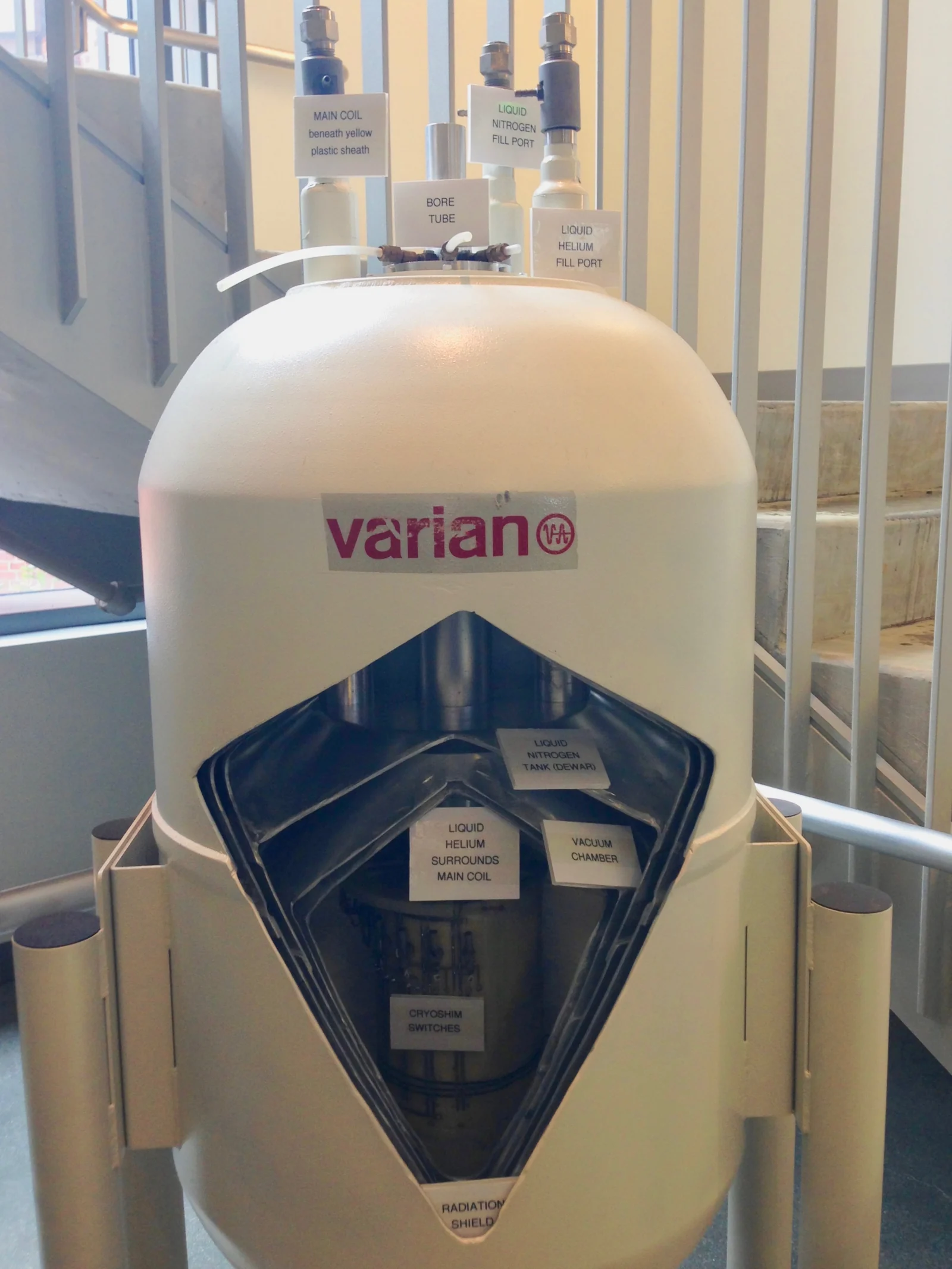
Every couple of months Joe Sachleben pours about 100 litres of liquid helium onto the magnets of the nuclear magnetic resonance machines he runs at the University of Chicago. This year his regular supplier offered him half of what he used last year. He found a backup, and in September the backup warned that it was about to run out. In an interview broadcast on 18 October, Sachleben said that unless more helium turned up he would have to decide “which machine are we going to sacrifice.”
Qatar’s helium stopped in March, when the war with Iran shut the gas complex at Ras Laffan. On paper that is a gap the United States can help fill. It is counted as the world’s largest helium producer, and by 18 October its helium exports were reported up 70 per cent since the war began. More American helium is going abroad. So why can’t a lab in Chicago get enough of it?
Because helium in the ground and helium at the door are separated by a chain that is narrow at every link: gas plants that mostly make it as a by-product, a handful of liquefiers, a small fleet of insulated boxes that keep their cargo for weeks, a few roads and sea lanes, and contracts that sell the output years ahead. When a link fails, the companies holding those contracts decide where the loss lands. Sachleben’s lab is a regular customer. It got half.
A by-product of a by-product
Nobody makes helium. It forms underground over billions of years as uranium and thorium decay, collects in pockets of natural gas, and once it’s released it rises and leaks away to space. Almost all of it is recovered where natural gas happens to carry enough of it and somebody has built a plant to pull it out, though a few explorers are now drilling for helium on its own.
Qatar is the extreme case. The gas in its North Field is about 0.04 per cent helium, a trace, but the field is so enormous that Qatar’s identified helium resources, about 10.1 billion cubic metres, come to roughly fifty years of everything the world produced in 2025. Qatar is not short of helium in the rock.
The catch is where Qatar’s helium comes from. It is stripped out of the gas feeding the LNG trains, the giant refrigeration plants that turn natural gas into liquid for export. “There is no helium being produced if LNG production is shut,” says Anish Kapadia of AKAP Energy, who advises investors on both. Qatar’s helium output is therefore a side effect of Qatar’s LNG output, which is itself a side effect of whether tankers can get in and out of the Gulf. A by-product of a by-product.
In 2025 the world produced about 190 million cubic metres of helium. The United States accounted for 81 million of that and Qatar for 63, so two countries made about three quarters of the supply. Chipmaking took about 18 per cent of world consumption that year and MRI about 14. Fabs blow helium across the back of silicon wafers during etching to pull heat away quickly and evenly. Some high-capacity hard drives are sealed with it inside. And below about −256°C, some 17 degrees above absolute zero, nothing substitutes for it at all, which is the territory where superconducting magnets, in hospital scanners and in Sachleben’s lab, have to live.
Neon, helium’s neighbour in the periodic table, runs on an entirely different system. It is 0.0018 per cent of air and is recovered only at very large air-separation plants, most of them attached to steelworks, then purified in a separate step at a small number of plants; an incomplete count from 2018 found fewer than 20. Most of the world’s neon goes into the lasers that print patterns onto chips.
What stopped at Ras Laffan
The war began on 28 February. On 2 March QatarEnergy halted LNG and associated production at Ras Laffan, and on 4 March it declared force majeure, invoking the contract clause that seeks relief from delivery obligations it can’t meet.
Ras Laffan’s three helium plants, all majority-owned by QatarEnergy, made about 68 million cubic metres of helium a year, sold under contract to Linde, Air Liquide, Messer, Iwatani and several other gas companies. Qatar supplied more than 34 per cent of the world’s helium exports in 2025, and Ras Laffan is one of the few plants anywhere whose helium is qualified for use in semiconductor fabs. Chip plants don’t take gas from a new source on trust.
Then came the strikes. One of the three helium plants was already shut for a pipeline repair when they hit. The attacks of 18 and 19 March knocked out 14 per cent of Qatar’s helium export capacity and 17 per cent of its LNG capacity, QatarEnergy’s chief executive, Saad al-Kaabi, said on 19 March. He added it would take at least three years to restore the complex fully.
Two numbers describe the loss, and they measure different things. On 7 April Russia’s prime minister, Mikhail Mishustin, said global helium supply had fallen by “almost a third”, which matches Qatar’s 63 million cubic metres out of 190 going to roughly nothing. That is the size of the hole at its deepest. Kapadia’s forecast, made on 25 March, was that about 11 per cent of world supply could be lost over the whole of 2026, a figure for the year rather than the moment.
Qatar’s helium comes off its LNG trains, so the autumn LNG figures show how badly its helium’s feedstock was still disrupted. Qatar’s September LNG exports were less than a quarter of the pre-war average, October was tracking lower still, and on 27 October the Italian utility Edison said QatarEnergy’s force majeure on its LNG cargoes would now run to the end of December. On 29 October Sanjiv Lamba, Linde’s chief executive, told investors he expected Qatar to get back to about three quarters of its former production.
Who felt it depended on where they bought. South Korea took about two thirds of its 2025 helium from Qatar and has put helium on a list of 14 chip-supply materials it monitors because of the war. Japan bought about 60 per cent from the United States and 37 per cent from Qatar in 2025, and about 70 per cent of Japan’s liquid helium goes to keeping hospital MRI scanners cold. In April the trade ministry said stocks would carry the country into early May and that American supply could then match the lost Middle Eastern volumes. Recorded imports in May were almost entirely American, with none from Qatar. Mohammad Ahmad, who runs the supply-chain data firm Z2Data, said in March that Japan was less exposed than Korea or Taiwan for exactly that reason, and that chipmakers had built bigger inventories and better recycling since the pandemic.
Delivery is the product
Follow one batch. At Ras Laffan’s first helium plant, crude helium from the gas stream is purified and liquefied, and the liquid fills more than 500 containers a year under sales contracts with Linde and Air Liquide. From there it has to move by road and sea, reach a distributor’s depot, be decanted or delivered to a user, and then the empty container has to come back to be filled again. Each leg depends on the one before it.
The forty-day box

A standard liquid-helium tank holds more than 41,000 litres inside a 40-foot ISO frame, so it can ride on a truck or a container ship like any other box. Inside, it is a very expensive thermos. No insulation is perfect. Heat leaks in, the liquid warms, pressure rises, and a relief valve vents helium to keep the tank safe. Every venting is product lost, which is why a container in transit holds its liquid for roughly 35 to 48 days. In March about 200 of these containers, worth roughly $1 million each, were stuck in the Middle East. Phil Kornbluth, a helium consultant who once ran the global helium business of the gas company BOC, put the world's total at "a couple of thousand", with many sitting full or empty in Qatar or on ships heading there. In 2023 he counted two established makers, Gardner Cryogenics and Linde Engineering, both quoting lead times of more than 18 months.
The road matters as much as the box. In June 2017, when Saudi Arabia closed its border with Qatar, the overland route for Qatari helium was cut, and Qatar’s two plants at the time shut down once every shipping container and storage tank was full. “Helium is the single commodity that is affected most by this blockade,” Kornbluth said then, because it was probably the only thing Qatar produced in world-scale volume that had been cut off completely. This year, with Hormuz closed to normal traffic, containers would have to be trucked across Saudi Arabia to Jeddah on the Red Sea or down to Salalah in Oman to find a ship. Kornbluth said in March that getting the stranded boxes back into position would most likely be “the worst part of the shortage.” Rerouting takes trucks, time and boxes the trade doesn’t have spare, and in late October Lamba said there weren’t enough tanks to keep that kind of rerouting going.
At the far end the chain splits. Conventional magnets like Sachleben’s need deliveries of liquid. Welding, leak detection and much laboratory work use helium as a gas.
None of this means every helium shock is a shipping problem. Each one has had its own mix. 2017 was a corridor and container problem; production was fine and simply had nowhere to go. In 2022 production failed: the US government’s crude helium enrichment unit was down from January to June, removing more than 10 per cent of world capacity, while Russia’s new Amur complex was hit by a fire in October 2021 and an explosion and fire in January 2022. 2026 combined the two, with production halted, a corridor closed and containers stranded in the wrong place. The binding constraint in a helium shock is whichever link has the fewest substitutes at that moment.
What stays constant is that every step has few hands on it and no quick substitute. Ras Laffan is one of the few fab-qualified sources. For the rare gases chipmakers use, certifying a new supplier’s purity can take several months or more than a year. Helium in Air Products’ and Linde’s underground caverns in Texas has to go through those companies’ purification and liquefaction plants in Kansas before it can be exported as liquid. And American output is held back by limited refining capacity and lengthy permitting.
Who gets 50 per cent
The decisions run downhill. QatarEnergy invoked force majeure on its contracts with the companies that buy its helium, seeking relief from its delivery obligations, and those companies in turn decide how much each of their own customers gets. “The key allocation decisions sit with the merchant gas layer,” the supply-chain risk firm Exiger wrote in March, naming Linde, Air Liquide, Air Products, Messer and Iwatani. Allocation itself is simple arithmetic: a supplier offers each customer a share of what it bought before, which is how the Chicago lab came to be offered 50 per cent of last year’s volume.
In March Kornbluth sketched how the queue would most likely form. MRI and aerospace would get all they need, chipmakers high percentages, welding and party balloons “much steeper cuts”, and “any non-contract customers will not be supplied.” The last shortage gives a precedent. In 2022 four of those five majors declared force majeure and put customers on allocation, with Air Products the exception, and he called the business an oligopoly. Customers were getting 45 to 65 per cent of their historical volume, depending on their supplier. The University of Nebraska made the same kind of call inside its own walls, reserving its helium for medical use and dropping the balloons its football fans released after the team’s first score at home games. The queue worked the same way in 2007, when BOC, now part of Linde, imposed quotas but rationed MRI facilities less than its other accounts.
This year’s observed cases are less tidy than the forecast. The Chicago lab had a supplier and was still cut to half, and its backup ran low. Polar Semiconductor, a chipmaker in Minnesota where 40 to 50 per cent of the machines in the fab use helium in some way, buys from three suppliers precisely to hedge, and one of them has put it on allocation. In June the marine insurers’ association IUMI cited reports of some Asian chipmakers getting about half their normal volumes. Having a contract was no guarantee of full deliveries. A buyer’s exposure came down to where its suppliers ranked its use, what other sources it could turn to, and how much it kept on hand.
The biggest buyers prepared accordingly. TSMC said in April that it holds safety stock and buys helium from multiple suppliers in different regions, and expected no near-term effect on its operations. Korean fabs, which normally kept about two weeks of chip-grade helium, raised that to between one and three months after 2022. Katie Grant, who heads Siemens Healthineers’ MR business in North America, said in March that the company works with several suppliers and storage set-ups. Kyle MacKinnon of Premier, which buys supplies for US hospitals, said the same month, “We’re not seeing signs of a blackout” among US hospitals. Those are big buyers with several suppliers, stocks to draw on and high places in the queue. A university lab with one regular supplier and a backup has none of those advantages, which is how the same shortage can look manageable from a hospital network and existential from a lab full of magnets.
Prices moved through particular channels. Spot trading is only about 2 per cent of the helium market in normal times, and spot prices had doubled from their pre-war level by March and tripled by October. In March Kornbluth warned that contract prices “could go up a lot.” Seagate and Western Digital, which make helium-filled drives, had already allocated their 2026 output and raised prices, and the US distributor Airgas reportedly declared force majeure on helium.
For the gas companies, helium is a small business run on long contracts. It makes up only a few per cent of Air Liquide’s sales, and 80 per cent of its helium sales are long-term contracts with electronics makers. Lamba told investors that Linde had signed up new customers on long-term contracts during the disruption. In a shortage, being the supplier that can still deliver wins customers for years.
Put the pieces together and the map of power is clear enough. QatarEnergy controls the source. The merchant majors control conversion, contracts, distribution and the order of the queue. Even they admit the limit of that. “We don’t control the sources,” Air Products’ chief executive, Eduardo Menezes, said in March.
What states can do
Governments have a hand on the valve too, and more than one.
The first is the export licence. The obvious replacement for Qatar is Russia (“The only feasible sizeable replacement for Qatar is Russia,” says Kapadia), but the EU bans imports of Russian helium, and Moscow then added its own brake. Decree 404 requires approval from the prime minister or a deputy prime minister for helium exports outside the Eurasian Economic Union from 14 April 2026 to the end of 2027, officially to secure domestic supply. Russia produced about 18 million cubic metres in 2025. A Russian trade-press estimate puts domestic use at just over 4 million, and analysts at NEFT Research called the rule “very ambiguous”.
China moved on 10 July with a “temporary export prohibition” on helium, with no end date and a line saying later adjustments would be announced separately. The commerce ministry’s stated reason was domestic supply, and Gary Ng, chief economist at Natixis, read it as protecting Chinese industry, not pressuring anyone else. The irony is that China imports most of its helium: 84 to 87 per cent of what it uses, about 98 per cent of that from Qatar and Russia. It also exported a little, some of it probably Russian helium passing through, and the ban closed that trade along with the rest.
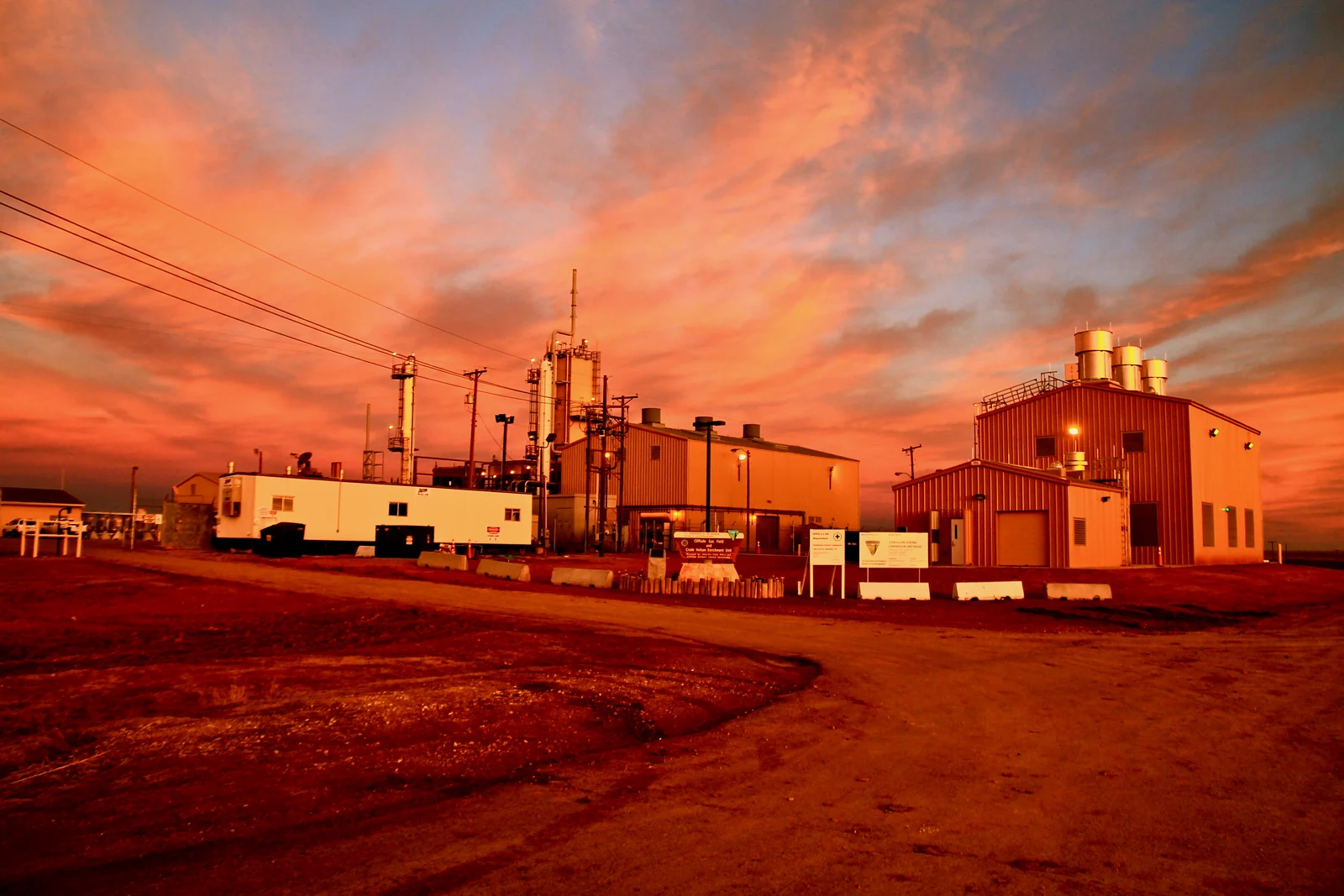
The second is ownership. The United States set up a federal helium reserve in 1960, storing crude helium underground at the Bush Dome near Amarillo. A 1996 law ordered substantially all of it sold, and in 2010 the National Research Council found that the sell-off “has adversely affected critical users of helium.” In 2024 the whole system went to Messer, for two accepted bids totalling about $423 million, and the House Oversight Committee asked questions about the sale in March 2025. What the sale changed is who owns the buffer and what public obligation comes with it. It did not create the industry’s concentration, which the same 2010 report already described: “much of the supply chain is dominated by a few companies.” And private storage has added real capacity since, including Linde’s storage cavern at Beaumont, Texas, with room for about 85 million cubic metres (more than 3 billion cubic feet, the unit the American trade uses). Menezes says the market got “much more volatile” once the federal seller went away. The US government now holds no helium stockpile of its own.
The third is designation and money, and October brought both. On 23 October the Department of Energy designated helium a critical material, published in the Federal Register four days later. Helium had been dropped from the separate federal critical-minerals list in 2022, so this is a reversal of sorts by a different department. Japan’s trade ministry has certified Iwatani’s helium stockpile for subsidy and lists helium and rare gases as important substances in its chip supply-security programme. That is a subsidised commercial stock, not a government reserve. The EU lists helium as a critical raw material, though not among its strategic ones.
So states reach well beyond their borders. They decide who may sell, who owns the rock, who gets a subsidy and what counts as critical. The merchant suppliers still decide, customer by customer, which lab gets the next container.
What actually substitutes
Where a substitute or a leaner design exists, helium’s users have taken it. The shortages of 2018 to 2023 pushed hydrogen into some chipmaking and fibre-optic steps and put recycling into plants that make MRI magnets and optical fibre, and S&P’s analysts count that demand as gone for good. Samsung runs a helium reuse system on some of its lines and is extending it. Philips says its BlueSeal magnet holds 7 litres of liquid helium against about 1,700 for an average conventional scanner, and claims about 2,500 installations. Siemens Healthineers’ Magnetom Flow, cleared in the US in January, needs 0.7 litres and, the company says, no refills. GE HealthCare sells a “helium-free” magnet, which on its own definition means the helium is permanently sealed inside, so the helium-free MRI contains helium.
Wafer cooling is the hard case. Jong-hwan Lee, who studies semiconductor devices at Sangmyung University, says today’s chipmaking processes have no viable replacement for helium in wafer cooling. Below about −256°C, physics closes the question, though superconductors that run warmer, cooled with nitrogen, are in development. For a small lab, the fixes cost money it may not have; during the 2007 shortage, the dry cryostats that avoid liquid helium refills cost up to $50,000 apiece.
New supply is coming, slowly. Six new helium operations started in the United States in 2025. Renergen’s Virginia project in South Africa announced stable liquid helium production on 26 October, with first deliveries still to come. Pulsar Helium targets first helium at its Topaz project in Minnesota by the end of 2027. Qatar’s fourth helium plant had been expected in 2028. Gavin Harper of the University of Birmingham, surveying substitution, recycling and new sources, notes that “none are quick fixes.”
Among the air gases, users have gone further when the physics allowed. SpaceX moved its Starlink thrusters from krypton to argon because, as Elon Musk put it, “krypton is too rare.” Chipmakers, whose lasers run on neon, cut how much of it they need.
How chipmakers cut their neon exposure

About three quarters of the world's neon goes into the excimer lasers that print chip patterns, and helium can't stand in for it. In May 2015 neon supply suddenly tightened, prices rose to as much as 20 times their historical level, and Japan forecast running out by the end of August. The laser maker Cymer responded by cutting its lasers' neon use by about half in one type and 30 per cent in another, with a second generation expected to reach up to 75 per cent. Chipmakers and their gas suppliers each built three to twelve months of stock and cut their reliance on Russia and Ukraine. So when the 2022 invasion hit Ukraine's two big refiners, Ingas in Mariupol and Cryoin in Odesa, which had made roughly half the world's chip-grade neon, the industry reported buffers that March and expected no immediate disruption. In September 2026 Gigaphoton announced a recycling system that it says reuses half of a laser's neon.
Wafer cooling has had no equivalent of Cymer’s fix, and many conventional magnets already installed still need their liquid topped up.
That was where things stood for Sachleben when his interview aired on 18 October. His regular supplier was still offering half, his backup had already warned it was running dry, and he said he did not feel hopeful of getting the helium he needed while the war went on. What happens to his magnets depends on deliveries arriving through plants, boxes and contracts in which his lab has no seat.
⁂
What the reserve cannot promise
Up to this point storage has looked like a known quantity: a federal reserve sold, private caverns built, a Japanese stock subsidised. But a reserve is really three numbers, and the headline usually gives only one. The Bush Dome has historically held up to about 1.25 billion cubic metres of helium. That is capacity. Before the sale, the government estimated that a little over 110 million cubic metres of federally owned helium would be left in it at the handover. That is inventory. And its pipeline typically delivered more than 56,000 cubic metres of crude helium a day to refiners, a figure for what usually flowed rather than the most it could have pushed out. That is a delivery rate. Capacity is not inventory, and inventory is not a delivery rate. And behind all three numbers sits a fourth question nobody’s headline answers: who has the right to draw on what is there?
Capacity, inventory, priority
Start with the rock. The Bush Dome is not a salt cavern. It is a dolomite formation in a former gas field, about 900 metres down, with roughly 10 per cent porosity, and the helium sits in the pores of the rock. By 1973 the government had put about a billion cubic metres into it, many times the roughly 18 million cubic metres the country then used each year, and stopped buying. Linde’s newer store at Beaumont, by contrast, is a cavern. Liquid helium can sit in stationary tanks, but the boxes that move it are good for weeks, so big, long-lived buffers are kept as gas underground. A reserve is physically possible for helium, and the neon stocks chipmakers built after 2014 show it is possible for neon too. What differs is the form, and therefore the speed at which the gas can come back out.
That speed is the third number, and it is the one a crisis tests. The Bush Dome’s 680-kilometre pipeline carried crude helium to private refiners in Texas, Oklahoma and Kansas. Crude helium has to be purified before anyone can use it, and helium bound for magnets cooled by liquid helium also has to be liquefied. Measured by inventory, the estimated 110 million cubic metres of federal helium was more than a year and a half of Ras Laffan’s output. But a store is drawn down through a pipe, a purifier and a liquefier, and the pipeline figure describes typical deliveries of crude gas, not the most the system could deliver in finished helium. However big the stock, the refiners at the end of the pipe set the pace at which it becomes supply.
The fourth question is legal. Under federal ownership the right of access was written down. Buyers of refined helium under the government’s in-kind programme, the arrangement through which federal agencies and their contractors bought helium, were “entitled to priority treatment in the event of helium shortages.” The system now belongs to Messer, and access to a privately owned store is a matter for its owner’s contracts; neither Messer nor Linde has published access terms for its store. That is the clearest change the sale made. In 2010 the National Research Council also predicted that if the sell-down continued the United States would become a net helium importer within 10 to 15 years. It is still a net exporter.
Abroad, Russia was reported in 2010 to store helium in a salt dome near its Orenburg plant, in amounts nobody outside knew. Japan chose a subsidised commercial stock run by Iwatani. Zhou Zhaoheng and colleagues, storage researchers in China, proposed in 2024 a salt-cavern strategic reserve big enough to cover five to ten years of China’s helium demand, and noted that China had no operating salt-cavern helium store at the time.
The boldest idea is older. In 2012 William Nuttall, Richard Clarke and Bartek Glowacki proposed an International Helium Agency modelled on the International Energy Agency, with members holding reserves. The comparison is pointed: oil has an emergency-stock system with rules about who draws and when, and helium has a market.
Sold before it is made
Look at who owns Qatar’s helium before it exists. Helium 2, the second Ras Laffan plant, takes crude helium from six LNG trains. Air Liquide built its extraction, purification and liquefaction unit. Its output is sold 50 per cent to Air Liquide, 30 per cent to Linde and 20 per cent to Japan’s Iwatani, under agreements running to 2032. That 20 per cent gives Japan a direct stake in Qatari helium, and it is held by a company, not the state.
When supply stops, the contract shows what survives. QatarEnergy invoked force majeure on the affected contracts on 4 March and has kept it in place since, seeking relief from its obligations to deliver. The offtakers then decide how their own shortfall is shared among their customers, which is how a lab in Chicago ends up on half rations from a war in the Gulf.
The other plants were arranged differently. Helium 1 sells to Linde and Air Liquide. Helium 3 was built by the contractor Chiyoda AlMana around a package of licensed equipment supplied by Air Products, and Air Products won its long-term offtake. Put together, the state owns the source but needs its LNG trains running, Western-licensed process equipment, the majors’ containers and distribution networks, and an open road or sea lane. The majors need Qatar’s volume, even though for Air Liquide, at least, helium is a small, contract-heavy line. It is mutual dependence in which the state holds the molecule and the firms hold the route to market.
Russia shows what an exporter faces without that route. Its Amur complex was designed as three helium plants of about 21 million cubic metres a year each, and fire and explosion in the gas plant feeding it delayed the first. In 2023 Kornbluth worked through a scenario: if a container makes four or five trips a year, Amur’s first two plants would need 300 to 375 of them, and Gazprom’s new customers could take several years to get them. Western ocean carriers stopped calling at Russian ports, thinning out the ships at Vladivostok, the main export port for Russian helium. Linde, Gazprom’s Western partner on the project, suspended its Amur agreements under sanctions in May 2022. Russia’s 2025 output was far below the 55 to 60 million cubic metres of capacity the Russian trade press attributes to it, and some of what it did sell reached the world through re-export from China until Beijing’s ban. The analysts at Geopolitechs see blocs forming, with North American helium serving the United States and its partners and Russian helium pulled toward China and Eurasia.
Neon’s dependency had a different origin. Ukraine’s place in the market was a Soviet industrial legacy: every oxygen plant built for a Soviet steel mill came with columns to recover neon, krypton and xenon. So much of the neon in Western chips began as a by-product of the oxygen plants serving Russian steel mills and was refined in Ukraine. Soviet planners built that dependency for Soviet steel, and the chip industry inherited it. Russia’s response in 2022 was a choice. It limited noble-gas exports to the end of that year, and a deputy minister said the aim was to “rearrange those chains that have now been broken and build new ones”. Industry minister Denis Manturov set a target of 70,000 cubic metres of neon a year, which he said would lift Russia’s share of the world market from 1 to 10 per cent. China, for its part, held 52 per cent of the neon-purification plants on the 2018 count, and most new rare-gas air-separation units are being built in Asia.
The plant in Odesa

Cryoin Engineering halted its neon plant in Odesa on 24 February 2022, the day of the invasion. In March 2023 Ukraine's security service, the SBU, accused an unnamed Odesa company of selling high-purity inert gas and processing equipment to Russia for use in tank laser sights. The Ukrainian outlet NV identified the company as Cryoin, and reported that it had co-founded a Korean venture in which the Korean firm JI Tech held 51 per cent. A Kyiv court transferred Cryoin's seized corporate rights and property to ARMA, Ukraine's asset-management agency, which said in September 2025 that the complex needed no additional investment to resume operations. On 13 October 2026 ARMA was again looking for someone to manage it. No conviction, final confiscation or restart has been reported, and there is no sign of the Korean venture producing. What the case does show is a purification plant, the scarce step in the neon chain, passing into the hands of a state agency in wartime, a different kind of state control from an export ban.
Glut or famine
Whether the next few years bring a glut or a famine depends on assumptions, and the people who know the market are making different ones.
Duration first. In March Kornbluth said that if the shutdown lasted more than six months, “we’ll be in ‘Helium Shortage 5.0’.” The trade numbers its big helium crunches, and analysts were already using the name that month for the fifth in two decades; the fourth ran from 2022 into early 2024. The disruption has now run well past six months, and Edison’s notice stretches QatarEnergy’s LNG force majeure to the end of December.
Then recovery. Lamba’s forecast of a return to about three quarters of former production is one assumption. He also told investors that in the longer term helium will be oversupplied, and that Linde has signed new long-term customers during the squeeze. His company is one of Qatar’s biggest helium customers, which makes him well informed and not neutral. A glut later and a squeeze now can both be true. What separates them is how fast production comes back, how fast the boxes get back into position, and how much demand is left when they do.
Demand is the third assumption. Kornbluth thinks chipmaking “won’t double demand like the headlines are saying.” S&P’s analysts expect the demand lost to hydrogen and recycling in the last round of shortages to stay lost, and before the war they forecast North America’s share of world helium production capacity falling from 57 per cent in 2025 to 43 per cent by 2030. And American exports, for all their growth, come from an industry held back by the same limited refining capacity and slow permitting.
New supply takes years. Qatar’s fourth plant and Amur’s third are forecasts. Exiger says Dry Piney, a Wyoming project approved by federal land managers in December 2025, won’t produce commercially before summer 2028, and the newest projects are still at the commissioning and target stage. For the air gases, Richard Barnett of Supplyframe reckoned in 2022 that moving neon production elsewhere would take nine months to two years. One group argues for a different model altogether. Hotspur Helium, an exploration company whose technical director is the Durham geoscientist Jon Gluyas, told the UK Parliament that primary helium, found in nitrogen-rich reservoirs rather than alongside hydrocarbons, would be “independent of hydrocarbons production and this sector’s associated market forces,” and that stockpiling would improve resilience. The argument goes straight at the weakness in Qatar’s supply: its helium stops when its LNG stops.
The next question is what happens if helium and neon tighten together. Kornbluth’s forecast queue suggests how helium would be rationed: nothing for customers without contracts, steeper cuts for balloons and welding, high allocations for chipmakers and full ones for MRI and aerospace. Stocks could cushion the fabs too. Korean fabs reported one to three months of helium in March, and in 2022 chipmakers held months of neon at two points in the chain. If buffers like those were still there when a double squeeze began, a short one would most likely fall on the bottom of the helium queue while the fabs drew down their stocks. In a long one, China’s position in neon would start to matter. It had the largest share of the neon refineries on the 2018 count and was the largest source of Japan’s combined imports of neon, krypton and xenon, by weight, in May 2026.
That leaves one of Qatar’s biggest helium customers forecasting a glut while telling investors there aren’t enough tanks to move what exists today.
Related articles
- Why diesel remains scarce as crude exports recover
- The arithmetic of a ration cut
- Why certain ports have more geopolitical power than entire countries
Further reading
As an Amazon Associate, Eikleaf earns from qualifying purchases. The book links below are affiliate links: if you buy through them, we may earn a small commission at no extra cost to you.
 Material World: The Six Raw Materials That Shape Modern CivilizationFollows indispensable materials through extraction, processing and chip factories, explaining why abundant resources can still depend on a few vulnerable suppliers.
 How the World Ran Out of Everything: Inside the Global Supply ChainReports how transport bottlenecks, concentrated suppliers and corporate bargaining power turn disrupted production into unequal access to essential goods.
 Chip War: The Fight for the World’s Most Critical TechnologyExplains the strategic importance and concentrated production networks of semiconductor fabs, a major helium customer competing for reliable supplies.
 The War Below: Lithium, Copper, and the Global Battle to Power Our LivesUses reported mining disputes to explain why diversifying critical supplies and expanding recycling take years, extending the article’s discussion of responses to helium shortages.
Recommended videos
 13:06Why you should care about a helium shortage | 60 MinutesVisits the labs and chipmakers behind the article, showing how disrupted deliveries affect research and production.
 5:33Why There Is A Helium ShortageExplains helium’s dependence on natural-gas extraction and the US reserve; useful historical context, with dated forecasts.
Cite this article
Lena Martin. “Who gets helium when supplies run short.” Eikleaf, 2 November 2026. https://www.eikleaf.com/who-gets-helium-when-supplies-run-short/
Gen AI Disclaimer
Some contents of this page were generated and/or edited with the help of a Generative AI.
Media
Helium transport container in Tokyo – Wikimedia Commons (Photo: Gazouya-japan, CC BY-SA 4.0)
Cutaway of an NMR magnet – Wikimedia Commons (Photo: Z22, CC BY-SA 4.0)
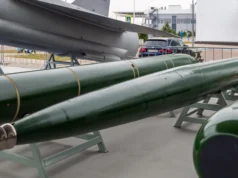
Federal Helium Reserve, Amarillo, Texas – Bureau of Land Management, Wikimedia Commons
Key Sources and References
CBS News, 60 Minutes. “Helium is way more important than you might think. And the supply chain is in crisis.” 18 October 2026. https://www.cbsnews.com/news/iran-war-impacts-helium-needed-for-big-tech-60-minutes/; CBS News, 60 Minutes. “Helium in short supply as Iran war continues” (transcript). 18 October 2026. https://www.cbsnews.com/news/helium-in-short-supply-as-iran-war-continues-60-minutes-transcript/
Goodin, Robert C. “Helium and Rare Gases.” Mineral Commodity Summaries 2026, pp. 96–97. U.S. Geological Survey, February 2026. https://pubs.usgs.gov/periodicals/mcs2026/mcs2026-helium.pdf; U.S. Geological Survey. “Helium and Rare Gases Statistics and Information.” https://www.usgs.gov/centers/national-minerals-information-center/helium-and-rare-gases-statistics-and-information
Harper, Gavin D. J. “The world’s supply of helium is being threatened by the Iran war.” The Conversation, 2 April 2026. https://theconversation.com/the-worlds-supply-of-helium-is-being-threatened-by-the-iran-war-278811
QatarEnergy LNG. “Ras Laffan Helium.” Undated. https://www.qatarenergylng.qa/english/Operations/Ras-Laffan-Helium
Crowley, John. “Qatari LNG shutdown puts 11% of global helium supply at risk.” AGBI, 25 March 2026. https://www.agbi.com/industry/2026/03/qatari-lng-shutdown-puts-11-of-global-helium-supply-at-risk/
Croteau, Jameson. “Up in the air: War in Middle East shakes helium supply chain.” Chemical Week, 16–23 March 2026. https://chemweek.mydigitalpublication.com/publication/?i=862496&article_id=5129452
Chan, Kelvin. “Iran war halts Qatar helium output, threatening global tech supply chains.” Associated Press, 21 March 2026. https://apnews.com/article/iran-chips-semiconductor-helium-exports-war-fe934332f7c83bb722ca87db22cd57d0
European Commission Joint Research Centre. “Rare Gases (Krypton, Neon, Xenon): Impact assessment for supply security.” 2022. https://rmis.jrc.ec.europa.eu/uploads/JRC130349_01_rare_gases.pdf
Exiger. “Iran War Disrupts One-Third of Global Helium Supply.” March 2026. https://exiger.com/perspectives/iran-war-disrupts-one-third-of-global-helium-supply/
Interfax. “Russian govt brings in temporary authorization procedure for helium exports until end of 2027 – document.” 14 April 2026. https://interfax.com/newsroom/top-stories/117116/
TKS.ru. “Россия ввела временные ограничения на экспорт гелия на фоне дефицита на мировом рынке.” 15 April 2026. https://www.tks.ru/news/nearby/2026/04/15/0001/rossiya-vvela-vremennyie-ogranicheniya-na-eksport-geliya-na-fone-defitsita-na-mirovom-ryinke/
Bousso, Ron. “Middle East LNG industry remains hostage of Iran war: Bousso.” Reuters column, published by Cyprus Mail, 12 October 2026. https://cyprus-mail.com/2026/10/12/qatar-lng-exports-remain-severely-disrupted-despite-recovery-in-gulf-oil-shipments
Linde plc. “Linde plc 3Q26 Earnings Teleconference and Webcast – Transcript.” 29 October 2026, pp. 19–20. https://assets.linde.com/-/media/global/corporate/corporate/documents/investors/quarterly-earnings/investor-call-transcript-3q26.pdf
Linde. Form 10-Q, quarter ended 30 June 2026. https://www.sec.gov/Archives/edgar/data/1707925/000162828026051289/lin-20260630.htm
Linde. “Linde Commissions World-Scale Helium Storage Cavern.” 30 July 2025. https://www.linde.com/news-and-media/2025/linde-commissions-world-scale-helium-storage-cavern
Financial News (fnnews). “‘반도체 생산 필수’ 헬륨 가격 폭등…삼성·SK, 재활용 및 공급처 다변화 총력.” 16 March 2026. https://www.fnnews.com/news/202603161115458829
CEO Score Daily. “[그래픽] 헬륨 국내 수입 현황.” 15 April 2026. https://ceoscoredaily.com/page/view/2026041510520276631
Kyodo News. “ヘリウム調達に事業者不安.” 4 April 2026. https://www.oanda.jp/lab-education/market_news/kn_2026040401000867/
Gaspedia. “ヘリウム・希ガス・カルシウムカーバイド輸入統計(2026年5月分).” 17 July 2026. https://igaspedia.com/2026/07/17/trade-statistics-import-202605/
Geopolitechs. “Why China banned helium exports.” 10 July 2026. https://www.geopolitechs.org/p/why-china-banned-helium-exports
Park Eun-Ha. “China Bans Helium Exports Just Before the Strait of Hormuz Is Closed Again···‘Country First’ Export Controls.” The Kyunghyang Shinmun, 12 July 2026. https://www.khan.co.kr/en/article/202607121615027
Ministry of Commerce of the PRC and General Administration of Customs. Announcement No. 29 of 2026. 10 July 2026. https://www.mofcom.gov.cn/zcfb/blgg/gg/2026/art/2026/art_e715aef77348447fb40cea835cdd8015.html; Ministry of Commerce of the PRC. Regular press conference. 16 July 2026. https://english.mofcom.gov.cn/News/PressConference/art/2026/art_d8b26b203a094bf495910da2872e4779.html
Kalin, Stephen, and Tom Finn. “Qatar closes helium plants amid rift with Arab powers.” Reuters, published by Gulf News, 13 June 2017. https://gulfnews.com/business/qatar-closes-helium-plants-amid-rift-with-arab-powers-1.2043656
Kornbluth, Phil. “Helium Shortage 4.0: What caused it and when will it end?” Innovation News Network, 4 April 2023. https://www.innovationnewsnetwork.com/helium-shortage-4-0-what-caused-it-and-when-will-it-end/29255/
Donevan, Connor, and Justine Kenin. “Helium prices are blowing up. Here’s what is causing the increase.” NPR, 17 June 2022. https://www.npr.org/transcripts/1105970804
Gardner Cryogenics. Helium storage and transport specification sheet. September 2020. https://www.gardnercryo.com/wp-content/uploads/2020/11/Gardner-Sell-Sheet_Helium_Sep2020.pdf
U.S. Department of Energy. “Energy Department Designates Helium as Critical Material.” 23 October 2026. https://www.energy.gov/articles/energy-department-designates-helium-critical-material-strengthen-american-manufacturing; U.S. Department of Energy, Office of Critical Minerals and Energy Innovation. “Critical Material List; Addition of Helium.” Federal Register 91, no. 206, p. 67558, document 2026-21884, 27 October 2026. https://www.govinfo.gov/content/pkg/FR-2026-10-27/pdf/2026-21884.pdf
U.S. Geological Survey. “U.S. Geological Survey releases 2022 list of critical minerals.” February 2022. https://www.usgs.gov/news/national-news-release/us-geological-survey-releases-2022-list-critical-minerals
Rooney, Josh. “Qatari helium shortages.” IUMI newsletter, 9 June 2026. https://iumi.com/newsletter-june-2026/qatari-helium-shortages/
TSMC. First-quarter 2026 earnings conference transcript. 16 April 2026. https://investor.tsmc.com/chinese/encrypt/files/encrypt_file/reports/2026-04/3cef85204275f94fd111485cfdf4adb3c0263c45/TSMC%201Q26%20Transcript.pdf
Fierce Medtech. “MRI providers keep eye on rising helium prices amid war in Iran.” 23 March 2026. https://www.fiercebiotech.com/medtech/mri-providers-keep-eye-rising-helium-prices-amid-war-iran
National Research Council. Selling the Nation’s Helium Reserve. National Academies Press, 2010. https://www.nationalacademies.org/read/12844/chapter/4
Bureau of Land Management. “BLM accepts bids for the sale of Federal Helium System.” 7 March 2024. https://www.blm.gov/announcement/blm-accepts-bids-sale-federal-helium-system
KFDA NewsChannel 10. “Bureau of Land Management closes sale of Cliffside helium plant in Amarillo.” 28 June 2024. https://www.newschannel10.com/2024/06/28/bureau-land-management-closes-sale-cliffside-helium-plant-amarillo
House Committee on Oversight and Government Reform. Letter to the Department of the Interior and GSA on the Federal Helium System sale. 13 March 2025. https://oversight.house.gov/wp-content/uploads/2025/03/2025-3-12-Letter-to-DOI-and-GSA-Federal-Helium-System-Sale.pdf
Gas Review. “METI Grands Subsidizes for Helium Stockpile, Domestic Production/Recycling of Rare Gases.” 23 August 2023. https://gasmos.gasreview.co.jp/column/1185/
European Union. Regulation (EU) 2024/1252 (Critical Raw Materials Act), Annex II. https://eur-lex.europa.eu/legal-content/EN/TXT/PDF/?uri=OJ%3AL_202401252
Philips. “Leading the charge in making a change: how Philips BlueSeal MRI magnet technology uses less helium.” 29 November 2022. https://www.philips.com/a-w/about/news/archive/standard/news/articles/2022/20221129-leading-the-charge-in-making-a-change-how-philips-blueseal-mri-magnet-technology-uses-less-helium-to-help-patients-receive-quality-precision-diagnosis.html; Philips Australia. “Helium-free MRI.” Undated; accessed 30 October 2026. https://www.philips.com.au/healthcare/technology/blueseal-helium-free-mri
Siemens Healthineers. Magnetom Flow FDA clearance. 8 January 2026. https://www.siemens-healthineers.com/en-us/press-room/press-releases/magnetom-flow-mr-platform-fda-clearance
GE HealthCare. “Freelium: Helium-free MRI technology.” https://www.gehealthcare.com/en-us/products/magnetic-resonance-imaging/freelium-helium-free-mri
TechCrunch. “SpaceX’s acquisition of Swarm is paying off with new Starlink thrusters.” 3 March 2023. https://techcrunch.com/2023/03/03/spacexs-acquisition-of-swarm-is-paying-off-with-new-starlink-thrusters
Kaplan, Karen H. “Helium shortage hampers research and industry.” Physics Today, 1 June 2007. https://physicstoday.aip.org/news/helium-shortage-hampers-research-and-industry
ASP Isotopes Inc. “ASP Isotopes Inc. Announces that Renergen Limited’s Virginia Gas Project has Achieved Stable Liquid Helium Production.” Press release, Exhibit 99.1, 26 October 2026. https://ir.aspisotopes.com/sec-filings/all-sec-filings/content/0001193125-26-431084/aspi-ex99_1.htm
Pulsar Helium. Topaz project. https://pulsarhelium.com/projects/topaz/
Cacouris, Ted, and Emmanuel Rausa. “How One Light Source Manufacturer Overcame The 2015 Neon Crisis.” Photonics Online, 12 November 2015. https://www.photonicsonline.com/doc/how-one-light-source-manufacturer-overcame-the-neon-crisis-0001
Laser Focus World. “Cymer second-generation lithography lasers reduce neon consumption.” 16 December 2015. https://www.laserfocusworld.com/lasers-sources/article/16557989/cymer-second-generation-lithography-lasers-reduce-neon-consumption
Shead, Sam. “Chip industry under threat with neon production set to fall off a cliff following Russia’s invasion of Ukraine.” CNBC, 25 March 2022. https://www.cnbc.com/2022/03/25/russia-ukraine-war-laser-neon-shortage-threatens-semiconductor-industry.html
Martin, Dylan. “Chip world’s major suppliers of neon gas shutter in Ukraine.” The Register, 11 March 2022. https://www.theregister.com/2022/03/11/ukraine_neon_supplies/
Gigaphoton. “Gigaphoton Develops Gas Recycling System for ArF Excimer Lasers.” 30 September 2026. https://www.gigaphoton.com/sc/news/10052
General Services Administration. “GSA Announces Sale of Federal Helium System Assets – Updated.” 22 June 2023, updated 26 July 2023. https://www.gsa.gov/about-gsa/newsroom/former-gsa-regional-news-archive/region-7-newsroom/greater-southwest-feature-stories-and-news-release/gsa-announces-sale-of-federal-helium-system-assets-06222023
U.S. Department of the Interior. “Report to Congress on Items Required by Sec. 19 of the Helium Stewardship Act of 2013, Public Law 113-40, as Authorized under 50 U.S.C. 167.” September 2015. https://www.blm.gov/sites/blm.gov/files/NM_Report%20to%20Congress%20Section%2019%20HSA_FINAL%20to%20DC%20062015%20Sec%20508%20Compliant.pdf
Zhou Zhaoheng, Zhou Donglin, Wang Jianfu and Wang Lidong. “Feasibility and key technologies for the construction of salt cavern helium storage in China.” Oil & Gas Storage and Transportation, 2024. https://yqcy.pipechina.com.cn/cn/article/doi/10.6047/j.issn.1000-8241.2024.03.003
Nuttall, William J., Richard H. Clarke and Bartek A. Glowacki. “Stop squandering helium.” Nature 485, 573–575, published online 30 May 2012; issue dated 31 May 2012. https://www.nature.com/articles/485573a
The Peninsula. “Helium2 plant at RasGas begins output.” 9 July 2013. https://thepeninsulaqatar.com/article/09/07/2013/helium2-plant-at-rasgas-begins-output; The Peninsula. “RasGas awards two major deals for Helium 3 project.” 29 October 2015. https://thepeninsulaqatar.com/article/29/10/2015/RasGas-awards-two-major-deals-for-Helium-3-project
Reisch, Marc S. “Air Liquide Adds Helium In Qatar.” Chemical & Engineering News, 10 May 2010. https://cen.acs.org/articles/88/i19/Air-Liquide-Adds-Helium-Qatar.html
Air Products. “Air Products Building Helium Plant for RasGas; Wins Long-Term Helium Supply Contract.” 28 October 2015. https://investors.airproducts.com/node/23476/pdf
Reuters. “Russia limits exports of noble gases, a key ingredient for making chips.” Published by Yahoo News, 2 June 2022. https://malaysia.news.yahoo.com/russia-limits-exports-noble-gases-172858402.html
Interfax. “Russia launches new neon production, ready to export purified inert gases for microelectronics – Russian minister.” 26 July 2022. https://interfax.com/newsroom/top-stories/81615/
LB.ua. SBU statement on an Odesa inert-gas company. 23 March 2023. https://lb.ua/society/2023/03/23/549784_sbu_vikrila_kompaniyu_odesi_yaka.html
NV. “Ukrainian neon manufacturer, suspected of collaboration, moves production to South Korea.” 12 April 2023. https://english.nv.ua/business/neon-manufacturer-cryoin-engineering-accused-of-treason-moves-production-to-korean-ukraine-news-50317320.html
ARMA (Asset Recovery and Management Agency of Ukraine). Market consultations on managing the inert-gas production complex. 19 September 2025. https://arma.gov.ua/en/news/typical/arma-rozpochalo-rinkovi-konsultatsii-schodo-upravlinnya-kompleksom-z-virobnitstva-inertnih-gaziv; ARMA. “АРМА шукає управителя для виробника рідкісних газів «Кріоін Інжинірінг».” 13 October 2026. https://arma.gov.ua/index.php/news/typical/arma-shukae-upravitelya-dlya-virobnika-ridkisnih-gaziv-krioin-injiniring
Hotspur Helium. Written evidence CRM0048 to the UK Parliament. https://committees.parliament.uk/writtenevidence/165270/pdf/
Edison. Press release on QatarEnergy’s extension of force majeure on LNG deliveries to the end of December. 27 October 2026. https://www.edison.it/it/edison-qatarenergy-estende-forza-maggiore-fino-fine-dicembre
Council of the European Union. “EU sanctions against Russia: questions and answers.” Undated; accessed 30 October 2026. https://www.consilium.europa.eu/en/policies/sanctions-against-russia-explained/