Last updated: · 18 min read
In brief
When the US sanctioned Kimberly Prost, a judge at the International Criminal Court, she lost access to her credit cards at once. Even Alexa stopped responding. Then Washington listed the court itself, and licensed its salaries only until April 2027. A licence permits; it obliges no one. Luxembourg’s state bank closed the court’s accounts months before the court was even listed, fearing for its US business. How far European firms are willing to go will decide whether the court can keep paying staff and try Rodrigo Duterte.
Contents
In August 2025 the US Treasury added Kimberly Prost, a Canadian judge at the International Criminal Court, to its list of sanctioned people. Before she joined the court, Prost had worked on sanctions for the UN Security Council. Now she was on the receiving end. She lost access to her credit cards at once, and Amazon’s Alexa stopped responding to her. Shortly after the listing she bought an e-book, Antal Szerb’s The Queen’s Necklace, and later found that it had disappeared from her device. In a 2026 court filing she says HSBC froze her New York account and that Amazon, Google and Expedia restricted or closed her accounts. “I’ve worked all my life in criminal justice, and now I’m on a list with those implicated in terrorism and organized crime,” she said.
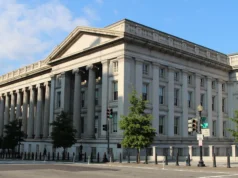
On 9 October 2026 the Treasury’s Office of Foreign Assets Control (OFAC) put the court itself on the same list. Earlier rounds had hit the court’s judges and prosecutors one by one. This step could expose any company that provides services to the institution. It came hours after Navi Pillay, a former judge of the court, won the Nobel Peace Prize. Secretary of State Marco Rubio put the aim plainly: “Either the ICC will end its threats, or we will end the ICC.”
Two separate things happened that day. The designation took effect. And OFAC issued four general licences, published permissions that allow defined dealings with the court despite the listing. One of them runs until 7 April 2027; the other three carry no end date. The licences leave European banks and suppliers to tell apart what US law actually prohibits and what Washington might punish them for anyway. Where they draw that line will decide whether the court can keep paying its staff, holding its prisoners and trying Rodrigo Duterte, the former Philippine president whose trial is due to open on 30 November.
What the Treasury’s paperwork says
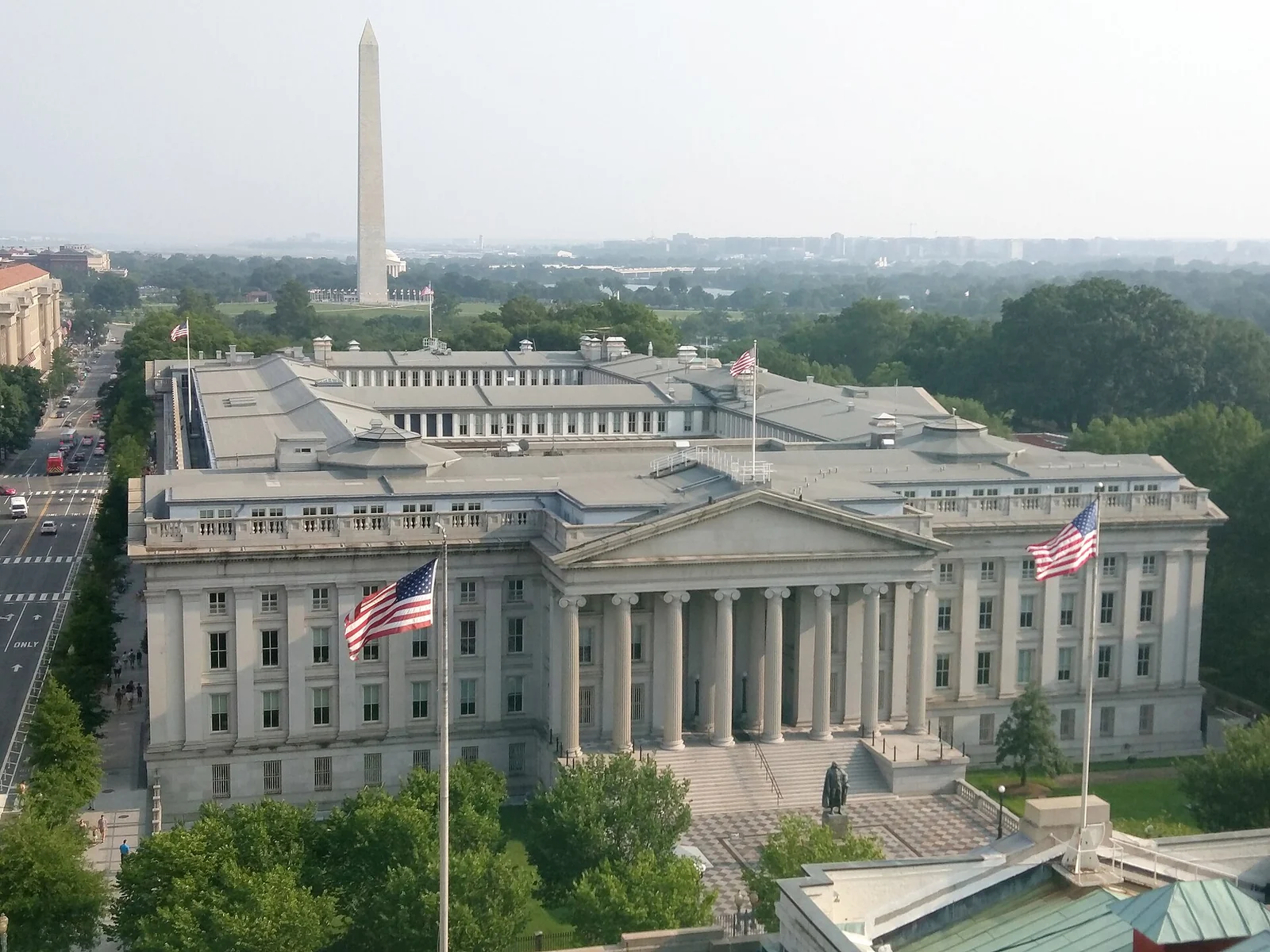
The legal engine is Executive Order 14203, which Donald Trump signed on 6 February 2025. Once a person or body is designated under it, all of its property that is in the United States, or in the possession or control of a “United States person”, is blocked: frozen where it sits. US persons may no longer provide funds, goods or services to the target, or receive them from it. The order defines a US person as an American citizen or permanent resident, anyone in the United States, or an entity organised under US law, including its foreign branches. An American company’s office in Amsterdam is covered. A Dutch bank in Amsterdam, as such, is not.
Read alone, the order would cut the court off from every American bank, software vendor and insurer. So OFAC wrote exceptions on the same day. General License 13 authorizes every transaction the court-related regulations would otherwise prohibit if it is “ordinarily incident and necessary to the maintenance or wind down of operations” involving the court. It runs until 12:01 a.m. eastern daylight time on 7 April 2027. Its text spells out what it has in mind: member states’ payments to the court, salaries, health insurance and medical care for its employees, grantees and contractors, plus rent, utilities, taxes, insurance and routine commercial services such as subscriptions.
The other three licences carry no expiry date. General License 14 covers telecommunications, internet services such as email and video conferencing, and enterprise software, a term it defines to include human resources and payroll, financial management, data storage and cloud services. General License 15 covers pension payments, provided any payment to a blocked person goes into a blocked, interest-bearing account in the United States. General License 16 authorizes whatever is needed for the continued detention of nine people named in its annex, Duterte and the Darfur militia leader Ali Kushayb among them, including their health and welfare and the running of the detention facilities.
Lay the four side by side and an odd shape appears. Washington has given open-ended permission to keep the court’s prisoners fed and guarded, its email running and its pensions paid. The payroll software is licensed with no end date. The salaries it calculates are licensed until April. Three limits follow from the wording. A licence permits; it obliges no one, and no bank has to keep an account open because OFAC allows it. General License 13 also excludes dealings with any other blocked person, such as an individually designated judge, unless separately authorized. And what lapses on 7 April 2027 is an American authorization. After that date the order covers what it has always covered: property in the United States or held by US persons, dealings by US persons, and anyone who causes a US person to break the rules. Nothing in the text turns into a worldwide ban.
The State Department said the exemptions were meant to “provide time for States Parties to demonstrate meaningful progress” on resolutions that address US concerns, and that the grace period could be adjusted depending on the “success or failure” of those efforts. Rubio named his audience. “We expect our allies, many of whom are part of the ICC and that rely on American servicemembers for their defense, to rein in the court,” he said. The April deadline on salaries is pressure on the governments that fund the court.
When Washington penalized countries for backing the court

The American Servicemembers' Protection Act, signed in August 2002, authorizes the president to use "all means necessary and appropriate" to free covered American or allied persons held by or for the court. Critics nicknamed the provision the "Hague invasion clause". Washington also used a clause of the court's own founding treaty. Article 98 of the Rome Statute bars the court from pursuing a surrender request that would force a state to break an agreement requiring the sending state's consent, unless the court first obtains that consent. The United States signed 100 such non-surrender agreements by March 2006. On 1 July 2003 it cut military aid to member states that had not signed one, sparing NATO members and major non-NATO allies, with waivers available; later laws cut some economic aid too. By March 2006 twelve Latin American countries, Brazil and Mexico among them, had been denied US assistance as a result. Some Bush administration officials and members of Congress worried about what the cuts were doing to relations with Latin America. In 2005 the United States abstained on the Security Council vote that referred Darfur to the court.
Where US law ends and caution begins
The order also has a second edge. It lets Washington designate any foreign person found to have “materially assisted” a blocked person or provided it with goods or services. And it prohibits any transaction that “causes a violation of” its rules. Neither clause, on its own, forbids a European company to serve the court. The first leaves the company open to being listed itself, at Washington’s discretion. The second makes it liable if a payment or service it arranges for the court pulls an American bank or cloud provider into a prohibited dealing.
The sanctioned judges have lived on that edge since 2025. Beti Hohler, listed in June 2025, told a European Parliament hearing in February 2026 that a European bank “whose client I was for decades” announced it was closing her account a day after she was sanctioned, and closed it within days. “Although a transaction may be between two European banks, in euros without any U.S. nexus, it may still get rejected,” she said. “A bank card that works today may not work tomorrow.”
Some cases remain murky. In May 2025 court staff told the Associated Press that Microsoft had cancelled the email address of Karim Khan, then the chief prosecutor and already under US sanctions, and that he had moved to Proton Mail, a Swiss provider. Microsoft’s president, Brad Smith, said the company had neither terminated nor suspended its services to the court, while Microsoft acknowledged a process “that led to excluding the sanctioned official”. The two accounts leave open who cut Khan off, and on whose initiative. Some non-governmental organisations stopped working with the court that year.
The clearest case involves the institution’s own money. By March 2026, months before the court itself was listed, Luxembourg’s state-owned bank Spuerkeess had closed the court’s two accounts, citing fears for its business in the United States. On 24 March its representatives told MPs the closure was mainly a matter of the bank’s risk policy and had been agreed with the court. Laurent Mosar, a Luxembourg MP, defended the move: “Any decision other than to close these accounts would have exposed the bank to sanctions.” At the time, US sanctions named several of the court’s officials but not the court.
ABN Amro, the Dutch bank that handles the court’s finances, faces the same arithmetic. Its clearing division, which settles share trades for clients, has a large American business, and that could expose the bank to US penalties. In mid-October Cedric Ryngaert, a professor of international law at Utrecht University, said that “the legislation is not at all clearly worded”, and that the uncertainty has a “chilling effect” because companies cannot tell whether they are covered.
The court has been preparing for months. Before 9 October it moved its office computers from Microsoft to openDesk, a German open-source suite, and made new arrangements for banking and health insurance. By September it had also been paying staff months in advance to soften any disruption to payroll. Its Trust Fund for Victims warned that the sanctions “may have the effect of disrupting financial channels, services, and partnerships” that reparations depend on.
American courts have trimmed the order’s edges, but only for the Americans who sued. Earlier suits by US law professors and human rights advocates won rulings that bar enforcement against those plaintiffs for specified speech-based work involving the court. On 13 October Judge Jesse Furman in New York granted a preliminary injunction to two US groups, DAWN and the Taxpayer Alliance Against Genocide, and two of the alliance’s members, shielding them from penalties for the speech-related activities set out in their complaint. He declined to declare the order unconstitutional or to block it for everyone. By 20 October the government had agreed to make that injunction permanent, and the groups were asking for a wider one. Three of the sanctioned judges sued in June 2026 to challenge their own designations, and Human Rights Watch and three other groups filed suit in August seeking to have the sanctions struck down; neither case had been decided by late October. None of this touches the court’s banking in Europe. That depends on how far European firms are willing to go.
Europe’s answer, as of 24 October
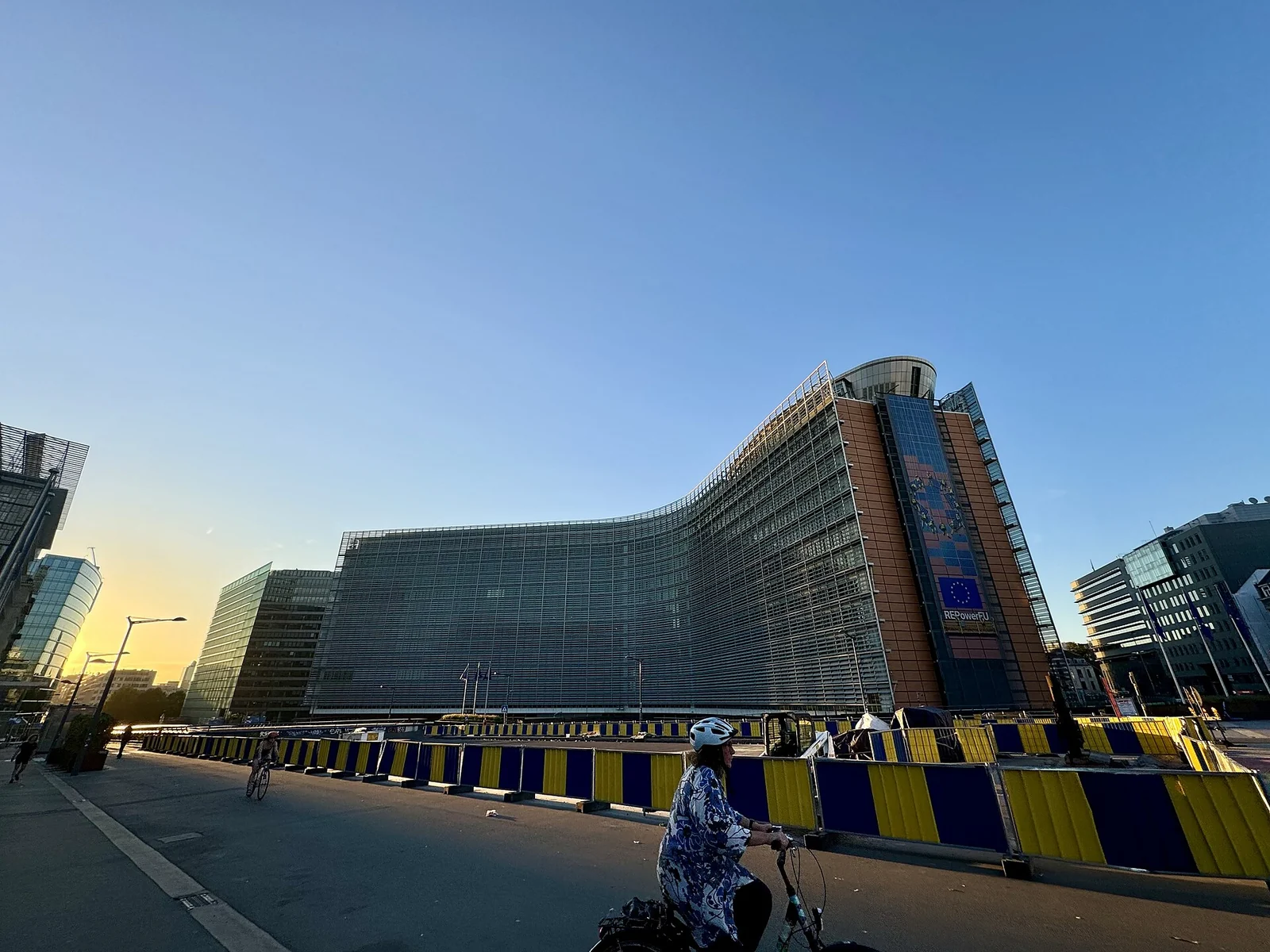
Governments have been trying to pull that line back toward the letter of the law. On 9 October Canada, Denmark, Germany, France, Italy, Japan, the Netherlands and the United Kingdom issued a joint statement opposing the sanctions. Earlier that week the court’s registrar, Osvaldo Zavala Giler, had asked the European Union to be ready to use its “blocking mechanism”.
The blocking statute is an EU regulation that protects European operators from the effects of foreign laws listed in its annex. It forbids them to comply with those laws, though a firm can apply to the European Commission for permission to comply. It was first used against US sanctions on Cuba, Iran and Libya, and the annex covers US measures on Cuba and Iran; the EU updated it in 2018 when Washington re-imposed sanctions on Iran. To shield the court, the EU would have to add the ICC measures to that annex. Even then the protection would be partial: ABN Amro could end up having to choose between breaking EU rules and breaking US ones.
On 14 October a Commission spokesperson said: “We haven’t made any decisions yet.” The European Council met on 15 and 16 October. The leaders stressed unimpeded access to financial services and the value of European firms continuing to serve the court, and urged Washington to reverse the measures. On 20 October the EU’s foreign policy chief, Kaja Kallas, told the European Parliament that work on the statute was under way. “If we use the blocking statute, we have one shot and one shot only to get it right,” she said. In the same speech she described the sanctions as “not in effect yet”, a political description of a listing that took effect on 9 October.
On 23 October the Commission issued formal guidance. “EU operators should continue providing services to the ICC as before,” it said, pointing to General License 13. That includes payments in the Single Euro Payments Area (SEPA), the system for euro transfers inside Europe, which the Commission noted run on European infrastructure. The notice tells banks what the American licence already allows. It gives them no legal protection against American penalties. As of 24 October the blocking statute’s annex had not been extended to the court, though members of the European Parliament had repeatedly asked for it. On 22 October the Parliament had awarded its Sakharov Prize for Freedom of Thought to the court and its officials.
A court that borrows its police
The dependence on outsiders is older than the sanctions. The Rome Statute, the treaty that created the court, was adopted on 17 July 1998 and entered into force on 1 July 2002. The court tries individuals for genocide, crimes against humanity, war crimes and the crime of aggression. Unless the UN Security Council refers a situation, it can act only when a crime was committed on the territory of a member state or by a member’s national, and a non-member can accept its jurisdiction by declaration. Investigations begin when a member state or the Security Council refers a situation, or on the prosecutor’s own initiative. The court steps aside when a state with jurisdiction is genuinely investigating or prosecuting the case itself. Judges issue an arrest warrant, or a summons to appear, when there are “reasonable grounds to believe” a person committed a crime. The accused must be present for trial.
The court has no police. Member states must “cooperate fully”, and when one refuses, the court’s only formal remedy is to make a finding and refer the matter to the Assembly of States Parties or, in cases the Security Council sent, to the Council. In September 2024 Vladimir Putin, wanted since March 2023 over the alleged unlawful deportation of Ukrainian children, visited Mongolia, a member. Mongolia did not arrest him. Judges found that it had failed to comply, and referred it. Past failures of this kind had brought little beyond verbal dressing-downs.
Duterte’s case shows the dependence from the other side. The Philippines left the court in 2019. His successor, Ferdinand Marcos Jr, indicated early in his term that he would not cooperate, but in late 2023 his government let the court’s investigators into the country. The two families have since had a spectacular falling-out. In March 2025 Duterte was arrested in Manila with Interpol’s help, and on 12 March he was surrendered to the court. In April 2026 the Appeals Chamber confirmed that the court has jurisdiction over alleged crimes on Philippine territory from 1 November 2011 to 16 March 2019, the years of membership. On 8 October the court announced that he was fit to stand trial on charges of murder and attempted murder as crimes against humanity. A government that had left the treaty delivered the defendant.
The Taliban warrants show the opposite outcome. In July and September 2025 a pre-trial chamber issued arrest warrants for four Taliban leaders, among them the supreme leader, Hibatullah Akhundzada, and on 5 October 2026 it unsealed all four. The judges found reasonable grounds to believe the four responsible for persecution on gender grounds against women, girls and people who do not conform to Taliban gender policy, and on political grounds against those seen as their allies, since the Taliban took power in August 2021. The Taliban have barred girls from school beyond the sixth grade and women from most jobs and public spaces. Afghanistan joined the court in 2003. With the Taliban in control, the prospect of any arrest is remote.
The court’s own tally, as of late October 2026, puts numbers on this. Its judges have issued 68 arrest warrants. Twenty-three people have been detained and brought before the court, 34 remain at large, and charges against 9 were dropped because they died. The judges have also issued 9 summonses. Omar al-Bashir of Sudan, the first sitting president the court ever sought, has two warrants against him; neither has been enforced.
How the Yugoslav tribunal's last fugitive was arrested

The International Criminal Tribunal for the former Yugoslavia, which closed on 31 December 2017, had no police either. It indicted 161 people, and all 161 are listed as "accounted for", a figure that includes 20 whose indictments were withdrawn and 10 who died before transfer. Radovan Karadžić was arrested by Serbian authorities in July 2008. The last fugitive, Goran Hadžić, was arrested in northern Serbia on 20 July 2011, after once slipping away, apparently tipped off from inside Serbia's security services. Serbia's president said the arrest met EU demands to catch all war-crimes fugitives. The tribunal's prosecutor, Serge Brammertz, later named three main reasons for its record: a fugitive-tracking unit in his office, international forces on the ground willing in the end to make arrests, and incentives for the region's states to cooperate. Among those incentives, the EU had made full cooperation a condition of membership since 2002, and in October 2010 it said the best proof from Serbia would be the arrest of its last two fugitives, Ratko Mladić and Hadžić.An old objection, a wider campaign
Washington’s case is set out in the executive order. It declares a national emergency over any effort by the court to investigate, arrest, detain or prosecute “protected persons”, a category that covers every US person, soldiers and officials included, unless Washington consents to the court’s jurisdiction over them, and the citizens and residents of NATO members and major non-NATO allies whose governments have not consented or have not joined the court’s treaty. “The ICC has no jurisdiction over the United States or Israel, as neither country is party to the Rome Statute or a member of the ICC,” it says. The immediate grievances are on the record. In November 2024 the court issued warrants for Israel’s prime minister, Benjamin Netanyahu, and former defence minister Yoav Gallant, after judges found reasonable grounds to believe they had deprived Gaza’s civilians of objects indispensable to survival, including food, water and medicine.
Trump has said the campaign is meant to protect Netanyahu. Two of the listed judges, Prost and Solomy Bossa, had joined a 2020 appeals ruling that allowed an investigation in Afghanistan, which covered alleged crimes by Americans; in 2021 the prosecutor said he would “deprioritise” that element. A third, Reine Alapini-Gansou, sat on the panel that approved the Netanyahu and Gallant warrants.
The objection is older than Trump. Under Bill Clinton the United States was one of only seven countries to vote against the Rome Statute in 1998, and on 6 May 2002 it told the UN it did not intend to become a party. In September 2020 OFAC listed the then prosecutor, Fatou Bensouda, and a senior official, Phakiso Mochochoko. Joe Biden lifted those sanctions in April 2021, calling them “not an effective or appropriate strategy”, while stating that the United States continues to object to the court’s jurisdiction over personnel of non-member states without their consent or a Security Council referral.
Trump’s second administration widened the campaign. In June 2025 OFAC listed four judges. In August it added Prost, Judge Nicolas Guillou and both deputy prosecutors; in December, two more judges; in August 2026, the court’s president, Tomoko Akane, and a senior trial lawyer. By then nine of the court’s 18 judges were under US sanctions. In July 2026 Rubio promised to “dismantle the ICC, brick by brick, if necessary”, and a State Department official said countries that host American forces “are being called upon to reject the ICC’s purported authority to prosecute American officials and servicemen”. On 22 September Trump told the UN General Assembly: “I call on all nations that are members of the ICC to officially resign from this rogue institution immediately.” That week, only Naoero, the Pacific island formerly called Nauru, followed. On 9 October the campaign moved from people to the institution.
The case against the court
Washington’s objection deserves its strongest form. A treaty binds the states that join it, and the United States and Israel never joined. The court’s answer is territorial: for genocide, crimes against humanity and war crimes, a member state’s territory falls under its jurisdiction whoever the suspect is. In February 2021 a pre-trial chamber ruled, by majority, that Palestine is a member state whose territory for this purpose includes Gaza and the West Bank, including East Jerusalem. The presiding judge, Péter Kovács, partly dissented on exactly that point, doubting that Palestine qualifies as the territorial state. The dispute runs through the bench itself.
The court’s record gives critics more material. As of October 2026 it counts 15 convictions and 4 acquittals. The 15 include five people convicted in a single case of offences against the administration of justice, over false testimony by defence witnesses. It has failed with defendants already in its dock: Laurent Gbagbo and Charles Blé Goudé, tried over alleged crimes against humanity in Côte d’Ivoire, were acquitted of all charges in 2019, and the acquittal was confirmed on appeal in 2021. In 2020 an independent expert review commissioned by the member states found the view “widespread” that the pre-trial stage fails to sift out weak cases, and described “distrust and a culture of fear” inside the court. In July 2026 the member states removed Khan as prosecutor for serious misconduct, the first such removal in the court’s history; he denies the allegations, and his two deputies run the office.
A second line of attack comes from the other direction. Six states filed withdrawal notices in 2026, each to take effect a year later. Venezuela cited “a demonstrated geographical bias, which has disproportionately concentrated its work on African and Latin American countries”. Chad accused it of ineffectiveness and bias against Africa. Burkina Faso, Mali and Niger denounced it as a neocolonial instrument. Hungary withdrew its own notice in May 2026, and only Burundi and the Philippines have ever completed an exit.
Washington’s objection is about consent; the withdrawing states’ is about whom the court chooses to prosecute; the expert review and the Gbagbo acquittal are about the quality of its cases; Khan’s removal is about leadership. The sanctions resolve none of them. They reach the whole docket instead. The detention licence names Kushayb, convicted over Darfur, and Mahamat Said Abdel Kani, convicted in September 2026 of crimes against humanity in the Central African Republic. The three judges suing in New York argue that the order disrupts investigations that Republican and Democratic administrations alike have backed, including those on Sudan, Libya, Uganda, Mali, the Democratic Republic of the Congo and Ukraine. As of 9 October 2026 the court had not sought to prosecute any American.
What is still to be decided
Washington has described the purpose of the window only in general terms. Rubio said the action was structured to let member states “negotiate and present a solution”, and that if they fail, the United States will “adjust accordingly”. As of 24 October, OFAC’s list of recent actions showed nothing new on the court since 9 October.
The treaty limits what the 125 member states can offer. Judges are independent in performing their functions, and members of the prosecutor’s office may not seek or act on instructions from any outside source. Only judges can withdraw the warrants for Netanyahu and Gallant. The Security Council can defer an investigation or prosecution for 12 months at a time by a resolution under Chapter VII of the UN Charter, but no member state can do so on its own. What members do control is money. They fund the court through assessed contributions, and for 2026 they approved a budget of €196.9 million and a staffing level of 1,008.
Duterte’s trial is due to open on 30 November, well inside the period General License 13 covers. Trial Chamber III will hear it: Judge Joanna Korner presiding, with Judges Keebong Paek and Nicolas Guillou. Until 7 April 2027 the licence lets American banks, insurers and suppliers keep handling the court’s salaries, rent and member states’ contributions, and Washington says it may adjust that window depending on how negotiations go. Guillou is a different matter. He has been on the sanctions list in his own right since August 2025, and General License 13 does not authorize dealings with him.
Related articles
- When the military becomes law enforcement: the legal architecture behind killing without trial
- How Switzerland stays neutral — the actual legal and military architecture behind it
- Dollar dominance – why the world’s most traded commodity isn’t oil
Further reading
As an Amazon Associate, Eikleaf earns from qualifying purchases. The book links below are affiliate links: if you buy through them, we may earn a small commission at no extra cost to you.
 Rough Justice: The International Criminal Court in a World of Power PoliticsHistory of the ICC’s relations with the great powers, including Washington’s shifting hostility, which frames the current sanctions.
 The Art of Sanctions: A View from the FieldA former US sanctions official on how designations, licences and exemptions are designed and enforced in practice.
Recommended videos
 27:57Could US sanctions destroy the International Criminal Court? | Inside StoryAl Jazeera panel on whether US sanctions can cripple the ICC’s operations.
 10:48Trump administration issues fresh sanctions against the International Criminal Court | DW NewsDW report on the expanding US sanctions on ICC judges and officials.
 3:03What is the ICC, and why is the US threatening new sanctions on it? | REUTERSReuters basics on what the ICC does and why Washington targets it.
Cite this article
Owen Parker. “How far a US sanctions list reaches into a court in The Hague.” Eikleaf, 24 October 2026, updated 25 October 2026. https://www.eikleaf.com/how-far-a-us-sanctions-list-reaches-into-a-court-in-the-hague/
Gen AI Disclaimer
Some contents of this page were generated and/or edited with the help of a Generative AI.
Media
International Criminal Court 2022 – Wikimedia Commons (Photo: Choinowski, CC BY-SA 4.0)
US Treasury building – Wikimedia Commons (Photo: MeanieHyaena, CC BY 4.0)
Berlaymont building 2024 – Wikimedia Commons (Photo: Cbliu, CC BY-SA 4.0)
Key Sources and References
Office of Foreign Assets Control, US Department of the Treasury. “International Criminal Court Designation and General Licenses.” Recent Actions, 9 October 2026. https://ofac.treasury.gov/recent-actions/20261009
Office of Foreign Assets Control. “International Criminal Court-Related General License No. 13: Authorizing Certain Transactions Involving the International Criminal Court.” 9 October 2026. https://ofac.treasury.gov/media/937186/download
Office of Foreign Assets Control. “International Criminal Court-Related General License No. 14: Authorizing Certain Transactions Related to Telecommunications and Enterprise Software Involving the International Criminal Court.” 9 October 2026. https://ofac.treasury.gov/media/937191/download
Office of Foreign Assets Control. “International Criminal Court-Related General License No. 15: Authorizing Transactions Related to Pension Payments Involving the International Criminal Court.” 9 October 2026. https://ofac.treasury.gov/media/937196/download
Office of Foreign Assets Control. “International Criminal Court-Related General License No. 16: Authorizing Certain Transactions Related to Certain International Criminal Court Detainees,” with Annex. 9 October 2026. https://ofac.treasury.gov/media/937201/download
Office of Foreign Assets Control. “Counter Narcotics Designations; International Criminal Court-related Designations; Issuance of International Criminal Court-related General Licenses.” Recent Actions, 5 June 2025. https://ofac.treasury.gov/recent-actions/20250605
Office of Foreign Assets Control. “International Criminal Court-Related Designations; Issuance of International Criminal Court-Related General License.” Recent Actions, 20 August 2025. https://ofac.treasury.gov/recent-actions/20250820
Office of Foreign Assets Control. “Iran-related Designations; International Criminal Court-related Designations; Russia-related Designations Removals; Foreign Sanctions Evaders Determination Removal; Issuance of Iran-related and International Criminal Court-related General Licenses.” Recent Actions, 18 December 2025. https://ofac.treasury.gov/recent-actions/20251218
Office of Foreign Assets Control. “International Criminal Court-related Designations; Venezuela-related Designation; Issuance of International Criminal Court-related General License.” Recent Actions, 18 August 2026. https://ofac.treasury.gov/recent-actions/20260818
Office of Foreign Assets Control. “Blocking Property of Certain Persons Associated with the International Criminal Court Designations.” Recent Actions, 2 September 2020. https://ofac.treasury.gov/recent-actions/20200902
Office of Foreign Assets Control. “Recent Actions.” Accessed 24 October 2026. https://ofac.treasury.gov/recent-actions
The White House. “Executive Order 14203: Imposing Sanctions on the International Criminal Court.” Federal Register, 12 February 2025. https://www.federalregister.gov/documents/2025/02/12/2025-02612/imposing-sanctions-on-the-international-criminal-court
The White House. “Executive Order 14022: Termination of Emergency With Respect to the International Criminal Court.” Federal Register, 7 April 2021. https://www.federalregister.gov/documents/2021/04/07/2021-07239/termination-of-emergency-with-respect-to-the-international-criminal-court
US District Court for the Southern District of New York. Rona v. Trump, No. 25-CV-3114 (JMF), Opinion and Order. 30 July 2025. https://www.justiceinitiative.org/uploads/86e8849e-6729-47b1-903c-4257439b5eee/rona-opinion-and-order-permanent-injunction-20250730.pdf.pdf
US District Court for the Southern District of New York. Democracy for the Arab World Now et al. v. Trump et al., No. 26-cv-5957 (JMF), Opinion and Order. 13 October 2026. https://storage.courtlistener.com/recap/gov.uscourts.nysd.668333/gov.uscourts.nysd.668333.40.0.pdf
Democracy for the Arab World Now et al. v. Trump et al., No. 26-cv-5957 (JMF). Joint letter to Judge Jesse M. Furman. 20 October 2026. https://storage.courtlistener.com/recap/gov.uscourts.nysd.668333/gov.uscourts.nysd.668333.41.0.pdf
European Commission. “Commission Notice to EU operators.” 23 October 2026. https://finance.ec.europa.eu/eu-and-world/commission-notice-eu-operators_en
European Commission. “Extraterritoriality (Blocking statute).” Accessed 23 October 2026. https://finance.ec.europa.eu/eu-and-world/open-strategic-autonomy/extraterritoriality-blocking-statute_en
European External Action Service. “Statement to the European Parliament by the HR/VP on European support to defend the International Criminal Court.” 20 October 2026. https://www.eeas.europa.eu/eeas/statement-european-parliament-hrvp-european-support-defend-international-criminal-court_en
European Parliament. “The International Criminal Court and its officials awarded the Sakharov Prize.” 22 October 2026. https://www.europarl.europa.eu/news/en/press-room/20261018IPR48263/the-international-criminal-court-and-its-officials-awarded-the-sakharov-prize
United Nations. “Rome Statute of the International Criminal Court.” 17 July 1998. https://legal.un.org/icc/statute/english/rome_statute(e).pdf
International Criminal Court. “Rome Statute of the International Criminal Court,” consolidated text including amendments. 2025. https://www.icc-cpi.int/sites/default/files/2025-05/Rome-Statute-EN-2025.pdf
United Nations Treaty Collection. “Rome Statute of the International Criminal Court: Status.” Accessed 23 October 2026. https://treaties.un.org/Pages/ViewDetails.aspx?src=TREATY&mtdsg_no=XVIII-10&chapter=18&clang=_en
International Criminal Court. “About the Court.” Accessed 23 October 2026. https://www.icc-cpi.int/about/the-court
International Criminal Court. “Duterte case: ICC Presidency constitutes Trial Chamber III.” 29 April 2026. https://www.icc-cpi.int/news/duterte-case-icc-presidency-constitutes-trial-chamber-iii
International Criminal Court. “ICC Appeals Chamber confirms jurisdiction in Duterte case.” 22 April 2026. https://www.icc-cpi.int/news/icc-appeals-chamber-confirms-jurisdiction-duterte-case
International Criminal Court. “ICC Pre-Trial Chamber II unseals four arrest warrants in Situation in Afghanistan.” 5 October 2026. https://www.icc-cpi.int/news/icc-pre-trial-chamber-ii-unseals-four-arrest-warrants-situation-afghanistan
International Criminal Court. “ICC Pre-Trial Chamber I issues its decision on the Prosecutor’s request related to territorial jurisdiction over Palestine.” 5 February 2021. https://www.icc-cpi.int/news/icc-pre-trial-chamber-i-issues-its-decision-prosecutors-request-related-territorial
International Criminal Court. “Statement by the Trust Fund for Victims in relation to sanctions imposed against the ICC.” 9 October 2026. https://www.icc-cpi.int/news/statement-trust-fund-victims-relation-sanctions-imposed-against-icc
International Criminal Court. “Assembly of States Parties concludes its twenty-fourth session.” 5 December 2025. https://www.icc-cpi.int/news/assembly-states-parties-concludes-its-twenty-fourth-session
International Criminal Court. “Duterte.” Case page, accessed 24 October 2026. https://www.icc-cpi.int/philippines/duterte
International Criminal Court. “Darfur, Sudan.” Situation page, accessed 23 October 2026. https://www.icc-cpi.int/darfur
International Criminal Court. “Bemba et al.” Case page, accessed 23 October 2026. https://www.icc-cpi.int/car/Bemba-et-al
International Criminal Court. “Gbagbo and Blé Goudé.” Case page, accessed 23 October 2026. https://www.icc-cpi.int/cdi/gbagbo-goude
Independent Expert Review of the International Criminal Court and the Rome Statute System. “Final Report.” 30 September 2020. https://asp.icc-cpi.int/iccdocs/asp_docs/ASP19/IER-Final-Report-ENG.pdf
US Department of State. “Imposing Sanctions on the International Criminal Court.” Statement by Secretary of State Marco Rubio, 9 October 2026. https://www.state.gov/releases/office-of-the-spokesman/2026/10/imposing-sanctions-on-the-international-criminal-court
Associated Press. “US hits International Criminal Court with sweeping sanctions as part of drive to dismantle tribunal.” KSAT, 9 October 2026. https://www.ksat.com/news/world/2026/10/09/us-hits-international-criminal-court-with-sweeping-sanctions-as-part-of-drive-to-dismantle-tribunal/
Reuters. “US imposes sanctions on International Criminal Court, hours after former judge wins Nobel.” Khaleej Times, 9 October 2026. https://www.khaleejtimes.com/world/americas/us-sanction-international-criminal-court-after-former-judge-win-nobel
AFP. “US announces sanctions on ICC, hours after Nobel award to former judge.” The Jakarta Post, 10 October 2026. https://www.thejakartapost.com/world/2026/10/10/us-announces-sanctions-on-icc-hours-after-nobel-award-to-former-judge
Al Jazeera. “US sanctions International Criminal Court in major escalation.” 9 October 2026. https://www.aljazeera.com/news/2026/10/9/us-sanctions-international-criminal-court-itself-in-latest-escalation
Associated Press. “Cut off by their banks and even iced out by Alexa, sanctioned ICC staffers remain resolute.” Yahoo News, 12 December 2025. https://www.yahoo.com/news/articles/cut-off-banks-even-iced-051239923.html
Associated Press. “Trump’s sanctions on ICC’s chief prosecutor have halted tribunal’s work, officials and lawyers say.” PBS NewsHour, 15 May 2025. https://www.pbs.org/newshour/world/trumps-sanctions-on-iccs-chief-prosecutor-have-halted-tribunals-work-officials-and-lawyers-say
Krempl, Stefan. “Microsoft denies mail blockade at the International Criminal Court.” heise online, 5 June 2025. https://www.heise.de/en/news/Microsoft-denies-mail-blockade-at-the-International-Criminal-Court-10429628.html
Courthouse News Service. “Sanctioned ICC judges sue Trump in New York.” 24 June 2026. https://courthousenews.com/sanctioned-icc-judges-sue-trump-in-new-york/
Human Rights Watch. “US Sanctions International Criminal Court.” 9 October 2026. https://www.hrw.org/news/2026/10/09/us-sanctions-international-criminal-court
The New York Times. “Judge blocks Trump administration’s sanctions on 2 groups aiding the ICC.” The Boston Globe, 14 October 2026. https://www.bostonglobe.com/2026/10/14/world/judge-blocks-trump-administrations-sanctions-2-groups-aiding-icc/
Anderson, Janet H. “Living with US sanctions means living in constant uncertainty.” JusticeInfo.net, 23 March 2026. https://www.justiceinfo.net/en/156847-living-with-us-sanctions-means-living-in-constant-uncertainty.html
Paperjam. ““A storm in a teacup” for Laurent Mosar.” 24 March 2026. https://en.paperjam.lu/article/a-storm-in-a-tea-cup-for-laurent-mosar
Jans, Pierre. “Luxembourg government accused of bowing to US pressure in ICC account closure.” RTL Today, 25 March 2026. https://today.rtl.lu/news/luxembourg/luxembourg-government-accused-of-bowing-to-us-pressure-in-international-criminal-court-account-closure-1369327957
DutchNews.nl. “ABN Amro caught in crossfire amid ICC sanctions.” 16 October 2026. https://www.dutchnews.nl/2026/10/abn-amro-caught-in-crossfire-amid-icc-sanctions/
Reuters. “ICC deputy prosecutor says court insulated against US sanctions, FT reports.” Internazionale, 25 September 2026. https://www.internazionale.it/ultime-notizie-reuters/2026/09/25/icc-deputy-prosecutor-says-court-insulated-against-us-sanctions-ft-reports
EUobserver. “EU bets on diplomacy, not blocking statute, to protect ICC from Trump sanctions.” 14 October 2026. https://euobserver.com/242731/eu-bets-on-diplomacy-not-blocking-statute-to-protect-icc-from-trump-sanctions/
AFP. “Mongolia failed to cooperate in Putin arrest.” JusticeInfo.net, 24 October 2024. https://www.justiceinfo.net/en?p=137488
The New York Times. “Duterte appears in court in The Hague via video after arrest.” Hawaii Tribune-Herald, 15 March 2025. https://www.hawaiitribune-herald.com/?p=339909
Reuters. “ICC finds Duterte fit to stand trial for murder.” BusinessDay, 8 October 2026. https://www.businessday.co.za/world/2026-10-08-icc-finds-duterte-fit-to-stand-trial-for-murder/
Associated Press. “ICC will unseal arrest warrants for 4 Taliban leaders wanted on gender persecution charges.” La Nación, 5 October 2026. https://www.lanacion.com.ar/usa/icc-will-unseal-arrest-warrants-for-4-taliban-leaders-wanted-on-gender-persecution-charges-nid05102026/
Al Jazeera. “ICC prosecutor leaves US forces out of new Afghanistan probe.” 27 September 2021. https://www.aljazeera.com/news/2021/9/27/icc-prosecutor-targets-taliban-isis-k-in-afghanistan-probe
Al Jazeera. “ICC issues arrest warrant for Israeli PM Netanyahu for ‘war crimes’ in Gaza.” 21 November 2024. https://www.aljazeera.com/news/2024/11/21/icc-issues-arrest-warrant-for-israeli-pm-netanyahu-for-war-crimes-in-gaza
Courthouse News Service. “Darfur militia chief Ali Kushayb sentenced to 20-year prison term by ICC.” 9 December 2025. https://www.courthousenews.com/darfur-militia-chief-ali-kushayb-sentenced-to-20-year-prison-term-by-icc/
Al Jazeera. “ICC convicts ex-CAR militia leader of crimes against humanity.” 23 September 2026. https://www.aljazeera.com/news/2026/9/23/icc-convicts-central-african-militia-leader-of-crimes-against-humanity
Associated Press. “ICC member states vote to remove chief prosecutor Karim Khan.” WRVO, 24 July 2026. https://www.wrvo.org/2026-07-24/icc-member-states-vote-to-remove-chief-prosecutor-karim-khan
Mateo, Janvic. “ICC top prosecutor removed over sexual misconduct.” The Philippine Star, 26 July 2026. https://www.philstar.com/headlines/2026/07/26/2544771/icc-top-prosecutor-removed-over-sexual-misconduct/amp/
Associated Press. “Chad announces intent to withdraw from the International Criminal Court.” WTOP, 28 July 2026. https://wtop.com/world/2026/07/chad-announces-intent-to-withdraw-from-the-international-criminal-court/
Reuters. “Trump calls on all ICC members to resign immediately.” Internazionale, 22 September 2026. https://www.internazionale.it/ultime-notizie-reuters/2026/09/22/trump-calls-on-all-icc-members-to-resign-immediately
Reuters. “Only Naoero heeds Trump’s call to abandon ICC as world leaders rally behind court.” Arab News, 25 September 2026. https://www.arabnews.pk/world/only-naoero-heeds-trumps-call-to-abandon-icc-as-world-leaders-rally-behind-court-3002276
The National. “Marco Rubio says the US will demolish the ICC ‘brick by brick’.” 13 July 2026. https://www.thenationalnews.com/news/us/2026/07/13/icc-rubio-trump/
Bellinger, John B., III. “The Tenth Year Anniversary of UNSCR 1593, Which Referred the Situation in Darfur to the International Criminal Court.” Lawfare, 31 March 2015. https://www.lawfaremedia.org/article/tenth-year-anniversary-unscr-1593-which-referred-situation-darfur-international-criminal-court
Ribando, Clare M. “Article 98 Agreements and Sanctions on U.S. Foreign Aid to Latin America” (RL33337). Congressional Research Service, 30 March 2006. https://www.everycrsreport.com/files/20060330_RL33337_48a6d9dfc8abb3a46001d07bb00691dd7ad8d6eb.html
Human Rights Watch. “US: ‘Hague Invasion Act’ becomes law.” 3 August 2002. https://www.hrw.org/news/2002/08/03/us-hague-invasion-act-becomes-law
22 U.S. Code § 7427 (American Servicemembers’ Protection Act). “Authority to free members of the Armed Forces of the United States and certain other persons detained or imprisoned by or on behalf of the International Criminal Court.” Legal Information Institute, Cornell Law School. https://www.law.cornell.edu/uscode/text/22/7427
Brammertz, Serge. Keynote remarks, Assembly of States Parties, eleventh session, cooperation plenary. 16 November 2012. https://asp.icc-cpi.int/sites/asp/files/asp_docs/ASP11/ICC-ASP11-COOP-Keynote_Remarks-Brammertz-ENG.pdf
International Criminal Tribunal for the former Yugoslavia. “Key figures of the cases.” Accessed 23 October 2026. https://www.icty.org/en/cases/key-figures-cases
International Criminal Tribunal for the former Yugoslavia. “Tribunal welcomes the arrest of Radovan Karadzic.” 21 July 2008. https://www.icty.org/en/press/tribunal-welcomes-arrest-radovan-karadzic
Al Jazeera. “Serbia’s last war crimes fugitive arrested.” 20 July 2011. https://www.aljazeera.com/news/2011/7/20/serbias-last-war-crimes-fugitive-arrested